“A Night We Held Between” by Noor Abed, conversation with curatorial duo LaOtra
Wednesday 20 November 2024
- Participants
- Noor Abed
- Curators
- LaOtra
- Venue
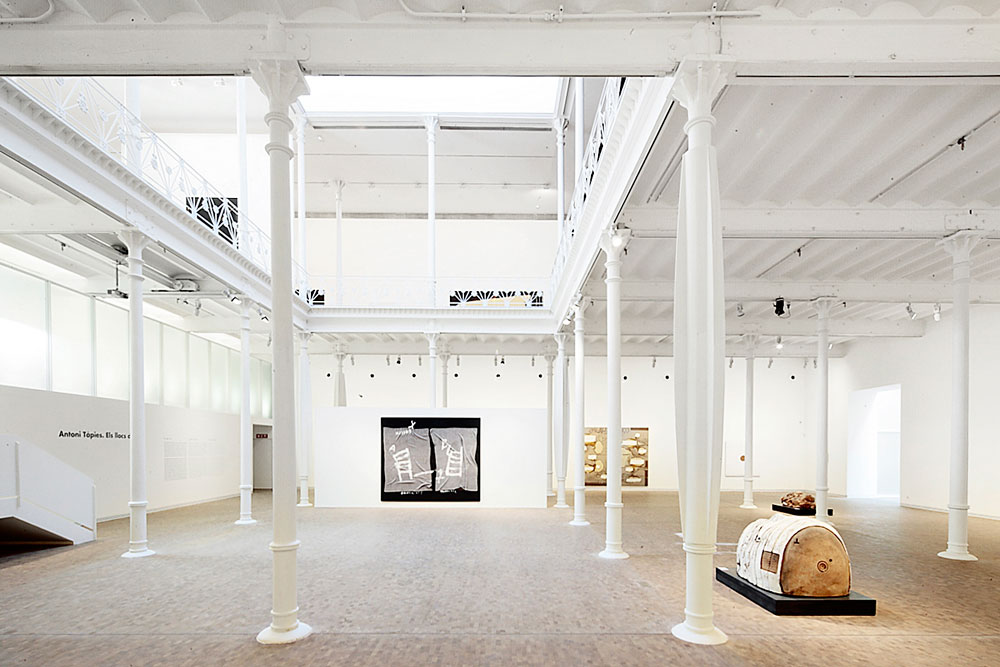
- Museo Tàpies
Add to calendar
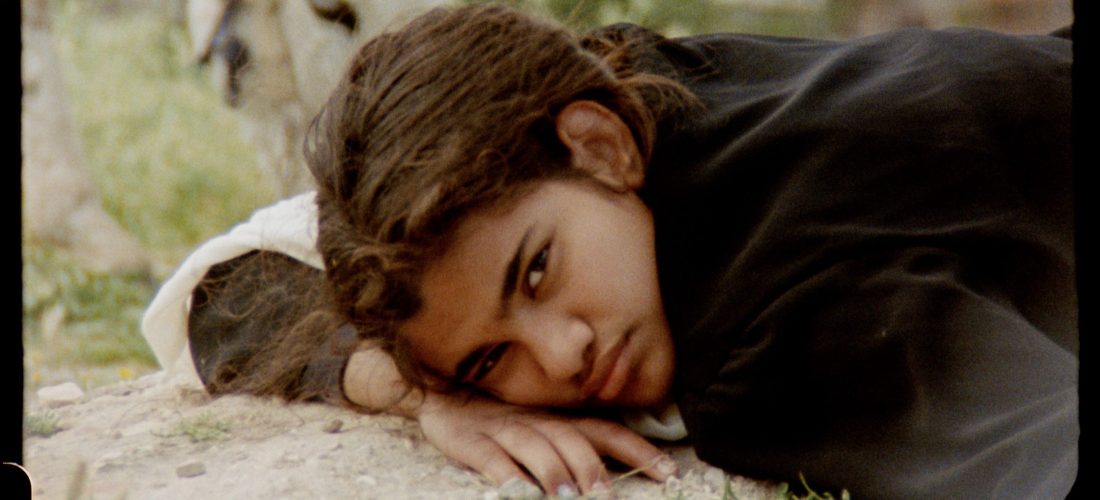
In A Night We Held Between Noor Abed integrates many of the characteristics of her artistic practice: movement and choreography are the guiding thread to delve into the systems of domination and power structures while working on the concept of archive and memory through the land. A Night We Held Between becomes a framework for new narratives of Palestinian reality based on the intersection between history and myth.
In this activity, the curatorial collective LaOtra, formed by Patricia Sorroche and María Amador, will discuss Abed’s work and analyze the Han Nefkens-Museu Tàpies award-winning film.
Noor Abed
- Artist
1988, Jerusalem
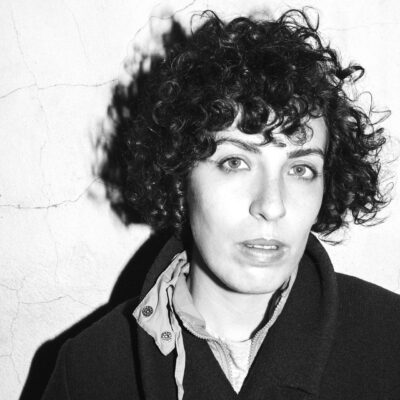
Noor Abed (1988, Jerusalem) is an interdisciplinary artist and filmmaker. She works at the intersection of performance, media and film. Through a process of image making, her works create situations where social possibilities are both rehearsed and performed.
Abed attended the Whitney Independent Study Program in New York during 2015 and 2016, and the Home Workspace Program at Ashkal Alwan, Beirut in 2016 – 2017. Among other awards, she was granted with the the March Project residency and commission from Sharjah Art Foundation also in 2016, won a fellowship at the Raw Material Company in Dakar in 2019 and in 2020 co-founded, with Lara Khaldi, the School of Instrusions, an independent educational platform in Ramallah, Palestine. Noor Abed was recently awarded a residency at the Rijksakademie in Amsterdam from 2022 to 2024.
LaOtra
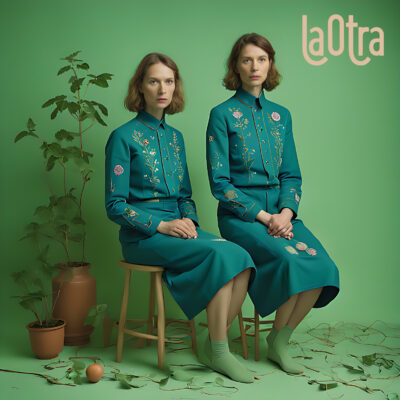
Created in 2021, LaOtra focuses on the distortions of normative structures, the cracks in daily life that reveal the dynamics of domination in which female bodies are socialized, both individually and collectively. Drawing from and applying transfeminist and intersectional feminist theories, LaOtra engages in a curatorial practice that questions the social and political construction of the “woman-body,” femininities, and the instrumentalization they continue to face under heteronormative, patriarchal, and capitalist narratives.
Our research also addresses the violence exerted by cultural institutions in their interactions with dissident, female, migrant, or vulnerable bodies, which are persistently labeled under the concept of “otherness.” This perspective denies them the possibility of self-understanding within hegemonic discourse. It renders them invisible, co-opts their narratives, and neutralizes them by incorporating them. Our project, therefore, emphasizes horizontal relational spaces where all voices are heard without hierarchy or imposition, in an exercise of deconstructing hegemonies.
This approach has led us to ground our work in horizontality. We carry out a collaborative, networked practice where all participants reflect, contribute, make decisions, and take responsibility within the project. This working model enables us to subvert the hierarchy and verticality commonly found in other spaces.
LaOtra has won the 2024 Pankhurst Curatorship Call, produced by the Matas i Ramis Center.
LaOtra is composed of María Amador, cultural manager and registrar at the Tàpies Museum, and Patricia Sorroche, head of exhibitions at the Tàpies Museum.