And If Seeing Was Fire
8 October — 22 November 2020, 4 — 9 pm
— Valentina Alvarado Matos and Carlos Vásquez Méndez
- Artists
- Valentina Alvarado Matos and Carlos Vásquez Méndez
- Curators
- Carolina Ciuti and Marina Vinyes Albes
- Venue
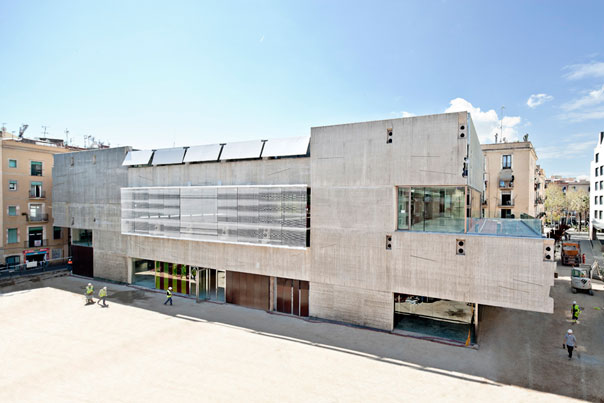
- Filmoteca de Catalunya
- A project by
- LOOP and the Filmoteca de Catalunya
- Price
- Free admission
- Tickets & register
-
Access to the exhibition is free; all activities in the programme require prior registration. More information soon.
Add to calendar
LOOP and the Filmoteca de Catalunya get together to present a multifaceted project featuring the work of Valentina Alvarado Matos and Carlos Vásquez Méndez.
“I wanted to see something in full daylight; I was sated with the pleasure and comfort of the half light. I had the same desire for the daylight as for water and air. And if seeing was fire, I required the plenitude of fire, and if seeing would infect me with madness, I madly wanted that madness.”
(Maurice Blanchot, La Folie du jour )
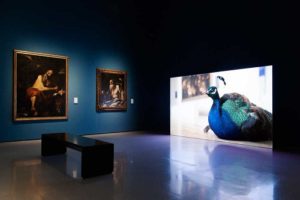
The sun rises, a candle flame glows, an electric pulse heats the filaments of a light bulb, and the projectors start rolling. The hum of the machines fills the space until it merges with the sounds from the next room, empty and black. The devices keep running uninterrupted, lit now by their own light, like old museum exhibits on their plinths.
The first forms appear. And if seeing was fire … flashing lights and shadows doomed to fade, a precious but momentary truth, fleeting glimmers. The flames light the world, illuminate it, touch it, and burning, turn the image to ash. This is a metaphor for the gaze of fire, the incessant movement of images, and shifting vision, as presented by the two artists. Like a candle. Georges Didi-Huberman writes that the image burns, fusing time within it, as “time looks back at us in the image”: to them, we are the same.
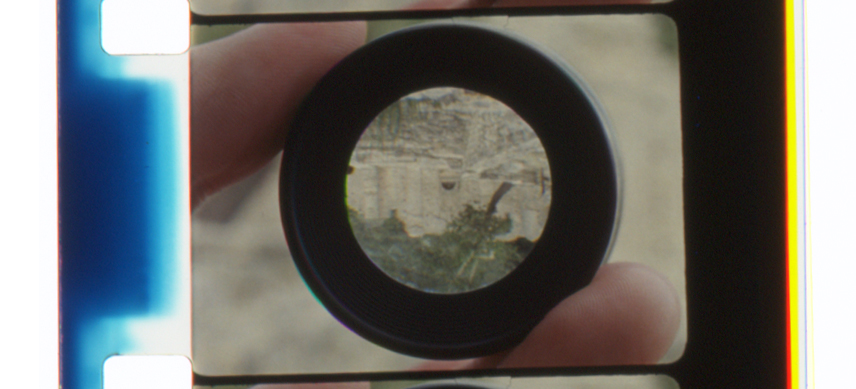
Light and time are their raw materials. The practice, pace, and creative processes of the piece are determined by the artists’ handling of analogue devices and photosensitive film, their complete awareness of the equipment, and cinematographic expression. It is a conscious methodological choice, driven by a desire to keep exploring the possibilities of the plastic arts, poetic usage and the critical potential of a technique and aesthetic approach considered obsolete in the digital age.
Light makes the world visible. What we can perceive is deceptive, but the invisible barely exists: the hegemony of vision in modern culture. Valentina Alvarado Matos and Carlos Vásquez use framed images, adding filters and lenses: mechanisms that act between the camera and the subject, changing the nature of perception to enable us to see things anew. Their earlier project, Paracronismos, explored ways of considering, within the image, our relationship with other times, or rather whether heterogeneous periods can coexist, disrupting the concept of linear chronological events. The image is thus a memory, a montage of superimposed layers that flash up when summoned, as Walter Benjamin would say. Past and present are contemporaneous, as in cinematographic practice.
We present an experimental project that brings together the themes explored in Paracronismos I and II with an installation specially designed for this exhibition space. And If Seeing Was Fire suggests a natural continuity between the exhibition space and cinema, combining a permanent film show with additional ephemeral performance sessions projecting 16 mm and S8 mm film and improvised sound. These are different but complementary experiences that invite us to rethink the possibilities of film and the place we occupy as spectators.
And if seeing was fire…
Wednesday 21th October, 6pm (Sala Laya)
- Performative session. Projections in 16 mm and S8 mm
- El mar peinó a la orilla (S8 mm / color / 2’ 26’’) Propiedades de una esfera paralela (16 mm / color / 16’ 31’’) Ensayos sobre el exotismo (primera parte) (16 mm / bw / 20’) mtDNA 1 Ca hg (16 mm / color / 10’), sound improvisation
Saturday 14th November, Night of the Museums (Exhibition's room)
- Film performance
- Paracronismes. Ombres projectades sobre el temps lineal (Part I)
Tuesday 3rd November, 6pm (Sala Laya)
- Film projection
- Las cruces by Teresa Arredondo and Carlos Vásquez Méndez
Saturday 21th November, from 10 am to 2pm (Exhibition's room)
- Family workshop
- llum llum llum!
Sunday 22th November, 6pm (Sala Laya)
- Film performance
- Paracronismes. Ombres projectades sobre el temps lineal (Part II)
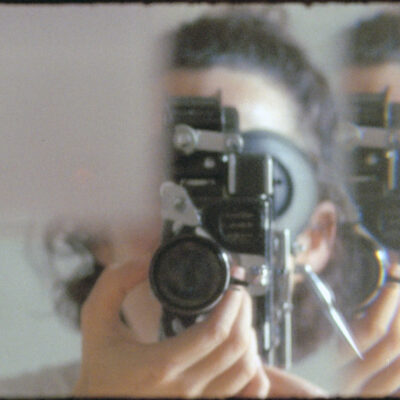
Valentina Alvarado Matos is an artist whose work explores the moving image, focusing on the diaspora, landscape and gesture. Her work has been exhibited at venues such as La Virreina Centre de la Imatge, La Capella, V&A Museum, Artium, LIAF Biennale, Pesaro Film Festival, IFF Rotterdam, Viennale, SFCinematheque, Punto de Vista, Docks Kingdom, Ambulante, LOOP Festival, Filmoteca de Cataluña, among others.
She has been a resident at VSW Rochester, Hangar, La Escocesa, Matadero Madrid and Cultura Resident. She also combines her artistic practice with teaching, giving classes and workshops in various institutions.
Some of her films are in the catalogue of Light Cone, Archivo XCèntric and HAMACA.
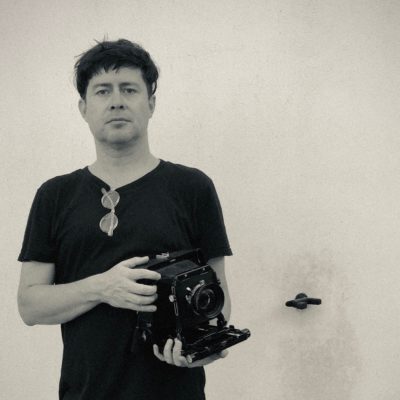
Carlos Vásquez Méndez (b. 1975, Santiago de Chile) lives and works in Barcelona. He is a visual artist, filmmaker, and researcher. He is interested in the relationship between art and the document, discourses on the representation of the real, and the role of the artist as a critical historian. Through his practice, he has explored obsolescence as an aesthetic-political discourse or as a media archaeology, especially focusing on celluloid, the material with which he has developed most of his work. His films have been screened at Jeonju, FIDMarseille, Mar del Plata, First Look, Cineteca Mexicana, OpenCity, Process, Black Canvas, BPI/Centre Pompidou, and others. He received the Joris Ivens/Centre National des Arts Plastiques award at Cinéma du Réel (France) in 2016 and the Mayor’s Award in Yamagata (Japan) in 2019.
His cinematic installations and performances have been exhibited at Virreina Centre de la Imatge, La Capella, Filmoteca de Catalunya, Fabra i Coats, and Arts Santa Mònica. His work is included in the Light Cone catalog.
Carolina Ciuti
1990, Pistoia
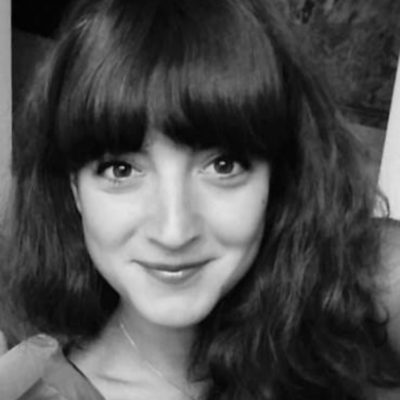
Carolina Ciuti is a contemporary art curator and researcher in the fields of visual and performing arts. She holds a BA in History and Preservation of the Artistic Heritage from the University of Florence (2009-2012) and an MA in Contemporary Art from the Sotheby’s Institute of Art in London (2013-2015). During her university training, she collaborated with the Collezione Gori: Fattoria di Celle (Pistoia) and the artists residency Villa Lena (Pisa), being respectively in charge of the educational proposals, the guided tours and the assistance to the director. She currently serves as artistic director of the LOOP video art festival in Barcelona, where she started working in 2015 as a curator. At LOOP, she has produced exhibitions, film programmes and performances by internationally recognised artists such as: Regina de Miguel, Agnes Meyer-Brandis, Aleksandra Mir, Muntadas, Steina and Woody Vasulka and Anton Vidokle. She curated the group exhibitions And If Seeing Was Fire (Filmoteca de Catalunya, Barcelona, 2020), One Day I Stumbled Upon A Meteorite (Fabra i Coats – Contemporary Art Centre of Barcelona, 2019), PRODUCE, PRODUCE, PRODUCED (Real Cercle Artístic, Barcelona, 2018), the projects Francesca Banchelli: Before The Name (MACBA, Barcelona, 2016) and TRANSEUROPE EXPRESS (OfficeCafè, Pistoia, 2015), as well as the video programmes presented by LOOP at Cinéphèmère-FIAC Paris (editions 2017, 2018, 2019). She edited the publications One Day I Stumbled Upon a Meteorite (exhibition catalogue, stuffinabook, 2020), I Have A Friend Who Knows Someone Who Bought a Video, Once (LOOP Barcelona, Mousse Publishing, 2016) and Before The Name: a book on an itinerant performance project. (RAM Editions, 2018). Ciuti is a permanent collaborator of the magazine of contemporary culture La Maleta de Portbou and she frequently contributes to the art catalogues of the publishing house Istituto Italiano Edizioni ATLAS. In 2017, she co-founded the art collective CRiB to create hybrid projects straddling the visual arts, theatre and performance. Whether through writing, curating, or research, all of Carolina’s projects denote a deep interest in the notion of ‘time’ in all its facets, its representation in the philosophical and cultural sphere, and its influence on the construction of identities.
Last update 3rd October 2020
Marina Vinyes Albes
1986, Barcelona
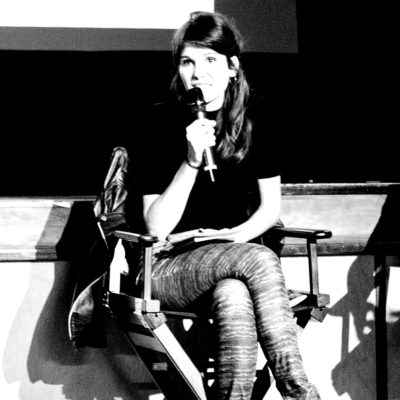
Marina Vinyes Albes holds a degree in Humanities from the Pompeu Fabra University in Barcelona, where she also specialised in Contemporary Film and Audiovisual Studies. Later she studied Design of Cultural Projects at the Sorbonne Nouvelle-Paris 3, thus developing her professional life between Catalonia and France. Since February 2020, she is Head of programming, educational services and exhibitions at the Filmoteca de Catalunya in Barcelona. In Paris, she has been a professor at the Faculté des Lettres of the Sorbonne University, where she is preparing her PhD thesis, and has worked in the artistic projects department of the Jeu de Paume, where she has curated numerous film cycles between 2013 and 2018 and the video installations’ exhibition Omer Fast. Le present continue (2015). In Barcelona, she has collaborated with the EUROM (The European Observatory on Memories), the CCCB, the Open City Thinking Biennale, the ICUB, the Maresme Biennial of Contemporary Art and the ‘la Caixa’ Foundation in the organisation of seminars, film programmes and cultural activities. In 2013 she received the Walter Benjamin Memorial International Prize for her unpublished essay Usos i abusos de la imatge en l’univers audiovisual de la Shoah (Uses and Abuses of the Image in the Audiovisual Universe of the Shoah, Documenta Universitària, 2015).
Last updated 3rd October 2020