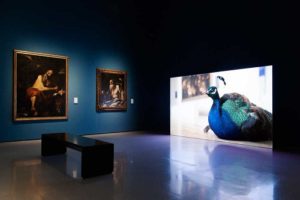
ANESTESIA. Adrián Melis y Javier Castro
16 — 27 November 2020
— Curated by Laura Baigorri
- Artists
- Adrian Melis and Javier Castro
- Curators
- Laura Baigorri
- Venue
- La Casa Elizalde
- Price
- Free admission
Add to calendar
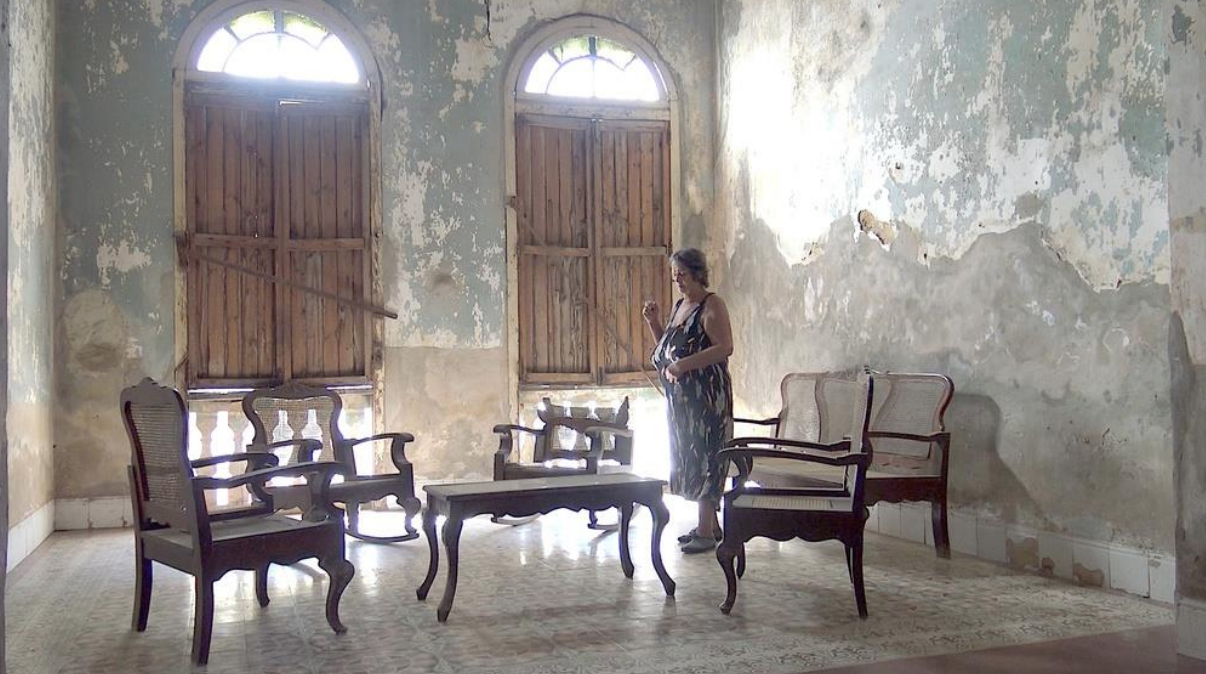
The exhibition curated by Laura Baigorri includes the works of the Cuban artists Adrián Melis and Javier Castro on dialogue between their original context and the current worldwide situation.
This exhibition builds on intermingling ideas of uncertainty and hope; concepts that have been present in Cuban society for decades and that have become increasingly irrefutable on a global scale. With this paradigm in mind, the addressed situations become comparable to the current planetary order imposed by the coronavirus pandemic. The videos by Adrián Melis and Javier Castro put on display a humanity that operates in the latent state of anesthesia–alive but willingly unconscious. The videos transport the viewer to a kind of limbo that suspends all ability to take action, leaving us waiting for an imagined future that will never come. Through their images, the artists speak of what is and what could have been; of latent desire, of potentiality, and of resistance. But they also speak of impotence, of disappointment and of resignation; of possible and impossible futures, of nostalgic pasts and of broken promises. Ultimately, they both speak of the multiple forms of survival that exist in the face of adversity.
Versus. Addressing similar themes, the artists’ discursive strategies are oppositional but oddly complimentary. Melis develops his videos through elaborate planning: with much precision, he positions the camera, gives instructions, and prepares the staging. On the other hand, Castro presents raw material from simple and direct interviews, based on immediacy and spontaneity. To achieve their respective purposes, Melis approaches the privacy of homes as locations, attempting to encourage introspection. Meanwhile, Castro walks through streets and public spaces with direct questioning, looking for answers without filters. Melis collects the memories of past generations, Castro finds his impulse in childhood and youth. However, from an anthropological point of view, both artists complete the same image: one of a complex and bipolar humanity, sustained by hope and disappointment. A humanity built on resignation; on a visceral nostalgia for past glories, and eager for an uncertain future. They coincide in emotion: both artists take a raw, ruthless and ironic look at the intimacy of real lives, revealing the pain of resignation and the anger of nonconformity. They too do not fear eternity.
WORK
What do you want to be? What would you have been?
In The Golden Age (Castro), children take their imaginations to flight and envision their futures; in Glories of a Forgotten Future (Melis) elder women go back in time to the moment when they had once imagined a sweeter future. Nostalgic pasts confront the anticipation of uncertain futures and the longing for something that didn’t occur. Futures that will never be and futures that never were. Jammed between children and elders, young adults struggle in limbo. (the anesthesia of time)
Silence: resignation and defiance
From a fighting stance, The New Man and my father (Melis) and I’m not afraid of eternity (Castro) create dialogue through two complementary combat strategies: insertion and challenge. Melis creates a portrait of his father in the intimacy of his home, taking the blows of Cuba’s political destiny. On the other hand, Castro takes the attacking position, exhibiting the streets and defiant young people who inhabit them. We are facing two diametrically opposed generational attitudes: a resigned Castro generation and a rebellious and challenging youth. Both videos are silent, without argumentation, and display the explicit evidence of an inevitable body language. The real paradox is in the background, since these videos are two different ways of showing the paralysis in face of an uncertain future, disappointment and acceptance. (Silence anesthesia)
The scorpion’s strategy
Here, everyone takes care of me (Melis) and Your silence has a price (Castro) are two pieces through which the artists explore the limits of ethical values, often being displaced by fatigue, helplessness and hopelessness. Melis deceives traitors by revealing the reciprocal game between a supervisor who consents to the illicit activities of his employees so that they can preserve a position without management; Castro confronts people by asking them to calculate the price of their silence. When the future is at a permanent halt, we begin to consciously walk on the edge of the precipice…the only way left is the strategy of the scorpion: ethical suicide. (Ethical anesthesia)
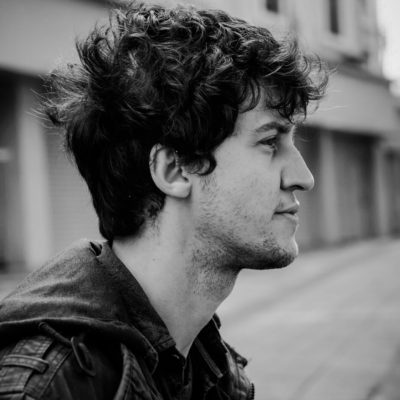
Adrian Melis is based between Cuba and Europe. He is a former resident at the Rijksakademie van Beldeende Kunsten of Amsterdam (2014/2015). In 2010 he graduated from the University of Art (ISA) in Havana, Cuba and between 2006/2008 participated at the Catedra of Behavioural Art directed by Tania Bruguera.
Since 2010 his work has been represented by ADN Galeria in Barcelona where he has had four solo shows since: Selective Memory (2018), Surplus Production Line (2015), Time To Relax (2013) and New Production Structures (2012). The first two exhibitions that took place in 2012 and 2013 received the Award Art Nou by the Association of Galleries in Barcelona and the GAC Award for Best Exhibition in a Private Gallery in Barcelona, respectively.
Selected solo shows include: Absolute silence does not exist, 2017, Fundación Cerezales Antonino y Cinia (Cerezales, Spain), The Value of Absence, 2013, Kunsthalle Basel (Switzerland); STOCK, 2014, Museum of Modern Art, MAS (Santander, Spain), New Production Structures, 2013, Adn Galeria (Barcelona, Spain).
Last update: October 28th, 2020.
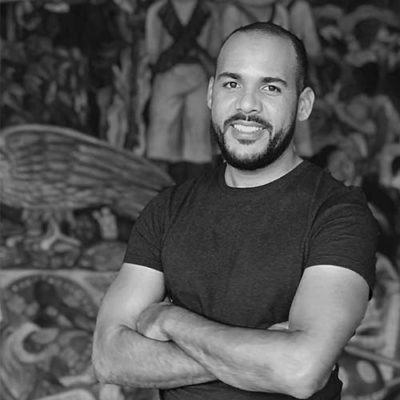
Javier Castro is a Cuban artist whose work focuses on the use of video and multimedia installations to explore the human experience and modes of survival. Castro examines Cuban contemporary society by presenting a unique perspective of diverse realities; from pleasures and frustrations, to vice and violence, language and love, and the other hidden complexities of life. He allows the human voice within the work to speak directly to the viewer, without manipulating or judging his subjects.
Castro has been awarded several grants and notable commission programmes. His work has been shown in more than fifteen countries from the United States to Senegal, Colombia to the United Kingdom. He lives between Cuba, the U.S. and the Middle East.
Collections: The National Museum Of Fine Art, Havana, Cuba; Daros- Latinoamerica Collection, Zurich, Switzerland; Ella Fontanals Cisneros Collection and CIFO Art Collection, Miami, USA; Nara Roesler Collection, Sao Paulo, Brazil; ArtNow International, California, USA. Mediateca Caixa Forum, Barcelona, Spain.
Last update: 29th October 2020
Laura Baigorri
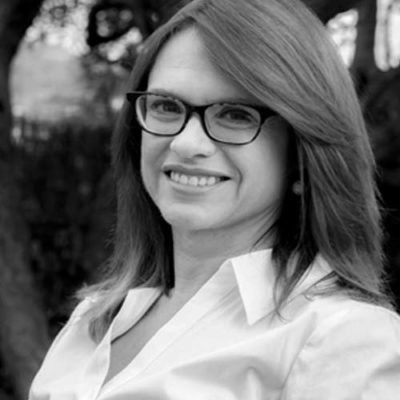
Profesora Titular en la Facultad de Bellas Artes de la Universidad de Barcelona especializada en Arte y Nuevos Medios y Vicedecana de Investigación, Masters y Doctorado (desde 2016). Combina su experiencia docente con la investigación, la crítica, el comisariado y la realización de proyectos online.
Ha publicado artículos y ensayos sobre arte y activismo en la red, videoarte y game art, y los libros: Vídeo. Primera etapa (2004), Net.art. Prácticas estéticas y políticas en la Red, (2006) y Vídeo en Latinoamérica. Una historia crítica (2008). Entre sus principales exposiciones destaca la curaduría de Videoarde. Video crítico en Latinoamérica y Caribe (2009-2015) AECID e Instituto Cervantes, Homo Ludens Ludens (2008) en LABoral de Gijón; CTRL + [SELF]: Intimacy, Extimacy and Control in the Age of the Self’s Overexposure en Studio XX de Montreal y Multiverso (2016), Multiverso II (2017) y Multiverso III (2018-2019) en Fundación BBVA de Madrid. http://laurabaigorri.net/
Última actualización: 27 de octubre de 2020