“Ariadna nunca fue nuestra diosa” (Ariadne was never our goddess) by Maria Alcaide
11 — 23 November 2024
— Curated by La Otra (Patricia Sorroche and María Amador).
- Participants
- María Alcaide
- Curators
- LaOtra
- Venue
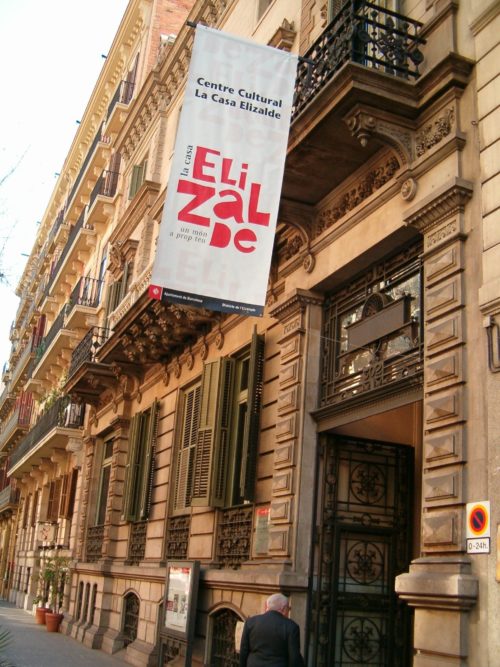
- La Casa Elizalde
- A project by
- Loop Festival
- Price
- Free admission
Add to calendar
Ariadne Was Never Our Goddess proposes unravelling the dominant social and political structures of our societies to reweave new threads of connection that enable us to dismantle othering and establish a space of horizontal relationships. With a clear questioning spirit, the project challenges the Western historical projections of femininity, not only in visual art and literature but also in social and political constructs, as well as in matters of race and class.
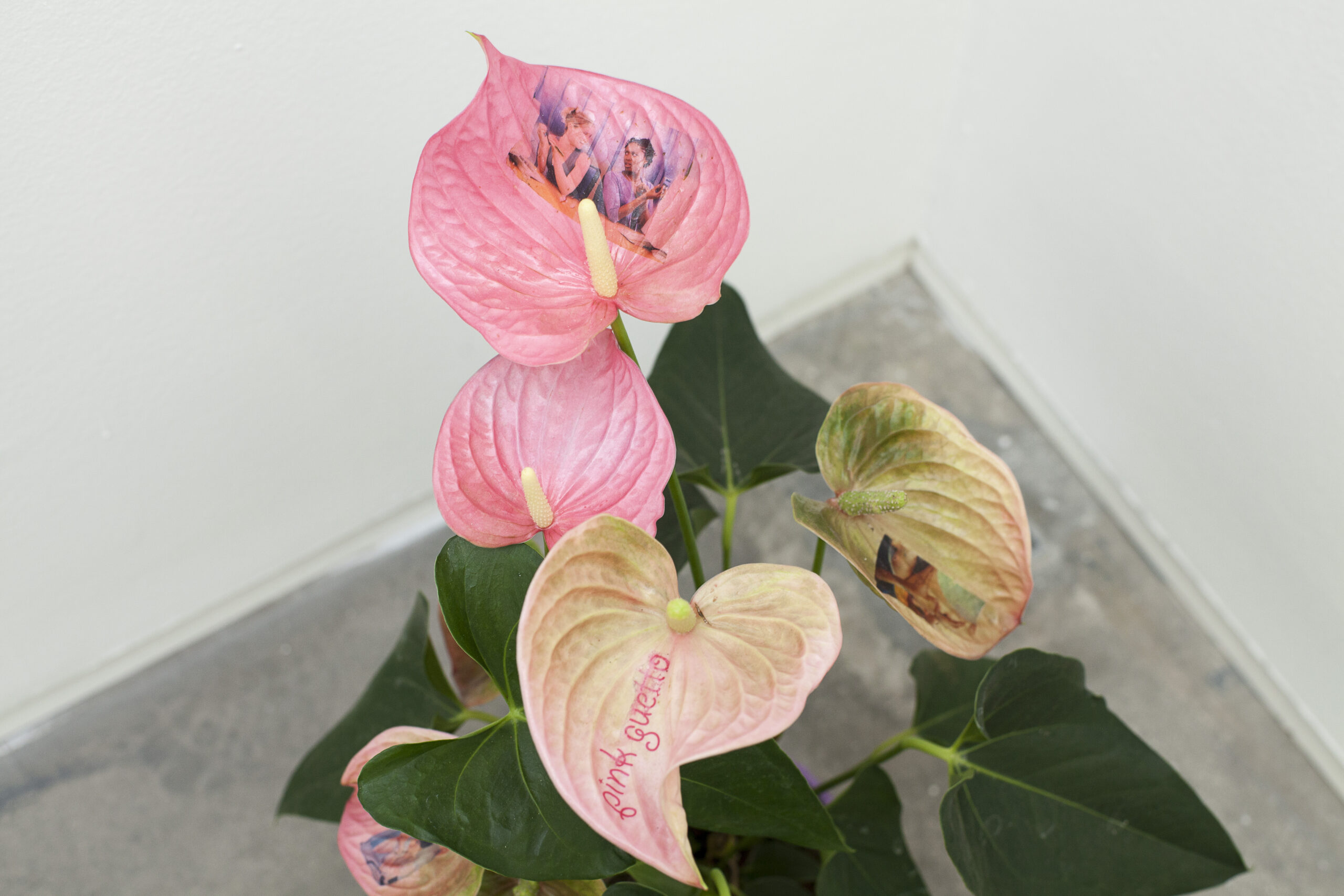
Through a reinterpretation of the work of artist Maria Alcaide, The Managed Hand, Ariadne fades and blends into American nail salons, spaces where those who care for others seek to be cared for themselves. The result is a repetition of power relations in which subordinated bodies simulate the display of dominant privilege. In these spaces, conversations, longings, and dreams blur amid the sounds of nail files and the soft purple light of lamps, where power categories invert, yet violence resurfaces.
Maria Alcaide’s work borrows its title from sociologist Miliann Kang’s 2008 book The Managed Hand, an anthropological study on the social and economic conditions of America’s highly precarious youth. Drawing from her own experience, in which Alcaide worked in public-facing roles, offering her physical labour in service to others and thus placed on a lower scale of rights, she began an in-depth investigation into the performativity of work associated with bodily services. Her work exposes the systemic violence exerted on female, racialized, and lower-to-middle-class subjects. Alcaide delves into this ecosystem of service performativity through the specific context of nail salons, where these power dynamics play out among the same oppressed bodies, simulating the privilege of class. In an allegory that inverts the myth of Ariadne, it is not Theseus who must find his way out of the labyrinth but rather those who place their bodies at the service of those who can afford it.
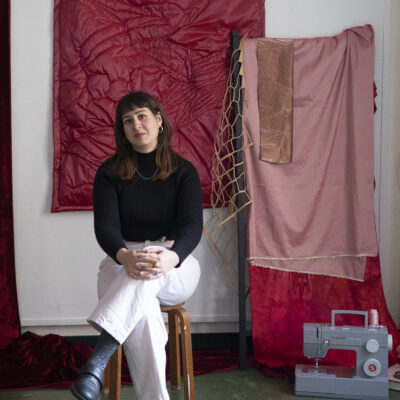
María Alcaide is a visual artist working with installations, film, and text, exploring alternative methodologies and non-conventional references. Her work is deeply rooted in her personal experiences and physical and economic limitations, using performativity as a tool to uncover social, economic, and political fictions. She combines epic narratives with recycled materials like textiles and plastics, transforming everyday objects and creating unexpected connections between the personal and the political. Alcaide encourages viewers to reflect on their social positioning.
She holds a Fine Arts degree from the University of Seville, studied at Université Paris VIII, and completed a Master’s in Research in Art and Design at Eina-UAB. Her research has been presented at institutions such as EHESS (Paris), Universität Der Künste (Berlin), and MACBA (Barcelona). Internationally, she has exhibited at venues like the Bauhaus Archive in Berlin, Frankfurter Kunstverein, IMAI in Düsseldorf, and Reed College in San Francisco. Alcaide has received awards such as Generación 2021, the LaCaixa production grant, Jeune Création, and the Salon de Montrouge in Paris. Recently, she won the Barcelona Producció award and worked on a contemporary art and ruralities project at the Centre Pompidou in Paris.
LaOtra
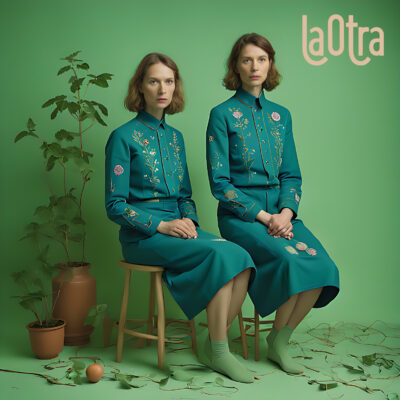
Created in 2021, LaOtra focuses on the distortions of normative structures, the cracks in daily life that reveal the dynamics of domination in which female bodies are socialized, both individually and collectively. Drawing from and applying transfeminist and intersectional feminist theories, LaOtra engages in a curatorial practice that questions the social and political construction of the “woman-body,” femininities, and the instrumentalization they continue to face under heteronormative, patriarchal, and capitalist narratives.
Our research also addresses the violence exerted by cultural institutions in their interactions with dissident, female, migrant, or vulnerable bodies, which are persistently labeled under the concept of “otherness.” This perspective denies them the possibility of self-understanding within hegemonic discourse. It renders them invisible, co-opts their narratives, and neutralizes them by incorporating them. Our project, therefore, emphasizes horizontal relational spaces where all voices are heard without hierarchy or imposition, in an exercise of deconstructing hegemonies.
This approach has led us to ground our work in horizontality. We carry out a collaborative, networked practice where all participants reflect, contribute, make decisions, and take responsibility within the project. This working model enables us to subvert the hierarchy and verticality commonly found in other spaces.
LaOtra has won the 2024 Pankhurst Curatorship Call, produced by the Matas i Ramis Center.
LaOtra is composed of María Amador, cultural manager and registrar at the Tàpies Museum, and Patricia Sorroche, head of exhibitions at the Tàpies Museum.