Co-collecting (video) art.
Tuesday 17 November 2020, 12 — 1:30 pm
— New ways of building collective histories.
- Participants
- Anna Manubens, Akram Zaatari, Christine Van Assche, Marine Lang and Salma Tuqan
- Moderator
- Hiuwai Chu
Add to calendar
Strategies of the sharing economy have been embraced by institutions during times of eco-nomic hardship. We have already seen examples of art collecting through crowd-funding (with varying degrees of success), which relies on individual donors willing to support artists and preserve artworks for public collection and exhibition. The joint acquisition is another strategy that museums have taken up to combat dwindling resources, but also to forge rela-tionships with like-minded institutions from different geographies and cultures. Audiovisual works presents themselves as an ideal candidate for this new way of collective collecting. What are the considerations and implications of co-purchasing an artwork for the different stakeholders involved?
Anna Manubens
- Artistic Director, Curator, Moderator, Participant
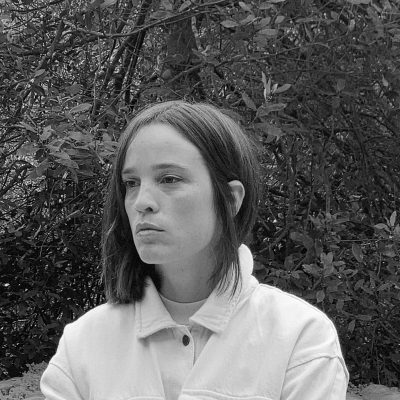
Anna Manubens is the director of Hangar, a center for artistic research and production in Barcelona and a professor at the Elías Querejeta Zine Eskola in San Sebastian.
Previously she was an independent curator and producer with a preference for hybrid roles at the intersection between writing, research, programming, project accompaniment, institutional analysis and exhibitions. Until 2017 she was Head of Public Programs at the CAPC musée d’art contemporain de Bordeaux and previously combined her freelance activity with teaching at the Universitat Pompeu Fabra and a regular job at the artist-run Auguste Orts (Brussels) dedicated to the production of, and thinking around, artists’ films. With them she directed the European project On & For production designed to facilitate the realization of audiovisual works through the implementation of new frameworks and professional exchange.
Her recent exhibitions include Luz Broto, Ponerse en el lugar del otro (Museu de Granollers, 2021-22), A L I E N T O (NoguerasBlanchard, Barcelona, 2020-2021); Wendelien van Oldenborgh. Tono lengua boca (Centro de Arte Dos de Mayo, Madrid, 2019 and Centre d’Art Contemporani Fabra i Coats, 2020); Alex Reynolds: Safe, Safe, safe, the pulse of the house beat softly (La panera, Lleida, 2020); entre, hacia, hasta, para, por, por, según, sin (EACC, Castellón, 2019); Visceral Blue (La Capella, Barcelona, 2016); Hacer cuerpo con la máquina: Joachim Koester (Blue Project Foundation, Barcelona, 2016) and Contours of the Audiovisual with Soledad Gutiérrez (Tabakalera, San Sebastián, 2015).
She was artistic director of the LOOP festival in the 2011 and 2012 editions and with Hamaca developed Apología/Antología, an online editorial project that analyzes and gives access to 60 years of art in film and video in the Spanish state.
He has written in several catalogs and magazines about production or about the work of artists such as Luz Broto, Lucía C. Pino, Laida Lertxundi, Pauline Julier, Alex Reynolds, Adrian Schindler or Wendelien van Oldenborgh.
Last update: 11th November, 2022
Akram Zaatari
- Artist, Participant
1966, Saida
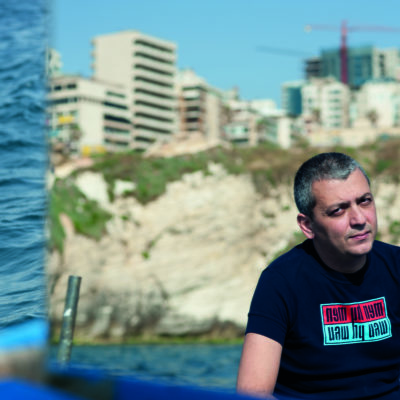
Akram Zaatari (b.1966 in Lebanon) has produced more than fifty films and videos, a dozen books, and countless installations of photographic material, all sharing an interest in writing histories, pursuing a range of interconnected themes, subjects, and practices related to excavation, political resistance, the lives of former militants, the legacy of an exhausted left, the circulation of images in times of war, and the play of tenses inherent to various letters that have been lost, found, buried, discovered, or otherwise delayed in reaching their destinations. Zaatari has played a critical role in developing the formal, intellectual, and institutional infrastructure of Beirut’s contemporary art scene. As a co-founder of the Arab Image Foundation, a groundbreaking, artistdriven organization devoted to the research and study of photography in the Arab world, he has made invaluable and uncompromising contributions to the wider discourse on preservation and archival practice. Zaatari’s represented Lebanon at the Venice Biennial in 2013. his work has been featured at Documenta13 in 2012. His work is part of institutional collections such as the Centre Pompidou, Paris; Guggenheim Museum, New York; Hammer Museum, Los Angeles; K21 Dusseldorf; MACBA, Barcelona; Moderna Museet, Stockholm; MoMA, New York; Serralves Foundation, Porto; Tate Modern, London and Walker Art Center, Minneapolis.
Last update: November 11th, 2020
Christine Van Assche
- Moderator, Participant, Speaker
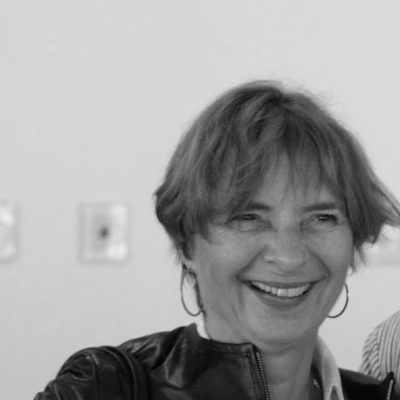
Christine Van Assche is a contemporary art historian, curator, and critic specializing in audiovisual art. As the Chief Curator at Centre Pompidou between 1982 and 2013, she built up the institution’s first video and new media art collection, featuring 1,600 works including those by David Claerbout, James Coleman, Stan Douglas, Valie Export, Esther Ferrer, Jean-Luc Godard, Douglas Gordon, Mona Hatoum, Pierre Huyghe, Isaac Julien, Mike Kelley, Chris Marker, Tony Oursler, Nam June Paik, Pipilotti Rist, etc. She curated a number of thematic exhibitions such as Passages des l’image in 1990, Sonic Process in 2000, Vidéo, un art, une histoir that toured internationally between 2005 and 2012, Une vision du monde. La collection des Lemaître in 2006, Video Vintage in 2012 and 2013, as well as numerous solo exhibitions accompanied by catalogs devoted to artists such as Nam June Paik, Tony Oursler, Mona Hatoum, Johan Grimonprez, Douglas Gordon, James Coleman, Chris Marker, Bruce Nauman, Pierre Huyghe, Ugo Rondinone, Isaac Julien, among others.
Last update: November 11th, 2019
Marine Lang
- Participant
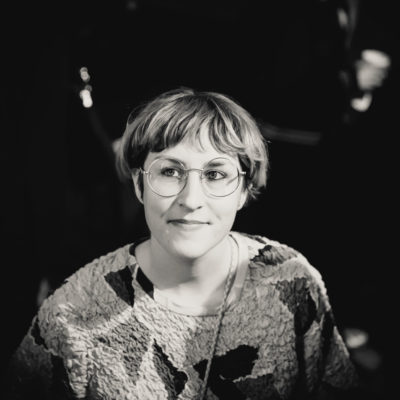
Marine Lang leads Mécènes du Sud Montpellier-Sète, a collective of 37 companies who are gathered to support contemporary art. The association produces each year works, projects and events, and establishes a program of exhibitions in a dedicated place of 150m2, in Montpellier. Marine Lang previously worked for the public services of the Magasin in Grenoble (38) and the Regional Museum of Contemporary Art in Sérignan (34). She has also curated and co-curated exhibitions.
Credit photo Elise Ortiou Campion
Last update: November 16th, 2020
Salma Tuqan
- Participant
- salmatuqan.com
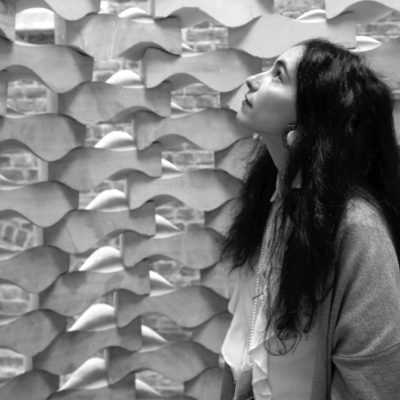
Salma Tuqan is a Contemporary Art and Design curator and cultural strategist. She is Deputy Director of Delfina Foundation, a non-profit inter-disciplinary foundation dedicated to artistic exchange through global residencies, exhibitions, commissions and public programming. Prior to this, she held the inaugural role of Contemporary Middle East curator at the V&A where she helped shape programming and laid the foundation for its permanent Contemporary Arab art and design collection.
Last update: November 16th, 2020