Collaboration in artist film/video: Debunking the myth of the solo artist
Wednesday 20 November 2024, 5 pm
- Participants
- Adrià Julià, Martina Millà, Anna Moreno, Edouard Cabay and Weiyan Low
- Moderator
- Frida Rusnak
- Venue
- Almanac Barcelona
Add to calendar
There’s an obsession in the art world with the artist as a singular genius, which covers up the fact that most artists collaborate in some way. With colleagues and professionals in other fields, to aquire skills, knowledge, get input, or simply to get things done. In film and video there are so many processes, it’s rare to find someone who works alone at every stage. Film and video has a dual role: An artistic medium in its own right and a way do document other artforms or processes such as performance, collaborative and social projects and research.
How do art institutions facilitate artistic collaborations? Why do we hide these aspects of artistic practice? And How can curators and art institutions make collaborations visible in exhibitions?
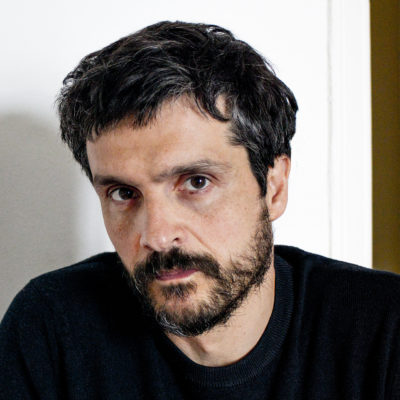
Adrià Juliàis a visual artist working with film, and video installations, and photography. His work questions image-making technologies and their relation to normative narratives and violence. His most recent solo exhibition was held at Pinacoteca, São Paulo, Brazil and at La Virreina Centre de la Imatge, Barcelona. Other solo shows have taken place in institutions such as Miró Foundation, Barcelona; Tabakalera, San Sebastian; Project Art Center, Dublin; Museo Tamayo, Ciudad de México; Orange County Museum of Art, Newport Beach; LAXART, Los Angeles; Artists Space, New York; Insa Art Space, Seoul; and Galeria Soledad Lorenzo, Madrid. Julià has taken part in group shows at the Metropolitan Museum, New York; Museo Reina Sofía, Madrid; Witte de With, Rotterdam; Seoul Museum of Art, Seoul, Korea; Lyon Biennale, Lyon; Generali Foundation, Vienna; 7ª Bienal do Mercosul, Porto Alegre; Akademie der Künste, Berlin. Julià has been awarded fellowships by the American Academy Berlin, Botín Foundation, California Community Foundation, Art Matters, American Center Foundation and La Caixa.
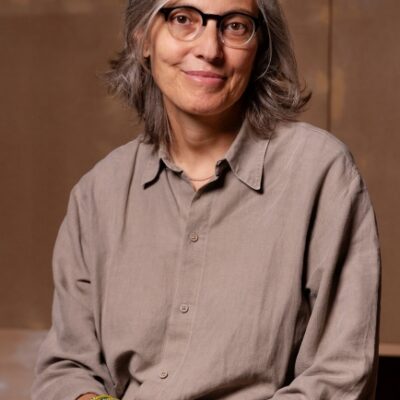
Since 2019 Martina Millà is Head of Exhibitions at Fundació Joan
Miró in Barcelona. Prior to that, from 2007 to 2018, she was Head of Programming
and Projects at the same museum, where she was responsible for exhibition
programming, curating, and coordination of three modern and contemporary art
exhibitions a year, an annual Christmas commission, and small-format photography
exhibits highlighting the work of non-professional photographers. During all these
years, she has also been programming and overseeing the emerging art project
room Espai 13, acting as a mentor for younger curators and giving opportunities to
selected artists from the Spanish and Catalan scenes and from around the world.
Starting in 2006 she has been coordinating the Joan Miró Prize (a biennial
international award) and co-curating exhibitions with the winning artists (Olafur
Eliasson, Mona Hatoum, Pipilotti Rist, Roni Horn, Ignasi Aballí, Kader Attia, Nalini
Malani, and Tuan Andrew Nguyen).
Anna Moreno
- Artist
1984, Barcelona
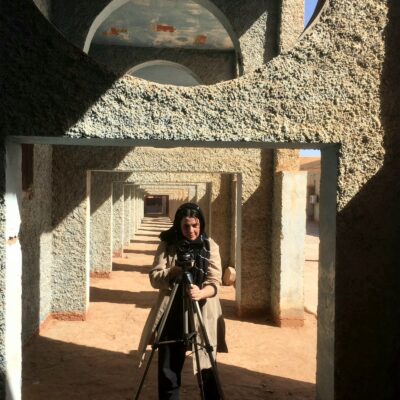
Anna Moreno is a visual artist and researcher based between The
Hague and Barcelona. Her research-driven artistic practice focuses on the
inconclusive nature of historical and speculative future events. She examines how
past utopias continue to influence the present and the interplay between human
history and speculative futures. She has participated in residencies, such as at the
Jan Van Eyck Academie in Maastricht or the Seoul Art Space Geumcheon in Seoul,
and exhibited at institutions like the Joan Miró Foundation (Barcelona), MOCAB
(Belgrade), and HIAP (Helsinki). Moreno also incorporates teaching and writing into
her artistic career, publishing essays on art, politics, and architecture while teaching
artistic research internationally. Additionally, she is working on projects including a
science fiction film, Marfantes, and exhibitions such as Subsidence at HAUS
(Barcelona), curated by BAR Project. Her recent works, such as The Terminal
Beach's trilogy, explore intersections of 70s architecture, Mediterranean history, and
speculative economies through video installations.
Edouard Cabay
- Artist
1979, Brussels
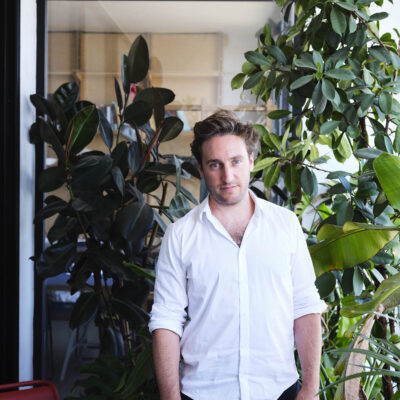
Edouard Cabay’s work lies at the border of art and architecture, disciplines that he
practises and teaches in Barcelona. In 2016, he initiated Machinic Protocols, a body
of research work which uses drawing as a tool to create collective interactions
between people, machines and computers. He uses protocols, algorithms and
automation to cultivate a sense of indeterminacy into creative processes. Thus,
encouraging the production of new forms and figures – critical objects of the new
relationships between science and nature.
Edouard Cabay is based in Barcelona. His work has been widely
exhibited in places such as Kanal, Centre Pompidou in Brussels, Mysk Art Center in
Riyadh, Arte Laguna in Venice, Biennale of Architecture in Venice, Paris and Tallinn,
Arts Santa Monica in Barcelona, Expo Dubai and at the Barcelona Gallery Weekend.
Weiyan Low
- Participant
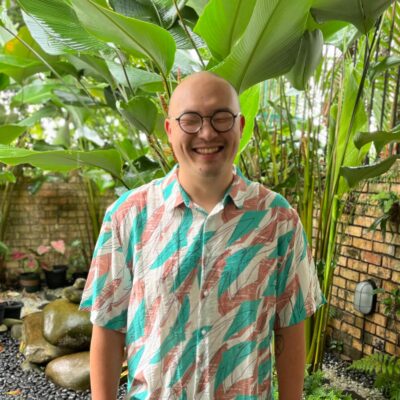
Weiyan Low is a Malaysian aspiring visual anthropologist interested in entanglements of technology and everyday materialism. He is currently an Anthropology PhD candidate at Leiden University, his research focuses on the everyday Muslim experiences of AI technologies and alternative futures in Malaysia. He incorporates multi-modal practices as a means of corresponding with the “field” and responding to the needs, friendships and responsibilities that emerge during research. His most recent visual work was Ggésék, a short documentary on Malaysia’s last remaining match factory, in collaboration with Rumah Kosong, a film collective from Kelantan.