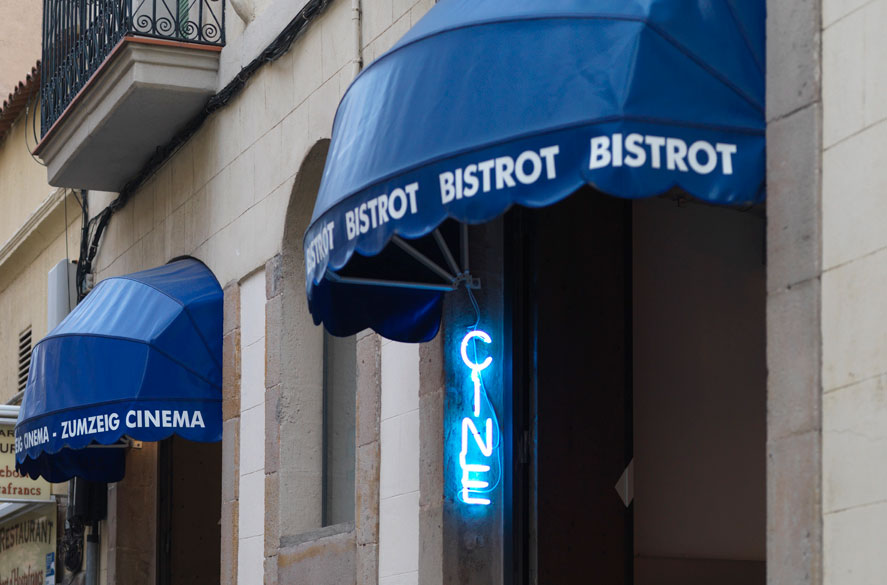
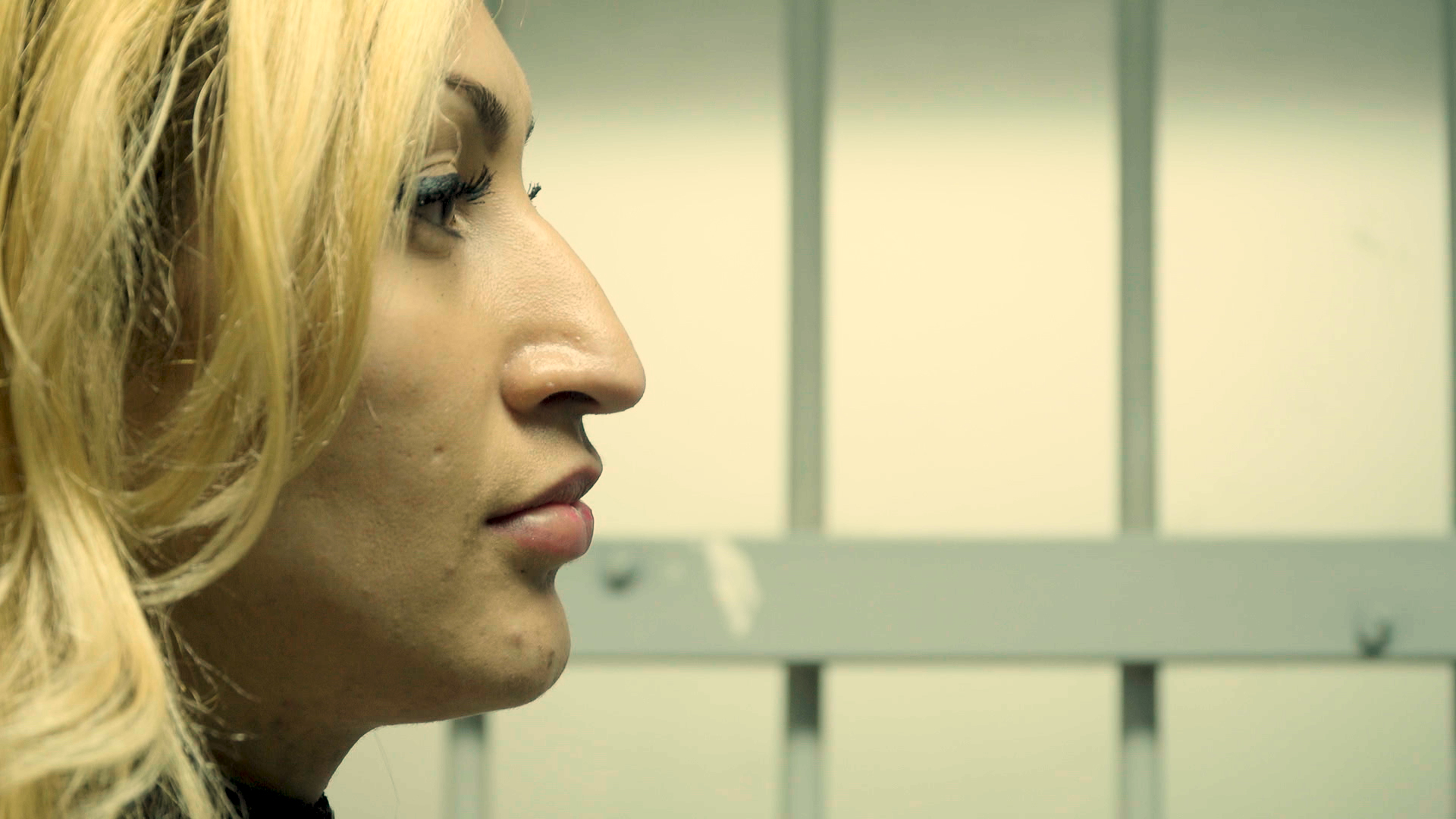
Joris Lachaise, João Pedro Rodrigues & João Rui Guerra da Mata. ‘Comment ça va? VI’
18 — 19 November 2023
- Artists
- Joris Lachaise, João Pedro Rodrigues and João Rui Guerra da Mata
- Curators
- Pascale Cassagnau and Rasha Salti
- Venues
- Zumzeig
- A project by
- CNAP, La Lucarne (Arte France) & LOOP
- Contributor
- Acción Cultural Española (AC/E)
- Price
- 7 €
- Tickets & register
- zumzeigcine.coop/es
Add to calendar
The program Comment ça va? borrows its title from the eponymous film by Jean-Luc Godard (1978), and has been developing throughout the past editions of the LOOP Festival. It presents documentary films that manifest a remarkable capacity to traverse history, recover truth and capture reality, not as their ultimate goals, but rather, as tools and potentialities of forms, that undertake a journey and forge a path through complex political geographies. The selected works incarnate a number of proposals that revisit some of the topoi of contemporary art, as well as narrative possibilities that fulfilling the calling of “stories that demand to be told” (to borrow from Paul Ricœur in Temps et Récits I).
In Comment ça va? Jean-Luc Godard filmed an exchange between the editor of a communist and trade unionist newspaper and his colleague, a left-wing militant, as they put together an article designed to reveal the processes involved in producing their daily paper. The pair disagree on how information ought to be handled, and in particular on how two specific images should be used and captioned. The first image depicts civilians and soldiers in conflict during Portugal’s “Carnation Revolution”, and the second image a clash between strikers and French anti-riot forces during a protest. While the film succeeds in exposing the complex ideological tensions and dissent that divided France’s Left, through editing and the film’s movement, it also dissects the rhetorical dimension of news making.
Resonating with a variety of hypotheses on reality, history and intimacy, contemporary video practice is not a transcendental field in and of itself, rather, it is an undefined territory in which artists venture (as they do with photography, drawing, digital media, or object-making). In engaging with these themes, several video works displace them in order to explore their utopian scope, such as for instance, with the appropriation of diverse cultural sources culled from mass media and the perspective of the network-based internet as context; human time and individual self-fictionalizing; uniqueness and intimacy reformulated in the scale of common time and between public and private space; unique representations of the self that establish a dialogue with the edition of the image, as montaging, fragmenting and referencing the filmic space become its prime motivation. Since the last century, the emergence of the document in the production of knowledge has modified the status of memory. Indeed, images provide memory with a support and a portal for reflection, leading the gaze towards both the object of memory and the memory of the object, acknowledging the ambiguity in their articulation. Moreover, the document has given rise to types of assemblages and montages that act as the basis for the elaboration of stories and forms of historicization. The creation of archives raises at once, questions on History and on personal, individual stories. Such is the nature of the document: a use value for the re-appropriation of subjectivities, of forms of historicity, through the multiplication of narrative hypotheses.
Programme
18/11/2023, 17.30h
João Pedro Rodrigues & João Rui Guerra da Mata. Onde fica esta rua? ou Sem antes nem depois (2022, 88 min)
19/11/2023, 18h
Joris Lachaise, Transfariana (2023, 150 min)

This programme is supported by a grant from Acción Cultural Española (AC/E).
Joris Lachaise
- Artist
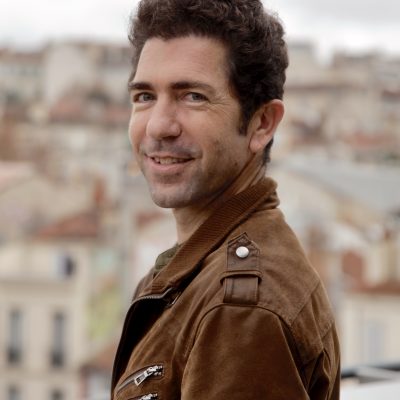
Joris Lachaise’s approach to filmmaking is based on the transition between his studies in philosophy to cinema. In 2005, he worked with Jean-Pierre Krief on Chronicle of a Trial Foretold, a film about the trial of Saddam Hussein by the Iraqi Special Tribunal.
In 2009, he co-directed with Thomas Roussillon Like a Bird in a Fishbowl, the chronicle of a common struggle of asylum, gypsies, and homeless people seekers in Angers. In 2011, he directed Convention: Black Wall / White Holes, a film about the 50th anniversary of Mali’s independence that won the FIFAI prize and was selected for the États généraux du documentaire in Lussas, France. In 2014, his film, Ce qu’il reste de la folie, was made in a psychiatric hospital in Senegal and won the Grand Prix at the FID Marseille festival before being selected for numerous festivals around the world. The film was released in French theaters in June 2016.
Photo by Anne Sophie Popon.
João Pedro Rodrigues
- Artist
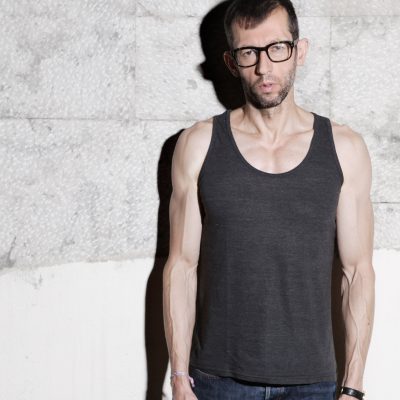
João Pedro Rodrigues is an internationally renowned Portuguese filmmaker. When he was 8 years old, his father gave him a pair of binoculars and he decided to become an ornithologist. He always travels with his binoculars, to foray into nature and watch birds.
Photo by Daniel Sánchez.
João Rui Guerra da Mata
- Artist
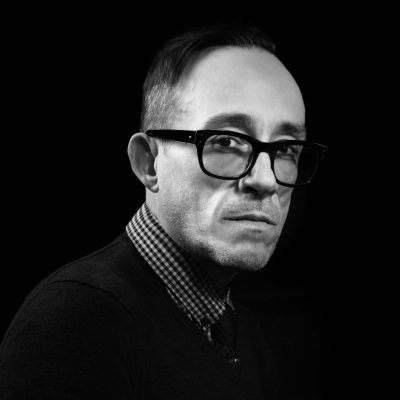
João Rui Guerra da Mata was born in Lourenço Marques, Mozambique. He spent his formative years in Macau, China. He has been working in cinema since 1995.
Photo by Diego Sánchez
Pascale Cassagnau
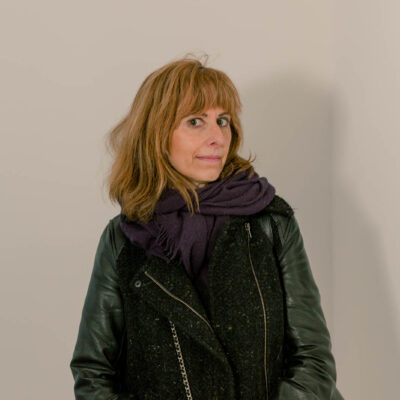
Pascale Cassagnau holds a PhD in Art History and Criticism and is responsible for the audiovisual and new media collection at the CNAP (Centre national des arts plastiques, Paris). She writes extensively for Art Press and is the author of texts on artists such as Chris Burden, James Coleman, John Baldessari, Pierre Huyghe, Dominique Gonzalez-Foerster and Matthieu Laurette, among others. She is mainly interested in the study of new film practices and their cross-over with contemporary art. Her essay “Future Amnesia, Enquêtes sur un troisième cinéma” (Ed. Isthmus, 2006) investigates new filmic forms, existing between fiction and documentary. “Un pays supplémentaire” (Ed. Ecole nationale supérieure des Beaux-Arts de Paris, 2010) focuses on contemporary creation in the media architecture. Her book, “‘Apichatpong Weerasethakul,’ Une théorie des objets personnels” was released as an e-book in 2016. Her essay “Diagramme Monteiro, on Joao Cesar Monterio, was written in collaboration with Hughes Decointet and published in Editions de L’Oeil in 2017. Her essays “La répétition générale,” — a work on the processes of creation and research in the fields of cinema, contemporary art — and “Dispositifs-jeux” — on Jean Frapat, inventor of television devices — are currently in progress.
Last update 9th March 2017
Rasha Salti
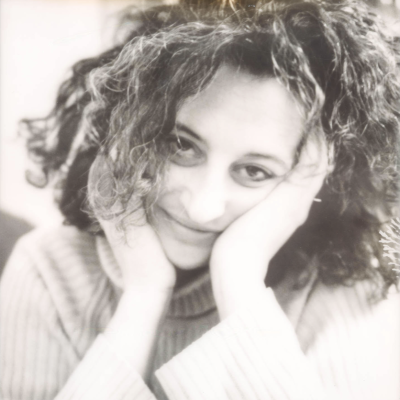
Rasha Salti is a researcher, writer and curator of art and film. Since 2017, she is commissioning editor of La Lucarne at Arte France.