Comment ça va? IV
Saturday 27 May 2017, 6:30 — 10 pm
— D’Après Godard
- Artists
- Lech Kowalski and Frédérique Lagny
- Curators
- Pascale Cassagnau
- Venue
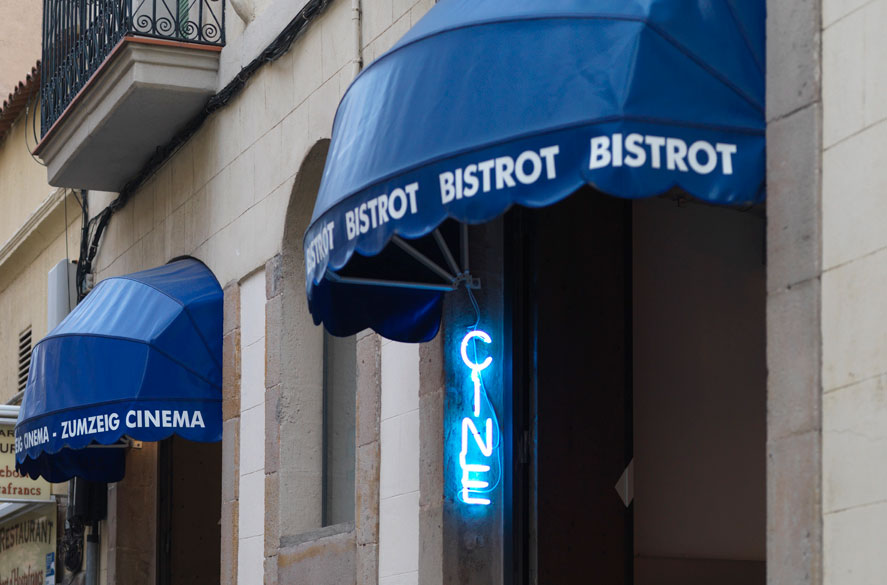
- Zumzeig
- A project by
- LOOP Barcelona in collaboration with CNAP
- Price
- 5 €
- Tickets & register
- zumzeigcine.coop/es
- Language
- English
Add to calendar
As the result of years long collaboration with curator Pascale Cassagnau, the CNAP and Le Fresnoy, LOOP presents the third edition of "Comment ça va? IV", a film programme dedicated to documentary and documented films. Taking place at the cinema Zumzeig, the programme proposes a selection of short and feature-length films by international artists, questioning filmic representation and narrative structures so to achieve a truthful image of reality and our everyday life.
The Comment ça va ? D’Après Godard film project-program, based on the eponymous film by Jean -Luc Godard, Comment ça va ? (1978) presents documentary and documented films, highlighting their capacity to cross history, to recover truth and reality, not as their ultimate goals, but rather, as tools, as reserves of forms, to undertake a journey, a trajectory, a path through complex political geographies.
In Comment ça va ? (1978, 70’), Jean –Luc Godard films a dialogue opposing a trade unionist and a left-wing activist on the subject of information processing and, specifically, on how two shots should be treated. The shots in question involve the Carnation Revolution, in Portugal, and a clash between strikers and riot police during a demonstration in France. The filmmaker described the genesis of this film, through a commentary delivered by a voice over, in the following terms: “This is the story of a guy who gets news from some other guy, who happens to be his father. And then this other guy talks to him about a woman with whom he had a thing going on at the office, a woman with whom he’s making a film showing how a Communist newspaper is made”. Not only does the film “expose” the full complexity of the ideological disagreements and tensions that divided the French left-wing movement, in doing so it also dissects the rhetorical dimension at work behind all information-writing activity through its montage and its movement, by deliberately placing the film, as the opening and closing credits put it, at the centre of the tension between two elements: “A film between the actor and the spectator, a film between activity and passivity”.
Here, the works of the Comment ça va? D’après Godard program express a number of shared hypotheses regarding both revisiting some of the topoi in modern art as well as work-creation and the possibility for narration. It is, in short, a series of films involved in reflecting on the present day.
Dowload the full curiatorial text here
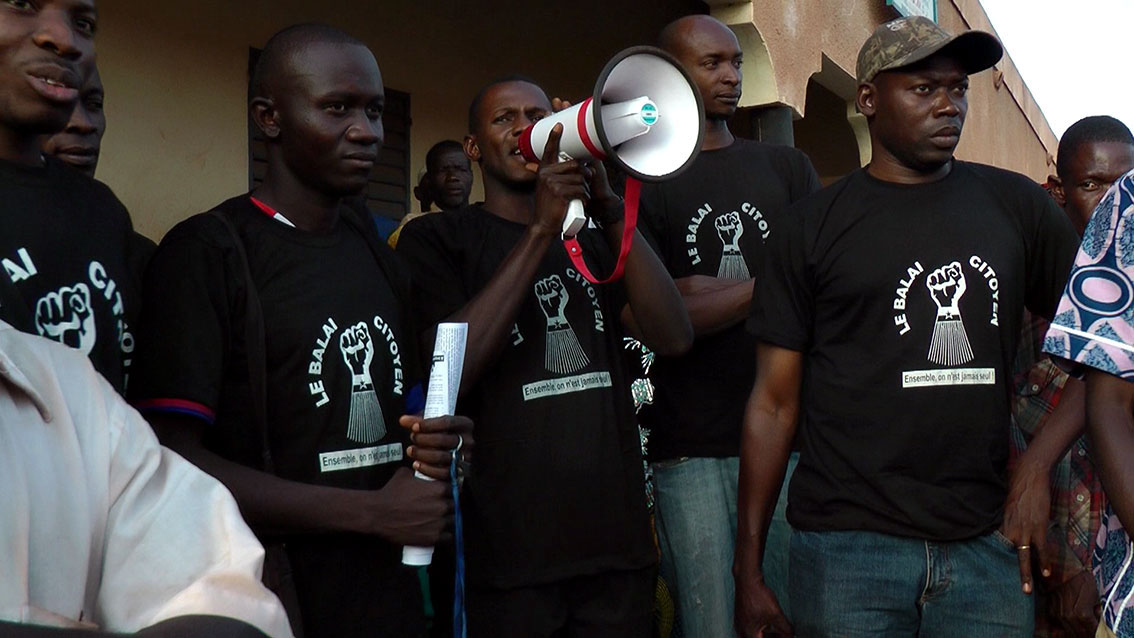
Frédérique Lagny, “Djama Mourouti” ( La colère du peuple) , 2016,49′
Thirteen years after the Democratic and Popular Revolution led by Thomas Sankara in Burkina Faso, the film Djama Mourouty, which was shot in Bobo-Dioulasso, the second largest city in the nation, reminds us of the fall of Blaise Compaoré’s regime. The Burkinabé people, and particularly its youth, go into action forcefully, inventing new tools and slogans for the purpose of carrying out citizen protests.
Lech Kowalski, “I Pay for Your Story”, 2016, 86′
This film by Lech Kowalski is a journey to the present of a devastated America, showcased by the filmmaker as he revisits his childhood locations. Starting from the close unity of space of the neighbourhood — a few blocks — in which he spent his childhood and teenage years, upon his arrival to the United States after emigrating from Poland, the filmmaker films his former neighbours like so many portraits of social and human dereliction that are entirely absent in the sphere of the media and official representations of American society. Lech Kowalski uses the uniqueness of life stories to delve into the heart of the influence of institutions on destinies and the fundamental alienation that results from it.
Zumzeig - Saturday 27 May 2017, 19:00
- 18:30
- Presentation with the artists
- 19pm, “I Pay for Your Story “
- Francia, (2016), 86 min. Directed by Lech Kowalski.
- “Djama Mourouti” (La colère du peuple)
- Burkina Faso – France, (2016), 49 min. Directed by Frédérique Lagny.
- 21:20
- Conversation with the artists and curator
Lech Kowalski
- Artist
- www.lechkowalski.com/fr
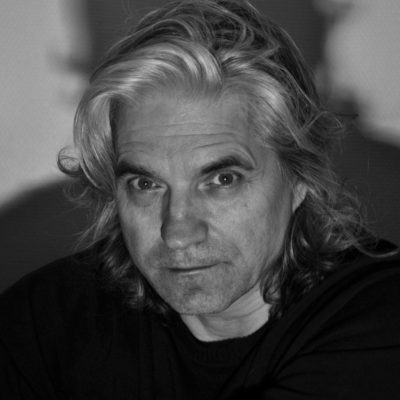
Director Lech Kowalski is a cult figure in underground cinema. Renowned for his controversial award-winning documentaries a journalist once called him “A warrior battling with a camera to redefine the art of documentary.” Born in London to Polish immigrants who fled Russian concentration camps, Kowalski grew up in nomadic displacement in the United States. He began his career in the 70’s in New York. His impressive array of documentaries has garnered critical praise around the world – best film for East of Paradise at Venice film festival in 2005, the Special Jury Award for On Hitler’s Highway at the 2002 Amsterdam International Documentary Film Festival, the Golden Gate Award for Rock Soup at the 1992 San Francisco International Film Festival. His seminal 1981 film DOA (first prize in Paris Music Film Festival) is a punk escapade that follows the Sex Pistols tour of the USA.
He created innovative film projects on the Internet – in 2008 Kowalski posted new “film-chapters” every week for one year on CameraWar.tv. Film historian Nicole Brenez awarded CameraWar.tv a top ten film of the 21st century. In 2012, Cuts was made for the Palais de Tokyo, the largest contemporary museum in Europe.
East of Paradise is on the list of 15 best documentaries made since the year 2,000 by Italian film critics. His two most recent films dealt with environmental issues – Holy Field Holy War was awarded three prizes in FID Marseille and release theatrically in many countries and the popular Drill Baby Drill about Chevron fracking operations in Poland was made for Arte and RTS television and continues to play all over the world.
last update 27th March, 2017
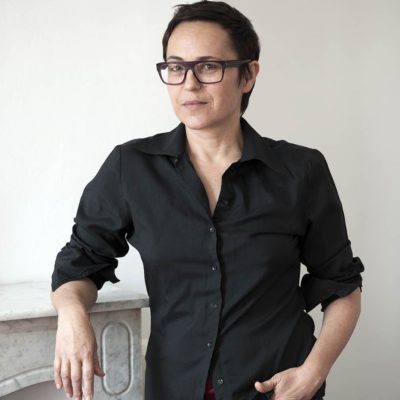
Lives and works in France in Marseille and Burkina Faso. Trained in painting at the National School of Fine Arts in Paris, she has also been licensed to film and audiovisual Faculty of the University Paris III Sorbonne Nouvelle. Winner of the prize for painting the town of Vitry-sur-Seine in 1987 and the Foundation of Fine Arts in 1988, various private and public collections – including the City of Paris and the National Plastic Arts Centre – were the acquisition of her works. Frédérique Lagny undertakes its work ten years ago in Burkina Faso in West Africa where it is developing a project composed of different photo essays, videos and sounds that reflect the successive shifts in hers views. Her project turned to the human figure, identifiable in some ways to a critical form of anthropology defined as tool – in the sense that Mongo Beti heard – attempting to develop, in practice as in its dissemination, a political intention.
last update 28th March, 2017
Pascale Cassagnau
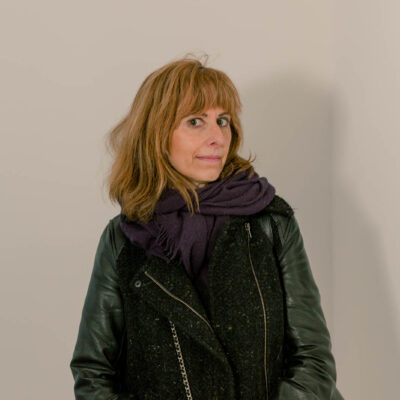
Pascale Cassagnau holds a PhD in Art History and Criticism and is responsible for the audiovisual and new media collection at the CNAP (Centre national des arts plastiques, Paris). She writes extensively for Art Press and is the author of texts on artists such as Chris Burden, James Coleman, John Baldessari, Pierre Huyghe, Dominique Gonzalez-Foerster and Matthieu Laurette, among others. She is mainly interested in the study of new film practices and their cross-over with contemporary art. Her essay “Future Amnesia, Enquêtes sur un troisième cinéma” (Ed. Isthmus, 2006) investigates new filmic forms, existing between fiction and documentary. “Un pays supplémentaire” (Ed. Ecole nationale supérieure des Beaux-Arts de Paris, 2010) focuses on contemporary creation in the media architecture. Her book, “‘Apichatpong Weerasethakul,’ Une théorie des objets personnels” was released as an e-book in 2016. Her essay “Diagramme Monteiro, on Joao Cesar Monterio, was written in collaboration with Hughes Decointet and published in Editions de L’Oeil in 2017. Her essays “La répétition générale,” — a work on the processes of creation and research in the fields of cinema, contemporary art — and “Dispositifs-jeux” — on Jean Frapat, inventor of television devices — are currently in progress.
Last update 9th March 2017