Contact at a distance
Thursday 18 November 2021, 11 am — 12:30 pm
- Participants
- Daniel Steegmann Mangrané, Théo-Mario Coppola, Veronica Valentini, Laura Arensburg, Dorian Sari and Julia Gorostidi
- Moderator
- Manuel Cirauqui and Anna Manubens
- Venues
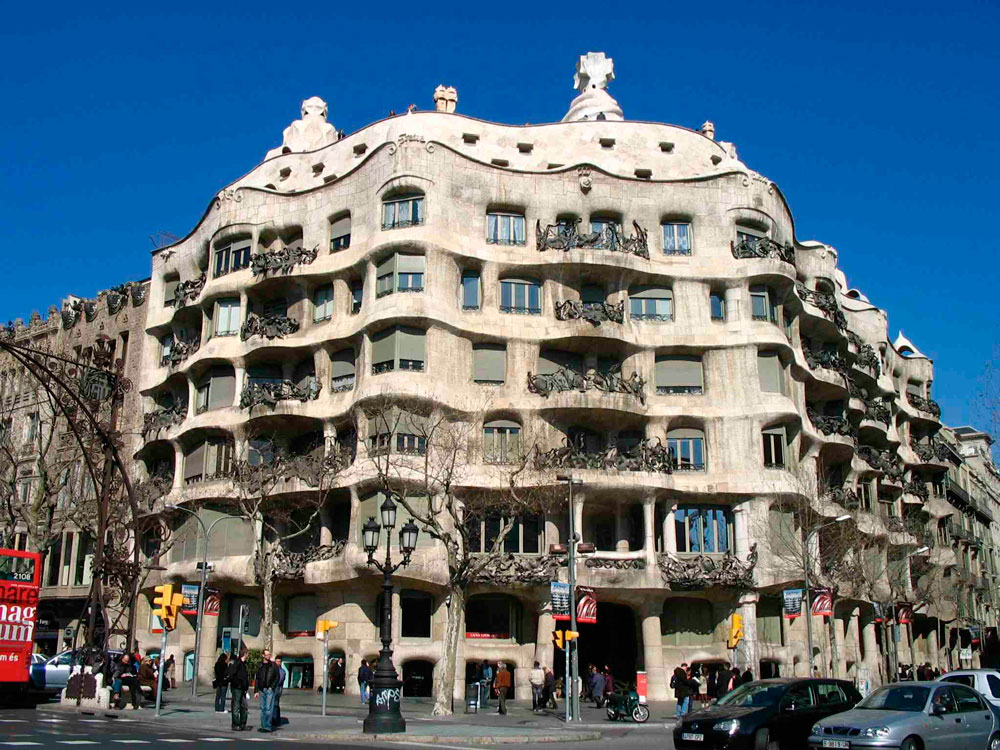
- La Pedrera
Add to calendar
Drawing from a series of shared references in artist moving images and film-based installations, we will discuss means of presence, contact, and intrusion from a distance. We would like to imagine other forms of remote touch and affect, away from the current speech overload on digitized or virtual communication. Taking the cinematic as a generator of possibility, this conversation will address moving images as sites of sympathy, synchronization, company, and anachronism.
Daniel Steegmann Mangrané
- Artist, Jury, Participant, Speaker
1977, Barcelona
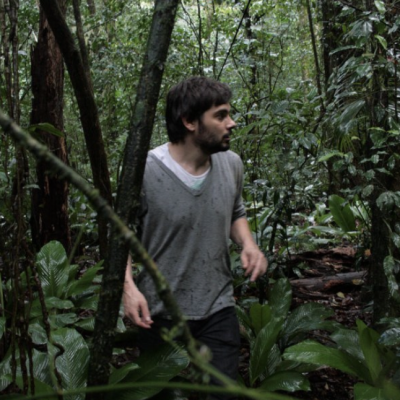
Born and educated in Barcelona, Daniel Steegmann Mangrané now lives and works in Rio de Janeiro. He is part of the generation of artists that began their production at the beginning of this century. The artists’ varied techniques and media include film, sound, drawing, kaleidoscopic collages, photography, sculpture and gardens. Nature is a constant in his work, which explores the contamination and affinity of forms that exist between nature, art and architecture. Concerned with the global ecological crisis, he believes that any change in the natural environment also modifies our own nature. Both in his sculptures, which are extremely fragile and incorporate altered organic material, and in his filmic work, the artist experiments with the correspondences between organic and geometric forms, and with the complex network of dependencies between natural order and the order created by human beings.
Solo exhibitions include: Kunsthalle Münster (2020), Hangar Bicocca, Milan (2019), Institut d’art contemporain, Villeurbanne/Rhône-Alpes (2019), Nottingham Contemporary (2019), CCS Bard College, New York State (2018), Fundació Antoni Tàpies, Barcelona (2018), Fundaçaô Serralves, Porto (2017), Museo de Arte Moderno, Medellín (2016) and Museu de Arte Moderna, Rio de Janeiro (2015). He has participated in biennials and triennials in Lyon, Berlin, New York, Paris, Porto Alegre and São Paulo, among others. His work is included in the collections of Tate Modern, London; Museu de Arte Moderna, Rio de Janeiro, Museu Serralves, Porto; Museo de Arte Contemporáneo, Castilla y León; Fundació “la Caixa” and MACBA, Barcelona.
Théo-Mario Coppola
- Curator

Théo-Mario Coppola is a curator and arts writer. They are currently based in Paris, France.
Viewing aesthetic issues as inherently tied to social struggles, Théo-Mario Coppola’s curatorial and critical practice engages with research-based, experimental, narrative and political forms. The projects they have conducted deal with experiences of concrete utopia, personal and collective narratives of emancipation, as well as initiatives of resistance, and examine how these enable the transformation of values in art, governance and society.
Their recent curated exhibitions and programmes include three annual chapters of the HOTEL EUROPA series in various cities across Europe between 2017 and 2019, the third edition of the Nuit Blanche arts festival at Villa Medici in Rome, Italy, in 2018, and the eleventh edition of the MOMENTUM biennale in Moss, Norway, in 2021.
Théo-Mario Coppola has contributed to catalogues, magazines and online publications. They regularly lecture on radical aesthetic practices at art schools and universities.
Last update: November 17th, 2022
Veronica Valentini
- Moderator, Participant
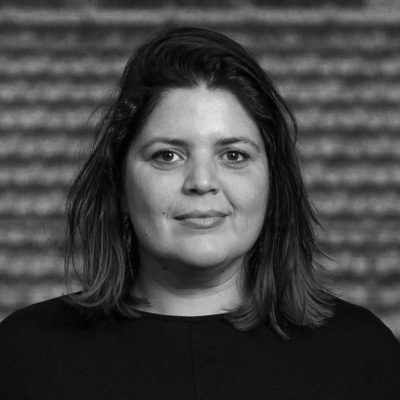
Veronica Valentini is a curator, educator, and researcher based in Barcelona. Her practice addresses subjects and methodologies related to the creation of the public sphere and the production of social knowledge through informal, distributed and situated exchange between art and society. She is the founding director of E.M.M.A. and co-founding director of the BAR project, two self-run curatorial organizations that she considers as tools for thought, imagination, and action. As mediator for the Concomitentes, art citizen project supported in Spain by the Daniel and Nina Carasso Foundation (Madrid), she is working with functional diversity activists on the Diversorium, a communal space in which to come together and celebrate: to “dance with” the various affective, invisibilized communities in the city and “move” the discriminations that separate us.
Last update: November 11th, 2019
Laura Arensburg
- Participant
1985, Buenos Aires
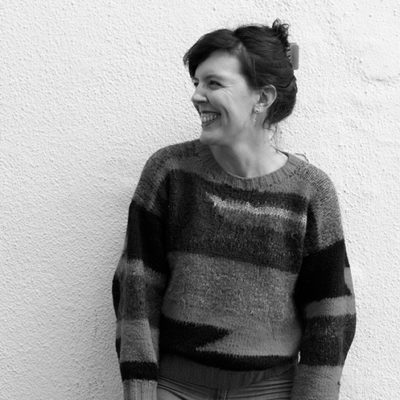
Laura Arensburg works with moving images and bodies. She graduated from the ENERC, the INCAA film school and the Independent Studies Programme of the Barcelona Museum of Contemporary Art (MACBA). She studied Combined Arts at the University of Buenos Aires, and she is currently studying a master’s degree in Contemporary Latin American Aesthetics at the UNDAV. She trained in audiovisual creation under Albertina Carri, Andrés di Tella and Nele Wohlatz. She is currently producing her first feature-length documentary, La Partida, which benefits from an endowment for documentary films from INCAA, the 2018 and 2020 MecenazgoBA awards, and the creation scholarship from the Argentine National Arts Fund 2019. It is with this project that she participated in the Walden Residency, coordinated by Marta Andreu, and the gender perspective script workshop at DAC Argentina. As an offshoot of this film, she created Las (com)Partidas, a performative conference that received the scholarship for research and innovation in visual arts 2020 from the Catalan regional government and which was carried out during her research residency at the MACBA. She was recently awarded a research and experimentation residence scholarship at the Arts Santa Mònica art centre, where she will work on subjects surrounding mediation and various forms of perception of contemporary art. She is also a participant in the “Proyecto Co” by La Escocesa at the Consultori, coordinating counselling activities for artists.In 2020, she was awarded a scholarship from the Buenos Aires Metropolitan Fund for the Sacudón de miradas video workshop, which she carried out at the Buenos Aires Museum of Modern Art. She was also selected as part of the Las Arenas Movedizas collective to carry out the Colectivo hacia rincones desorbitantes interactive at the Usina del Arte (AR). She has been a resident artist at the Centro de Investigaciones Artísticas (AR), Hangar (ES), MACBA (ES) and at La Escocesa (ES), where she was awarded the NEXES Poble Nou scholarship for the Labrotopías colectivas video workshop with teenagers, which she carried out alongside Julieta Obiols, and the 2019 Research/Experimentation scholarship for her experiential project Malvidentes, which likewise received a research and innovation scholarship in the field of visual arts from the Catalan Regional Government in 2019. In 2019 and 2020, she coordinated the non-fiction film club at the MACBA (Spain) alongside Catarina Bothelo, where she also carried out guided tours for the Un siglo breve exhibition. Between 2014 and 2018, she also programmed and coordinated Ciclo Cuerpos at the Matienzo Cultural Centre in Buenos Aires. She also acted as assistant general in the Pensar Contemporáneo art and education programme at the España Cultural Centre in Buenos Aires, and she created guided tours for the La poética del Papel exhibition by Eduardo Chillida. Her videos have won prizes from INCAA, MecenazgoBA and Prodanza Buenos and have been displayed at international film festivals and art centres including La Nit dels Museus MACBA (BCN), the Mar del Plata film festival, L´Alternativa, Asterisco, Bogoshorts, and Bideodromo-BilbaoArte, among others. She has worked on the production of documentary and fiction films by Dora García, Ana Quiroga and Miguel Perez, Pablo Fendrik, David Blaustein, and Andrés Habegger; on video dance and art pieces by Daniel Böhm, Noemí Lapezesohn and Alejandra Riera; and she was a production assistant for Edgardo Mercado’s choreographic works. She has also worked in the production area of MTV Networks International and in documentaries for Canal Encuentro and DeporTV under the auspices of the Argentine Ministry of Education.
Last udpated: 11th November 20212
Dorian Sari
- Artist, Moderator
- www.doriansari.co
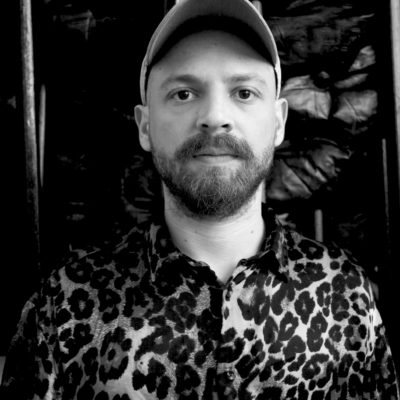
Dorian Sari born in 1989, in Izmir, Turkey, based in Basel, Switzerland. Studied Political Science and Languages, Greek literature at Paris Sorbonne University, Visual Art at HEAD Geneva, and Visual Art Institut Kunst Basel. Dorian Sari is an observer of public reactions to contemporary politics and social movements. The main core of his work is looking into hu-man beings, cultures and projecting them with personal and collective mythology into completely fictional,theatrical scenes, based on an-thropological and psychoanalytical interpretation of humans and their symbols. He creates a certain perspective for a certain period in his narrations. Mostly in the form of sculpture, video, and performance. Making sublimation of his observations into materials involves ceremo-nial rituals in the production process. Sometimes it is just quiet sewing, some- times he takes the role of the fool of the king and says things that people generally do not dear to say. His goal is requestioning cultural norms and hierarchies in his speech. Sculptures tell a story with the language of collective symbols while other mediums are directly pointing to the current obvious, with a little bit of humor. The parallel of this communication between the individual consciousness and the collective subconsciousness is combining rational scientificresearches with metaphysical methods. Requestioning current affairs and taking a measure with his multidisciplinary background and his position as an artist are the main points of his work.
Julia Gorostidi
- Artist, Participant
Artist based in Barcelona