‘Cossos Itinerants’ [Itinerant Bodies]: actions in the public space
9 — 12 November 2021
— In collaboration with EINA - University School of Design and Art of Barcelona, Hangar.org and La Escocesa.
![‘Cossos Itinerants’ [Itinerant Bodies]: actions in the public space](https://fervent-sinoussi.5-196-224-241.plesk.page/wp-content/uploads/2021/11/COSSOS-1-rotated.jpg)
- Artists
- Valentina Alvarado Matos, Laura Arensburg, Julia Calvo, Natalia Carminati, Comitè Queer, Citlali Hernández, Daniel Moreno Roldán, Núria Nia, Pedro Torres, Carlos Vásquez Méndez and Paula Serrano
- Curators
- Carolina Ciuti
- Venues
- Jardins de Rubió i Lluch and Plaça Joan Coromines
- A project by
- LOOP Festival in collaboration with EINA - University School of Design and Art of Barcelona, Hangar.org and La Escocesa.
- Contributor
- The mobile artifact has been co-produced by Hangar.org and LOOP. Its adaptation was carried out by Pense (Head of constructions of Hangar.org).
- Price
- Free admission
Add to calendar
The 'Itinerant Bodies' project explores the possibilities of networking and the value of public space as a meeting place. On November 9 and 12, a mobile device becomes the ephemeral stage to present the performative proposals by Valentina Alvarado Matos and Carlos Vásquez Méndez, Laura Arensburg, Julia Calvo, Natalia Carminati and Daniel Moreno Roldán, Queer Committee, Citlali Hernández and Núria Nia, Pedro Torres and Paula Serrano.
Background
Among other things, the arrival of Covid-19 caused the gradual withdrawal of bodies from public space. The need to counter the health threat led to the immediate and radical suppression of basic freedoms, generating a state of voluntary citizen submission in the name of health. The unexpected state of emergency highlighted the importance of emotional bonds and community networks, as well as the need for human “contact” despite the paradox of contagion.
Due to the diffuse precariousness and the total absence of social and legal systems of care, these same demands were manifested in the artistic community. In the face of the institutional vacuum, the only possible response was connection, support, mutual commitment, and the pooling of human and economic resources. To be “bodies open to the community,” as Merleau-Ponty put it, individuals sensitive to intertwining with others.
Crises often have the effect of radically exposing existing systemic problems, but then they need to be dealt with. While in the artistic field the most immediate and sensible proposals seem to have been born thanks to the associative initiative of artists themselves, where have the other agents of the ecosystem been then?
Itinerant (and intertwined) bodies
Taking these reflections as a starting point, this proposal aims to reflect on the possibilities of networking and the value of public space. It becomes an excuse to generate professional links and a platform for shared reflection. For this reason, it was addressed to the residents of Hangar.org and La Escocesa (art residencies both located in the Poblenou district), with the aim of fostering moments of exchange and a common work methodology.
An underlying questions was: “what does it mean to be a body?” Linking to the general theme of this edition of the Festival, the proposals of Valentina Alvarado Matos and Carlos Vásquez Méndez, Laura Arensburg, Julia Calvo, Natalia Carminati and Daniel Moreno Roldán, Citlali Hernández and Núria Nia, Queer Committee, Pedro Torres and Paula Serrano tells us about exposed, connected, pixelated bodies and traversed by time; of dissident, dependent, porous and powerful corporealities. Bodies that look and are looked at, that cross the city and are crossed by it. A series of ‘Itinerant Bodies’ and inevitably intertwined.
The performances will be presented at two different locations in the public space: the first, coinciding with the inauguration of the Festival on November 9, will take place at the Jardins de Rubió i Lluch; the second, on November 12 in the Plaça Joan Coromines.
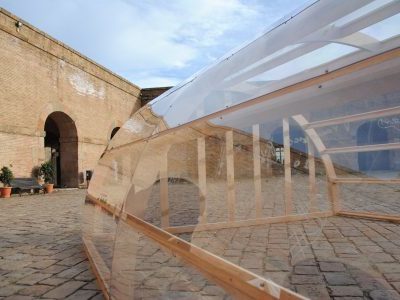
The mobile device that will accompany the proposals has been conceived during the workshop ‘Mobile artifacts and Itinerant bodies’, organized in collaboration with EINA – University School for Design and Art of Barcelona, and with the participation of the students Irene Anglada Espadaler, Rafael Cribillés Alba, Gio Galindo (“Grupo Octubre”); Mercedes Almeida, Maria Bei Bellsolà López, Andrea Fernández Camps, Maria Verdù; Elisabet Callén Artola, Julieta Italiano, Felipe Román Osorio, Lucía Trigo González.
- The prototype presented by the students of the “Grupo Octubre” was the selected project. Pense (Head of Construction at Hangar.org) was in charge of adapting and building the device. The artifact has been co-produced in collaboration with Hangar.org.
9.11.2021 - Festival's opening @Jardins de Rubió lluch
- Julia Calvo with Iby and Anna Sagrera
- 'Utopía', 2021
- Pedro Torres and Paula Serrano
- 'En lo negro de la noche', 2021
- Comitè Queer
- 'Comitè Queer proposes a urban assembly
12.11.2021 @Plaça Joan Coromines
- Natalia Carminati and Daniel Moreno Roldán
- 'Multi FPS', 2021
- Citlali Hernández and Núria Nia
- 'Òrbita #2', 2021
- Valentina Alvarado Matos and Carlos Vásquez Méndez
- tbt, 2021
- Laura Arensburg
- 'Espejismo', 2021
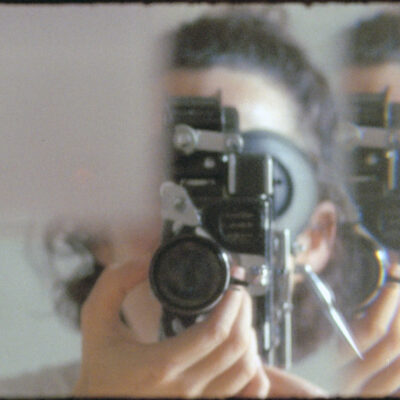
Valentina Alvarado Matos is an artist whose work explores the moving image, focusing on the diaspora, landscape and gesture. Her work has been exhibited at venues such as La Virreina Centre de la Imatge, La Capella, V&A Museum, Artium, LIAF Biennale, Pesaro Film Festival, IFF Rotterdam, Viennale, SFCinematheque, Punto de Vista, Docks Kingdom, Ambulante, LOOP Festival, Filmoteca de Cataluña, among others.
She has been a resident at VSW Rochester, Hangar, La Escocesa, Matadero Madrid and Cultura Resident. She also combines her artistic practice with teaching, giving classes and workshops in various institutions.
Some of her films are in the catalogue of Light Cone, Archivo XCèntric and HAMACA.
Laura Arensburg
- Participant
1985, Buenos Aires
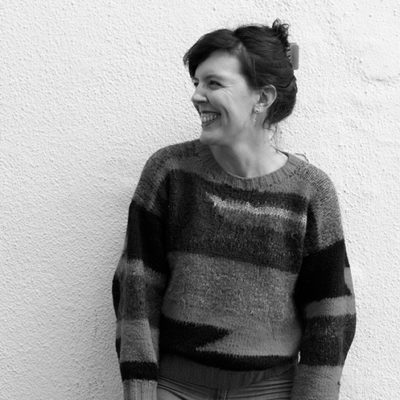
Laura Arensburg works with moving images and bodies. She graduated from the ENERC, the INCAA film school and the Independent Studies Programme of the Barcelona Museum of Contemporary Art (MACBA). She studied Combined Arts at the University of Buenos Aires, and she is currently studying a master’s degree in Contemporary Latin American Aesthetics at the UNDAV. She trained in audiovisual creation under Albertina Carri, Andrés di Tella and Nele Wohlatz. She is currently producing her first feature-length documentary, La Partida, which benefits from an endowment for documentary films from INCAA, the 2018 and 2020 MecenazgoBA awards, and the creation scholarship from the Argentine National Arts Fund 2019. It is with this project that she participated in the Walden Residency, coordinated by Marta Andreu, and the gender perspective script workshop at DAC Argentina. As an offshoot of this film, she created Las (com)Partidas, a performative conference that received the scholarship for research and innovation in visual arts 2020 from the Catalan regional government and which was carried out during her research residency at the MACBA. She was recently awarded a research and experimentation residence scholarship at the Arts Santa Mònica art centre, where she will work on subjects surrounding mediation and various forms of perception of contemporary art. She is also a participant in the “Proyecto Co” by La Escocesa at the Consultori, coordinating counselling activities for artists.In 2020, she was awarded a scholarship from the Buenos Aires Metropolitan Fund for the Sacudón de miradas video workshop, which she carried out at the Buenos Aires Museum of Modern Art. She was also selected as part of the Las Arenas Movedizas collective to carry out the Colectivo hacia rincones desorbitantes interactive at the Usina del Arte (AR). She has been a resident artist at the Centro de Investigaciones Artísticas (AR), Hangar (ES), MACBA (ES) and at La Escocesa (ES), where she was awarded the NEXES Poble Nou scholarship for the Labrotopías colectivas video workshop with teenagers, which she carried out alongside Julieta Obiols, and the 2019 Research/Experimentation scholarship for her experiential project Malvidentes, which likewise received a research and innovation scholarship in the field of visual arts from the Catalan Regional Government in 2019. In 2019 and 2020, she coordinated the non-fiction film club at the MACBA (Spain) alongside Catarina Bothelo, where she also carried out guided tours for the Un siglo breve exhibition. Between 2014 and 2018, she also programmed and coordinated Ciclo Cuerpos at the Matienzo Cultural Centre in Buenos Aires. She also acted as assistant general in the Pensar Contemporáneo art and education programme at the España Cultural Centre in Buenos Aires, and she created guided tours for the La poética del Papel exhibition by Eduardo Chillida. Her videos have won prizes from INCAA, MecenazgoBA and Prodanza Buenos and have been displayed at international film festivals and art centres including La Nit dels Museus MACBA (BCN), the Mar del Plata film festival, L´Alternativa, Asterisco, Bogoshorts, and Bideodromo-BilbaoArte, among others. She has worked on the production of documentary and fiction films by Dora García, Ana Quiroga and Miguel Perez, Pablo Fendrik, David Blaustein, and Andrés Habegger; on video dance and art pieces by Daniel Böhm, Noemí Lapezesohn and Alejandra Riera; and she was a production assistant for Edgardo Mercado’s choreographic works. She has also worked in the production area of MTV Networks International and in documentaries for Canal Encuentro and DeporTV under the auspices of the Argentine Ministry of Education.
Last udpated: 11th November 20212
Julia Calvo
1985, Madrid
Julia Calvo is an artist whose practice moves within the fields of sculpture, performance and installations. Her works are large-scale actions that establish a dialogue with space and reflect on the context they display. This interest towards finding dialogue and questioning viewers on the spot sometimes leads to her projects taking the form of light colour in order to communicate directly through the perception of colour and shapes. The artist likewise creates atmospheres in the shape of austere exhibitions in which the simplicity of the items involved take on a transcendent scale. Her works have been presented in Spain (Centro Párraga, Espacio de Investigación y Desarrollo para las Artes Escénicas, the Artnueve gallery), in Barcelona (Montjuïc Castle and La Farinera del Clot), Finland (Forum Box), Germany (Genscher galerie, Hamburg), and in a number of art fairs throughout Spain, Germany and Switzerland (ARCO, SWAB, VUELTA, GIAF, Kunstfrühling, Bremen).
Last update 5th November 2021
Natalia Carminati
- Participant
1982, Buenos Aires
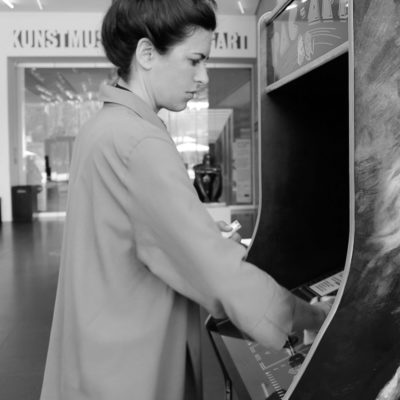
Natalia Carminati is a visual artist and researcher. Her research is mostly focused on the critical study of contemporary culture, post-colonial theory, biotechnology, and food sovereignty. Her projects take the form of multi-sensory devices that combine video, video games, sound experiments, painting, installations, or performance. She has been awarded scholarships from the Catalan Regional Government, La Escocesa and the Centre Arts Santa Mònica. She has participated in individual and collective exhibitions and performances at the MACBA (Barcelona Museum of Contemporary Art), the Museu Picasso Barcelona, Arts Santa Mònica, Born Centro de Cultura y Memoria, L’Estruch (Sabadell), Fabra i Coats, Centro Cultural Las Cigarreras (Alicante), Konvent Zero (Berga), Casa de la Cultura Sant Cugat del Vallès, SWAB Barcelona Art Fair, LOOP Barcelona, GREC Festival, Salmon Festival, Tangent Projects, Ostavinska Galerija (Belgrade) and Kunstmuseum Stuttgart (Germany), among others. She is currently working as a resident artist at La Escocesa and Centre d’Arts Santa Mònica.
Last update 5th November 2021
Comitè Queer
October 2021. QUEER COMMITEE has just been born. The times need it. The circumstances make it necessary, essential. The pandemic has diminished the meeting spaces of the LGTBIQ + community. The nightlife scene, fundamental to understand the progress in civil rights, has disappeared. The meetings are controlled, reduced. Meanwhile, the dangerousness in public space has increased worriedly.
QUEER COMMITEE is an activist meeting iniciative for the LGTBIQ + community. Open to sympathizers and impulsed by the Barcelona artistic scene. Its objective is to promote meetings, dialogue, and political activism. A discussion space, a laboratory of ideas to develop proposals and promote new genealogies.
QUEER COMMITEE premieres for the LOOP Festival 2021 with an urban assembly proposal, in which the public space is claimed as a political place, a space, occupied temporarily, for the reflection, the exchange of ideas and the debate of the LGTBIQ+ collective enterprise.
Last update 1st October 2021
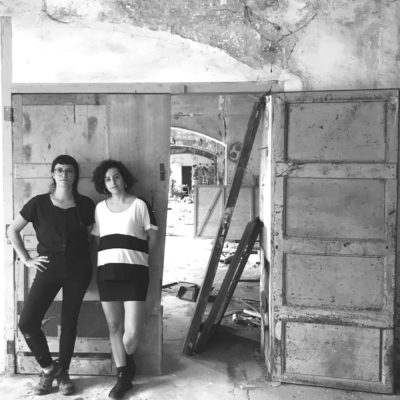
Citlali Hernández holds a Master in Digital Arts from the Universitat Pompeu Fabra; she participates in the Fab Academy programme in Barcelona, and is currently a teacher in university and Ph.D. student at the BAU University Design School on the subject of “Body, technology and performativity: The body in new media art practices.” Her practice is focused on exploring the social and technological codes that are part of the ways in which the body is inhabited in the context of the electronic and digital arts. From a trans-disciplinary point of view, Citaly seeks to experience the material aspects of performance and its entanglements with cables, pixels and circuits in order to conceive the body as a field of potentialities. She is currently a teacher at the university level, she actively participates in Matics Barcelona (a digital arts association) and she is a resident artist alongside Núria Nia at Hangar.org, with the Cuerpo Satelital, with support from the sixth art research scholarship from Fundación Banco Sabadell – Hangar at Hangar.
Last update 5th November 2021
Daniel Moreno Roldán
- Participant
1990, Barcelona
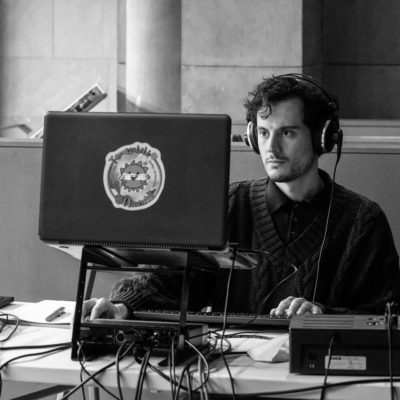
Daniel Moreno Roldán is an artist and musician. As of late, his work has focused on the notions of obsolescence, nostalgia and transience in digital environments, as well as archive and conservation work on the Internet. His work has been displayed at Radio Nostalgia Profunda (Bombon Projects, Barcelona), Instadeath (La Casa Encendida, Madrid), Myspace Dragon Hoard (Lost WorldWW Muisc) (BSC, Barcelona), Esdevenir immortal i després morir (La Capella, Barcelona), Granota Polly (Bombon Projects, Barcelona), Goodbye, My Sunny Child (SWAB, Barcelona), Assumpte: una forta intuïció (MNAC, Barcelona), You are too alert to sleep any longer (The Roommates, London), Some and Others (Spinnerei, Leipzig), Ella: allà i després (Blueproject Foundation, Barcelona) and Pica i Fuig! (Fundació Joan Miró, Barcelona), among others. He has been awarded the 2017 Embarrat Prize (Tàrrega) as well as scholarships from BCN Producció (Barcelona), /UNZIP (El Prat de Llobregat), Can Felipa (Barcelona), Sant Andreu Contemporani (Barcelona) and Sala d’Art Jove (Barcelona). He has also been a resident artist at Hangar (Barcelona), Fabra i Coats (Barcelona), Can Serrat (El Bruc) and NauEstruch (Sabadell). He is a member and co-founder of the Club de Videojocs, a group of people interested in videogames beyond their nature as mere entertainment, which gathers twice a month at Hangar. He is a member of the SOSUN.dance electronic music project, for which he composes songs using computers and obsolete gaming consoles. Moreover, he works as a music producer and sound designer.
Last update 5th November 2021
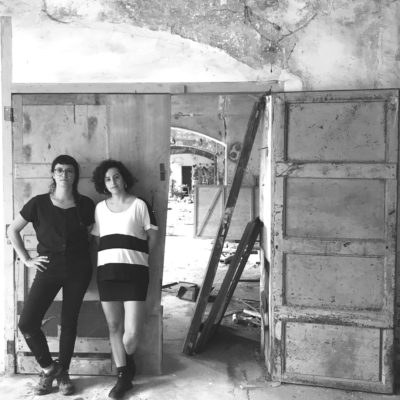
Núria Nia graduated in Film and New Audiovisual Media from the University of Barcelona (ESCAC) and obtained her master’s degree in Digital Art Curation from ESDI / Ramon Llull university. Her practice is mostly focused on audiovisuals in combination with other art forms, such as trans-media environments or performance, activating the possibilities provided by a blend of various contexts and practices that allow for research into subjects such as digital bodies, screen-images and collective thought. The ubiquitous and hyper-connected “mobile body” is one of the central themes in her current practice, with which she has done research at La Fàbrica i el Cos (Unzip 2020 scholarship) regarding the digitalisation of work and, currently, with Cos Satel•lital (Sixth art research scholarship from Fundación Banco Sabadell – Hangar), on data and bodies, alongside Citlali Hernández. Núria Nia is a co-founder and participant in the Matics Barcelona digital artists collective, who are residents at Hangar.
Last update 1 November 2021
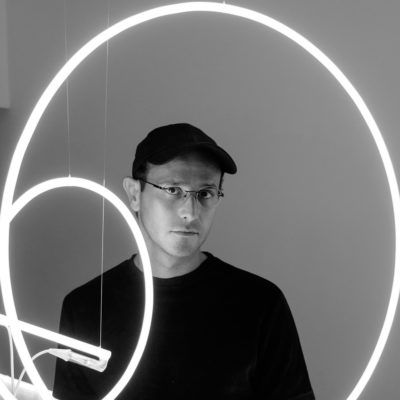
Pedro Torres (Brazil, 1982) focuses his artistic practice on subjects related to the notions of time, distance, memory, language, and image, using a variety of media to develop his works and research projects. His works have been recently displayed at Aragon Park II (Madrid), The Green Parrot (Barcelona), Casal Solleric (Palma de Mallorca), Centro Párraga* (Murcia), Casa Seat* / LOOP Barcelona 2020, Chiquita Room* (Barcelona), Errant. Itinerarios de arte y pensamiento* (Iglesia vieja de El Pont de Suert), Festival Poesia i + (Caldes d’Estrach), Fabra i Coats: Centre d’Art Contemporani de Barcelona, OTR. espacio de arte (Madrid), Swab Barcelona, Dilalica (Barcelona), the Cuenca Biennale (Ecuador), ArtBo (Bogotá, Colombia), CaixaForum Barcelona, BienalSUR (Casa Nacional del Bicentenario, Buenos Aires, Argentina), Festival Embarrat (Tárrega), NC-arte (Bogotá, Colombia), ARCO Lisboa (Portugal), at the Galería Travesía Cuatro and La Casa Encendida (Madrid), Galería Luis Adelantado* (Valencia), the Mardin Biennale (Turkey), the Las Fronteras Biennale (Mexico), the Blueproject Foundation* and the Fundació Antoni Tàpies (Barcelona). His videos have been screened at a number of festivals in Europe, South America, and Asia. He has been awarded scholarships and prizes including PostBrossa (2021), the Exchange art3/Homesession scholarship (2021), the S.O.S ARTE/CULTURA endowments for creation from Vegap (2021), the Production Awards from the “la Caixa” foundation (2020), he was a finalist at the Antoni Gelabert visual arts award of the city of Palma (2020), the research scholarship from the department of culture of the Catalan regional government (2020, 2013), the production award from the Sala d’Art Jove of Barcelona (2013) and the Fundación Botín scholarship (2007), among others. He has been a resident artist in Skagaströnd (Iceland), Seoul (South Korea), Berlin (Germany) and Barcelona (Spain). Some of his works and publications have been featured in the collections of institutions such as MadridAbierto, Fundación Botín, the Blueproject Foundation, the olorVISUAL collection, ICP New York, UPV/Colección de libros de artista and other private collections. He lives and works in Barcelona, where he is a resident artist at the Hangar visual arts production and research centre.
* individual exhibitions
Last update 5th November 2021
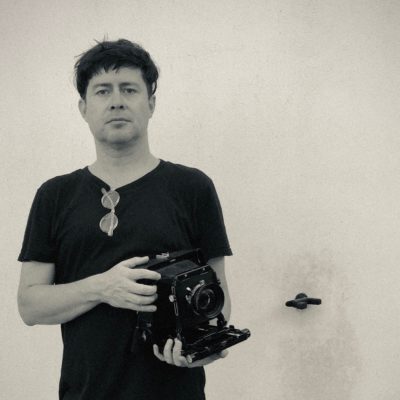
Carlos Vásquez Méndez (b. 1975, Santiago de Chile) lives and works in Barcelona. He is a visual artist, filmmaker, and researcher. He is interested in the relationship between art and the document, discourses on the representation of the real, and the role of the artist as a critical historian. Through his practice, he has explored obsolescence as an aesthetic-political discourse or as a media archaeology, especially focusing on celluloid, the material with which he has developed most of his work. His films have been screened at Jeonju, FIDMarseille, Mar del Plata, First Look, Cineteca Mexicana, OpenCity, Process, Black Canvas, BPI/Centre Pompidou, and others. He received the Joris Ivens/Centre National des Arts Plastiques award at Cinéma du Réel (France) in 2016 and the Mayor’s Award in Yamagata (Japan) in 2019.
His cinematic installations and performances have been exhibited at Virreina Centre de la Imatge, La Capella, Filmoteca de Catalunya, Fabra i Coats, and Arts Santa Mònica. His work is included in the Light Cone catalog.
Paula Serrano
1993, Alcoi
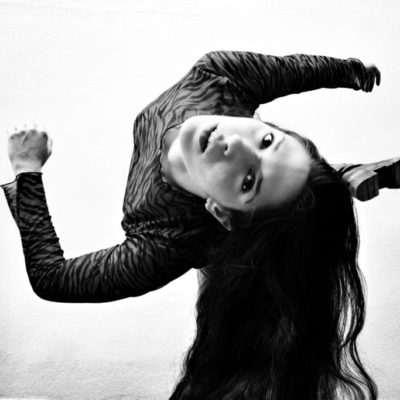
Paula Serrano (Alcoy, 1993) graduated from the Conservatorio Profesional de Danza José Espadero in Alicante. She began her professional career as a performer with the Joven Compañía Gerard Collins de València, and has subsequently worked under the direction of choreographers such as: Asun Noales, Gustavo Ramírez, Olatz de Andrés, Maura Morales, Irene García (La Quebrá) and Elvi Balboa. Currently, she studies choreography at the CSD of the Instituto del Teatro, while accompanying it with her activity as a professional dancer and choreographer. As a choreographer, she made her first debut by La hermosura prefereix ser secret, winning piece of the III Encuentro Internacional de Jóvenes Coreógrafos Gracias x Favor – Santander, Spain 2016 and finalist of the XXV edition of Jóvenes Creadores – Madrid, Spain 2016. In March 2021, she premiered her first full-length piece within the framework of renowned festivals such as Quincena de Danza Metropolitana in Barcelona and Festival Danza València. She is a resident artist in the Graners de Creació 2019/2022 programme in València with the support of the Consellería de Cultura de la Generalitat Valenciana. She is interested in analysing dance from a critical point of view and is moving towards feeling useful to society with the language of movement as a tool. Her artistic, pedagogical and research practice is linked to the visibility of illness as a creative process and seeks the reformulation of beauty, honesty, social criticism, fragility and error.
Last update: 1st November 2021
Carolina Ciuti
1990, Pistoia
Carolina Ciuti is a contemporary art curator and researcher in the fields of visual and performing arts. She holds a BA in History and Preservation of the Artistic Heritage from the University of Florence (2009-2012) and an MA in Contemporary Art from the Sotheby’s Institute of Art in London (2013-2015). During her university training, she collaborated with the Collezione Gori: Fattoria di Celle (Pistoia) and the artists residency Villa Lena (Pisa), being respectively in charge of the educational proposals, the guided tours and the assistance to the director. She currently serves as artistic director of the LOOP video art festival in Barcelona, where she started working in 2015 as a curator. At LOOP, she has produced exhibitions, film programmes and performances by internationally recognised artists such as: Regina de Miguel, Agnes Meyer-Brandis, Aleksandra Mir, Muntadas, Steina and Woody Vasulka and Anton Vidokle. She curated the group exhibitions And If Seeing Was Fire (Filmoteca de Catalunya, Barcelona, 2020), One Day I Stumbled Upon A Meteorite (Fabra i Coats – Contemporary Art Centre of Barcelona, 2019), PRODUCE, PRODUCE, PRODUCED (Real Cercle Artístic, Barcelona, 2018), the projects Francesca Banchelli: Before The Name (MACBA, Barcelona, 2016) and TRANSEUROPE EXPRESS (OfficeCafè, Pistoia, 2015), as well as the video programmes presented by LOOP at Cinéphèmère-FIAC Paris (editions 2017, 2018, 2019). She edited the publications One Day I Stumbled Upon a Meteorite (exhibition catalogue, stuffinabook, 2020), I Have A Friend Who Knows Someone Who Bought a Video, Once (LOOP Barcelona, Mousse Publishing, 2016) and Before The Name: a book on an itinerant performance project. (RAM Editions, 2018). Ciuti is a permanent collaborator of the magazine of contemporary culture La Maleta de Portbou and she frequently contributes to the art catalogues of the publishing house Istituto Italiano Edizioni ATLAS. In 2017, she co-founded the art collective CRiB to create hybrid projects straddling the visual arts, theatre and performance. Whether through writing, curating, or research, all of Carolina’s projects denote a deep interest in the notion of ‘time’ in all its facets, its representation in the philosophical and cultural sphere, and its influence on the construction of identities.
Last update 3rd October 2020