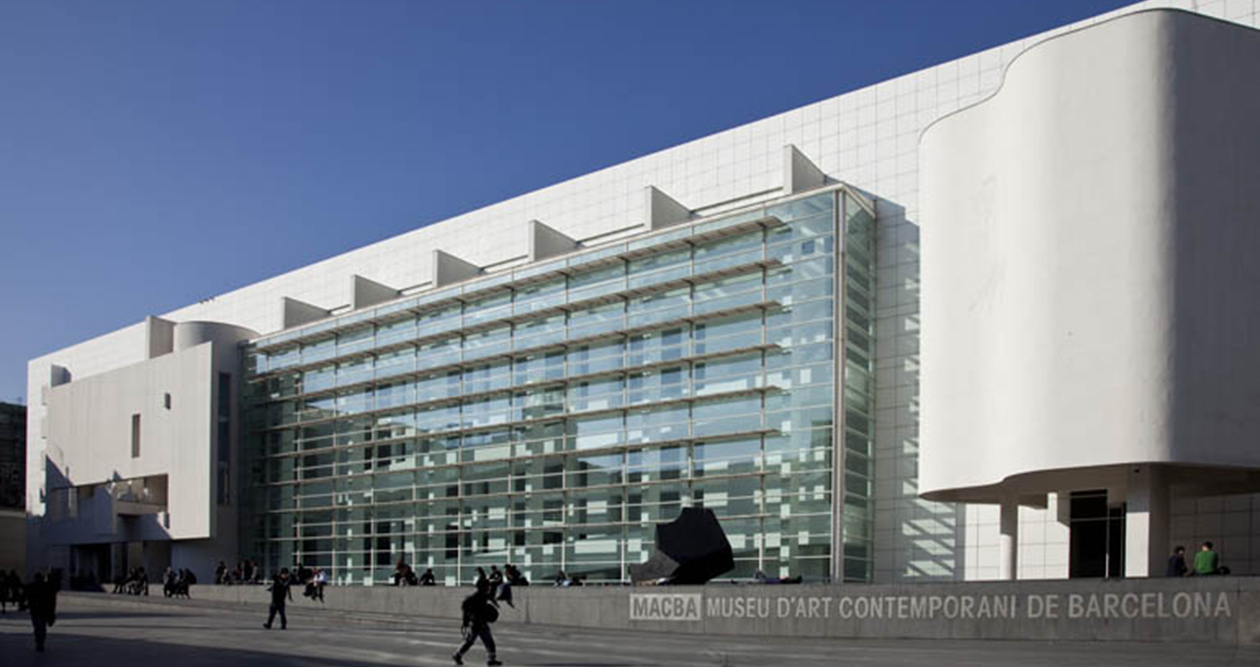
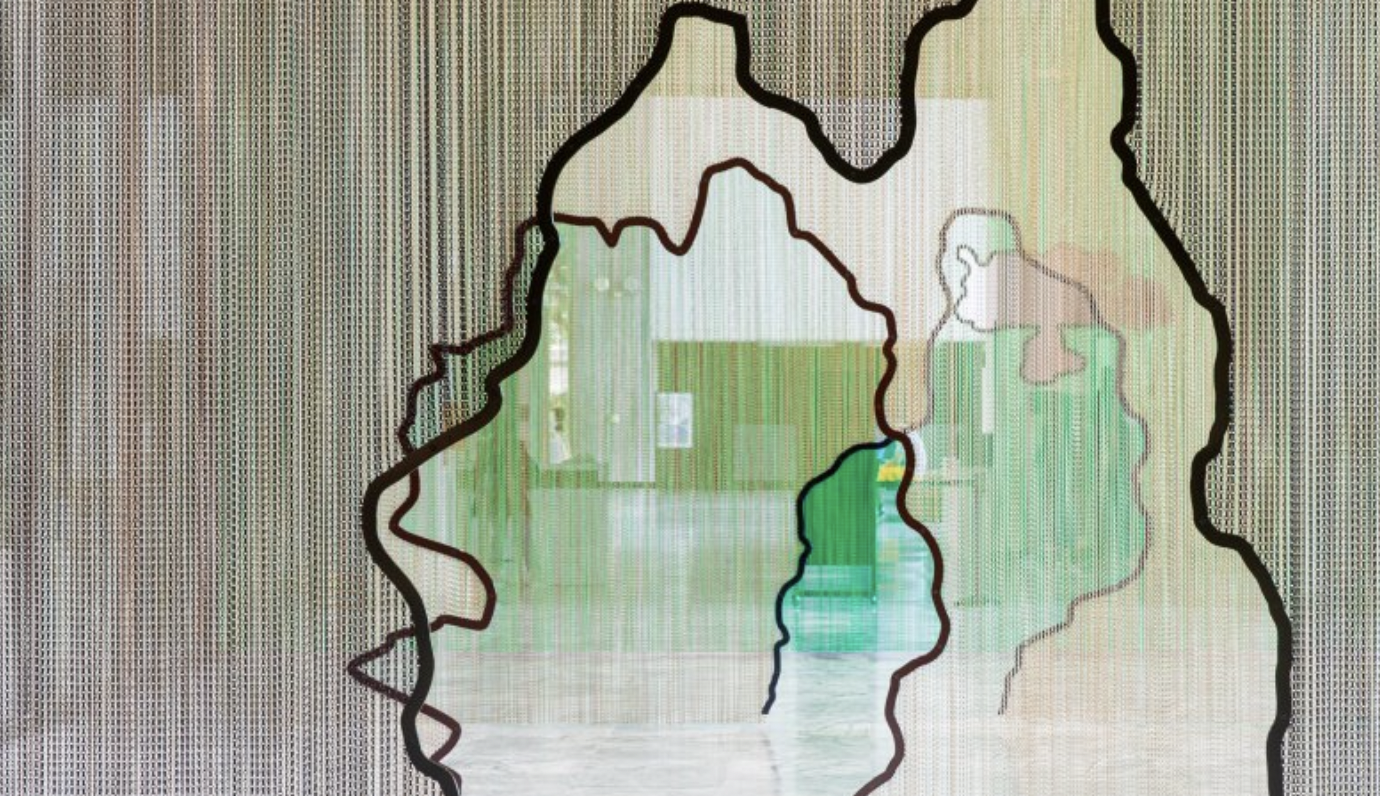
Daniel Steegmann. ‘A Leaf Shapes the Eye’
16 November 2023 — 20 May 2024
- Artists
- Daniel Steegmann Mangrané
- Curators
- Hiuwai Chu and João Laia
- Venues
- MACBA
- A project by
- MACBA
Add to calendar
This is the first retrospective exhibition in Spain of the work of Daniel Steegmann Mangrané, born in Barcelona in 1977 and resident in Rio de Janeiro for the last fifteen years. A place, according to the artist, where he can always be in direct contact with the world’s most pressing needs, whether ecological, political or social, all of them subjects reflected in his work.
Interested in exploring the complex interdependence of the organic world and human action, Steegmann focuses on the Amazonian Forest of Brazil, while also adopting the theoretical framework of the renowned anthropologist Eduardo Viveiros de Castro, who argues against the false dichotomy between humanity and the animal world by putting forward the notion that we are all part of a shared equilibrium and incorporating the paradigm of Amerindian perspectivism.
With a language close to Brazilian Neo-Concretism, Steegmann Mangrané explores the migration and affinities of forms between nature, art and architecture. Both in his fragile sculptures, made of intervened organic material, and in his creations of augmented reality, he experiments with the correspondences between organic and geometric forms and with the complex network of dependencies that exist in the biological order.
The exhibition includes drawings, paintings, photographs, sculptures, films and installations from the late 1990s to the present. It will be accompanied by an artist’s book, in which Steegmann Mangrané puts forward a circular visual cycle that begins with the artist’s early works and moves toward the present, only to return to the past, with collage interventions on these and other works. The publication has been co-produced with the Museum of Contemporary Art Kiasma, Helsinki, and the publisher of artists’ books BOM DIA BOA TARDE BOA NOITE from Berlin.
Daniel Steegmann Mangrané
- Artist, Jury, Participant, Speaker
1977, Barcelona
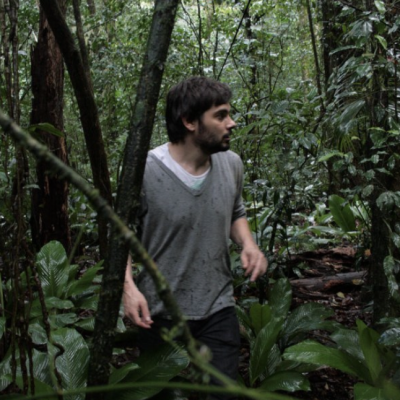
Born and educated in Barcelona, Daniel Steegmann Mangrané now lives and works in Rio de Janeiro. He is part of the generation of artists that began their production at the beginning of this century. The artists’ varied techniques and media include film, sound, drawing, kaleidoscopic collages, photography, sculpture and gardens. Nature is a constant in his work, which explores the contamination and affinity of forms that exist between nature, art and architecture. Concerned with the global ecological crisis, he believes that any change in the natural environment also modifies our own nature. Both in his sculptures, which are extremely fragile and incorporate altered organic material, and in his filmic work, the artist experiments with the correspondences between organic and geometric forms, and with the complex network of dependencies between natural order and the order created by human beings.
Solo exhibitions include: Kunsthalle Münster (2020), Hangar Bicocca, Milan (2019), Institut d’art contemporain, Villeurbanne/Rhône-Alpes (2019), Nottingham Contemporary (2019), CCS Bard College, New York State (2018), Fundació Antoni Tàpies, Barcelona (2018), Fundaçaô Serralves, Porto (2017), Museo de Arte Moderno, Medellín (2016) and Museu de Arte Moderna, Rio de Janeiro (2015). He has participated in biennials and triennials in Lyon, Berlin, New York, Paris, Porto Alegre and São Paulo, among others. His work is included in the collections of Tate Modern, London; Museu de Arte Moderna, Rio de Janeiro, Museu Serralves, Porto; Museo de Arte Contemporáneo, Castilla y León; Fundació “la Caixa” and MACBA, Barcelona.
Hiuwai Chu
Guangzhou
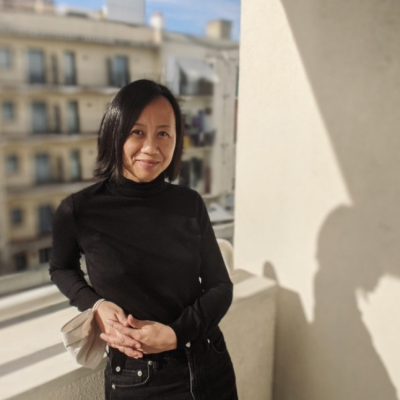
Hiuwai Chu is Head of Exhibitions and Curator at MACBA Museu d’Art Contemporani de Barcelona, where she has worked since 2007 as assistant curator and curator. She has curated exhibitions such as Bouchra Khalili: Between Circles and Constellations (2023); Panorama 21: Notes for an Eyer Fire (2021), Charlotte Posenenske: Work in Progress(2019), Undefined Territories: Perspectives on Colonial Legacies (2019), and Akram Zaatari. Against Photography: An Annotated History of the Arab Image Foundation (2017). She is co-editor of the book Climate: Our Right to Breath (K. Verlag, 2022). She is on the board of Hangar, an artist residency and center for research and production, and of Cordova, an independent curatorial project, both based in Barcelona. She was a member of the Editorial board of L’Internationale Online from 2021 – 2023. Before moving to Barcelona, Chu previously worked as associate editor at Aperture, New York. She studied anthropology at Barnard College, Columbia University.
João Laia
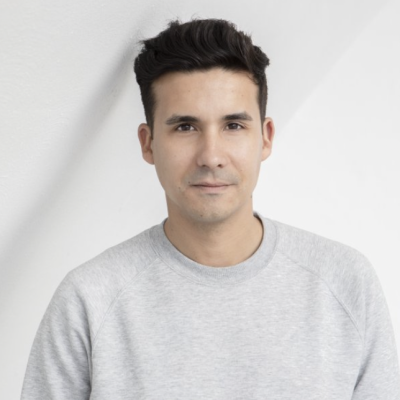
João Laia is the chief curator for exhibitions at Kiasma National Museum of Contemporary Art, Helsinki, and curator of forms of the surrounding futures, the 12th edition of GIBCA – Göteborg International Biennial for Contemporary Art (2023). He has a background in social sciences, film theory and contemporary art. Past projects were developed in collaboration with Fondazione Sandretto Re Rebaudengo, Turin; Galeria Municipal do Porto; La Casa Encendida, Madrid; MAAT – Museum for Art, Architecture and Technology, Lisbon; Moscow Young Art Biennial, MMOMA; Whitechapel Gallery, London; Contemporary Art Biennial Sesc_Videobrasil, São Paulo. He edited Living Encounters (Kiasma/Mousse, 2022) and A Multiple Community (Sesc, 2018) and has been published in magazines such as ArtMonthly, Flash Art, frieze, Mousse, Spike and Terremoto. Together with Valentinas Klimašauskas, Laia curated the 14th Baltic Triennial (2021) titled The Endless Frontier at the CAC – Contemporary Art Centre, Vilnius, and in 2024 Klimašauskas and Laia curate the Lithuanian Pavilion at the 60th Venice Biennial showcasing the artist duo Pakui Hardware