“Els Miracles del Mestre Cabestany” (“The Miracles of Master Cabestany”), Rosa Tharrats and Gabriel Ventura
Tuesday 12 November 2024, 7 pm
— Presentation and screening. With the artists Rosa Tharrats and Gabriel Ventura, and the curator Sofia Lemos.
- Participants
- Rosa Tharrats & Gabriel Ventura
- Curators
- Sofia Lemos
- Venue
- Palau Robert
- Price
- Free admission
Add to calendar
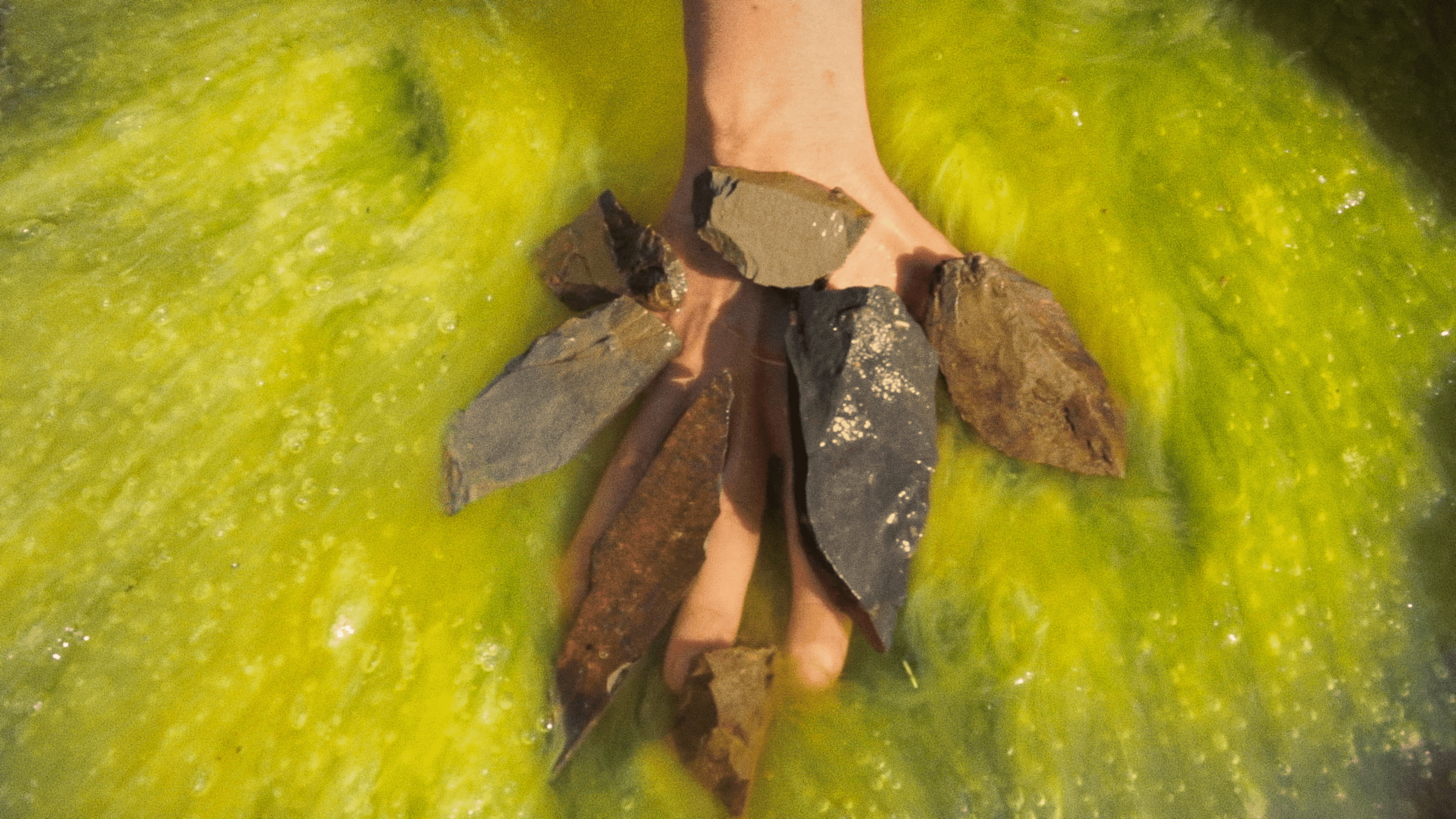
Between inner monologue and dream, Mestre Cabestany fantasizes about the future sculptures he is preparing for the portal of the Sant Pere de Rodes monastery.
Inspired by three miracles narrated in the New Testament (the resurrection of Lazarus, the turning of water into wine, and the miracle of the withered hand), the Master reflects on his vocation and the mysteries of divinity.
*Their work El riu era verd i blau i groc (The River Was Green and Blue and Yellow), 2024, is part of Manifesta 15 at La Ciba (Santa Coloma de Gramenet).
Find out more here.
Rosa Tharrats & Gabriel Ventura
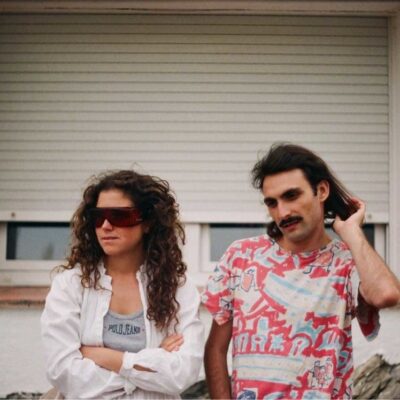
Gabriel Ventura (Granollers, 1988) is a poet and artist whose work spans disciplines such as performance, chronicle writing, and moving images. His notable recent books include W (2017; expanded edition in 2019), Apunts per a un incendi dels ulls (2020)—a poetry collection that inspired an exhibition at MACBA—and La nit portuguesa (2021), a chronicle of the filming of Liberté by Albert Serra. He is also the author of Passió i cartografia per a un incendi dels ulls (2022), a text-performance published by MACBA. Recently, alongside Rosa Tharrats, with whom he often collaborates, he co-directed the short film Els miracles del Mestre Cabestany (2023) and El riu era verd i blau i groc, presented at Manifesta 15. His poems have been translated into English, French, Dutch, Greek, Portuguese, and Turkish.
Rosa Tharrats (Barcelona, 1983) explores the synchronicities and natural patterns intuitively, using various materials, particularly textiles. Her work is rooted in the belief that both natural and artificial objects possess unexplored subjectivity and can establish an organic connection with us. Tharrats views matter as having a soul and vibration, considering it an identity. Her work often focuses on the interaction between the mineral kingdom, the plant world, and the industrial sphere, tackling themes of transformation, symbiosis, process, compilation, foundational practices, and the visible-invisible balance. She frequently works with materials from her personal archives, accumulated over time through collecting textiles, garments, cabinets, and miscellaneous objects. This archive is a continuous process that evolves and gains layers of meaning over time. Her work has been exhibited at Manifesta 15 (2024), Liste Art Fair Basel (2023), TBA21 (Córdoba, 2022), Art-o-rama (Marseille, 2022), Centre d’Art Maristany (2022), Zona Maco (Mexico City, 2022), MACBA (2021), Ehrhard Flórez (2022, 2018), Barcelona Gallery Weekend (2021), CCCB (2021), Museu de l’Empordà (2021), Bombon Projects (2020, 2024), Arco Madrid (2019), Apulia Land Art Festival (2017), and Galería Cadaqués (2015).
Sofia Lemos
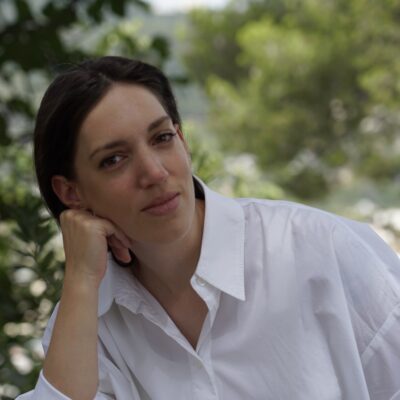
Sofia Lemos is a curator and writer whose practice explores the intersections of art, performance, and discourse. From 2021 to 2024, she was Curator at TBA21–Academy, where she initiated a new program centered on ecology and community practice, including fellowships, commissions, and convenings that brought together artists, musicians, performers, and thinkers. Prior to this, from 2018 to 2021, she was Curator of Public Programs and Research at Nottingham Contemporary, where she launched the multi-year research project Sonic Continuum in collaboration with artists and scholars, exploring the relationship between sound and social change.
Lemos was associate curator at the Riga Biennial (2020), worked as visiting curator at Galeria Municipal do Porto (2017–18), and was part of the curatorial team of Contour Biennale 8 (2017). She regularly collaborates with international institutions and is an advisor to Loop Barcelona. She edited Meandering: Art, Ecology, and Metaphysics (Sternberg Press, 2024), Sonic Continuum: On the Sound and Poetics of Time (Nottingham Contemporary, 2021), and co-edited Metabolic Rifts (Anagram, 2019). She contributes regularly to publications and exhibition catalogs.