Estado de Malestar (malestar_exhuberancia_anomalía)
14 November 2018 — 20 January 2019
2018 Co-Production Award of Centres d’Art de Catalunya, Arts Santa Mònica and LOOP Barcleona.
Capital makes the worker ill, and then multinational pharmaceutical companies sell them drugs to make them better. The social and political causation of distress is neatly sidestepped at the same time as discontent is individualised and interiorised.
Mark Fisher, Capitalist Realism
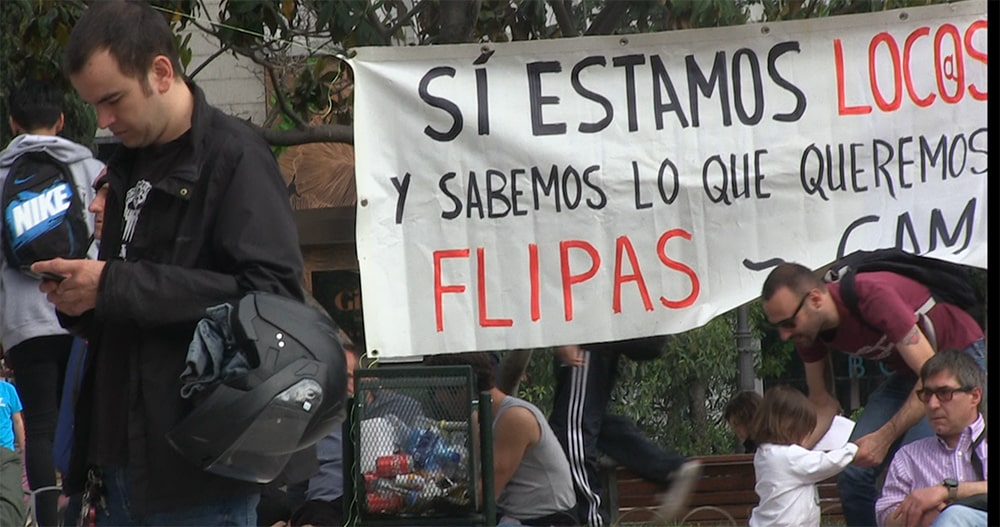
Estado de malestar (malestar_exhuberancia_anomalía) [“State of Distress (distress_exuberance_anomaly)”] (2018) takes as its starting point a series of texts by Mark Fisher, Franco Berardi and Santiago López Petit, as well as conversations with philosophers, psychiatrists and patients or diagnosed people, notably with the activist collective InsPiradas, in Madrid, in order to present itself as a visual essay about the social symptomatology and psychic suffering in the age of capitalist realism, about the pain that our life system inflicts upon us, and about the places and actions of resistance and change that we can build to combat it.
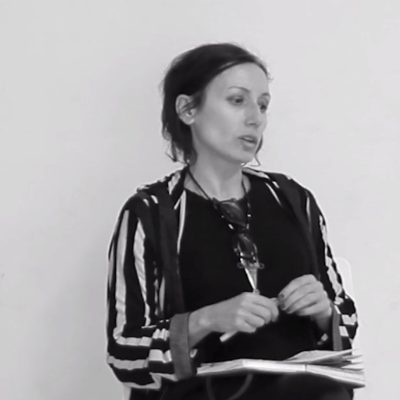
Maria Ruido is an artist, filmmaker and researcher who has been working on interdisciplinary media projects since 1998. Along her work she has developed a investigation on the imaginaries of labour in postfordits capitalism, as well as on the mechanisms that construct the memory and its relations to the different historical narratives, and currently, on decolonial imaginary and its emancipatory possibilities.
She lives between Madrid and Barcelona, where is a teacher at the Visual Culture Department at the University of Barcelona, and where she is implicated in several studies questioning the representation and the contexts were it´s being produced.