High Band-Width Network
Friday 26 May 2017
— Dedicated to Artistic, Education and Cultural Experimentation
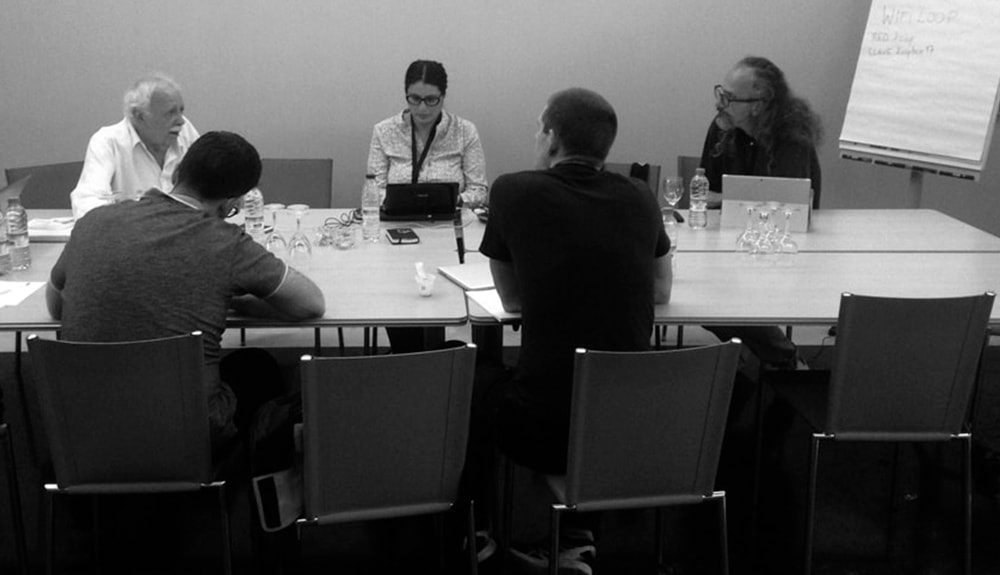
- Participants
- Andy Gracie, Roc Parés and Pau Waelder
- Moderator
- Don Foresta
- Venue
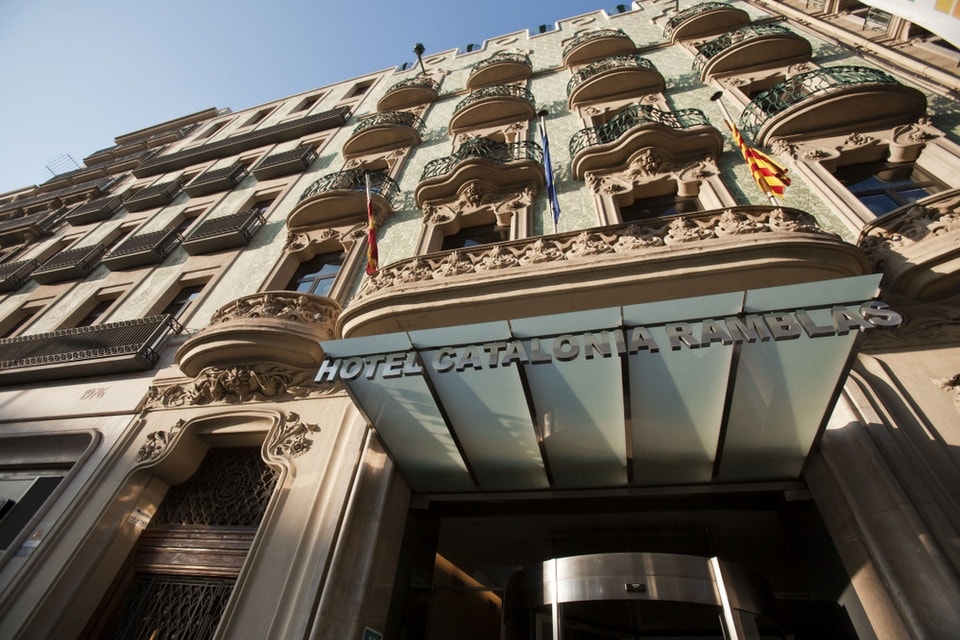
- Hotel Catalonia Ramblas
- Language
- English
Add to calendar
Andy Gracie
- Artist, Participant
1967, London
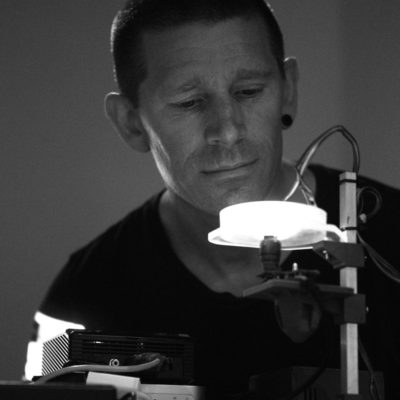
Andy Gracie is a british artist based in Barcelona. In his work examines the opportunities that other disciplines offer to creative practice, such as biology, astronomy or robotics. In his works he uses different media that come from installations where sound, video or bioarte are conjugated as a language of his own. The whole of his work is situated between art and science, generating situations of interaction and exchange between emerging systems and behaviors. In his recent works he examines the cultural impact of space research and the science of astrobiology. The fundamental notion about the origins of life, and the analysis of where the edges of what we understand as living are situated, are the themes that show their artistic practice. His research points to the complexity of knowledge and the context where the relations between art and science are meaningful. Using scientific theory and practice as an artistic medium, he examines our relationships with the post-natural world and the notion of reality.
His work has been in exhibitions in the United Kingdom, France, Spain, Austria, Germany, Slovenia, USA, Japan, Mexico, China, Hong Kong and Australia. It has received special commissions for new works of the Arnolfini (Bristol, UK), Organisms in Barcelona and AV06 of the Northeast of England. He has exhibited at important festivals such as ISEA, Artbots, Radar, Ars Electronica and the robotics exhibition for the Capital of Culture in Lille 2004.
His works have received honorary mention of VIDA (2007) and Ars Electronica (2007 and 2015). He has written numerous articles and articles for magazines, web forums, catalogs and books.
Last update: May 23th, 2017
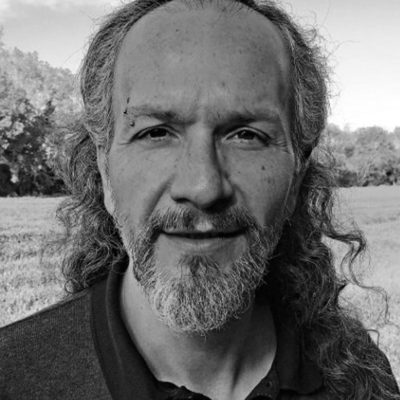
Lives and works in Barcelona, Catalonia. An interactive communication artist and researcher, Pares’ work is characterized by the poetic and critical experimentation with digital technologies, and has been presented and exhibited in festivals, art centers and museums in Europe, the Americas and Asia. Parés holds a PhD in Audiovisual Communication and a degree in Fine Arts. He is a Professor and Researcher in the Communication Department at the Pompeu Fabra University, and his research projects have been published by the British Computer Society, Academic Press, FECYT, Macba, and MIT Press, amongst others. He has launched pioneer platforms in electronic art, such as, for example, “Galeria Virtual” (1993-2000), dedicated to the development of virtual reality as an art form; ‘Macba En Línea’ (1995-1997), a pioneer platform for net.art; and M.A.L. (2011-2013), an art lab with smartphones. From 2010 to 2015 he was co-director of the Master’s in Digital Arts, UPF. His commitment to an inter-discplinary culture (which he defends for its anti-dogmatic potential and for its civilizing power), has led him to explore the intersections between art, science, technology and society.
Last update: May 10th, 2017
Pau Waelder
- Moderator, Participant
- pauwaelder.com
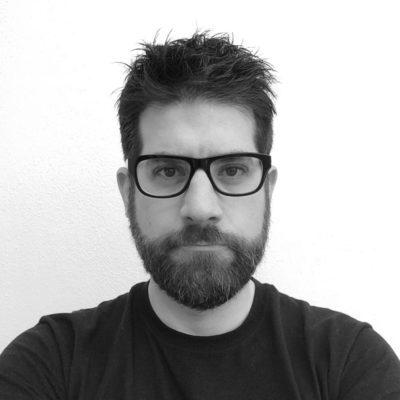
Art critic and independent curator, with a PhD in Information and Knowledge Society, Universitat Oberta de Catalunya (UOC) and Bachelor in Art History from the University of Barcelona. Waelder has curated several digital art exhibitions in museums and foundations and has been a member of the jury in various contemporary and digital art awards. He writes regularly for several specialized, international publications, as well as catalogues and monographs. Currently, he is a consulting professor in Humanities and Design as well as postgraduate courses at UOC. He is also a writer for the magazines ETC Media (Canada) and Estonian Art (Estonia), and he is section editor of Media Art in art.es contemporary art magazine.
Last update: May 15th, 2017