La forma dels temps: pròleg
6 November — 21 December 2018
- Artists
- Marco Godoy, Ángel Marcos, Shahar Marcus, Johanna Reich and Miguel Ángel Rios
- Venues
- La forma dels temps: pròleg
Add to calendar
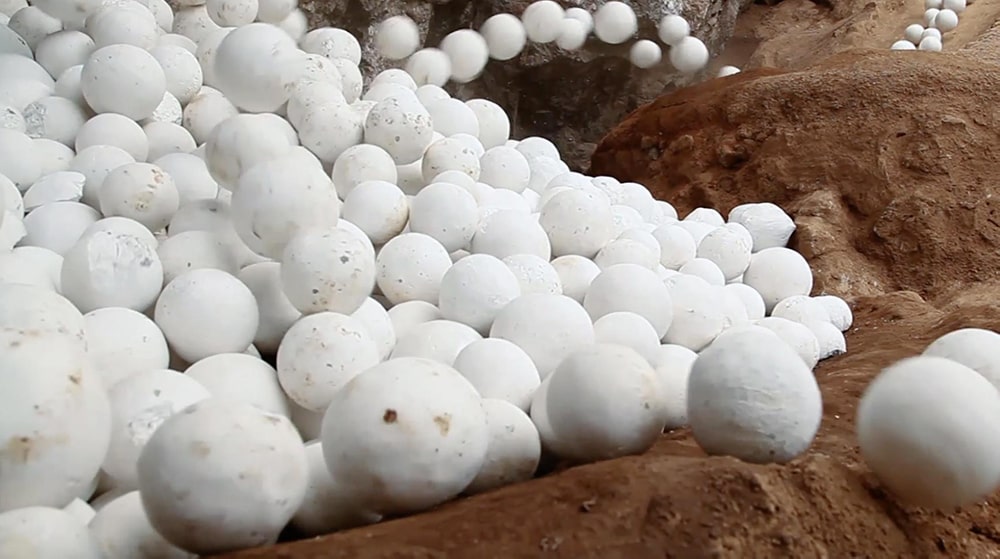
While refusing any comparison to traditional art media, video characterises for its ephemeral nature and a specific language embedded in time that brings it close to cinema. Generally devoid of a narrative structure, it often deploys moving images to construct symbolic and conceptual imaginaries that implicitly hint to specific social, historical and economical conjunctures. Being the prologue of La forma del temps, – an exhibition scheduled to take place at Casa Elizalde next January -, this video selection gathers together a group of artists that, by way of poetic and seemingly abstract associations between music and images, recount of precise geopolitical contexts while putting forth the potential of video as a creative vehicle of (hi)stories.
Marco Godoy
- Artist
1986, Madrid

Marco Godoy lives and works between Madrid and London. He holds a Masters degree in Fine Arets by the Complutense University in Madrid, and has expnaded his studies at the School of the Art Institute in Chicago (SAIC) and has a a Master in Photography from the Royal college of Art in London. His work has been exhibited in intitutions and galleries such as Matadero in Madrid, The Dallas Museum of Contemporary Art, Stedelijk Museum s-Hertogenbosch, Städtische Galerie Bremen, Siart Boliva Biennal 2013, Liverpool Biennial 2014 or the Institute of Contemporary Arts (ICA) in London.
Ángel Marcos
- Artist
1955, Medina del Campo, Valladolid
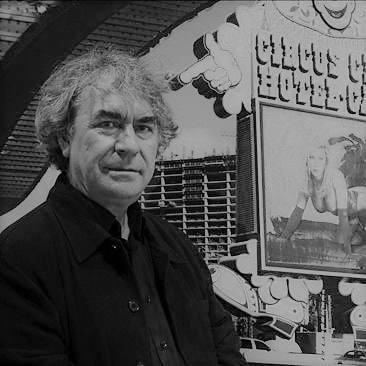
Ángel Marcos work repeatedly refers to the idea of the ‘blind spot’ as defined by Nobel literature laureate Elias Canetti: ‘a point of reversal beyond which things are no longer real’. Marcos triggers his gaze beyond all real experience; there, in the space between desire, know-how and politics, seen as the result of replacing the truth by the real in multiple games of subjectivities of knowledge and action. His works have been exhibited in recognised institutions such as Centro de Arte Reina Sofía, Madrid; Institut Valencià d’Art Modern; ARTIUM, Vitoria-Gasteiz; Museo de Arte Contemporáneo de Castilla y León; Museo Patio Herreriano, Valladolid; Naples Museum of Art, Florida; FNAC, Paris; and Maison Européenne de la Photographie, Paris. Angel Marcos lives and works in Valladolid.
Shahar Marcus
- Artist
1971, Israel
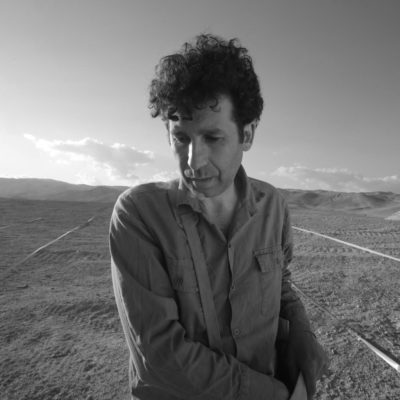
Shahar Marcus (b. 1971) is an Israeli based artist who primary works in the medium of performance and video art. His initial works dealt with the exploration of his own body and its limitations- incorporating various perishable materials, such as dough, juice and ice. His body served as an instrument, a platform on which various ‘experiments’ took place: lying on the operating table, set on fire, dressed in a ‘bread suit’ and more.
Food is also a major theme in Marcus’s works. For instance, his recurrent use of bread as a symbol of essentiality and survival is juxtaposed with military symbols. By working with food, a perishable, momentary substance and by turning it into a piece of clothing or a set, Marcus also flirts with art history; transforming arbitrary objects and materials into something immortal and everlasting.
His early video-performances feature himself along with other artists, with whom he had collaborated in the past. However, in his recent works, Marcus appears by himself, while embodying different roles and characters. ‘The man with the suit’ is a personage that was born from an intuitive desire to create a ‘clean-cut’ version of an artist, juxtaposed to the common visual stereotype of the artist as a laborer. Drawing influence from Magritte’s familiar figure- the headless suit, a symbol of Petite bourgeoisie, Marcus embodies this man with a suit as an artist who is in charge, a director.
His most recent works deal with local political issues, by approaching iconic Israeli landmarks with a critical and humorous point of view. Thus, Marcus reflects on his own heritage, environment and the creation of local historical narratives. His works are influenced by the visual language of cinematography along with familiar themes and tributes to art – history and artists, such as Ives Klein, Paul McCarthy, Peter Greenway and Jackson Pollack.
Shahar Marcus is an active artist for over a decade and has exhibited at various art- institutions, both in Israel and around the world, including: The Tate Modern ,The Israel Museum, Tel Aviv Museum of Art, Petach Tikva Museum of Art , Charlottenburg, Copenhagen- Kunsthalle , Moscow Biennale, Poznan Biannale, Moscow Museum of Modern Art The Hermitage in Saint Petersburg and at other art- venues in Polland, Italy, Germany, Georgia, Japan, the USA and Turkey. Many of his works are a part of various important collections, such as The Israel Museum, Tel Aviv Museum of Art, Petach Tikva Museum of Art as well as art- intuitions in Poland and Italy.
Johanna Reich
- Artist
1977, Minden
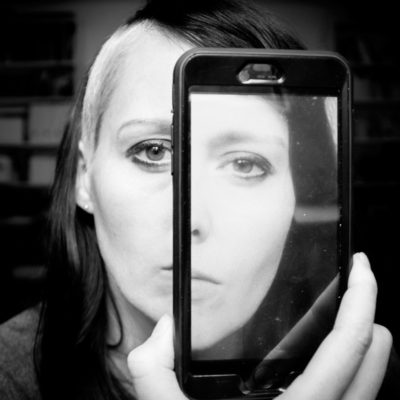
JOHANNA REICH is a video artist working also in the fields of performance and photography. Johanna Reich received national and international awards and scholarships like the Nam June Paik Award, the Excellence Prize of the Japan Media Arts Festival,Tokyo, the Media Art Award NRW and the Konrad-von-Soest Prize. She took part of several artist residencies Romania, the USA, Luxembourg and Spain.
EXHIBITIONS (selection): Ornament and Obsession, Goethe Institut Paris, France (2017) Till it‘s gone, Istanbul Modern, Istanbul, Turkey, (2016) Miami New Media Festival, Miami, USA (2015), Behind The Screen, Galerie Anita Beckers, Frankfurt am Main (2014), Per Speculum Me Video, Frankfurter Kunstverein (2013), Young Artists Project 2012, Daegu EXCO, Corea (2012), ARTE Video Night, FIAC Paris (2011), ¡Patria o Libertad!, Museum of Contemporary Canadia Art,Toronto (2011), Culture Shock: Video Interventions at the Olympic and Paralympic Winter Games, Vancouver, Canada, (2010), Moscow International Biennale for Young Art, Russia (2010).
Miguel Ángel Rios
- Artist
1943, Catamarca
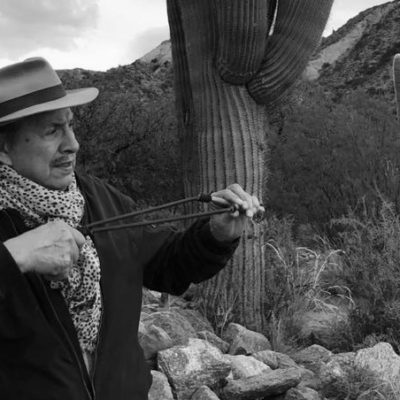
In his work, Ríos pairs a rigorous conceptual approach with a meticulously constructed, often handmade aesthetic. Since the 1970s, he has made work about the concept of the “Latin American,” using this idea as both an artistic strategy and a political problem. In the 1990s, he began creating a series of maps, which he carefully folded and pleated by hand. Marking the 500th anniversary of the “discovery” of the Americas, the maps indicate long histories of power and colonial experience, and they reference traditional indigenous arts in the Americas, including the Andean quipu. Since the early-2000s, Ríos has also delved into the medium of video to create symbolic narratives about human experience, violence, and mortality.