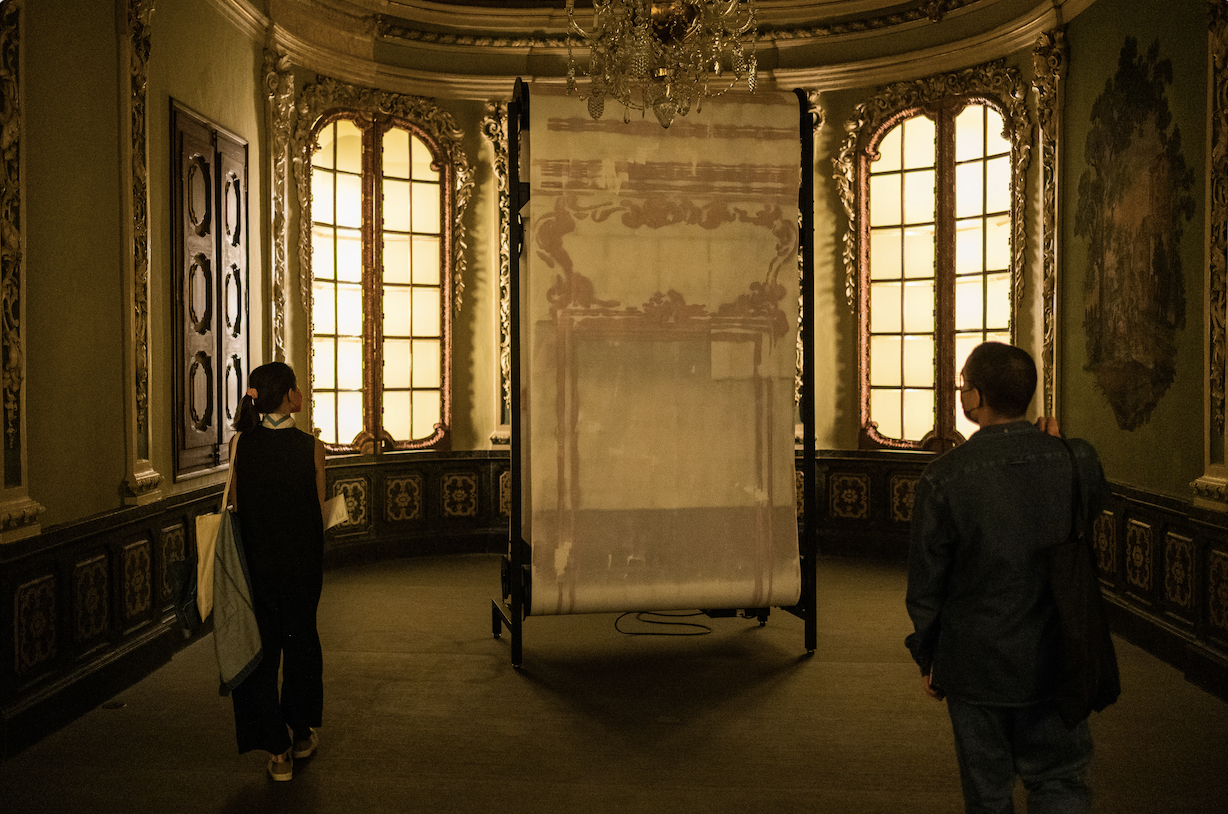
Art Larson. ‘The Shadow of the Flatlander’
22 October 2022 — 23 April 2023
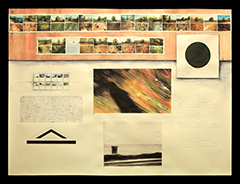
- Artists
- Art Larson
- Curators
- Valentín Roma
- Venue
- La Virreina Centre de la Imatge
Add to calendar
Art Larson (San Diego, 1962) interrogates the relationship between the work we see and the artist who created it. He highlights the outsider’s perspective, the observer who recognizes himself in the overlooked. He showcases the residue of ordinary moments, accumulated over a lifetime, and the artist’s shadow that leaves no trace on the landscape, yet is a part of it.
The career of Art Larson defies any attempt at pigeonholing and even questions the drive (specific to the field of art) to gain prestige from being analysed by a critical literature.
The themes that appear in The Shadow of the Flatlander include failed expectations, misunderstanding as an epistemological basis, eschatology, and the artist’s social position. The title alludes to the amusement—a far from frivolous political humour—that categorizes Larson’s approach to most of his works.
One can see in these works a rejection of big decisions and definitive projects; to paraphrase the title of the book by Larson’s compatriot Susan Sontag, everything depends where the stress falls. However, intensity also means moving through apparently contradictory territories, between unfinished or amateur works and formal virtuosity, between comic performance and video documents.
The French philosopher Jean-Luc Nancy wrote in The Inoperative Community (1983) that inoperativeness does not entail inaction but rather a plea to produce, through undetectable positions, a work from anywhere and through any material, with the aim of discarding two quintessential ontological questions: What is this? What does this mean?
We can say that this drive is observed in Art Larson’s proposals, which can be understood not only because of their processual nature but above all because of what distances them from a coherent or seamless discourse.
It is thus precisely the remains that prevent art from closing in on itself, exulting within its limits. Larson somehow operates with the remains, through which he achieves a modulable language, a language that leaps from sensitivity to humour, from the fragile to the inappropriate.
On viewing the works that make up The Shadow of the Flatlander, one wonders what would become of museums if they had not rejected tentative forms, if, instead of embracing a host of dogmatisms, they had initiated a sort of journey to nowhere, an odyssey from all places and from none in particular.
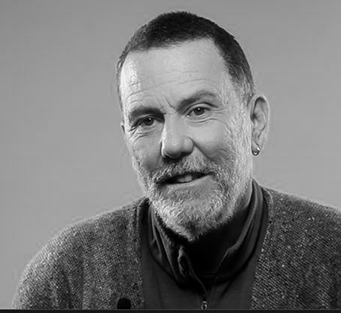
Born in San Diego in 1962, artist Art Larson spent most of the eighties in San Francisco, where he studied at the Art Institute, the Academy of Art and USF. He moved to Spain in 1988 and settled down in Barcelona in 1992. He works with a variety of media (film, video, drawing and photography), even though he is fundamentally a performance artist.
Valentín Roma
1970, Ripollet

Valentín Roma va néixer a Ripollet el 1970 i actualment viu a Badalona. Doctor en Història de l’Art i Filosofia per la Universitat de Southampton, ha comissariat exposicions d’art contemporani a Espanya i l’estranger, des del Museu Picasso, la Fundació Tàpies o el CaixaForum de la seva ciutat fins a la Biennal de Venècia o la Kunstverein de Stuttgart. Va ser conservador en cap del Museu d’Art Contemporani de Barcelona i, actualment, és director de la Virreina Centre de la Imatge de Barcelona.