Lotty Rosenfeld. ‘Me niego’
Friday 24 November 2023, 7 pm
- Artists
- Lotty Rosenfeld
- Speakers
- Alejandra Coz Rosenfeld and Luz Muñoz Rebolledo
- Curators
- Alejandra Coz Rosenfeld
- Venues
- Casa Amèrica Catalunya
- A project by
- Casa Amèrica Catalunya, Fundación Lotty Rosenfeld & LOOP.
- Price
- Free admission
- Producción}
- Patrocina}
Add to calendar
Screening and conversation about the video art work of artist Lotty Rosenfeld 50 years after the military coup in Chile.<br />
“All art is political. Even an innocent watercolour flower includes a stance on something, and that in itself is political.” asserted Lotty Rosenfeld.
The selected video art pieces have been chosen in commemoration of the 50th anniversary of the Chilean military coup. Six pieces created between 1979 and 1989: One Mile of Crosses on the Pavement (1979), An American Wound (1982), Proposal to (between) cross limit spaces (1983), Woe to the Defeated (1985), Peace for Sebastián Acevedo (1985), and Captives (1989). These works denounce the way in which political, economic and social power operates across the whole of society.
Rosenfeld’s work, the first female artist in Chile to use video as a medium, is an ever-evolving, interconnected piece that draws from historical and current events.
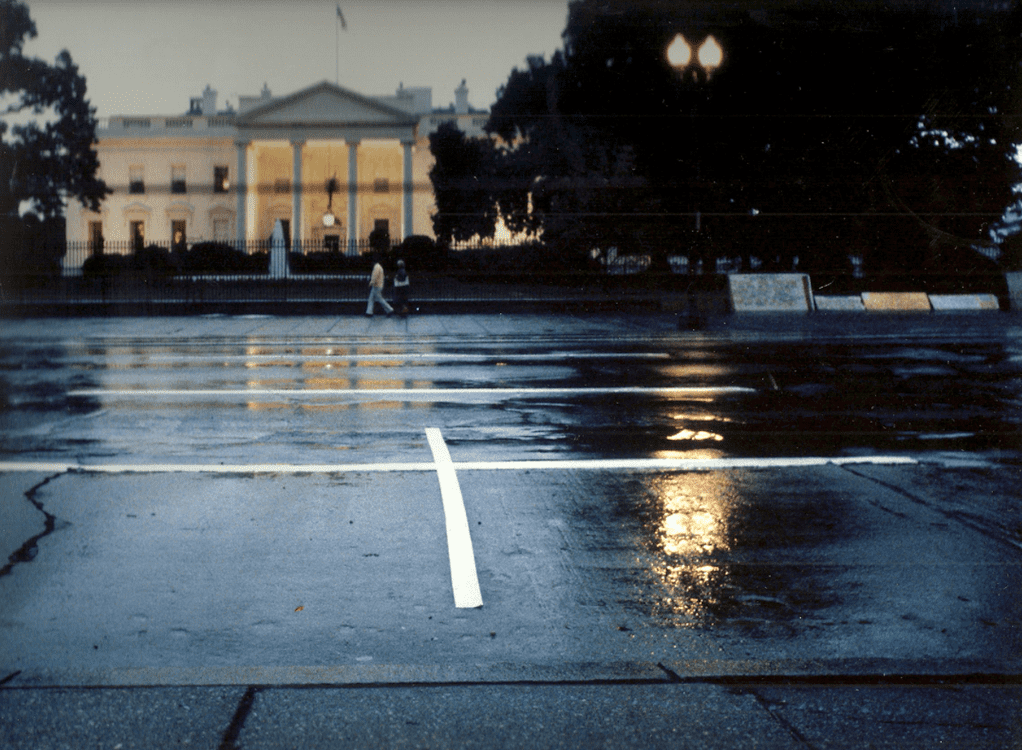
Lotty Rosenfeld’s first and iconic work, One Mile of Crosses on the Pavement, marks the beginning of the catalogue of her uninterrupted trajectory of street interventions spanning more than 40 years around the world. She uses the lines that divide the road traffic lanes crossed with another line of the same characteristics, resulting in a + symbol. The road sign and the street serve as its support. The work begins locally in the city of Santiago de Chile, specifically on Avenida Manquehue, an avenue with a panoramic view of the hill of the same name, which in Mapudungún means: place of condors. The mile of crosses starts at the crossroads of Avenida Los Militares and ends at Avenida Presidente Kennedy, intersecting concepts of armed forces and American imperialism, both responsible for the military coup and the subsequent dictatorship in Chile.
Alejandra Coz
Lotty Rosenfeld
1943, Santiago de Chile
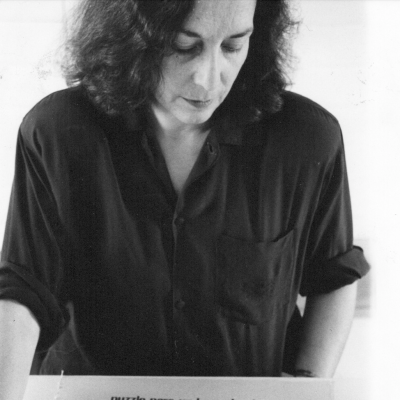
In 1963, she entered the School of Applied Arts at the University of Chile. In the 70s, she focused primarily on printmaking. 1977 marked a turning point in her work; Chile was entrenched in a military dictatorship, so she had to redefine her role as an artist. In 1979, alongside the artists Diamela Eltit, Raúl Zurita, Juan Castillo and Fernando Balcells, she co-founded CADA (Colectivo Acciones de Arte). It was at this point she also began creating her pavement pieces, a practice she carried out continuously for over forty years. She was the first woman to use video in Chile, producing video art pieces, fiction, video installations, and sound installations. She participated in various events, including the FIRST TOKYO INTERNATIONAL VIDEO, 5th ISTANBUL BIENNIAL, DOCUMENTA 12, 29th SAO PAULO BIENNIAL, 56th VENICE BIENNALE, and the RADICAL WOMEN exhibition curated by Andrea Giunta and Cecilia Fajardo-Hill. Lotty Rosenfeld’s work is held in prominent collections and museums such as MNBA (Santiago, Chile), MoMA (NYC), Tate Modern (London, England), Museo Nacional Centro Reina Sofía (Madrid, Spain), MALBA (Buenos Aires, Argentina), Stedelijk Museum (Amsterdam, Netherlands), and Guggenheim Museum (NYC and Abu Dhabi).
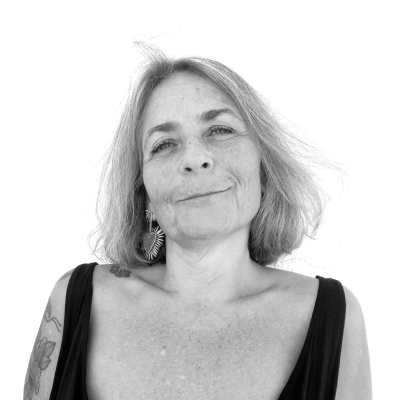
Es poeta, escritora y artista visual. Estudió Letras y Estética en la Pontificia Universidad Católica de Chile y Arte en el Palazzo Spinelli, Florencia (Italia).
Ha publicado los libros de poesía Marea Baja (Ed. Cuarto Propio, 2017), La Jabalina (Ed. Filacteria, 2019) y La Lava (Sangría Editora, 2021). Durante los años 1994 a 2020 trabajó como asistente de producción de la obra la artista visual Lotty Rosenfeld, asistiendo la producción en ciudades como Berlín (Alemania), NYC (USA), Cali (Colombia), París (Francia), Roma (Italia), Madrid (España), Estambul (Turquía) además de la 56ª Bienal de Venecia y Documenta 12.
Durante 2021 participó en Umbral la XV Bienal de Artes Mediales de Santiago de Chile, con la pieza Cicatrizar un proceso biológico instalada en el Museo Nacional de Bellas Artes (MNBA), la obra dedicada a la memoria del duelo de la artista Lotty Rosenfeld, su madre. Entre 2021 y 2022 realizó el levantamiento del archivo de la artista financiado por el Fondo de Patrimonio de Chile. Actualmente es la Directora Ejecutiva de la Fundación Lotty Rosenfeld.
Poet, writer, and visual artist. She studied Literature and Aesthetics at Pontificia Universidad Católica de Chile and Art at Palazzo Spinelli in Florence, Italy.
She has published the poetry books Marea Baja (pub. Cuarto Propio, 2017), La Jabalina (pub. Filacteria, 2019), and La Lava (pub. Sangría Editora, 2021). From 1994 to 2020, she worked as a production assistant for the visual artist Lotty Rosenfeld, assisting in productions in cities such as Berlin (Germany), New York City (USA), Cali (Colombia), Paris (France), Rome (Italy), Madrid (Spain), and Istanbul (Turkey), as well as the 56th Venice Biennale and Documenta 12.
In 2021, she participated in Umbral, la XV Bienal de Artes Mediales de Santiago de Chile, with the piece Cicatrizar un proceso biológico (Scarring is a biological process) exhibited at the Museo Nacional de Bellas Artes (MNBA). The piece is dedicated to the memory of the mourning of the artist Lotty Rosenfeld, her mother. Between 2021 and 2022, she carried out the survey of the artist’s archive financed by the Chilean Heritage Fund. She is currently the Executive Director of the Lotty Rosenfeld Foundation.
Luz Muñoz Rebolledo
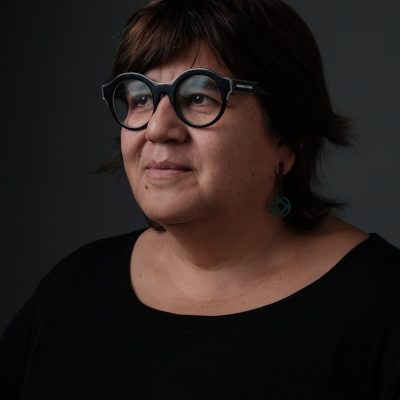
Curator, consultant, visual arts researcher, and documentalist. She obtained her postgraduate degree in Master of Arts CCC-Critical Curatorial from Geneva University of Art and Design, and her doctoral studies in Society and Culture at the University of Barcelona. She has dedicated over two decades to the investigation, recovery, and promotion of archives in Chile and the American continent. Since 2008, she has been a key member of the team at Documents of Latin American and Latino Art and Digital Archive and Publications at the International Center for the Arts of the Americas (ICAA), located at The Museum of Fine Arts in Houston, Texas, USA. This project is currently one of the largest of its kind worldwide.
In her curatorial and research path, her primary focus lies in multidisciplinary projects that involve engaging with communities, artists, and researchers in a holistic manner. Her key areas of interest revolve around archives, memory, Latin American art and culture, ecologies, the environment, social movements, and contemporary activism.