“Paraules d’amor” by Núria Güell. Winner of the 2023 Video Creation Award
15 November — 15 December 2024
- Participants
- Núria Güell
- Venue
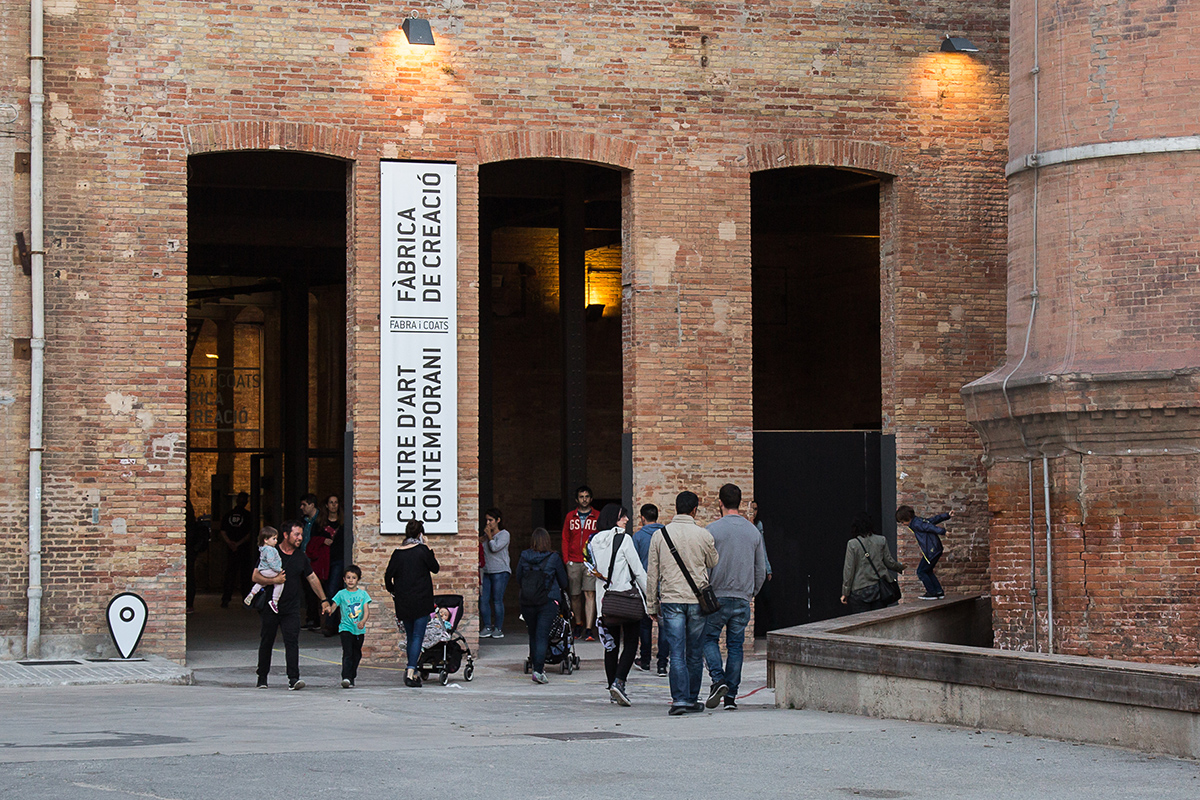
- Fabra i Coats-Centre d’Art Contemporani de Barcelona
- A project by
- Loop Festival
- Price
- Free admission
Add to calendar
The list of Western cultural representations surrounding love and passions would be endless: from Greek mythology and its tragedies, through Christian scholasticism, courtly love, the Golden Age, and the romanticism of the 18th century and part of the 19th, to the most popular or alternative cultural expressions of our time, there has been testimony of the ravages caused by some idea of love.
In the realm of the real, we continue to suffer from believers who exterminate the other in the name of love for a God; all the nationalists who continue to throw themselves into mutual destruction for love of some homeland or motherland; adolescents who interpret jealous traits as signs of true love; the mother who kills her children so that they do not suffer; revolutionaries who give their lives or take them for love of some idea of social revolution; or the lover who decides to kill their beloved (or vice versa) upon realizing they are losing their love.
What is the responsibility of culture in all these paradoxes? How many dramatically pre-established situations have we lived in our love stories? What pleasures or phantoms are hidden behind the mask of beliefs surrounding the ideal of love? Could it be that the main cause of social conflicts is not hatred but an excess of blind love? What effects would the de-idealization of love have on social order? And on us?
In the exhibition Words of Love, Núria Güell, through an inaugural action, a video projection, and a closing party with live music, questions the established representations and learned cultural mandates surrounding passionate love and its consequences.

Núria Güell (Girona, 1981) flirts with the powers that be, joins forces with collaborators who are in on the project, and takes advantage of the privileges offered by the artistic institutions she works with, as well as those she enjoys as a Spaniard and European, to analyze the way in which power structures affect our subjectivity and attempt to change those connections. Güell’s recent solo shows include exhibitions at MUSAC, Léon (Spain) and at Maczul Museo de Arte Contemporáneo de Maracaibo (Venezuela) in 2018, the Middlesbrough Institute of Modern Art and the Project Arts Centre in Dublin in 2016, the Vienna Brut Konzerthaus in 2015, and Salle Zéro in Havana in 2013. She also works regularly with a number of self-managed art and social centers. Núria Güell is represented by the ADN Gallery in Barcelona.Güell’s artistic practice is about the analysis of how power devices affect our subjectivity, subjecting it to law and hegemonic moral. The main resources that she uses in her work are to flirt with the established powers, complicity with different allies and the uses of privileges that artistic institutions she works with have, as well as those socially granted to her for being a Spanish and European. These tactics, diluted into her own life, are developed in specific contexts intending to question commonly-assumed identifications and cause a disruption in power relations.