Judith Adataberna, Imagen Ensayo, Mar Guerrero, Rio Molinengo, pantea. ‘D’un rastre com un tall’
16 — 25 November 2023
- Artists
- Judith Adataberna, Imagen Ensayo, Mar Guerrero, Rio Molinengo and pantea .
- Curators
- Eva Paià and Marina Ribot Pallicer
- Venues
- Convent de Sant Agustí
- A project by
- Centre Cívic Convent Sant Agustí & LOOP
- Price
- Free admission
Add to calendar
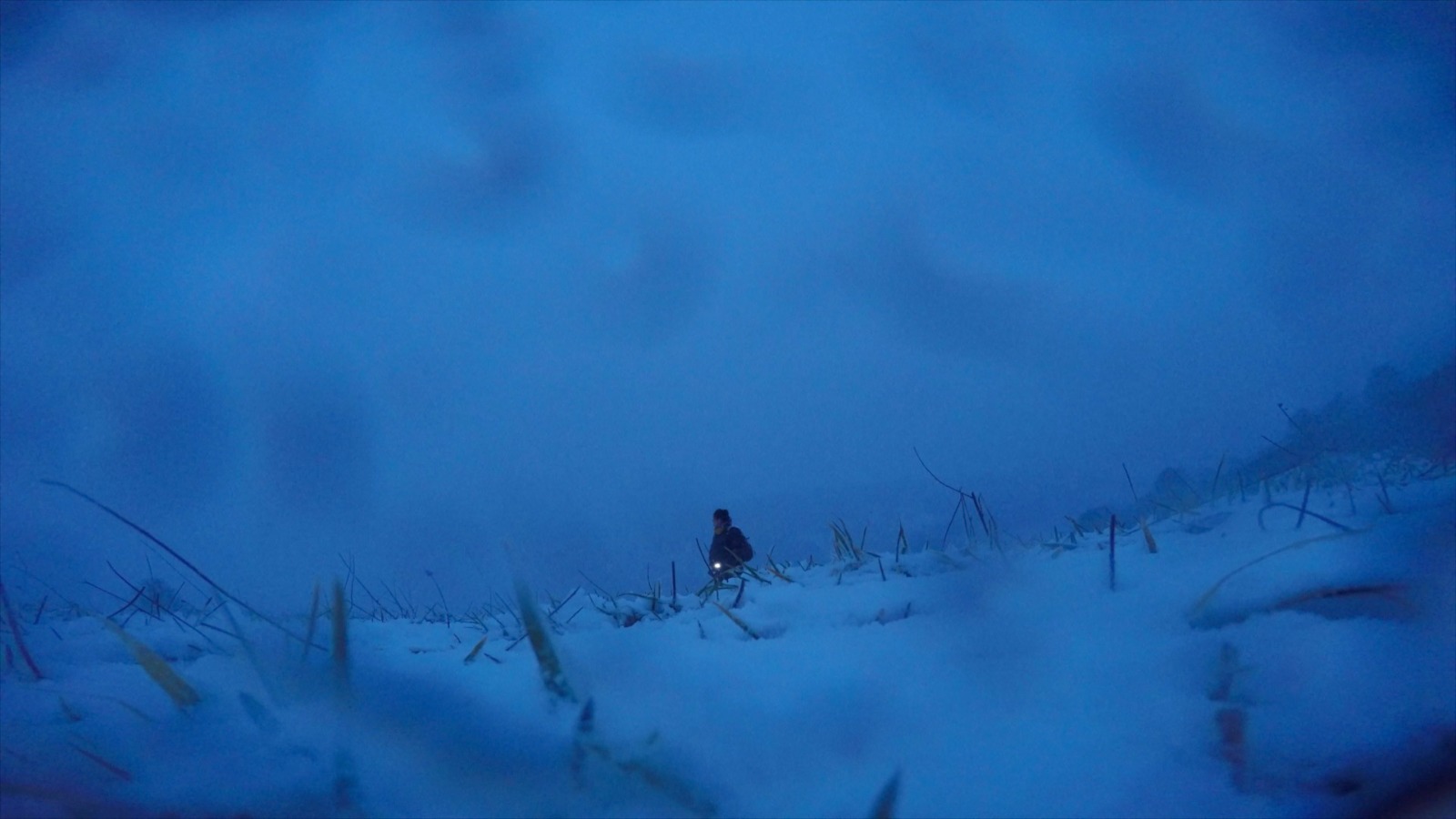
To exhale words that have not yet been spoken, images that beg to be remembered, and vague visions that burst forth to be heard. Delving into the remnants of the world that still yearns to be a world is an act of courage that need not be justified by familiar responses. The trails that compose the present complicate our experiences, igniting the fervour of a forgotten or unknown state. They lead us into a temporal disruption, a kind of haphazard condition that gives shape to what is unsettling, mysterious, vast, yet simultaneously envelopes us.
The pieces in this exhibition breathe unusual, hostile, and delicate depths of our individual and collective memory. They unveil stories that are intimate, strange, and painful, stories that saturate the landscapes, desire them, ignite them, and separate the densities and bodies. In the end, what is this? Is it a conversation or a cry for life? This duality of the works, which is one and the same, merges with the courage to give a name to what is intentionally hidden. It transcends the notion of evoking memories from the past while retaining them in the violence of the present moment, taking shape and substance in the space that welcomes them.
This exhibition aims to explore the concept of “trail” through a variety of images and connotations, perceiving it as a plastic, linguistic, and metaphorical element that infiltrates, saturates, and has the capacity to reemerge like a cut.
Brochure here.
Judith Adataberna
1992, Vilaboa
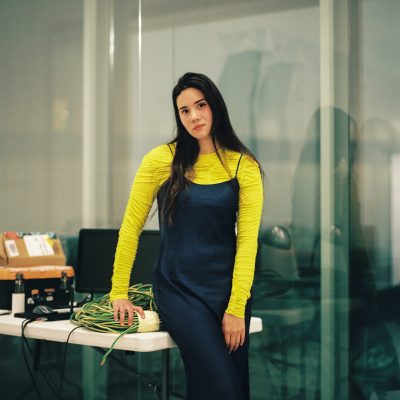
Judith Adataberna (Vilaboa, 1992) has developed her artistic imagination through the avenues of experimental cinema, photography, and video installation. She received her education in Fine Arts and completed her studies in the Master-LAV experimental film laboratory.
Born to seafaring parents, she spent her childhood on an oyster batea, fostering a keen observation of nature and its phenomenology. Her interest in psychology and the mysteries of consciousness has been instrumental in crafting simulation-based works that challenge the scales and thresholds of perception. Her themes have explored survival mechanisms and technological evolution, raising questions about human detachment from nature.
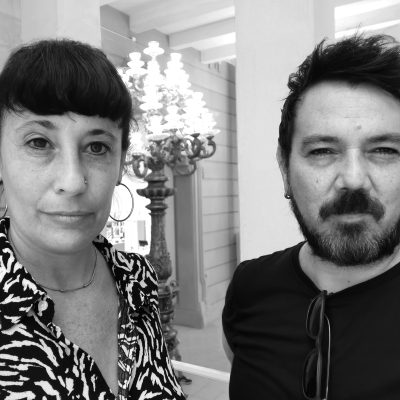
Imagen Ensayo is a visual arts collective based in the city of Barcelona, focused on the migrant experience, anti-racist activism, critical feminism of colonial whiteness, and sex-gender dissidence. Their projects, which have spanned from audiovisual to the generation of images using artificial intelligence, blend social research and community-based political communication, with a special focus on encoding border records within the context of a racially oriented capitalism. The collective is formed by Valeria Linera and Rodrigo Requena.
Mar Guerrero
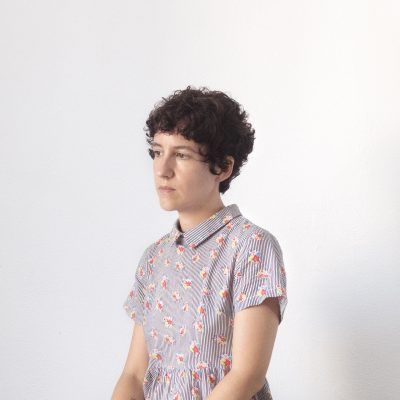
A graduate in Fine Arts from the University of Castilla-La Mancha (2014), she completed the Master’s in Artistic Production at the Valencia Polytechnic University (2016).
Her work displays a keen interest in studies related to the preservation of the marine ecosystem and the observation of the cosmos. She delves into the symbolic relationships between reality and fiction, as well as the concepts of error and failure in connection to historical thought models that continue to influence contemporary productive and visual consciousness. She juxtaposes ideas of dispersion and speed with those of duration and temporal experience. She questions the use of spaces and objects, connecting notions of renewal and disposal with reactivation and re-signification, taking inspiration from seemingly insignificant everyday moments that are easily overlooked. She uses the fingerprints of a society that is constantly changing to become an archaeologist that investigates using the memory of spaces.
Rio Molinengo
1993, Rosario, Santa Fé
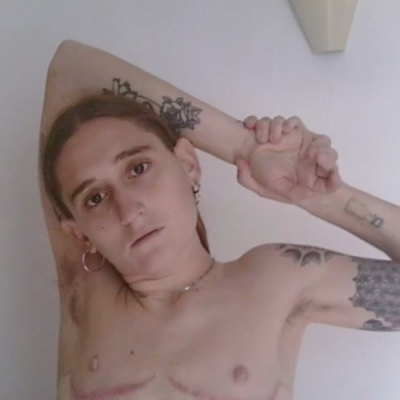
Rio Molinengo is an audiovisual creator and experimental sound artist. He studied Fine Arts at the Faculty of Humanities and Arts at the National University of Rosario. He has been living in Barcelona since 2017.
His work as an audiovisual producer seeks to experimentally capture the everyday. Created sounds and textures blended in a journal of urban landscapes, nature, and portraits, all captured with a handheld camera.
pantea .
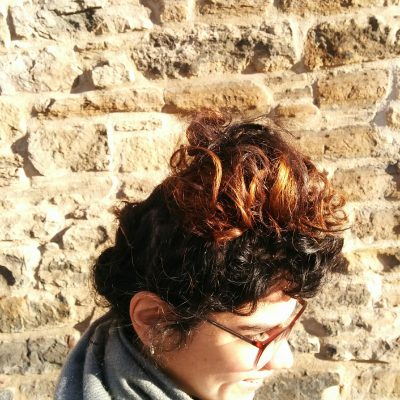
Pantea is a soundmaker and multidisciplinary artist from Iran engaging with narratives of ecological and more-than-human connection. Her work has incorporated performance, walking, film, photography, and music. More recently, pantea is focused on developing a socially engaged practice by exploring possibilities brought about by sound and listening. She is passionate about the environment, plants, and wetlands. pantea is one half of the design group Studio Informal and a member of Khamoosh, an artistic research collective dedicated to preserving and archiving Iranian sonic heritage. She has works performed and exhibited internationally across the UK, Netherlands, Germany, Belgium, Croatia, Turkey, Iran and India.
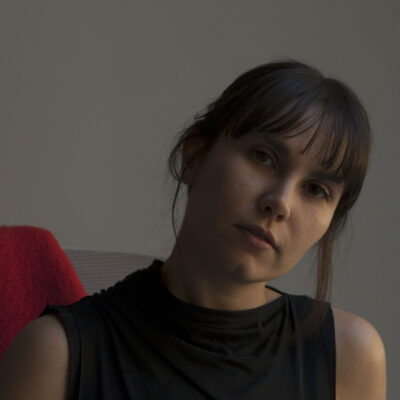
Eva Paià es Directora Artística de la Sala d’Art Jove y Comisaria Adjunta del Loop Festival 2025. Tiene un Máster en Estudios Avanzados y una Licenciatura en Historia del Arte, ambos por la Universidad de Barcelona. Desde 2020, colabora con el Departamento de Educación del MACBA, reflexionando sobre la institución y proponiendo formas alternativas de implicación y de dar voz dentro del museo. Ha colaborado con instituciones como el MACBA, La Escocesa o Fabra i Coats, con proyectos como Idensitat, con galerías como àngels barcelona y con festivales como Loop Festival o Art Nou. Ha escrito para A*desk, El Temps de les Arts y La Maleta de Portbou.
Marina Ribot Pallicer
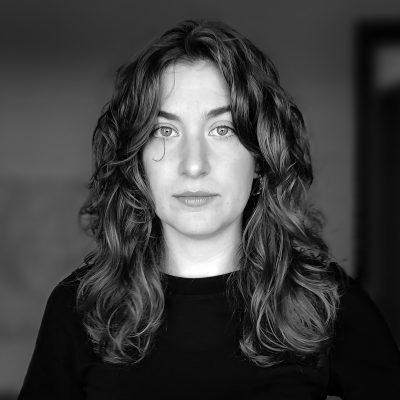
Ha estudiado Bellas Artes en la Universitat de Barcelona y a The Cooper Union for the Advancement of Science and Arte en Nueva York. Ha ampliado los estudios cursando el grado en Historia del Arte (UB). Su práctica artística recoge varias propuestas audiovisuales, fotográficas y pictóricas en las que explora y cuestiona diferentes estrategias de control y dominio sobre el cuerpo, el territorio o el lenguaje. Actualmente, gestiona colectivamente la Sala d’Art Jove, un espacio de creación, de investigación y de formación de artistas jóvenes que depende de la Generalitat de Cataluña. Desde el 2021, colabora de forma regular con el Departamento de Educación del MACBA. Recientemente, ha participado en el programa «Culturas de Avenir», impulsado por el Centro Pompidou de París, la Haus der Kulturen der Welt de Berlín (HKW) y el Centro de Cultura Contemporánea de Barcelona (CCCB), con el apoyo del OFAJ.