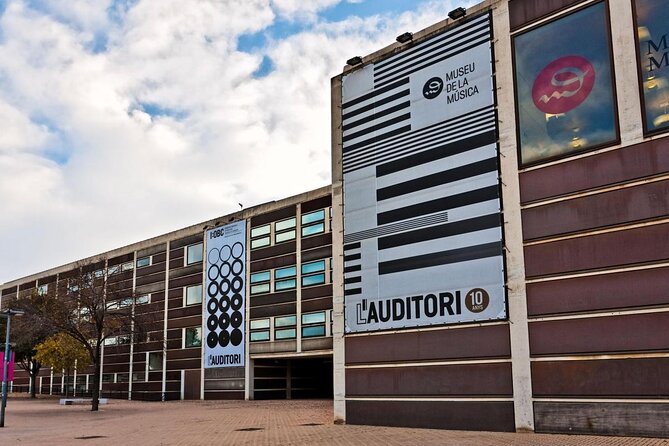
‘Claiming the Echo’
3 — 20 November 2022
— Within the framework of the exhibition 'INTERFACE: the common frontier between video art, music and sound'
- Artists
- Cecilia Bengolea, Carles Congost, Marco Godoy, Teresa Serrano, Adrian Melis and Fito Conesa
- Venue
- Museu de la Música de Barcelona
Add to calendar
On the occasion of its first collaboration with the Museu de la Música de Barcelona, the LOOP festival presents two exhibition proposals that, from very different perspectives, investigate the common ground between video art, music and sound.
On the one hand, the video-graphic tour Reclaiming the echo, with works by national and international artists who claim and celebrate the communicative nature of the musical experience.
Works presented:
Cecilia Bengolea (Buenos Aires, 1979)
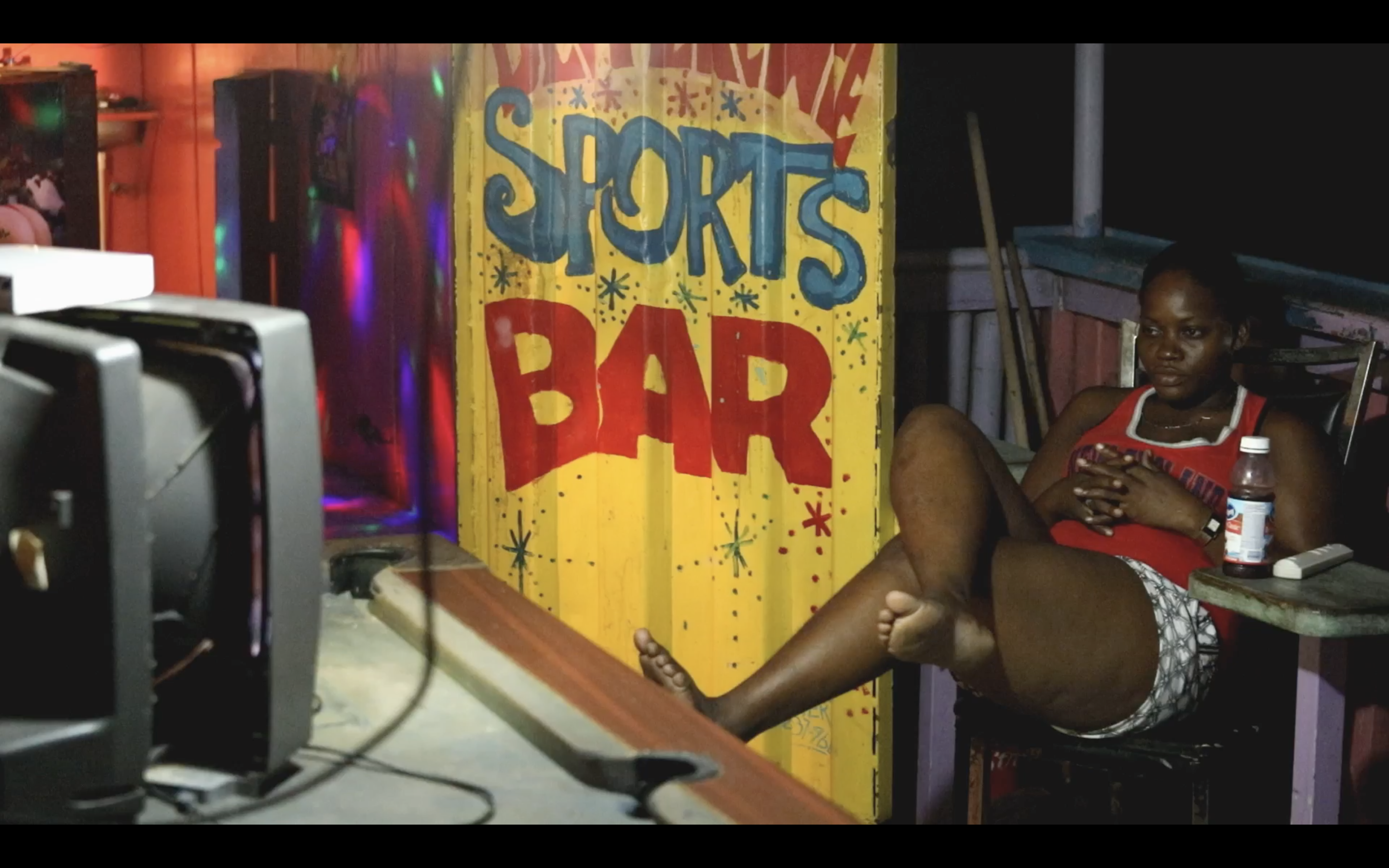
Dancehall Weather, 2017
10 min 28 sec
Fito Conesa (Cartagena, 1980)
El Reparo, 2021
5 min
Carles Congost (Olot, Girona, 1970)
Wonders, 2016,
15 min
Marco Godoy (Madrid, 1986)
Reclamar el eco, 2015
5min 25 sec
Adrian Melis (La Habana, 1985)
Glorias de un futuro olvidado, 2016
15min
Teresa Serrano (Ciudad de México, 1936)
Amapola, 2017
2 min 15 sec
—
Over the centuries, there has been much debate about the meaning of music and composition as linguistic forms. Although it would be difficult to affirm the universality of musical language without falling into hasty generalizations, it can be said that music functions as a communication tool, with its own specific codes of expression and representation, intonation and vocabulary.
As it happens with linguistic variety to distinguish among people who speak the same language (‘dialects’), in the musical field it is also possible to differentiate between different genres or styles. According to the academic classification, the factors to be taken into account in this case would be the ‘instrumentation’, the ‘design’ and the ‘intention’ of a composition, as well as its ‘cultural peculiarities’ and the ‘historical and geographical setting’ of its production.
According to this, you would have genres that use classical or acoustic musical instruments, and others that are produced virtually, with electronic nuances and synthesizers; there are genres that are a mixture of different music, and others that claim their purism. Some follow an exact score and others are based on improvisation. There are compositions designed to accompany singing or dancing, as well as to cause moments of recollection and reflection. There is traditional or popular music, as well as evangelical or religious music. There are rhythms resulting from youth movements in opposition to the system, as well as repeated litanies addressed to a saint or melodies related to the protests of the working class.
As this video selection wants to show, we could say that music is a hybrid, diverse, plural, heterogeneous phenomenon, but present in everyday life or in the memory of each one. That is a communication tool with a strong political, social, liturgical, visionary or entertainment character.
Thus, in Helicon (2018) by Fito Conesa (Cartagena, 1980), we hear a mystical song addressed to the Earth before the Apocalypse; and in Reclamar el eco [Reclaiming The Echo] (2012) by Marco Godoy (Madrid, 1986) the slogans pronounced in the protest demonstrations in Spain. The video Amapola (2017) by Teresa Serrano (Mexico City, 1936) proposes a sad melody that celebrates the symbolic resistance of the poppy flower to the drug trafficking network in Mexico, while Glorias de un futuro olvidado [Glories of a forgotten future] (2016) by Adrián Melis (La Habana, 1985) presents a group of women who remember their past in the time of Capitalist Cuba through some songs. On the other hand, Wonders (2016) by Carles Congost (Olot, Girona, 1970) uses resources close to musical biopic and performance to reflect on the social and personal repercussions of success and failure; and Dancehall Weather (2017) by Cecilia Bengolea (Buenos Aires, 1979) proposes a mix of various choreographic videos filmed between 2014 and today, where dancehall music constitutes an important moment of affirmation and aggregation.
We could reaffirm, then, that the meaning (or interpretation) attributed to music has to do, essentially, with the cultural horizon from which it is produced or heard, but that its existence is verified from one side of the planet to the other. As a resonance, a repercussion, or a continuous reflection. An infinite echo beyond time and space.
Cecilia Bengolea
- Artist, Participant
1979, Buenos Aires
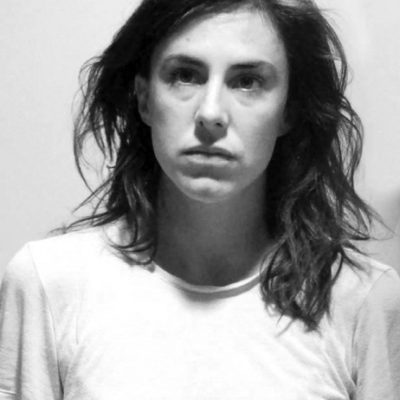
Cecilia Bengolea (Buenos Aires, 1979), works on a range of media including performance, video and sculpture. Using dance as a tool and a medium for radical empathy and emotional exchange. Infused with the symbolic energies found within nature and relationships, her compositions are formed around ideas of the body – both individually and collectively – as a medium. Bengolea develops a broad artistry where she sees movement, dance and performance as animated sculpture.
Bengolea has collaborated with dancehall artists such as Craig Black Eagle, Bombom DHQ, Damion BG, and with artists Dominique Gonzalez Forster and Jeremy Deller. Her collaborative work with French choreographer François Chaignaud, Pâquerette (2005-2008) and Sylphides (2009), have earned several awards such as the Award de la Critique de Paris in 2010 and the Young Artist Prize at the Gwangju Biennial in 2014. They have also co-created dance pieces for their dance company as well as for the Ballet de Lyon (2013), the Ballet de Lorraine (2014) and Pina Bausch Tanztheater Wuppertal.
Cecilia Bengolea’s work is a part of numerous public and private collections including TBA21 Accademy, Mire Fond Cantonal de La Ville de Geneve, The Vinyl Factory, Le CNAP, Le Consortium, Peter Handschin and Martin Hatebur, Fiorucci Arts and Trusts, Tank Shanghai, Fundacion Arco, Jimena Blazquez Bonte, Fernando Arriola.
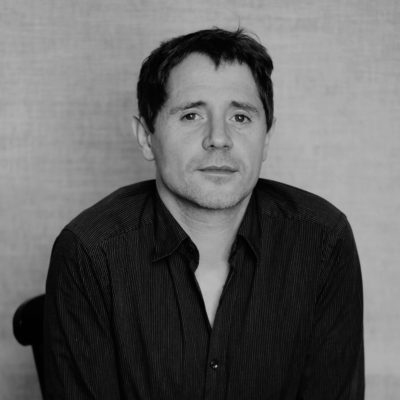
Interdisciplinary Artist, Carles Congost graduated in Fine Arts from the Universidad de Barcelona, 1994. Carles Congost’s work combines different mediums and supports including video, music, drawing and photography. In his work there are constant references to the world of comics, consumer music, fantastic film and television culture. The decidedly low-tech character of his early work gradually disappeared moving into productions that stand out for their ever increasing technical complexity. He has exhibited in some of the most important art centres and galleries both nationally and internationally, such as MoMA, Palais de Tokyo, Fundación Miró, the MNAC Reina Sofía and the Hamburger Bahnhof in Berlin.
Marco Godoy
- Artist
1986, Madrid

Marco Godoy lives and works between Madrid and London. He holds a Masters degree in Fine Arets by the Complutense University in Madrid, and has expnaded his studies at the School of the Art Institute in Chicago (SAIC) and has a a Master in Photography from the Royal college of Art in London. His work has been exhibited in intitutions and galleries such as Matadero in Madrid, The Dallas Museum of Contemporary Art, Stedelijk Museum s-Hertogenbosch, Städtische Galerie Bremen, Siart Boliva Biennal 2013, Liverpool Biennial 2014 or the Institute of Contemporary Arts (ICA) in London.
Teresa Serrano
- Artist
Ciudad de México
Born in Mexico City, Mexico, in 1936
Lives and works in Mexico City and New York.
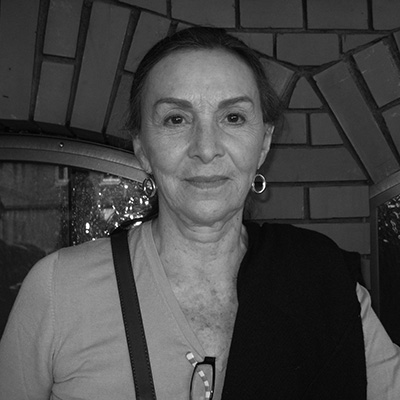
Towards the end of the 70s, Serrano began her artistic studies at the Dolores de la Barra Art Workshop, under the teaching of Javier Arévalo, Robin Bond and José Feher. Since then, her artistic activities have been incessant, and encompass different disciplines such as painting, found object, sculpture, video, and installation.
Serrano’s work is loaded with great personal political undertones; depicting at the same time sexism and gender violence. The artist performs metaphors around the body, the domestic, the femininity and how it can be oppressing. Serrano does so by using different materials, ranging from steel to ceramics and fabrics.
Serrano has had numerous solo shows in museums and galleries such as Museo Amparo, Puebla; Museo Marco de Monterrey, Monterrey; Sala de Arte Público Siqueiros, Mexico City; Laboratorio de Arte Alameda, Mexico City; Michael Kohler Arts Center Sheboygan, Wisconsin, and Museo de Arte Moderno, Buenos Aires. She has also participated in group exhibitions at El Museo del Barrio, New York; Centre Georges Pompidou, Paris; Seoul Museum of Art, Seoul, and Museo Reina Sofía, Madrid.
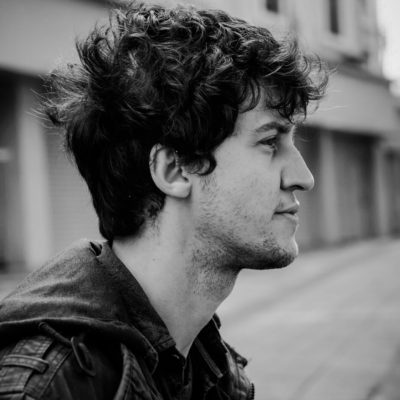
Adrian Melis is based between Cuba and Europe. He is a former resident at the Rijksakademie van Beldeende Kunsten of Amsterdam (2014/2015). In 2010 he graduated from the University of Art (ISA) in Havana, Cuba and between 2006/2008 participated at the Catedra of Behavioural Art directed by Tania Bruguera.
Since 2010 his work has been represented by ADN Galeria in Barcelona where he has had four solo shows since: Selective Memory (2018), Surplus Production Line (2015), Time To Relax (2013) and New Production Structures (2012). The first two exhibitions that took place in 2012 and 2013 received the Award Art Nou by the Association of Galleries in Barcelona and the GAC Award for Best Exhibition in a Private Gallery in Barcelona, respectively.
Selected solo shows include: Absolute silence does not exist, 2017, Fundación Cerezales Antonino y Cinia (Cerezales, Spain), The Value of Absence, 2013, Kunsthalle Basel (Switzerland); STOCK, 2014, Museum of Modern Art, MAS (Santander, Spain), New Production Structures, 2013, Adn Galeria (Barcelona, Spain).
Last update: October 28th, 2020.
Fito Conesa
- Artist
1980
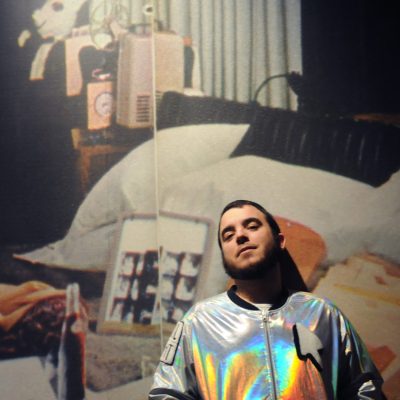
Fito Conesa studied Fine Arts at the University of Barcelona, the city where he lives and works. With a multifaceted work that encompasses installation, video and sound exploration, some of his works are conceived as an exhibition of the artist himself and his geographical context of origin; others incorporate different elements of cultural history and the contemporary world; and others dissect the everyday.
Since 2008, he has exhibited in spaces such as the Aparador del Museu Abelló in Mollet del Vallès (2008), CaixaForum in Tarragona (2009), Centro Cultural Español in Santo Domingo, Dominican Republic (2014), La Naval in Cartagena (2015) and Espai 13 at the Fundació Joan Miró in Barcelona (2018). His work can be found in collections such as the Fundació Banc Sabadell, the University of Granada, the City Council of Valls and MACBA in Barcelona.