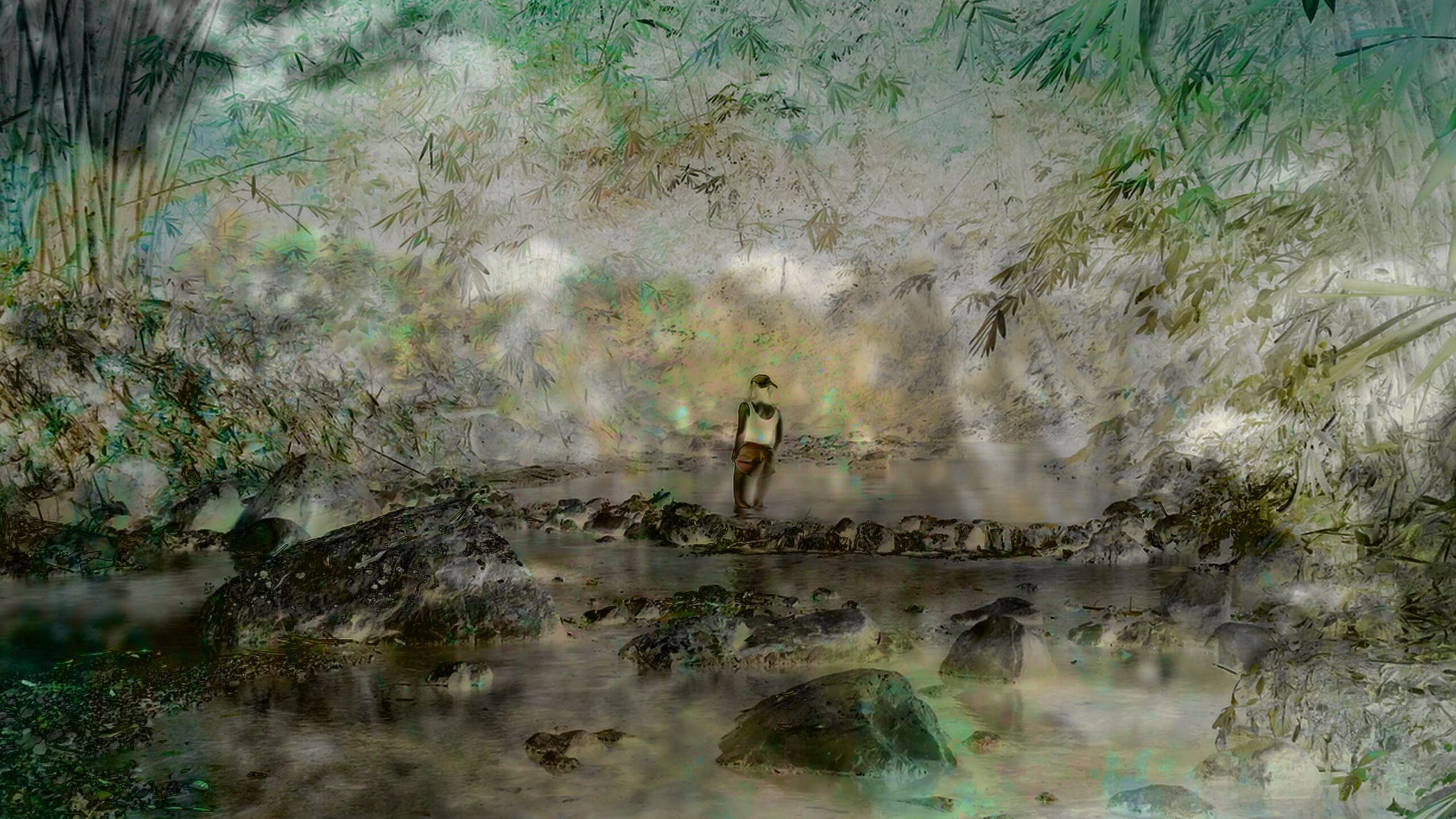
Tiyan Baker, Lena Bui, Prapat Jiwarangsan, Russell Morton, John Torres. ‘Soft Country’
Thursday 23 November 2023, 7 pm
- Artists
- Lena Bui, Russell Morton, Prapat Jiwarangsan, Tiyan Baker and John Torres
- Curators
- Alfonse Chiu
- Venues
- Manifesta 15 Barcelona
- A project by
- Centre for Urban Mythologies, Casa Asia & LOOP
- Price
- Free admission
- Language
- Vietnamese, Cham, Tamil, Javanese, Khmer, Thai, Cantonese, Kristang, Bidayuh. Subtitles in English
- Supported by}
- Special Thanks}
Add to calendar
Soft Country is a proposal to consider the powers of memory-making through the moving image.
Presenting five works by contemporary Southeast Asian artists that each contemplates the relationships between land, language, and history, this film programme invites audience to question the mechanisms of remembrance and forgetting in an era of shifting grounds and disappearing horizons. As the neoliberal logics of technology and politics continually shape and re-shape the terrain of the world we live in, how may we find resistance and justice against the violence and capital—and how may we mourn, make kin, and find pleasure in each other? How can we, as Derrida wrote, ‘come to ourselves through this memory of possible mourning’?
Beyond the standard narrative trappings of conventional fiction, each work acts as an essay, a testimonial, and a poem that constantly re configures the artist’s observation of being and becoming in the hard states of geopolitics, and imagines a soft country of mutable entanglements and slippery tongues.
Programme
Lena Bui, Kindred (Vietnam, 2021, 8′)
Russell Morton, Saudade (Singapore, 2019, 21′)
Prapat Jiwarangsan, The Wandering Ghost (Thailand, 2018, 20′)
Tiyan Baker, Tarun (Malaysia, 2020, 16′)
John Torres, After Nonoy Estarte, a certain Orpheus, and those flowers in Dahilayan that accompanied this other sense
they told me about (Philippines, 2016, 10′)
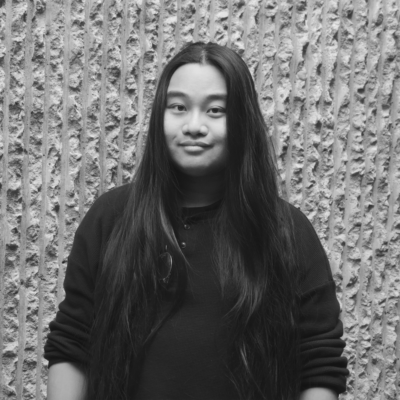
Lena Bui
- Artist
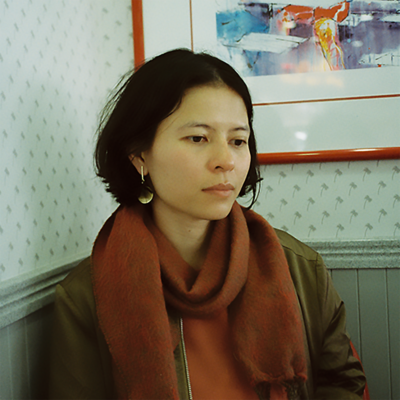
Lena Bui is a Vietnamese artist based in Sài Gòn. Her works explore people’s relationship with nature and the impact of rapid development on people’s lives in registers ranging from the intimate to the anecdotal. She has shown widely at institutions including the Jeju Biennale 2022, Haus der Kulturen der Welt, Sharjah Art Foundation, and the Wellcome Collection.
Russell Morton
- Artist
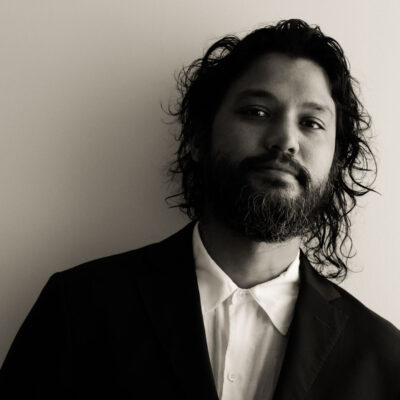
Russell Morton is a Singaporean filmmaker and visual artist. His practice explores folkloric myths, esoteric rituals, and the conventions of cinema itself. His works have been shown and won awards in festivals and galleries globally, such as SeaShorts, Thessaloniki Short Film Festival, Jogja Netpac Asian Film Festival, Short Shorts Film Festival, the South London gallery and Gasworks. He is currently developing his debut feature, and also actively practices as a cinematographer for projects that have premiered at Venice Biennale, Berlinale, and Sundance Film Festival amongst many others.
Prapat Jiwarangsan
- Artist
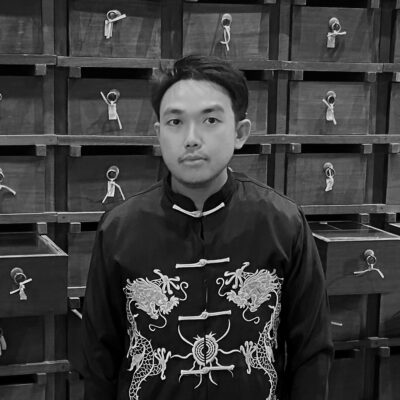
Prapat Jiwarangsan is a Thai artist and filmmaker. His practice investigates and represents the relationships between history, memory, and politics in Thailand—particularly in relation to the theme of migration by Southeast Asian bodies. Jiwarangsan’s works have been shown widely in film festivals and biennales including Berlinale (2021, 2022), IFFR (2016, 2018), and Singapore Biennale (2019).
Tiyan Baker
- Artist
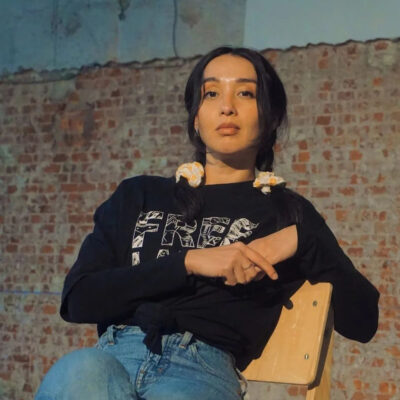
Tiyan Baker is an Australian-Bornean artist based in Newcastle. Her practice draws on historical research, language, digital processes and material play to trace unseen relationships between words, place and stories. Centring her Bidayǔh culture in her works, Baker is also interested in things she has unknowingly inherited. Living far from native lands, culture and family, in the midst of the (re)colonisation of Borneo, she explores all that can be mistranslated or lost, and what can manifest in its place. She has shown her works widely across the Asia Pacific region, and is the winner of the 2022 National Photography Prize awarded by the Murray Art Museum Albury.
John Torres
- Artist
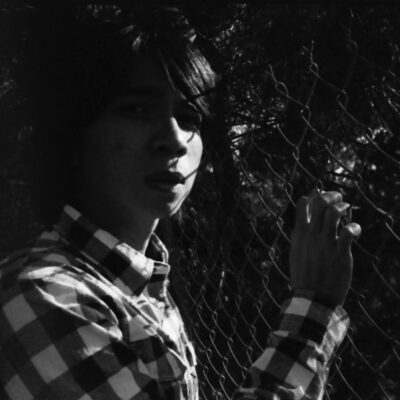
John Torres is an independent filmmaker, musician and writer from the Philippines. He has made more than a dozen short films and five features. His work fictionalizes and reworks personal and found documentations of love, family relations, and memory in relation to current events, hearsays, myth, and folklore. He currently teaches at the University of the Philippines and Ateneo de Manila University and conducts filmmaking workshops and co organizes artist talks and screenings in Los Otros, a Manila-based space, film lab, and platform committed to the intersections of film and art, with a focus on process over product. His retrospectives have been shown at festivals including the Viennale, and in Seoul, Cosquín, and Bangkok.
Alfonse Chiu