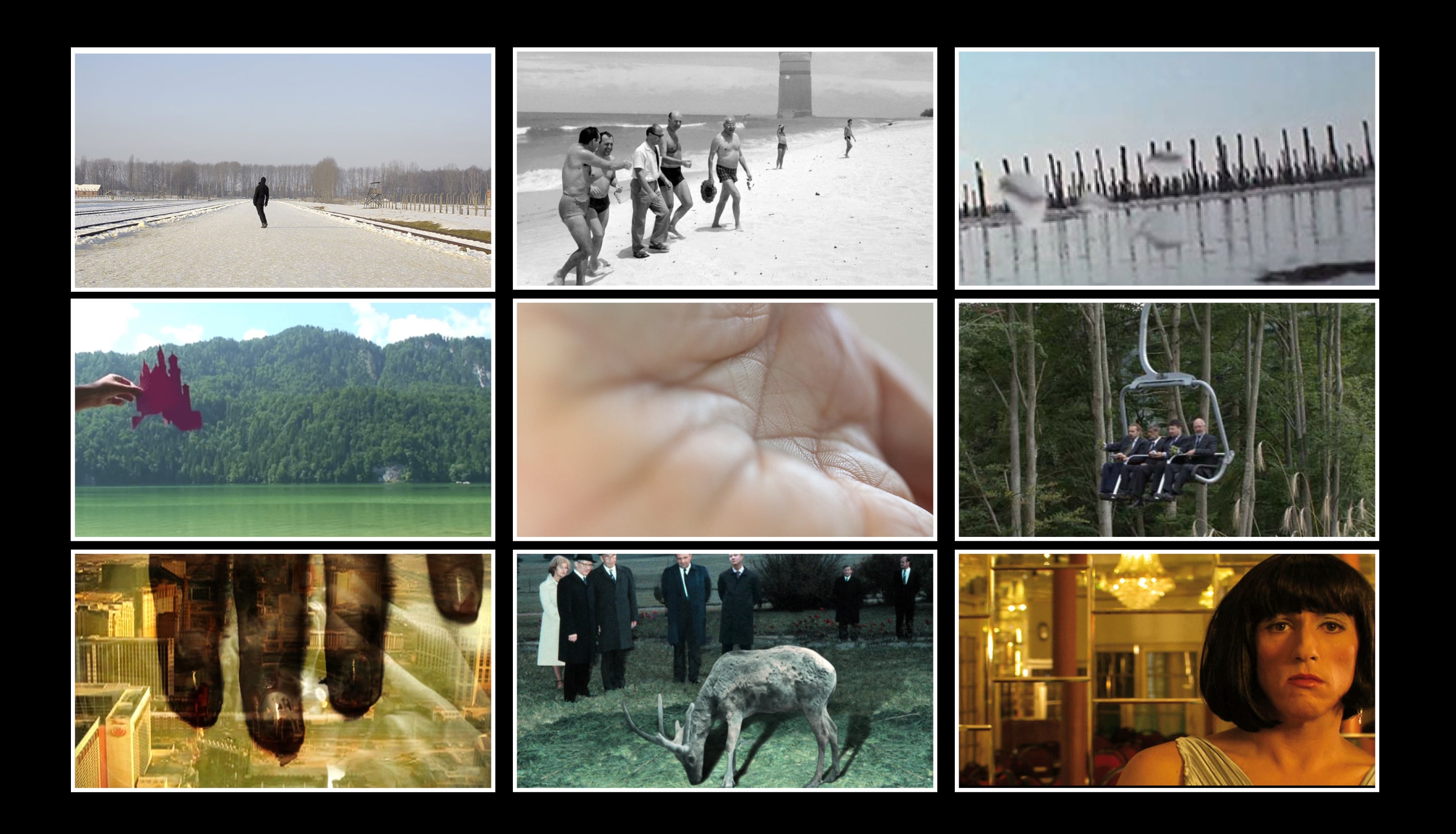
The Dancing States of the Political Body
10 November — 10 December 2020
— Curated by Pascale Cassagnau
- Artists
- Cecilia Bengolea
- Curators
- Pascale Cassagnau
- Venue
- VIDEOCLOOP
- Contributor
- CNAP
Add to calendar
A selection of works by Cecilia Bengolea
CLICK HERE FOR WATCHING -> Dub Love, 2017
CLICK HERE FOR WATCHING -> Dancehall Weather, 2017
CLICK HERE FOR WATCHING -> Danse au fond de la mer, 2019
CLICK HERE FOR WATCHING -> Shelly Belly inna Real Life, 2020
This programme gathers together a series of works by Argentinian artist Cecilia Bengolea, and it features one video belonging to the collection of the CNAP (National Centre of Plastic Arts, Paris) – Dancehall Weather.
Dancer, performer and video-maker, Argentinian artist-Paris based Cécilia Bengoléa makes the territory of dance and the deconstruction of dominant aesthetics the very material of her work. Alone or in collaboration with a large number of dancers, choreographers, artists such as François Chaignaud – with whom she founded the Vlovajob Pru’s company in 2008 –, Cécilia Bengoléa examines collective dance rituals. The Jamaican culture of Dancehall now globally celebrated, thus, gets revisited with traditional songs from Georgia, exacerbating their political load. The journey through the music and dances of urban communities, as performed in great cities of the world and observed anthropologically, explores all the forms of scholarly parody contained in these popular and anonymous creations. The worlds of “Voguing”, “Twerk”, “Dancehall”, “House”, “Dub Step”, “Hip Hop”, “Bashement”, are explored according to their historical ecologies and respective cultures, with a dancing virtuosity that restores their very community nature (Dancehall Weather, Cnap’s collection). Drawing from the principle of a hybrid or diaphanous body of fluid crystals –as in “Liquid” dancing –, Cécilia Bengoléa presents a metamorphic and animal body, one in constant becoming.
Dub Love, 2017
Video, color, sound, 4 min 23 sec
For the Dub Love project, Cecilia Bengolea collaborated with HIGH ELEMENTS, and Dubplates DJ from the Island of Reunion, to create a sort of optimistic music, defined by a tension between the dub’s characteristic bass sounds and brilliant melodies. Dub is often heard at massive social gatherings in Europe and Jamaica (Nothing Hill Carnival, One Love Rave Festival) through powerful sound systems. Their intense vibrations, their physical impact and their unifying power turned these gatherings into spiritual or even religious events, going far beyond mere entertainment.
Dancehall Weather, 2017
Video, colour and sound, 10 min 28 sec (CNAP’s collection)
Dancehall Weather is an infinite mix of various choreographic collaboration shot between 2014 and 2020 in Kingston, Spanish Town Jamaica. A program of algorithms mixes live videos made in collaboration with Black Eagle, Equinoxx, Kissy McCoy, Erika Miyauichi. This is a ten minutes extrait of the algorithm which mixes six hours of rushes of Cecilia Bengolea and Dancehall Collective archive 2014-2020.
Danse au fond de la mer, 2019
Video, colour and sound, 12 min 52 sec
Danse au fond de la Mer re-enacts the repertory of Utopic dance compositions by François Malkovsky, Paris 1940-1980. A disciple of Isadora Duncan, François Malkovsky followed her steps to create a movement that responds to the industrial revolution and the de-harmonization of human and nature. Malkovsky’s with his repertory, aims to restitute harmony between human and nature again. His short choreographies figurate and animate the elements of the sea nature to sonatas of Schubert, Chopin, Rachmaninov, Debussy. His repertory was re-enacted by Cecilia Bengolea, and dancers Alex Mugler, Suzanne Bodak, François Chaignaud in Kasino in Vienna in 2012. In 2019, Bengolea made a video collage bringing deep-sea life footage to accompany Malcovsky’s repertory.
Shelly Belly inna Real Life, 2020
Video, color, sound, 23 min
Shot in Jamaica between 2015 and 2019 “Shelly Belly inna Real Life” is collaboration of Cecilia Bengolea with the Dancehall scene in Kingston and Bog Walk. It explores the influences of culture and nature within the Caribbean island art community. Narrated through movement and music it follows the language of dancehall from the intricate rhythms of the jungle landscapes to the choreography and steps of the people whose passion practice it follows. Shot by artist and choreographer Cecilia Bengolea it’s uniquely insider view grants unprecedented access to the characters whose vitality and influence has shaped a view of movement and life that reaches from its Jamaican founders to the world beyond.
About Cecilia Bengolea. Bengolea, born 1979 in Argentina, is a multidisciplinary artist using dance as a tool and a medium for radical empathy and emotional exchange. Through collaboration with others – artists, performers, deejays and dancers – Bengolea develops a broad artistry where she sees movement, dance and performance as animated sculpture, where she herself is both object and subject in her own work. Dance may be our most advanced forms of bodily expression. Unlike sport or other related forms of physical communication dance demands that we consider the figure as pure medium devoid of functionality. Adaptive physical intelligence may well be the indirect quest of most dance but, for Cecilia Bengolea, it is the basis of a practice that has been centered around the creation of new bodies of thought. The other mind that is the focus of her attention is less about what Deleuze & Guattari would term the body without organs, than a body without boundaries, a fully eroticized being born of a state of constant rehearsal. The spirit and rhythms that infuse this body move in several directions at once. Often they are found played out in transient or boundaries places such as the side of the road where passing cars choreograph another kind of risk. Sweat and tropical rain further dissolve the boundaries between inside and outside, reminding us perhaps that inner body fluid is an electrical conductor that functions for the body in ways similar to the synapses of the brain – creating new pathways and communication highways redefining sentience.
Bengolea’s work has been shown at the Gwangju Biennial (2014 et 2021), Biennale de Lyon (2015), The Tanks and Tate Modern (2015), Faena Arts Center, Buenos Aires (2015 and 2017) ICA, London (2015), Biennale de Sao Paulo (2016), The Infinite Mix, Hayward Gallery London (2016), Center Pompidou (2010 and 2016), Elevation 1049, Gstaad (2017), Dia Art Foundation (2017), Palais de Tokyo (2015 and 2018), ICA London (2015), Dhaka Art Summit (2018), TBA21, Venice (2018), Desertx (2019), Sferik Tulum (2019), Performa NY (2019) and Fondation Giacometti (2019), Tank Shanghai (2020).
Cecilia Bengolea
- Artist, Participant
1979, Buenos Aires
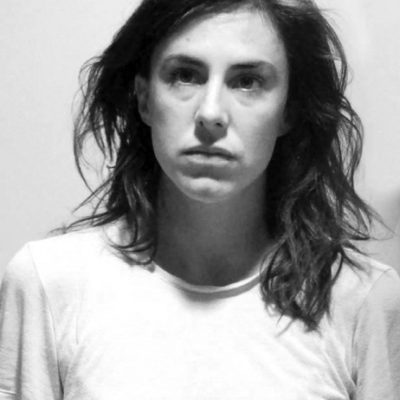
Cecilia Bengolea (Buenos Aires, 1979), works on a range of media including performance, video and sculpture. Using dance as a tool and a medium for radical empathy and emotional exchange. Infused with the symbolic energies found within nature and relationships, her compositions are formed around ideas of the body – both individually and collectively – as a medium. Bengolea develops a broad artistry where she sees movement, dance and performance as animated sculpture.
Bengolea has collaborated with dancehall artists such as Craig Black Eagle, Bombom DHQ, Damion BG, and with artists Dominique Gonzalez Forster and Jeremy Deller. Her collaborative work with French choreographer François Chaignaud, Pâquerette (2005-2008) and Sylphides (2009), have earned several awards such as the Award de la Critique de Paris in 2010 and the Young Artist Prize at the Gwangju Biennial in 2014. They have also co-created dance pieces for their dance company as well as for the Ballet de Lyon (2013), the Ballet de Lorraine (2014) and Pina Bausch Tanztheater Wuppertal.
Cecilia Bengolea’s work is a part of numerous public and private collections including TBA21 Accademy, Mire Fond Cantonal de La Ville de Geneve, The Vinyl Factory, Le CNAP, Le Consortium, Peter Handschin and Martin Hatebur, Fiorucci Arts and Trusts, Tank Shanghai, Fundacion Arco, Jimena Blazquez Bonte, Fernando Arriola.
Pascale Cassagnau
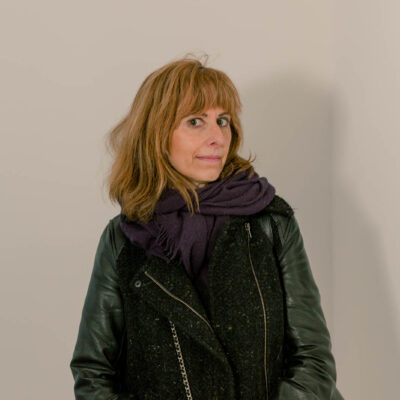
Pascale Cassagnau holds a PhD in Art History and Criticism and is responsible for the audiovisual and new media collection at the CNAP (Centre national des arts plastiques, Paris). She writes extensively for Art Press and is the author of texts on artists such as Chris Burden, James Coleman, John Baldessari, Pierre Huyghe, Dominique Gonzalez-Foerster and Matthieu Laurette, among others. She is mainly interested in the study of new film practices and their cross-over with contemporary art. Her essay “Future Amnesia, Enquêtes sur un troisième cinéma” (Ed. Isthmus, 2006) investigates new filmic forms, existing between fiction and documentary. “Un pays supplémentaire” (Ed. Ecole nationale supérieure des Beaux-Arts de Paris, 2010) focuses on contemporary creation in the media architecture. Her book, “‘Apichatpong Weerasethakul,’ Une théorie des objets personnels” was released as an e-book in 2016. Her essay “Diagramme Monteiro, on Joao Cesar Monterio, was written in collaboration with Hughes Decointet and published in Editions de L’Oeil in 2017. Her essays “La répétition générale,” — a work on the processes of creation and research in the fields of cinema, contemporary art — and “Dispositifs-jeux” — on Jean Frapat, inventor of television devices — are currently in progress.
Last update 9th March 2017