VIDEO REWIND
18 — 27 May 2017
— A look back to early video works from the 1970s and 1980s
- Artists
- Beryl Korot, Chip Lord, Steina Vasulka, Mary Lucier and Antoni Muntadas
- Curators
- Eugeni Bonet
Add to calendar
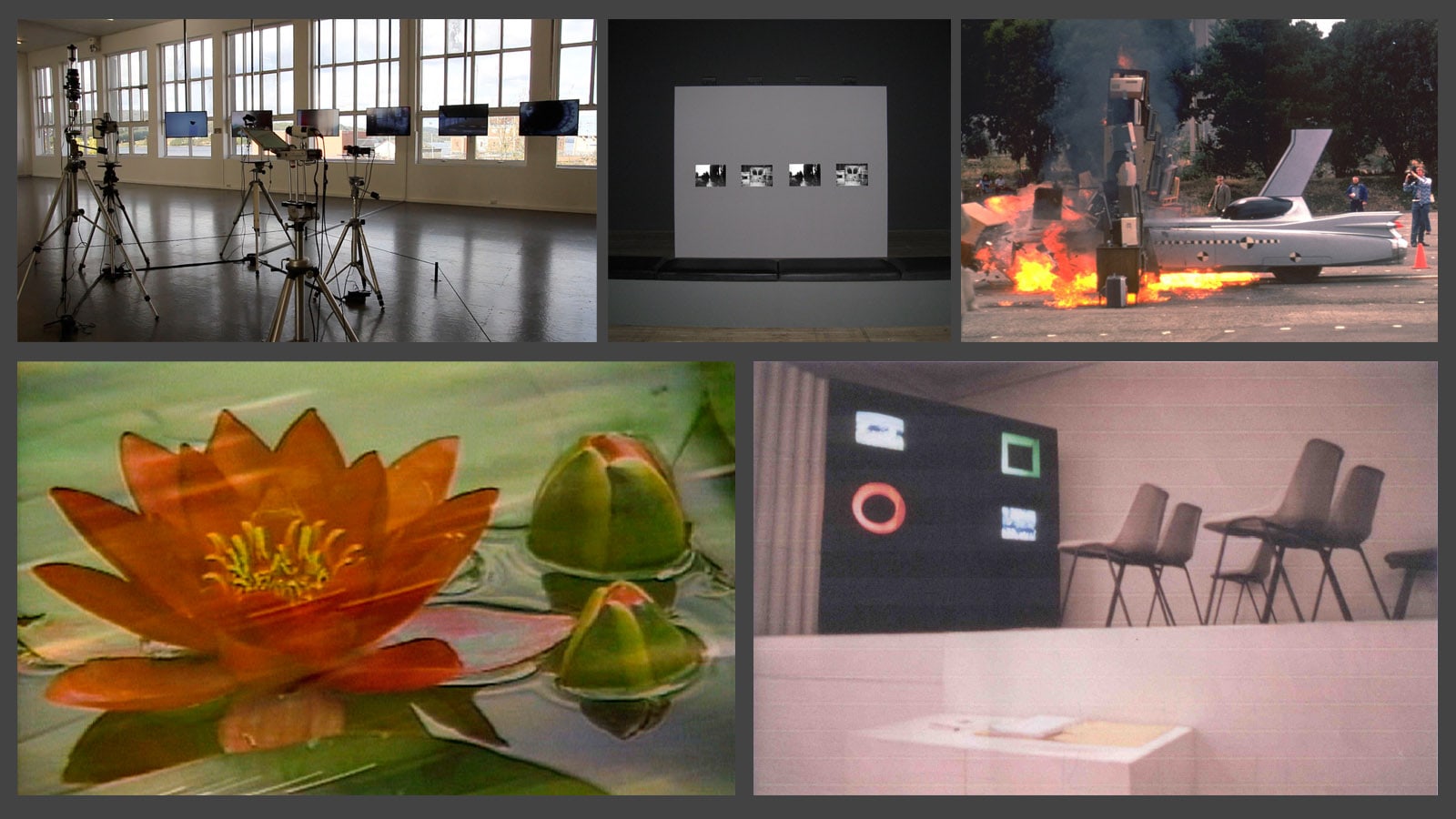
This exhibition series, which takes place across different areas of the city and connects with other sections of the LOOP 2017's program, includes five works dating from 1974 to 1983.
This exhibition series, which takes place across different areas of the city and connects with other sections of the LOOP 2017 program includes five works dating from 1974 to 1983. They form a reflection of a golden era in the evolution of a medium that was still quite new at the time. They recall the frenzied transition from black and white to color; the roughness of analogue to the dawn of digital media; the emergence of open reel tapes in both professional and everyday formats — the evolution of a technique that was once somewhat cryptic into increasingly common and ubiquitous terms, and everything that involves. As much as they offer relief in some artistic respects, they consider, among other things, an antagonistic view of television, a scan of optical and electronic hardware involving video and hybrids, the growth and development — in space and beyond the screen — a medium that takes real time as source material. They address the memory of places and shadows of history in a recent but still dark and murky past (Beryl Korot); the icons of modern society and the spectacle of a future of intense consumerism (Ant Farm); mechanical perception as an initial step toward hypothetical “artificial vision” (Steina); the pursuit of a visual kinship with the social sciences (Muntadas) and a subjective pictorial narrative of light, landscape and the interior journey (Mary Lucier).
Selected works
- Beryl Korot, 'Dachau 1974,' 1974
- Multichannel installation, MUHBA (Museu d'Història de la Ciutat)
- Chip Lord, "Media Burn," 1975
- Single channel projection, Parking Ortigosa
- Steina Vasulka, "Machine Vision," 1978
- Multichannel installation, CosmoCaixa
- Muntadas, "Pamplona-Grazalema," 1975-1980
- Two channel installation, Museu Can Framis. Fundació Vila Casas
- Mary Lucier, "Ohio to Giverny: Memory of Light," 1983
- Single channel installation, MNAC (Museu Nacional d'Història de Catalunya)
Beryl Korot
- Artist, Speaker
1945, New York
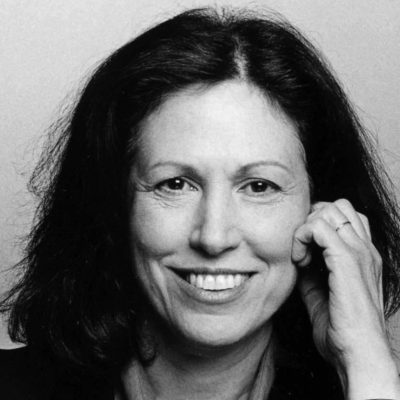
Beryl Korot (New York, 1945) is a pioneer of video art whose work brought video technology into conversation with the ancient hand loom. Co-founder and co-editor of Radical Software (1970), her work has been exhibited at The Kitchen (1975), Leo Castelli Gallery (1977), Documenta 6 (1977), the Whitney Museum (1980, 2000 and 2002), The John Weber Gallery (1986),The Carnegie Museum (1990), The Reina Sofia (1994), ZKM (2008), The Aldrich Museum (2010), bitforms gallery, NYC (2012), The Whitworth Gallery, UK (2013), Museum Abteiberg (2013), Art Fair Basel, ICA Boston, Tate Modern (2014), and SFMOMA (2016). Two collaborations with Steve Reich (The Cave, 1993, and Three Tales, 2002) brought video installation art into a theatrical context and continue to tour worldwide. In 2010 The Aldrich Museum, Ridgefield, CT presented a 6 month mini retrospective of her work. She is in the permanent collection of NY MOMA and in The Kramlich Collection’s New Art Trust shared by SFMOMA, NY MOMA and the Tate Modern, amongst others. She currently lives and works in New York.
20 April 2017
Chip Lord
- Artist, Speaker
- chiplord.net
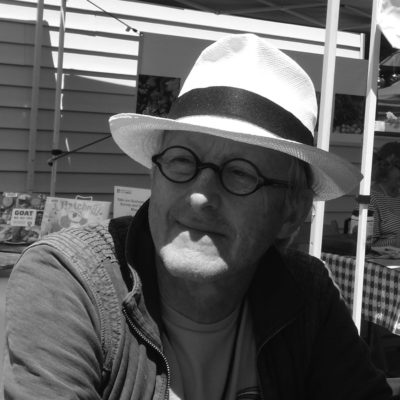
Chip Lord (Cleveland, Ohio, 1944) was the co-founder with Doug Michels of the group Ant Farm in 1968. For ten years Ant Farm worked the radical fringe of architectural practice, in the process they became video and performance artists. When Ant Farm dis-banded in 1978, Lord continued as a video artist producing works for single channel and installation. Currently, he is producing a series of films about cities and climate change and to date has produced Venice Underwater, New York Underwater, and Miami Beach Elegy. His work is in the collections of the Museum of Modern Art (New York), the Pompidou Center (Paris), SFMOMA (San Francisco), the Berkeley Art Museum (Berkeley, CA), the Tate Modern (London) and other museums. He is Professor Emeritus in the Department of Film and Digital Media at the University of California, Santa Cruz and lives in San Francisco.
Last update, 14 March 2017
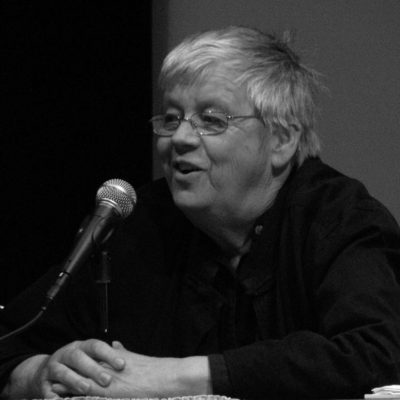
Steina was born in Reykjavik, Iceland, in 1940. She studied violin and music theory, and in 1959 received a scholarship from the Czechoslovak Ministry of Culture to attend the State Music Conservatory in Prague.
Woody and Steina married in Prague in 1964, and shortly thereafter she joined the Icelandic Symphony Orchestra. After moving to the United States in 1965 she worked in New York City as a freelance musician. She began working with video in 1969, and since then her various tapes and installations have been exhibited in USA, Europe and Asia. Although her main thrust is in creating Video Tapes and Installations she has recently become involved in interactive performance in public places, playing a digitally adapted violin to move video images displayed on large video projectors.
In 1971 she co-founded The Kitchen, an Electronic Media Theater in New York. Steina has been an artist-in-residence at the National Center for Experi-ments in Television, at KQED in San Francisco, and at WNET/Thirteen in New York. In 1988 she was an artist-in-residence in Tokyo on a U.S./Japan Friendship Committee grant. She has received funding from the New York State Council on the Arts, the National Endowment for the Arts, the Corporation for Public Broadcasting, the Guggenheim Foundation, the Rockefeller Foundation, the American Film Institute and the New Mexico Arts Division. She received the Maya Deren Award in 1992 and the Siemens Media Art Prize in 1995. In 1993 she co-curated with Woody the exhibition and catalogue, Eigenwelt der Apparatewelt (Pioneers of Electronic Art) for Ars Electronica in Linz, Austria. In 1996 she served as the artistic co-director and software collaborator at STEIM (Studio for Electronic Instrumental Music) in Amsterdam. In 1996 Steina and Woody showed eight new media installations at the San Francisco Museum of Modern Art, an exhibition repeated in Santa Fe a few months later. Her installation, titled Orka was featured in the Icelandic Pavilion at the 1997 Venice Bienale. In 1999 she showed three installations in three countries: “Nuna” in Albuquerque, New Mexico, “Textures” in Reykjavik, Iceland and “Machine Vision” in Milano, Italy. She created two installations for the Art Festival 2000 in Reykjavik, Iceland. In 2001 she was invited to festivals in Norway, Russia, Estonia, Portugal, Montreal, England and Italy. Between July and October of 2002 she realized four installations in four locations in her hometown of 22 years, Santa Fe, NM.
Last update 17th March, 2017
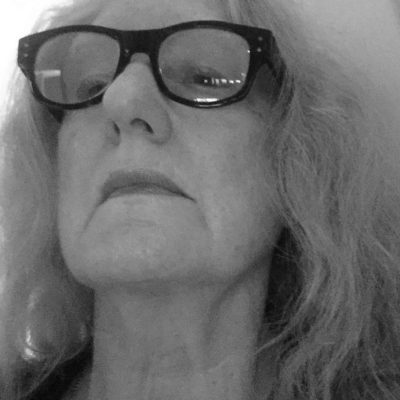
Mary Lucier (Bucyrus, Ohio, 1944) has been known for her contributions to the form of multi-monitor, multi-channel video installation since the early 1970s. After studying sculpture and literature at Brandeis University she became involved in photography and performance while still living in the Boston area. She traveled extensively with the Sonic Arts Union, collaborating with composers Alvin Lucier and Robert Ashley in. Since 1971 her mixed-media video work has consistently explored the theme of landscape as a metaphor for loss and regeneration and, more recently, trauma as experienced and articulated in more obliquely narrative modes. Her video work has been shown in major museums around the world where it now resides in numerous collections, such as the Whitney Museum of American Art, the Museum of Modrn Art, the Reina Sofia, the Stedeljik Museum, and the San Francisco Museum of Modern Art. Over the years she has been the recipient of many awards and fellowships. She has recently been involved in reviving and revising select older works such as Color Phantoms with Automatic Writing or Equinox for a contemporary context. She currently lives and works in New York City and upstate New York.
20 April 2017
Antoni Muntadas
- Artist, Speaker
1942, Barcelona
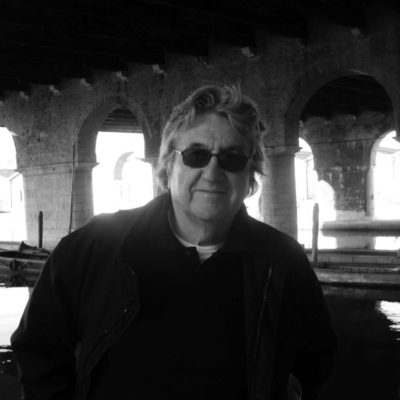
Muntadas works with photography, video, publications, Internet, multi-media installations and public intervention. His work addresses social, political and communication issues, the relationship between public and private space as well as the different channels of information. In 1971 he moved to New York where he created most of his video works and installations, and made prototypes for experimental alternative television, such as Cadaqués Canal Local, 1974 and Barcelona Distrito 1, 1976. Since 1995, Muntadas has grouped together a set of works and projects titled On Translation. Highly diverse in their contents and features, they all focus on the author’s personal experience and artistic activity in numerous countries over a period of thirty years. By grouping such works together under this epigraph, Muntadas places them within a body of experience and concrete concerns regarding communication, the culture of our times and the role of the artist and art in contemporary society. His most recent projects are About Academia (2011-2017) and Asian Protocols, (2012-ongoing). Currently he lives where he works and works where he lives.
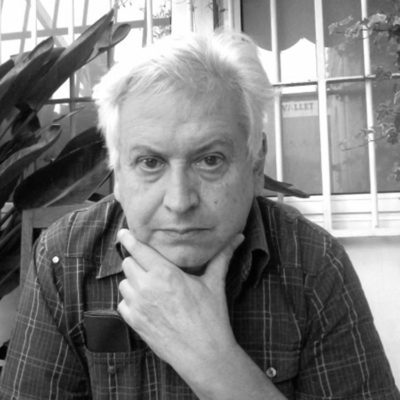
Eugeni Bonet works with film, video and digital media. Since the 1970s, he has been moving across research and creative practice, spanning both audiovisual art and the moving image.
He curated several exhibitions and programmes, such as: Desmontaje: film, vídeo/apropiación, reciclaje (1993), Señales de vídeo: aspectos de la videocreación española de los últimos años (1995-1997), El cine calculado (1999-2001), Movimiento aparente: la invitación al viaje inmóvil en las tecnologías ubicuas del tiempo, la imagen y la pantalla (2000), Comer o no Comer, o las relaciones del arte con la comida en el siglo XX (2002, with Darío Corbeira y Carlos Jiménez), Properament en aquesta pantalla: el cinema lletrista, entre la discrepància i la sublevació (2005, with Eduard Escoffet), Gustavo Romano. Sabotaje en la máquina abstracta (2008), Desbordamiento de Val del Omar (2010-2011) and De trencar i estripar (2016). He co-authored two reference books on video art and film: En torno al vídeo (Barcelona: Gustavo Gili, 1980), together with Joaquim Dolls, Antoni Mercader and Antoni Muntadas; and Práctica fílmica y vanguardia artística en España, 1925-1981/The Avant-Garde Film in Spain (1983), together with Manuel Palacio. Many of his texts and essays were compiled in Escritos de vista y oído (2014). Beginning in the 1970s, he has created film sculptures, multiple channel projections, as well as feature films, like Tira tu reloj al agua (2003-2004) and eGolem (2007- ongoing), also conceived for an online version. He also works with shorter formats and multi-screen devices and often experiments with found footage and recycled images.
In 2014, the MACBA (Museo de Arte Contemporáneo de Barcelona) dedicated him a large exhibition titled El ojo escucha. Eugeni Bonet: pantallas, proyecciones, escritos, which testified to his activity as an artist, curator and writer.