VIDEO REWIND: Antoni Muntadas
18 May — 1 June 2017
— 'Pamplona-Grazalema,' 1975-1980
- Artists
- Antoni Muntadas
- Curators
- Eugeni Bonet
- Venues
- Fundació Vila Casas
- Price
- Free admission
- Tickets & register
- www.fundaciovilacasas.com
Add to calendar
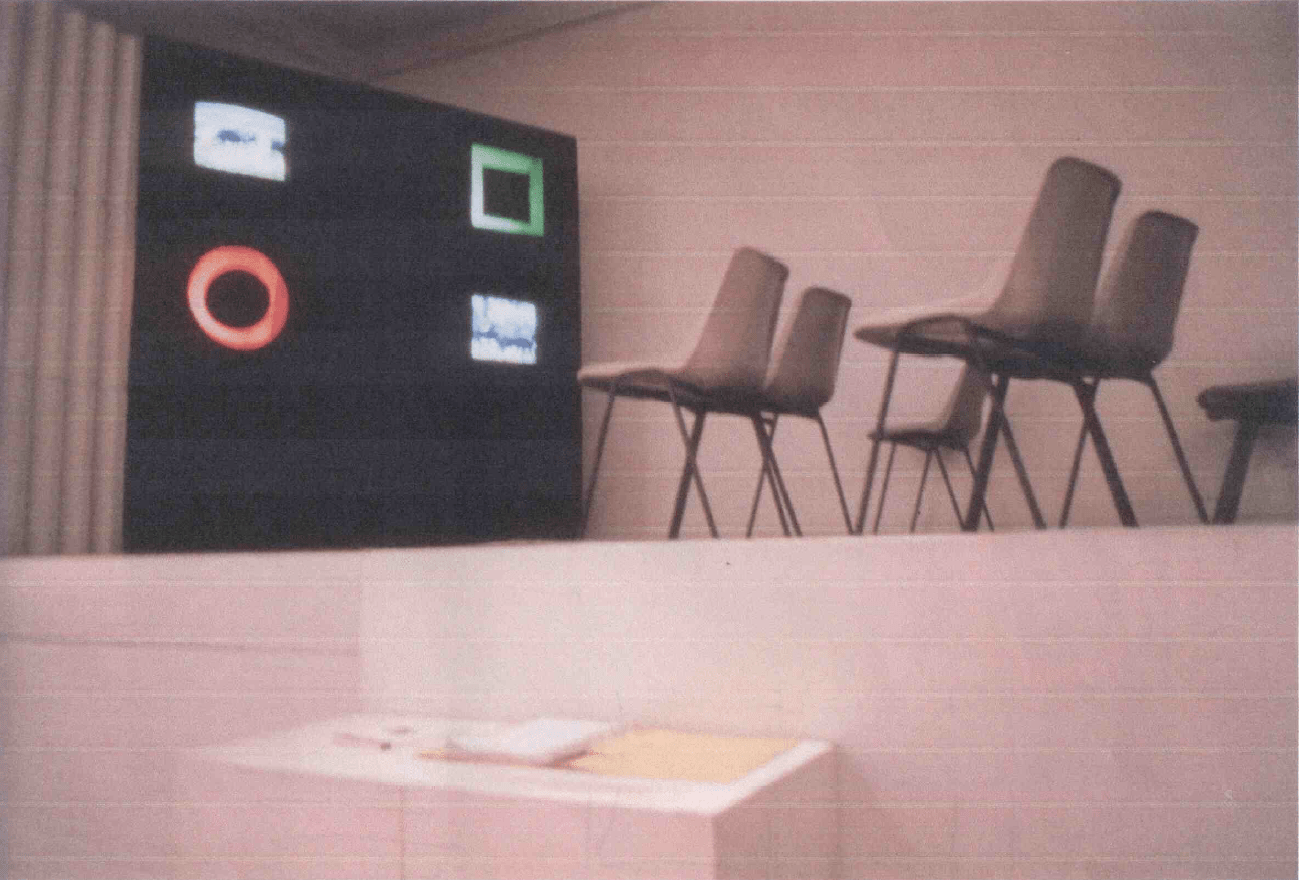
As part of 'VIDEO REWIND: A look back from early video works from the 1970s and 1980s', 'Pamplona-Grazalema' (1975-1980) considers the spectacle of cultural traditions.<br />
Pamplona-Grazalema, a project developed by Antoni Muntadas (Barcelona, 1942) with Spanish anthropologist Ginés Serrán Pagán, is an installation consisting of the publication of a book and two videos projected simultaneously. This hybrid work of visual art and social anthropology makes an interdisciplinary enquiry into bullfighting’s geographic and cultural permutations within Spain’s recent history. Pamplona is famously the modern capital of bullfighting and home to its most sophisticated practitioners, but the city’s “fiesta of the bull” is a predominately commercial and touristic enterprise. In places like Grazalema, a mountain town in Cádiz (Andalusia), the oldest known form of bullfighting is still practiced. The male residents symbolically sap the bull’s virility and power as the animal becomes weaker. As the relationship between human and animal is increasing rationalized, these social and spiritual connections become obscure. This work offers a fascinating study in ritual, myth, and community for the citizen of the global world.
Antoni Muntadas
- Artist, Speaker
1942, Barcelona
Muntadas works with photography, video, publications, Internet, multi-media installations and public intervention. His work addresses social, political and communication issues, the relationship between public and private space as well as the different channels of information. In 1971 he moved to New York where he created most of his video works and installations, and made prototypes for experimental alternative television, such as Cadaqués Canal Local, 1974 and Barcelona Distrito 1, 1976. Since 1995, Muntadas has grouped together a set of works and projects titled On Translation. Highly diverse in their contents and features, they all focus on the author’s personal experience and artistic activity in numerous countries over a period of thirty years. By grouping such works together under this epigraph, Muntadas places them within a body of experience and concrete concerns regarding communication, the culture of our times and the role of the artist and art in contemporary society. His most recent projects are About Academia (2011-2017) and Asian Protocols, (2012-ongoing). Currently he lives where he works and works where he lives.
Eugeni Bonet works with film, video and digital media. Since the 1970s, he has been moving across research and creative practice, spanning both audiovisual art and the moving image.
He curated several exhibitions and programmes, such as: Desmontaje: film, vídeo/apropiación, reciclaje (1993), Señales de vídeo: aspectos de la videocreación española de los últimos años (1995-1997), El cine calculado (1999-2001), Movimiento aparente: la invitación al viaje inmóvil en las tecnologías ubicuas del tiempo, la imagen y la pantalla (2000), Comer o no Comer, o las relaciones del arte con la comida en el siglo XX (2002, with Darío Corbeira y Carlos Jiménez), Properament en aquesta pantalla: el cinema lletrista, entre la discrepància i la sublevació (2005, with Eduard Escoffet), Gustavo Romano. Sabotaje en la máquina abstracta (2008), Desbordamiento de Val del Omar (2010-2011) and De trencar i estripar (2016). He co-authored two reference books on video art and film: En torno al vídeo (Barcelona: Gustavo Gili, 1980), together with Joaquim Dolls, Antoni Mercader and Antoni Muntadas; and Práctica fílmica y vanguardia artística en España, 1925-1981/The Avant-Garde Film in Spain (1983), together with Manuel Palacio. Many of his texts and essays were compiled in Escritos de vista y oído (2014). Beginning in the 1970s, he has created film sculptures, multiple channel projections, as well as feature films, like Tira tu reloj al agua (2003-2004) and eGolem (2007- ongoing), also conceived for an online version. He also works with shorter formats and multi-screen devices and often experiments with found footage and recycled images.
In 2014, the MACBA (Museo de Arte Contemporáneo de Barcelona) dedicated him a large exhibition titled El ojo escucha. Eugeni Bonet: pantallas, proyecciones, escritos, which testified to his activity as an artist, curator and writer.