VIDEO REWIND: Beryl Korot
18 — 27 May 2017
— 'Dachau 1974', 1974
- Artists
- Beryl Korot
- Curators
- Eugeni Bonet
- Venue
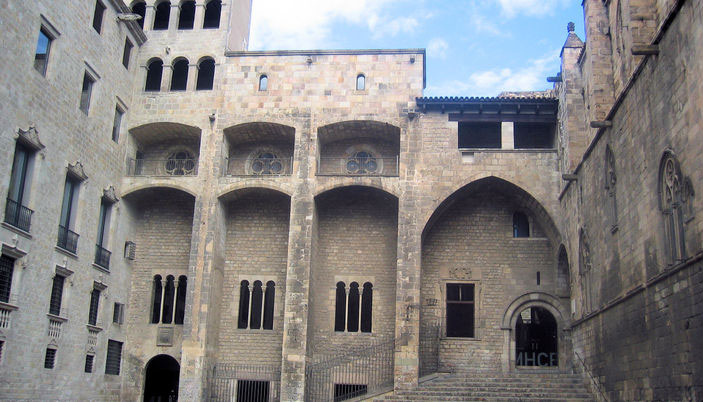
- Museu d’Historia de Barcelona, Capilla de Santa Ágata
- Contributor
- in collaboration with bitforms
- Price
- 7 €
- Tickets & register
- museuhistoria.bcn.cat/ca/muhba-placa-del-rei
Add to calendar
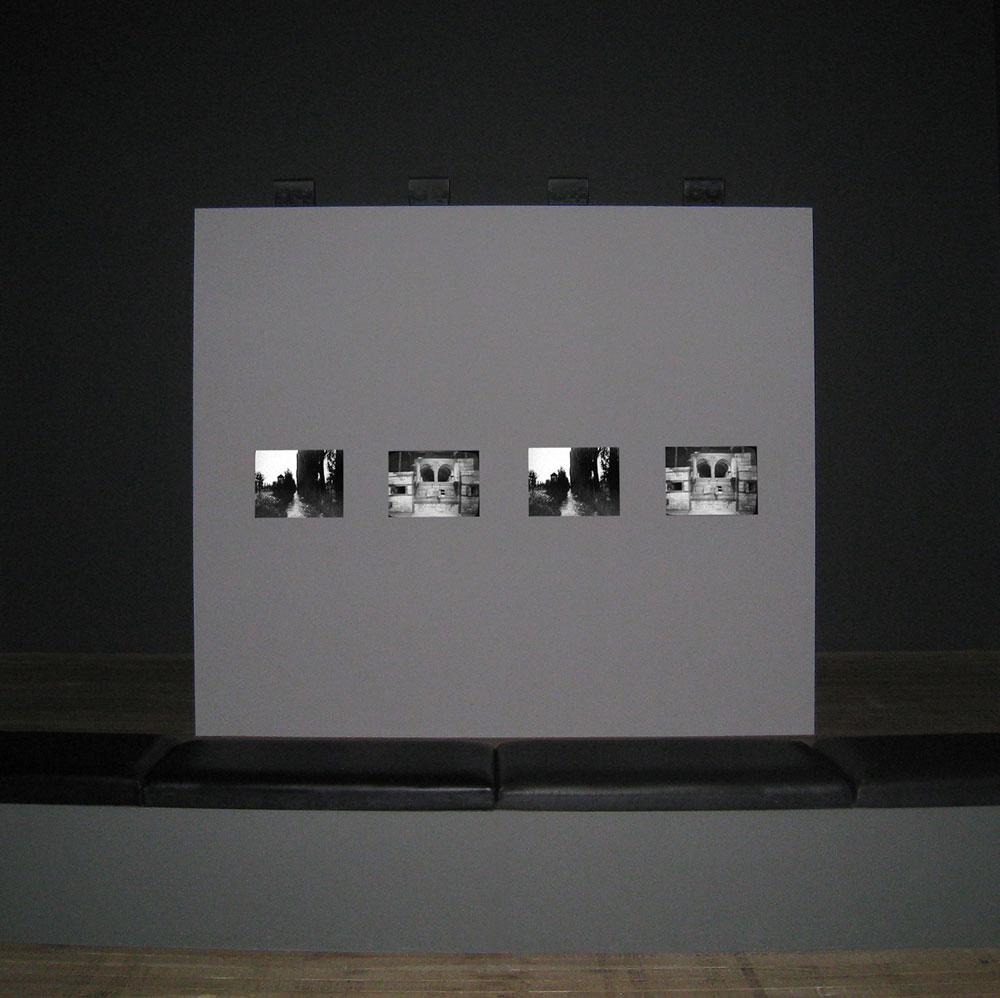
As part of 'VIDEO REWIND: A look back from early video works from the 1970s and 1980s', 'Dachau 1974' by Beryl Korot addresses the memory of places and shadows of history in a recent but still dark and murky past.
In 1974 I visited Dachau, the site of the former concentration camp. It seemed to me a very strange tourist site: very much cleaned up, tourists strolling thru the site, sometimes murmuring, sometimes playing with their children.
Having learned to weave months before, and interested in the multiple channel genre just developing, a video tapestry of Dachau emerged. The minimum number of threads necessary to bind a cloth is four. Paired channels (l and 3) and (2 and 4), though rhythmically different, formed the interlocking “thread” combinations of image and 1 second blanks as the work proceeded in time. This paired structure takes the viewer on a journey from outside the camp’s walls, passed guard towers, to the barracks and finally to the crematoria.
The blanks interrupt the narrative, allowing the identical images of each pair to appear at slightly different times. In its verbal silence, rigorous formalism and focus on the present, the work must ultimately engage the memory of the viewer to endow it with meaning.
Beryl Korot
- Artist, Speaker
1945, New York
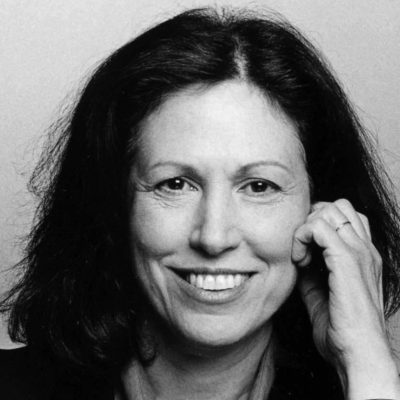
Beryl Korot (New York, 1945) is a pioneer of video art whose work brought video technology into conversation with the ancient hand loom. Co-founder and co-editor of Radical Software (1970), her work has been exhibited at The Kitchen (1975), Leo Castelli Gallery (1977), Documenta 6 (1977), the Whitney Museum (1980, 2000 and 2002), The John Weber Gallery (1986),The Carnegie Museum (1990), The Reina Sofia (1994), ZKM (2008), The Aldrich Museum (2010), bitforms gallery, NYC (2012), The Whitworth Gallery, UK (2013), Museum Abteiberg (2013), Art Fair Basel, ICA Boston, Tate Modern (2014), and SFMOMA (2016). Two collaborations with Steve Reich (The Cave, 1993, and Three Tales, 2002) brought video installation art into a theatrical context and continue to tour worldwide. In 2010 The Aldrich Museum, Ridgefield, CT presented a 6 month mini retrospective of her work. She is in the permanent collection of NY MOMA and in The Kramlich Collection’s New Art Trust shared by SFMOMA, NY MOMA and the Tate Modern, amongst others. She currently lives and works in New York.
20 April 2017
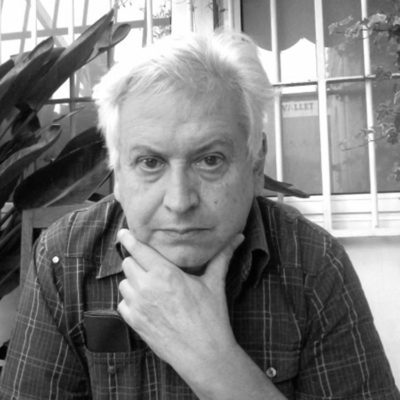
Eugeni Bonet works with film, video and digital media. Since the 1970s, he has been moving across research and creative practice, spanning both audiovisual art and the moving image.
He curated several exhibitions and programmes, such as: Desmontaje: film, vídeo/apropiación, reciclaje (1993), Señales de vídeo: aspectos de la videocreación española de los últimos años (1995-1997), El cine calculado (1999-2001), Movimiento aparente: la invitación al viaje inmóvil en las tecnologías ubicuas del tiempo, la imagen y la pantalla (2000), Comer o no Comer, o las relaciones del arte con la comida en el siglo XX (2002, with Darío Corbeira y Carlos Jiménez), Properament en aquesta pantalla: el cinema lletrista, entre la discrepància i la sublevació (2005, with Eduard Escoffet), Gustavo Romano. Sabotaje en la máquina abstracta (2008), Desbordamiento de Val del Omar (2010-2011) and De trencar i estripar (2016). He co-authored two reference books on video art and film: En torno al vídeo (Barcelona: Gustavo Gili, 1980), together with Joaquim Dolls, Antoni Mercader and Antoni Muntadas; and Práctica fílmica y vanguardia artística en España, 1925-1981/The Avant-Garde Film in Spain (1983), together with Manuel Palacio. Many of his texts and essays were compiled in Escritos de vista y oído (2014). Beginning in the 1970s, he has created film sculptures, multiple channel projections, as well as feature films, like Tira tu reloj al agua (2003-2004) and eGolem (2007- ongoing), also conceived for an online version. He also works with shorter formats and multi-screen devices and often experiments with found footage and recycled images.
In 2014, the MACBA (Museo de Arte Contemporáneo de Barcelona) dedicated him a large exhibition titled El ojo escucha. Eugeni Bonet: pantallas, proyecciones, escritos, which testified to his activity as an artist, curator and writer.