Pegasus Dance
Fernando Sánchez Castillo
Albarrán Bourdais, Madrid
— Log in to watch the artist video if you have been given an access
- Title
- Pegasus Dance
- Gallery
- Albarrán Bourdais, Madrid
- Year
- 2007
- Duration
- 11 min 27 s
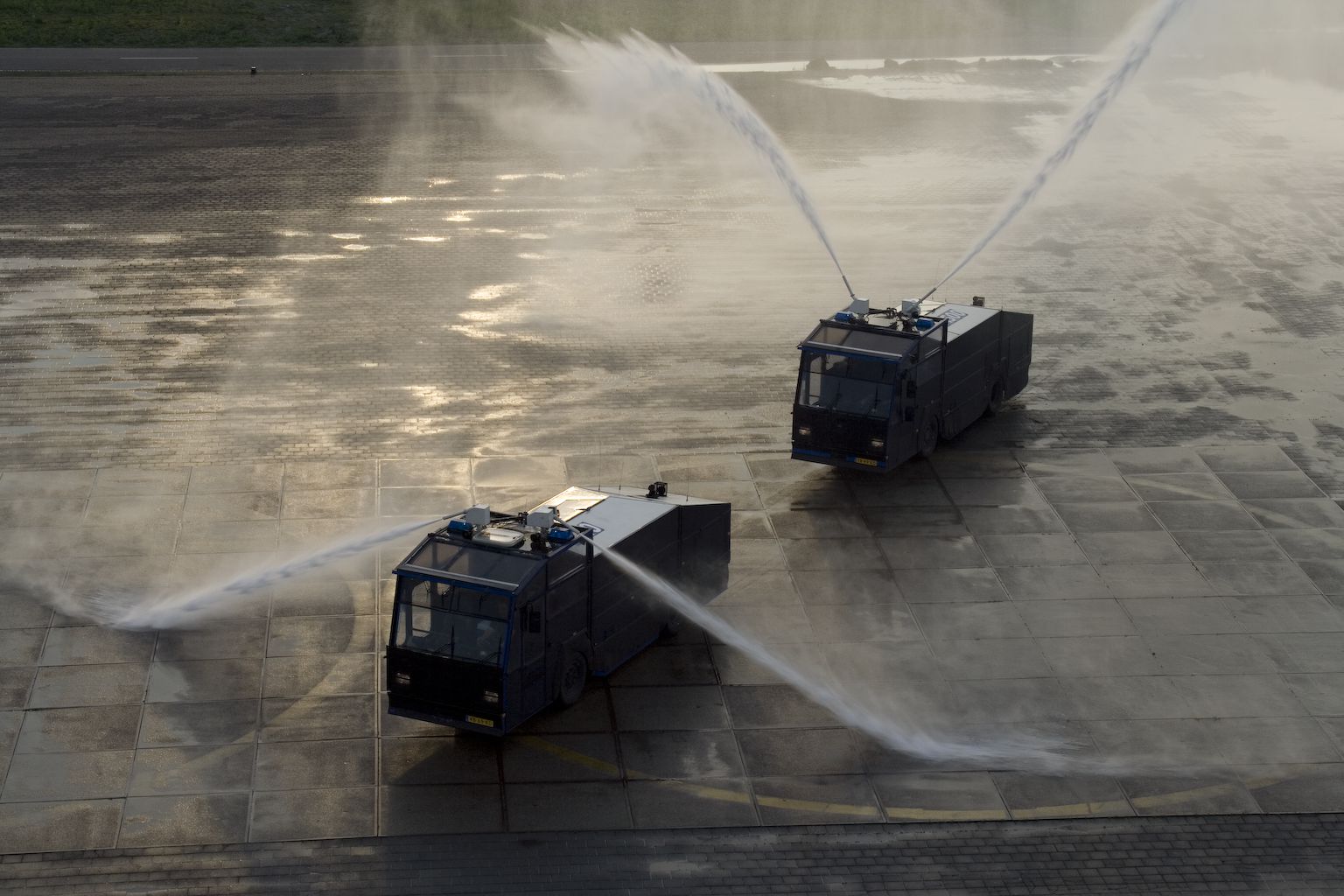
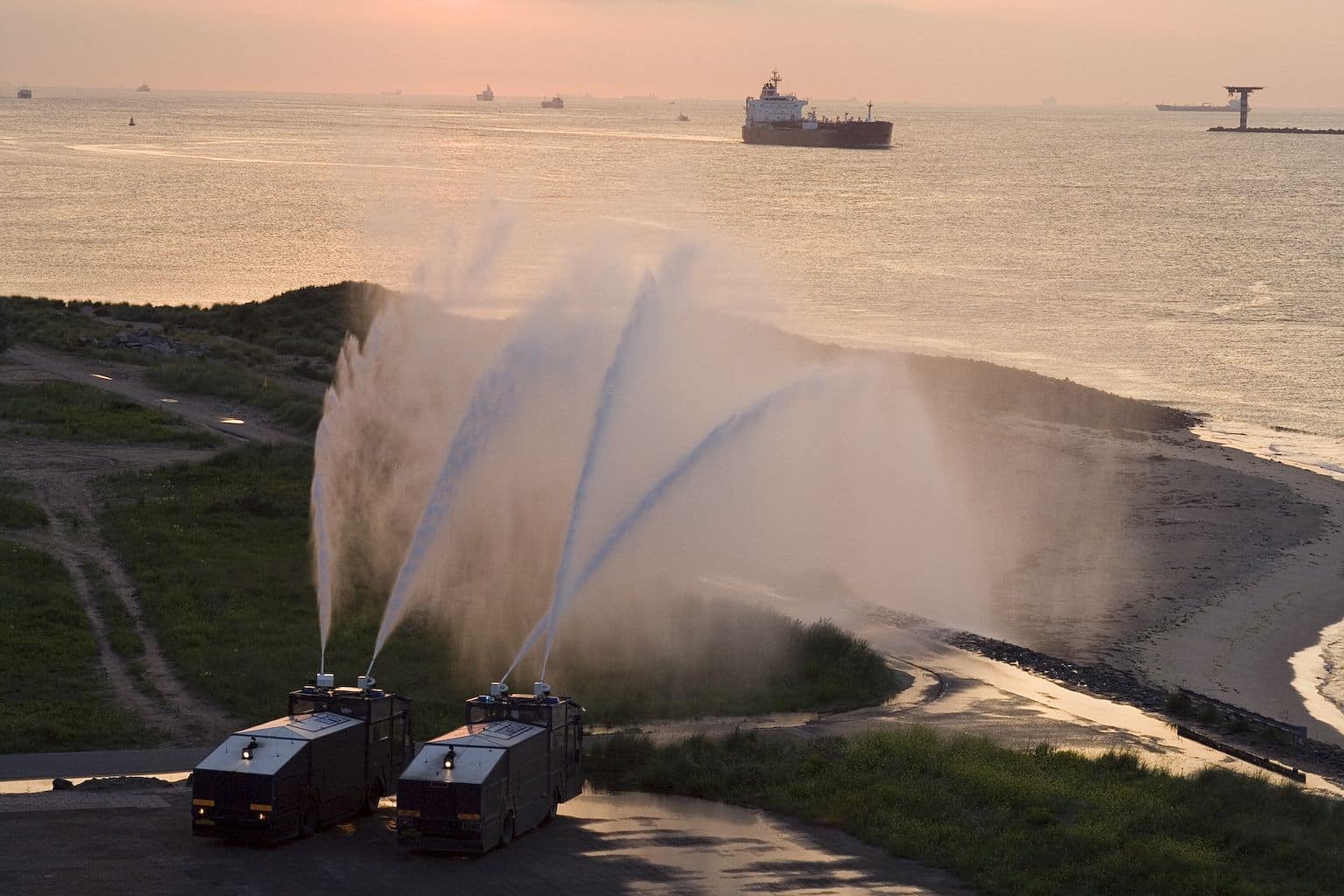
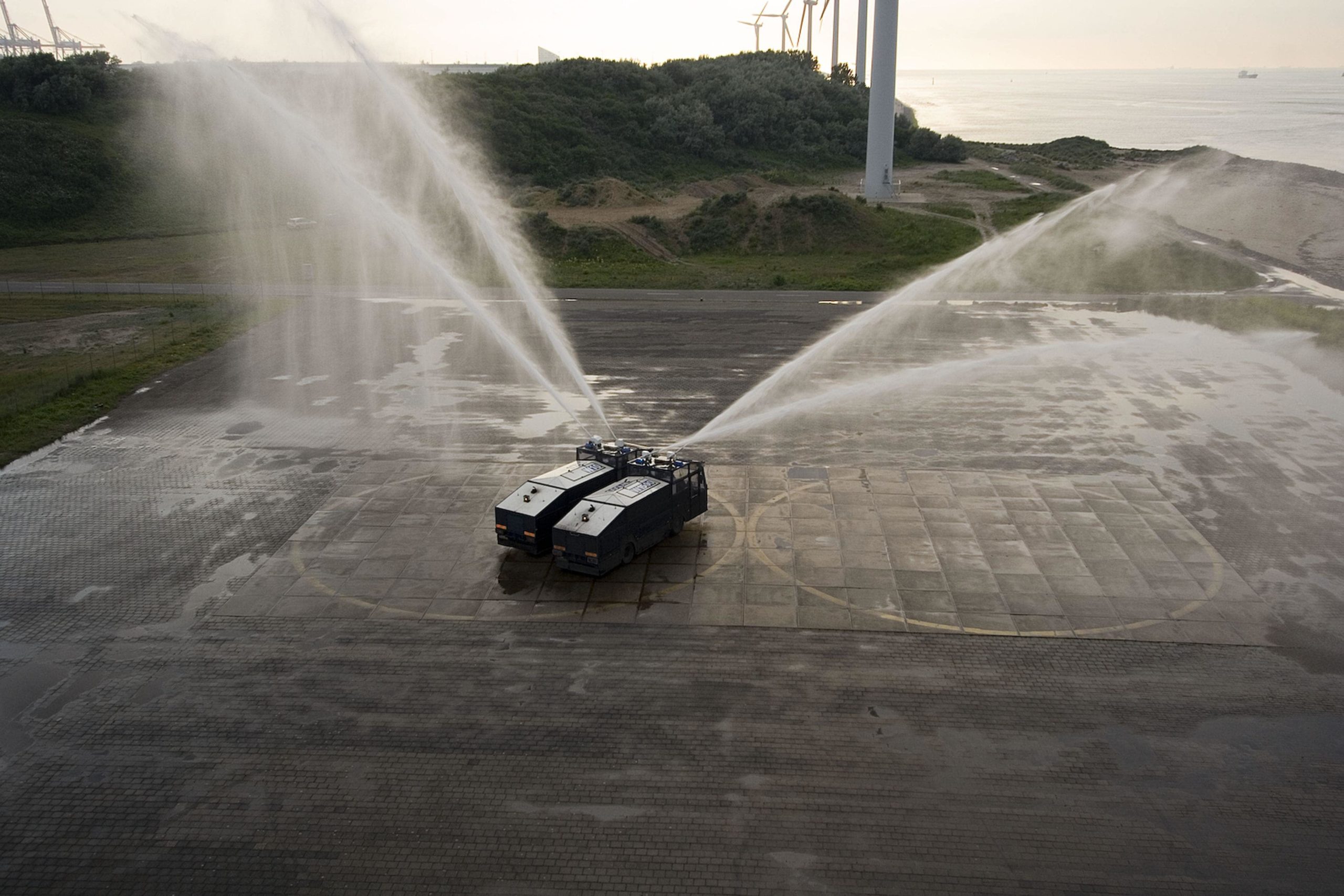
With Pegasus Dance, made in the Netherlands in 2007 in collaboration with the Rotterdam riot police, Fernando Sánchez Castillo revises the functions that are generally associated with power, in this case, the anti-riot water cannon vehicles. The vehicles play out a dance set to a Strauss waltz. Through their series of circular motions, the two vehicles act out a sort of melodrama, replete with a sense of romance, longing, and triumph. By doing so the artist reinvents the violent nature of these instruments and slows down their tempo, accommodating them in an unusual poetic climate. Rather than instruments of oppression, they operate in favor of art and culture. The plays of light are filtered through the water that they shoot to the sound of music; the colors are degraded, the afternoon becomes pleasant and the scene intoxicating, almost like a bucolic landscape painting.
Stills
Fernando Sánchez Castillo
- Artist
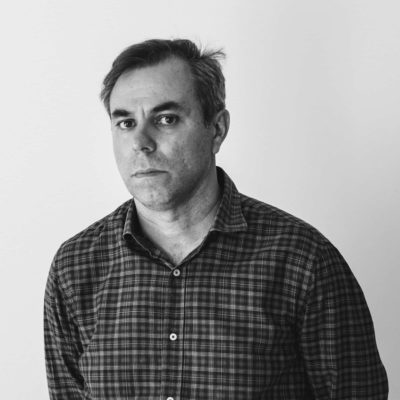
Fernando Sánchez Castillo is one of the most relevant Spanish artists of his generation. He develops a critique from different perspectives to monumental discourses with the intention to disarticulate agents of power and representation. His work is an attempt to rewrite historical events, or at least to make us more aware of its complexities and traces, showing that history is constructed from many positions of power. Fernando Sánchez Castillo’s had solo exhibitions at important museums such as CA2M (Madrid), Stedelijk Museum (Amsterdam), Center for Contemporary Art (Linz, Austria), CAC Centro de Arte Contemporáneo (Malaga, Spain), MUSAC (León, Spain), among others.
His work is part of the most important museums and collections such as the Centre Georges Pompidou; Centro de Arte Reina Sofía; MUDAM (Luxembourg); Fundación NMAC, Rabobank, Caldic Collection, CA2M, Utrecht Centraal Museum, Skissernas Museum, Marta Herford (Germany), IVAM (Valencia, Spain), PAMM (Miami, U.S.A); Suzuki Collection (Japan), City of Arnhem and City of Amsterdam, among others.
Last update: October 2021
Related galleries
Albarrán Bourdais
- Address
- Calle del Barquillo 13, 28004, Madrid, Spain
- Phone
- (+34) 611 555 693
- info@albarran-bourdais.com
- Website
- albarran-bourdais.com
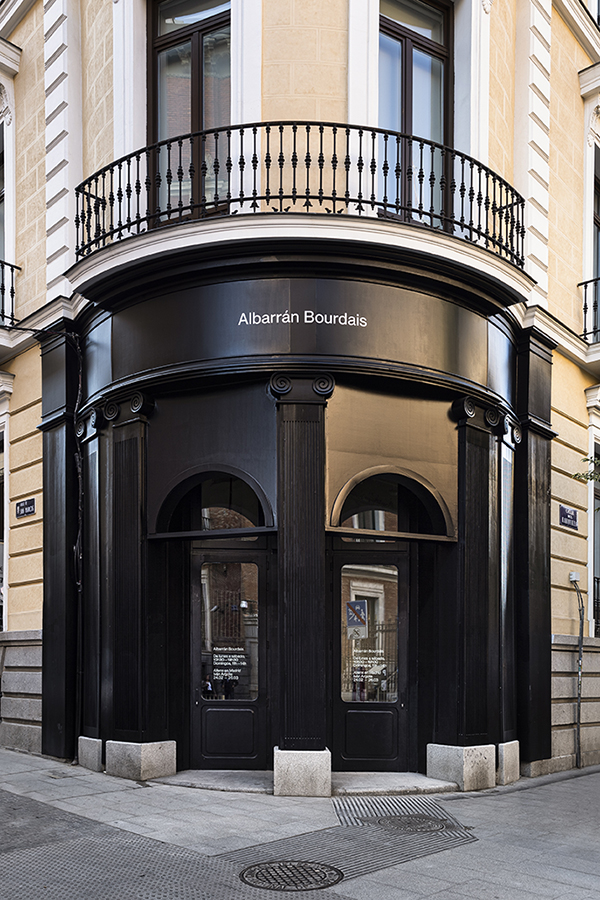
Albarrán Bourdais (Madrid) was born in 2018 out of the idea to create a new art gallery concept that went far beyond the white cube. With large installations, interventions, collaborations and exhibitions that blur the walls of the physical space, the gallery opens up doors for established artists such as Christian Boltanski, Iván Argote, Cristina Lucas or Carlos Amorales, (among others), to the Spanish and Latin American public, thus promoting the exchange and dialogue between different cultures and agents of the art world: artists, public, curators, museums and institutions and collectors. “Acknowledging that the virtualization of art is currently in full swing, we believe that the physical experience is essential to create spaces for dialogue and meeting, a carrefour of knowledge and disciplines intended for all generations. We are proud to belong to the creative and extremely dynamic community of Madrid, and to have the support of a group of exceptional artists”.