Suggested Place for You to See it
Fatma Bucak
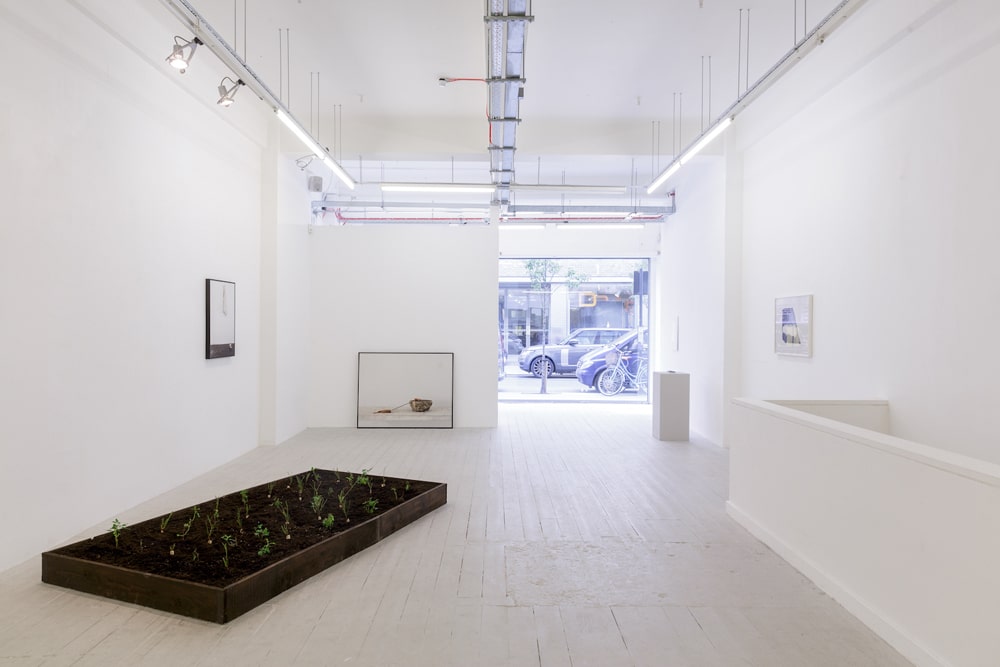
Pi Artworks, London / Istanbul
— Log in to watch the artist video if you have been given an access
- Title
- Suggested Place for You to See it
- Gallery
- Pi Artworks, London / Istanbul
- Year
- 2013
- Duration
- 13 min 32 s
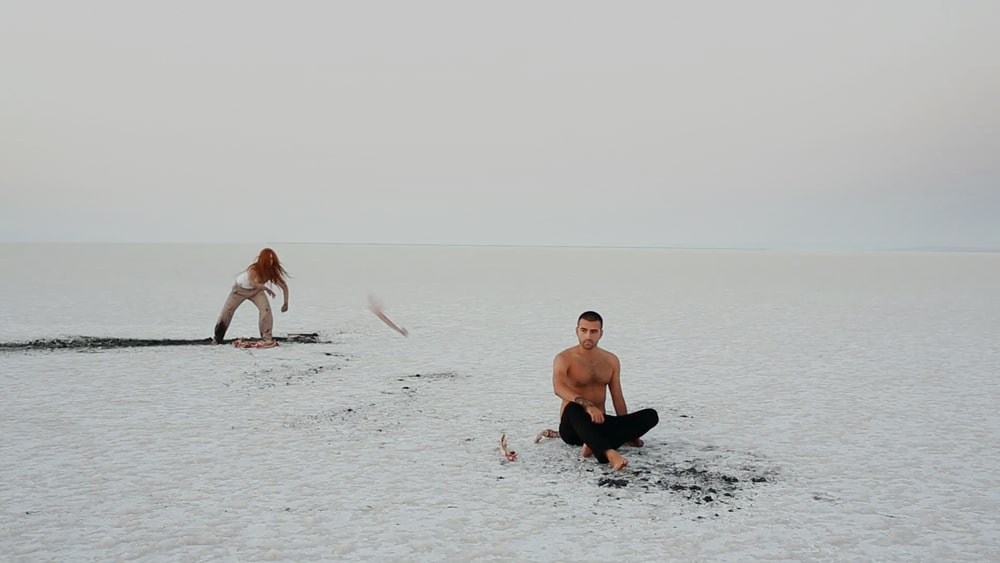
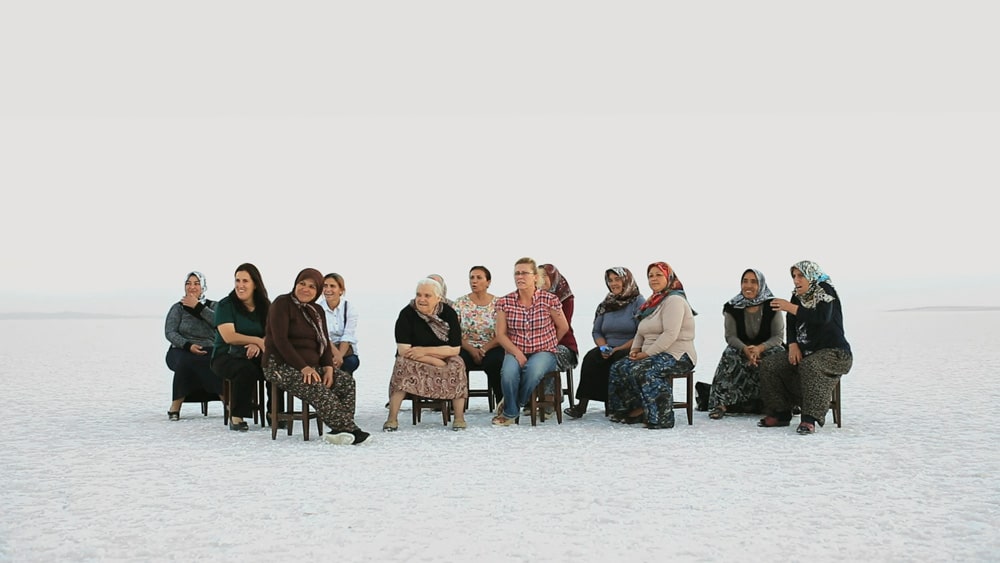
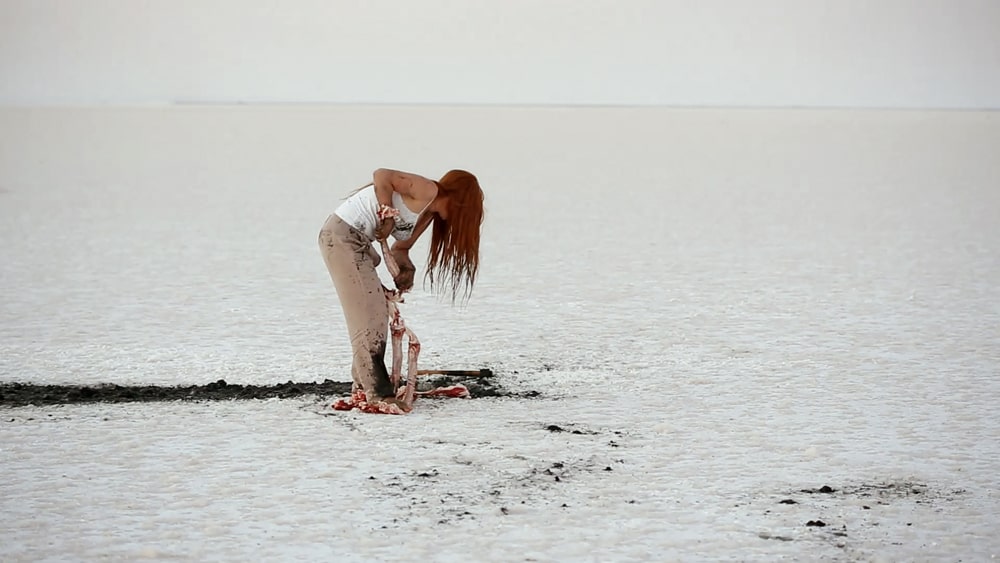
The two videos, Suggested place for you to see it and And then God blessed them, are a two-channel installation work set Salt Lake in Central Anatolia. The work is an exploration where the fixed contemporary definitions of religion gender hierarchy and gender politics, and their impact on society, are help question through a dialogue around theatrically, audience and medium. The first video, And then God blessed them, is a performance executed by the artist herself and her brother in which Bucak re-visits the genesis myth of the monotheist religions, transforming the stage into a negotiation of gender politics. Exhibited as a sort of a “Call and Response” the second video Suggested place for you to see it transforms the audience from a performance into the subject of a work. Her a camera is fixed on a group of thirteen Turkish Kurdish women who are witnessing the performance of the artist in the same place. Bucak invited thirteen women from around villages of the Salt Lake area in Turkey’s Anatolia. Each participant came from a different understanding of gender issues of today, some had a more conservative approach and others a feminist approach. This mixed group of women if invited to see, examine and comment on the performance that is happening in front of them. The artist creates an almost palpable friction between a fictional scenario and the dialogue of the comments of the women, revealing certain cultural codes.
Stills
Fatma Bucak
- Artist, Speaker
1984
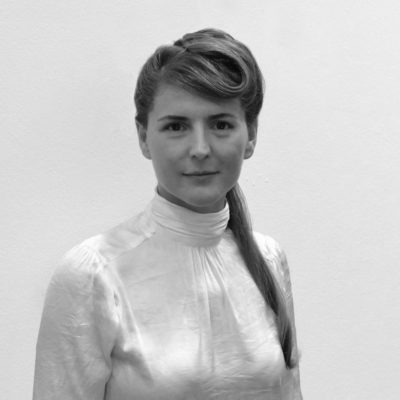
Fatma Bucak studied Philosophy at Istanbul University and History of Art and Etching in Italy at the Albertina Academy of Fine Arts, before completing her MA in Photography at the Royal College of Art, London. Her works in performance, photography, sound, and video, center on political identity, religious mythology, and landscape as a space of historical renegotiation. Investigating the fragility, tension and irreversibility of history, the power of testimony and memory. In her practice she often questions traditional forms of history-making as well as cultural and gender norms.
“I confess that I often have doubts about the strength of independent narratives in art and about resistance within art. I spend a fair amount of time thinking about how it might be done better, and even about whether one ought to simply disengage from these subjects all together. But ultimately there is no way by which you can isolate yourself from the world; all my works are influenced by, and influence, my surroundings.”
Related galleries
Pi Artworks
- Address
- 55 Eastcastle St, London W1W 8EG, United Kingdom, London / Istanbul
- Phone
- +44 20 7637 8403
Contemporary Art Gallery with spaces in London and in Istanbul. Pi Artworks aims to create a program to initiate social change. Pi Artworks wants to cross borders, make connections, explore “shared histories”, bridge artists from different geographies working on similar issues. Open up to global conversations about art history, political and critical thinking.