The Desire Project
Grada Kilomba
Goodman Gallery, Johannesburg,
— Log in to watch the artist video if you have been given an access
- Title
- The Desire Project
- Gallery
- Goodman Gallery, Johannesburg,
- Year
- 2016
- Duration
- 8 min 37 s
- Format & Technical
Three-channel video HD in black and white, in loop, with one sound channel, two printed impressions and a shrine installation
Ed.5- Contact
Kirsty Wesson
kirsty@goodman-gallery.com
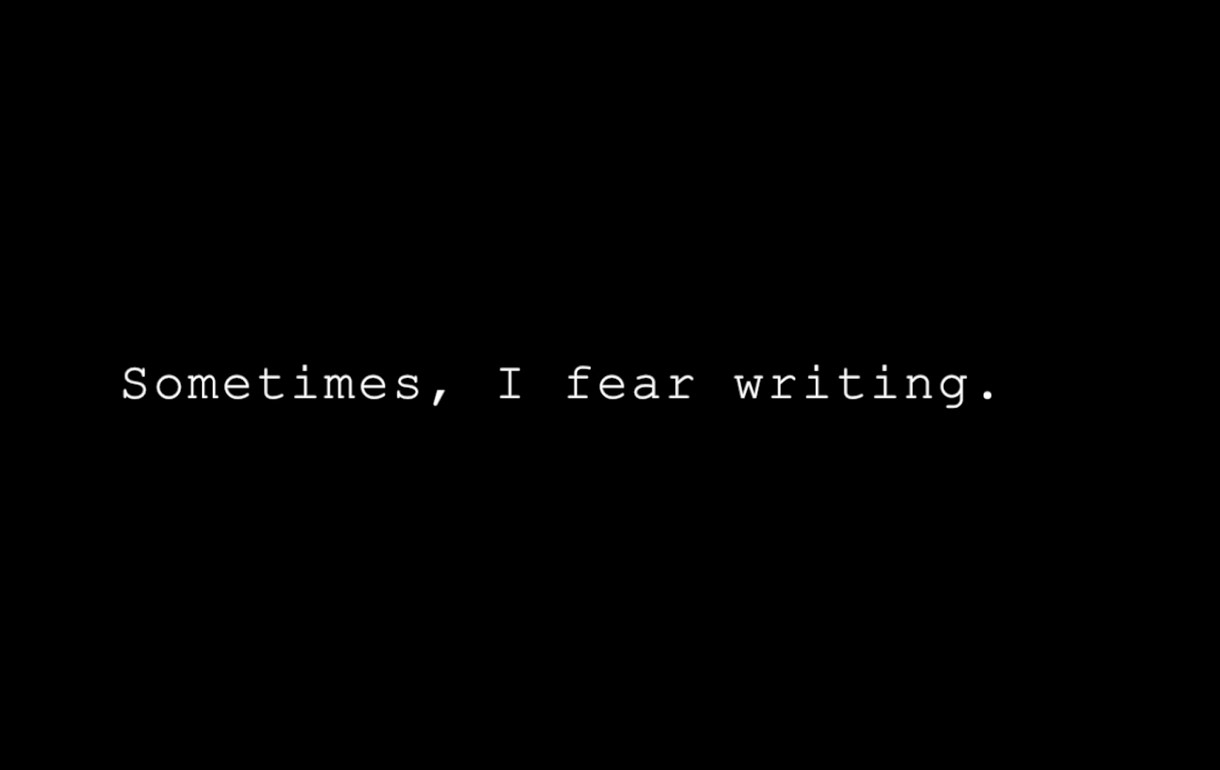
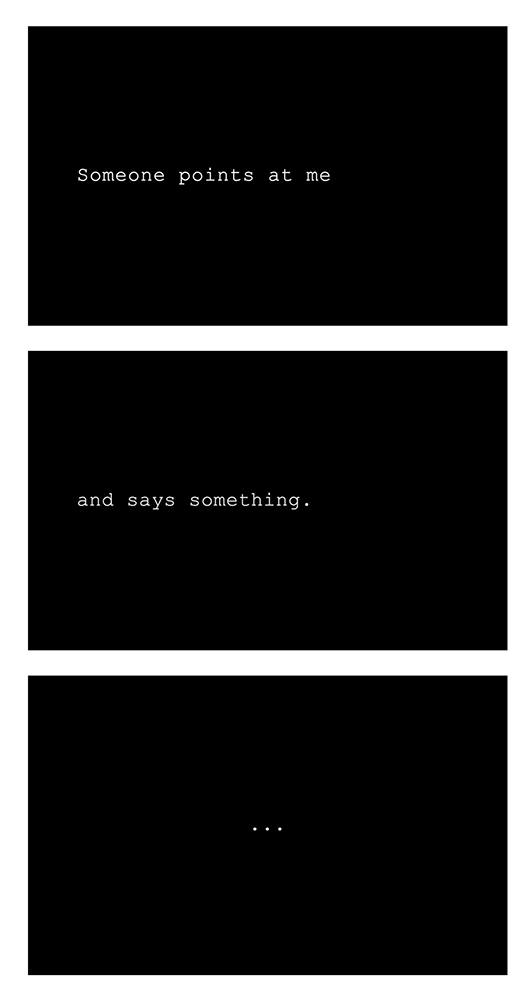
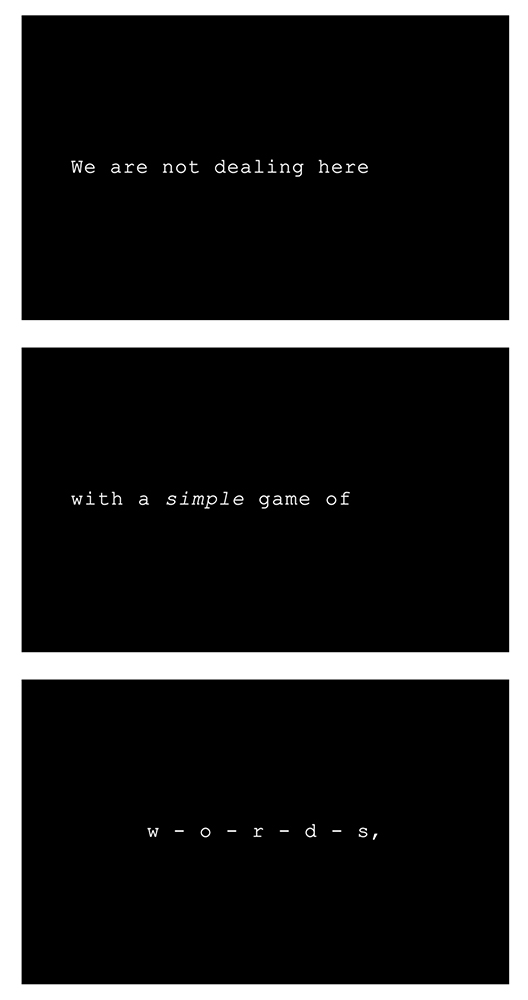
In her video installation The Desire Project, Grada Kilomba uses the written word as the only visual element, accompanied by a rhythmical drumming as a metaphorical voice, indicating the emergence of a speaker who has been historically silenced by colonial narratives.
The work is comprised of three films representing three chronological moments: “While I Walk”, “While I Speak” and “While I Write”. In each film white text appears against a black background in time with a soundtrack of rhythmical drumming, composed by Moses Leo. The drumming is used instead of the usual voice over, becoming a form of narrative and recalling the African tradition of storytelling.
Kilomba foregrounds the importance of writing in the work which, she explains, is “almost an obligation to find myself”.
As Gabi Ngcobo, writes “In her visual work, Kilomba exits the book form by stretching out pages, spilling them out and extending them into the field of vision”.
In her strong text, Kilomba plays with the concept of memory as a theory of forgetting: “one cannot simply forget and one cannot avoid remembering” she writes. Before entering the video installation, one passes a shrine dedicated to the ancestor Anastácia, an emancipated enslaved African woman whose mouth was sealed, to implement a sense of fear and spechlessness. For Kilomba, Anastácia not only embodies the conflictuous triangle Africa-Europe-America, but also raises the pertinent questions of ‘who can speak?’ and ‘what can we speak about?’ and ‚‘what happens when we speak?’
This work was commissioned for the 32nd Bienal de São Paulo – Incerteza viva [Live Uncertainty], 2016.

- Loop Fair Mention Honor 2020
Stills

Grada Kilomba
1968, Lisbon
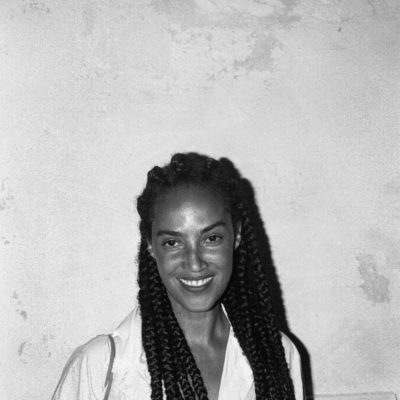
Grada Kilomba (n. 1968, Lisboa, Portugal) es una artista interdisciplinar cuya obra se basa en la memoria, el trauma, el género y el post-colonialismo, replanteando las nociones de conocimiento, poder y violencia. «¿Qué historias se cuentan? ¿Cómo se cuentan? ¿Quién las cuenta?» son cuestiones constantes en el corpus de la obra de Kilomba, enfocada en revisar los relatos post-coloniales.
Kilomba traduce el texto a imágenes, movimientos e instalaciones de manera subversiva, dando cuerpo, voz y forma a sus propios escritos críticos. Performance, lecturas escenificadas, vídeo, fotografía, publicaciones e instalaciones son el escenario de la singular práctica de narración de Kilomba, que perturba el llamado «cubo blanco» a propósito mediante un lenguaje e imaginario decolonial nuevo y urgente.
Con una fuerte influencia de la obra de Frantz Fanon, Kilomba estudió psicoanálisis freudiano en el ISPA de Lisboa, donde trabajó con supervivientes de las guerras de Angola y Mozambique. Al poco empezó a escribir y publicar relatos, antes de ampliar sus intereses a la escenificación, la imagen, el sonido y el movimiento.
Kilomba obtuvo su doctorado en filosofía cum laude en la Freie Universität de Berlín. Ha enseñado en varias universidades internacionales, como la Universidad de Ghana y la Universidad de Artes de Viena, y fue profesora invitada en la Humboldt Universität de Berlín, en el departamento de estudios de género. Durante varios años fue artista invitada en el teatro Maxim Gorki de Berlín, desarrollando Kosmos 2, una intervención política con artistas refugiados.
Es la autora de las aclamadas «Memorias de la plantación» (Unrast, 2008), un recopilatorio de episodios de racismo cotidiano escrito bajo la forma de breves relatos psicoanalíticos. Su libro ha sido traducido a varios idiomas y fue nombrado una de las obras de literatura de no-ficción en Brasil en 2019.
Last update 22nd October 2020
Related galleries
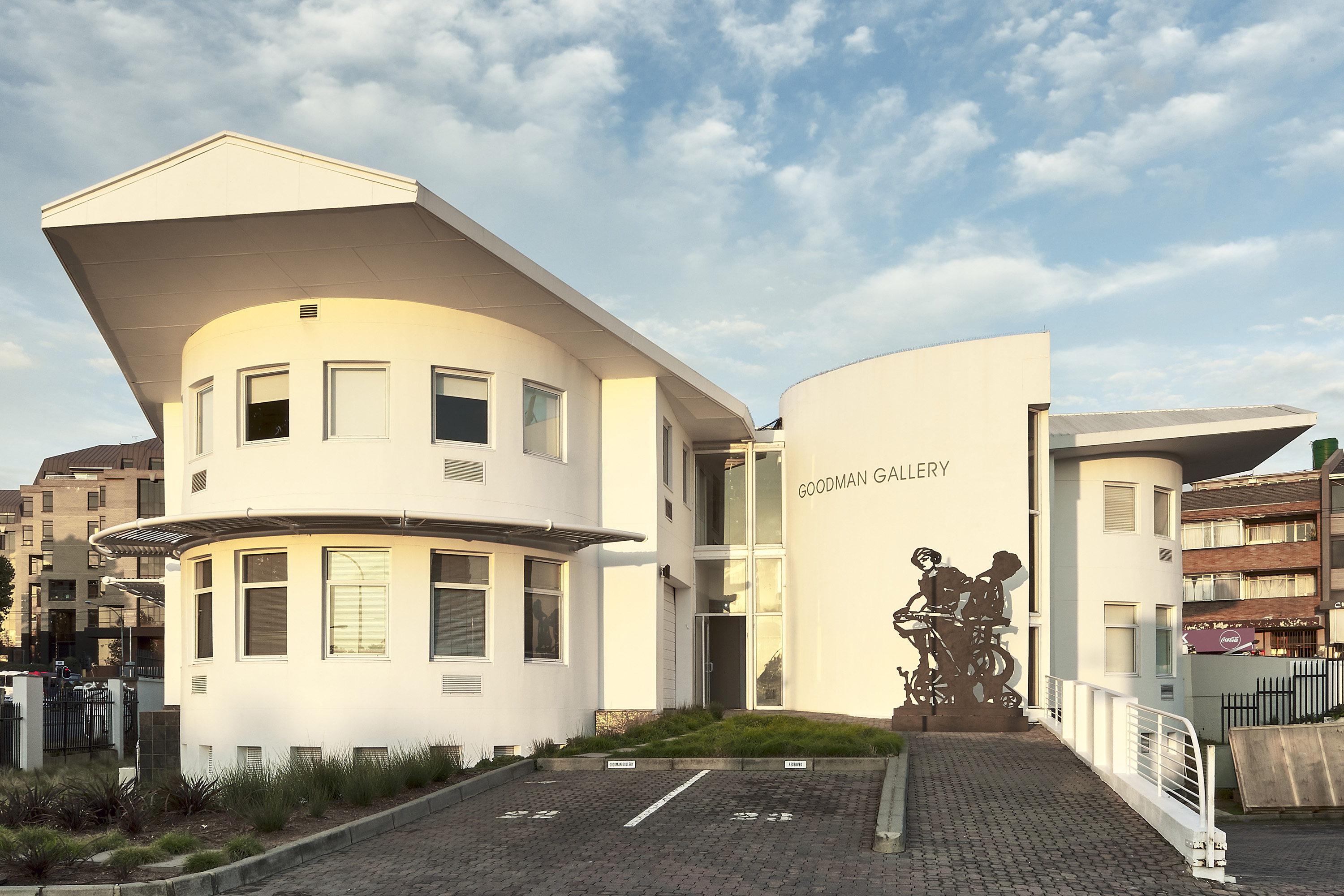
Goodman Gallery
- Address
- 163 Jan Smuts Ave, Parkwood, Johannesburg,, South Africa
- Phone
- 0117881113
- kirsty@goodman-gallery.com
- Website
- www.goodman-gallery.com
Goodman Gallery is one of the most distinguished and longest-standing international contemporary art galleries. Established in Johannesburg in 1966, the gallery works with artists who are at once contemporary, influential and strive to shift perspectives and engender social transformation. Founded during the era of apartheid, Goodman Gallery offered a nondiscriminatory space when museums served the agenda of the autocratic government. Since 2008, under the directorship of Liza Essers, Goodman Gallery has expanded on this legacy, shifted its focus, and introduced numerous pivotal curatorial initiatives and partnerships. Essers has promoted a global outlook, while initiating unconventional interventions both within and outside of the traditional gallery space.