The Upper Eyelid
Taro Izumi
Galerie GP & N Vallois, Paris
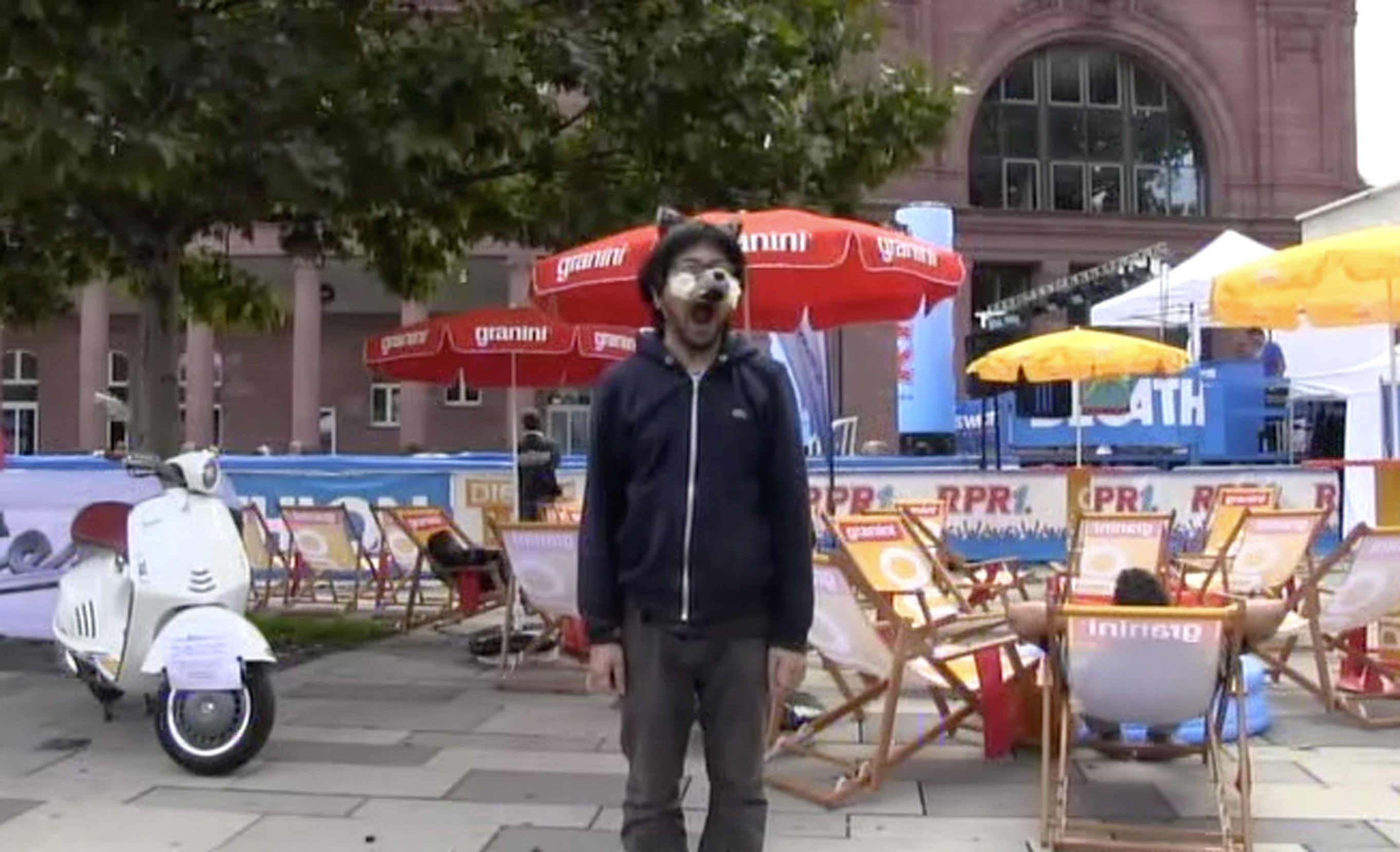
— Log in to watch the artist video if you have been given an access
- Title
- The Upper Eyelid
- Gallery
- Galerie GP & N Vallois, Paris
- Year
- 2014
- Duration
- 54 min 45 s
- Format & Technical
Single channel, loop, colour, sound
3 + 2 AP
- Courtesy
This self-referential film captures the artist’s own sense of alienation in a context hostile to him. Izumi creates a self-portrait with steady camera shots of his entire body, which follow one another showing him to be passive and isolated in different scenes of a western urban landscape. Disguised as a fox, he repeats his actions devoid of all emotion to eloquently manifest how he does not belong to that environment, and that any effort he makes to adapt is useless.
The fox —kitsune in Japanese— is an important animal in the Asian mythological tradition: it is an intelligent protector; it is capable of adopting human form so as to make fun of the people it comes across. Taro Izumi transforms into a fox, yet he suggests an inverse reading of the ancestral myth. He personifies the animal, but as a being incapable of understanding the world around him, from within a nature that has been taken away from him, and into which he no longer fits because he has no purpose whatsoever within it. The scenes are deliberately ridiculous, triggering an absurd situation, a regular resource in the works of the Japanese artist.
Absurdism could be defined by the lack of a specific purpose for human existence and the intensification of indifference, like that of someone who has accepted defeat. Izumi conveys his burden to us through the construction of a character who, imprisoned in himself, wanders tirelessly through the city, detached of every desire, commodity, or ambition. However, he also conveys weight to us when he puts the spectator’s patience to the test with his prolonged actions that repeat themselves again and again, impressing upon us the sadness of a character who goes unnoticed until becoming just one more element of an alienated landscape.
The sound also contributes to the monotony of the film. Through the simple play of opposites (silence-noise, positive-negative) he displaces the unintelligible murmur of the city to the cry or the whimper of the animal. In this way, the concise content makes use of film’s very own resources—time and sound—to reinforce the intention behind the image. Our perception, in a reading of all the elements articulated by the artist, meets face to face and repeatedly with a situation in which cultural difference isolates the character, a reflection of the contemporary socio-economic framework and its frictions.
Violeta Janeiro
Taro Izumi
- Artist
1976, Tokyo
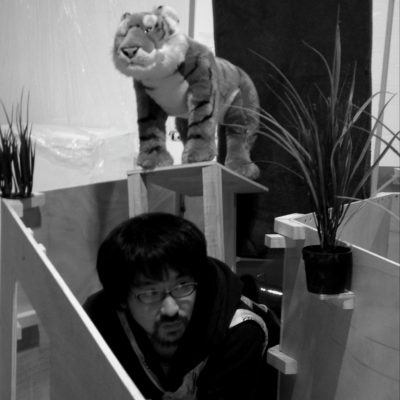
Taro Izumi researches through installations, videos and sculptures on the creation of absurd environment, often coloured with dark humour. Since 2002, he has taken part in major exhibitions in Japan and abroad in such institutions as Deitch Projects, New York; the MOCA, Los Angeles; House of Culture of Japan, Paris; or at the Palazzo Grassi, Venice. In 2009, he had his first solo exhibition at the GP & N Vallois Gallery, Paris. Invited by Jean de Loisy, he is currently presenting his works in a solo show at the Palais de Tokyo, 2017. Izumi’s works are part of important private and public collections including the Tokyo Museum of Contemporary Art; the Japan Foundation; the François Pinault Foundation; the Kansas Spencer Museum of Art; the Seine-Saint-Denis Municipal Fund of Contemporary Art of the City of Paris; or the Kadist Art Foundation.
Last update 8th May, 2017
Related galleries
Galerie GP & N Vallois
- Address
- rue de Seine 36, 75006, Paris, France
- Phone
- +33(0)1 46 34 61 07
- Website
- www.galerie-vallois.com
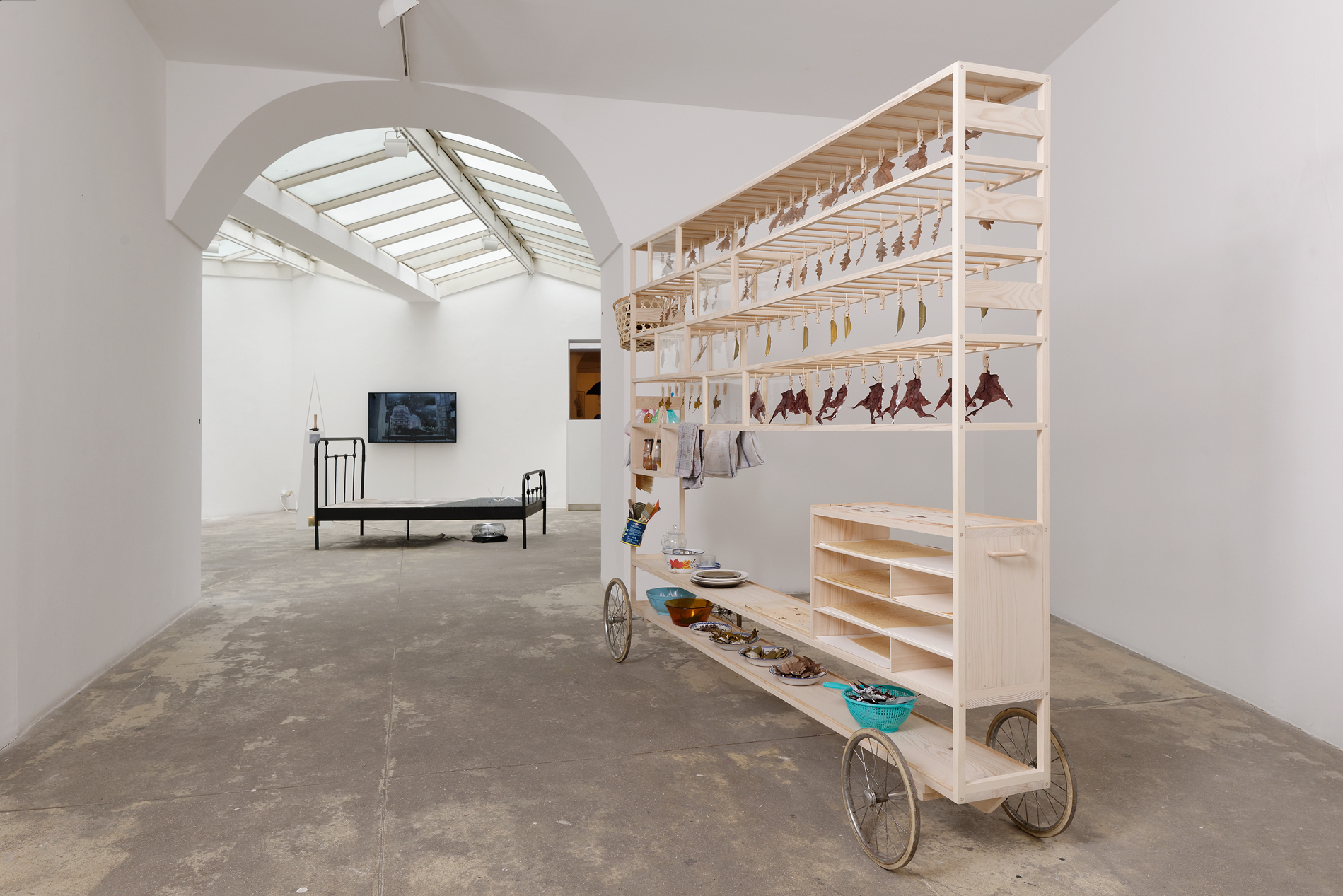
Galerie Georges-Philippe & Nathalie Vallois opened in September 1990. From the outset, the gallery has followed two main directions in contemporary art. The first, representing both French and foreign artists and introducing them in the capacity of a solo exhibition for the first time in France. In addition and since 1998, the gallery’s ‘Project Room’ has shown specific installations or projects by emerging artists. Our second commitment regards the exhibiting of major works by artists of the ‘Nouveau Réalisme’ movement by organizing regular historical group and solo exhibitions of the “Nouveaux Réalistes” (New Realism) artists. The Gallery represents Jacques Villeglé as well as the estates of Alain Jacquet, Niki de Saint-Phalle and Jean Tinguely.
Last update 8th May, 2017