The Lost Dog
Amie Barouh
Yamamoto Keiko Rocheix, London
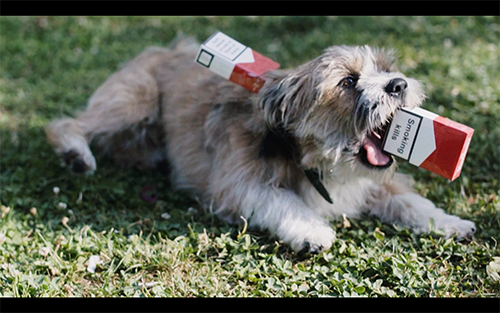
— Log in to watch the artist video if you have been given an access
- Artist
- Amie Barouh
- Títol
- The Lost Dog
- Galeria
- Yamamoto Keiko Rocheix, London
- Any
- 2020
- Fomart tècnic
- 11 min 38 s
- Format & Tècnica
HD, Single-Channel Video, Colour, Sound
Un gos perdut divaga per un barri parisenc de classe obrera mentre tota mena de persones en tenen cura pels carrers. Cada una fa cas del simpàtic gosset a la seva manera.
Pot ser que el gos sigui un eufemisme per referir-se als marginats de la societat, amb els quals es «juga» o als quals s’humilia o s’ignora, però que finalment queden a mercè dels altres, malgrat que passen moments agradables amb ells. Amb tot, el més significatiu és que el vídeo està imbuït d’afecte i d’esperança, potser vinculats amb la llibertat de la vida vagabunda, l’audàcia de la joventut i una fe muda però subliminal en un futur millor.
Rodat des del punt de vista dels seus protagonistes, aquest curtmetratge està dotat d’una sensació d’autenticitat que, de vegades, acumula una tensió com la que marca les vides dels immigrants i de les minories: és una afirmació desacomplexada dels que tenen unes vides que, sovint, no són altra cosa que notes a peu de pàgina per a la societat convencional.
Stills
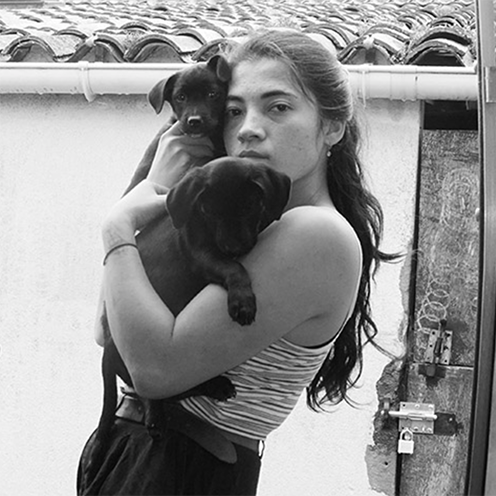
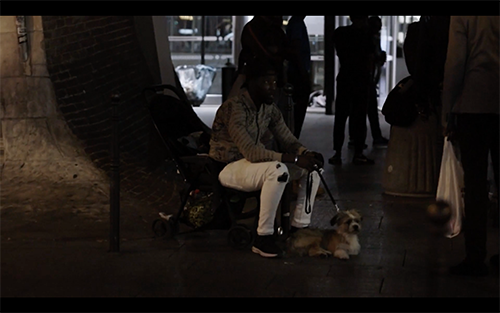
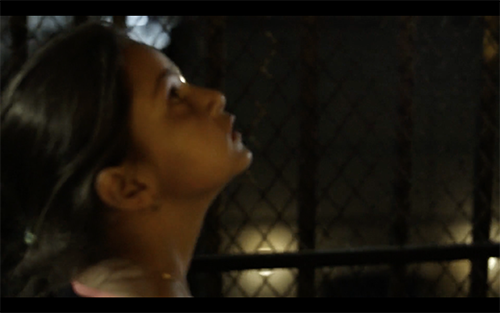
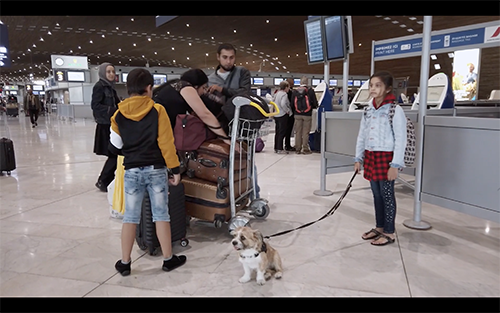
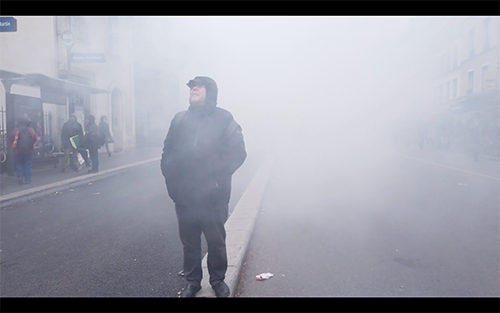
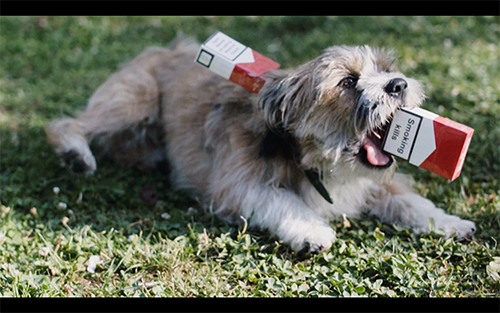
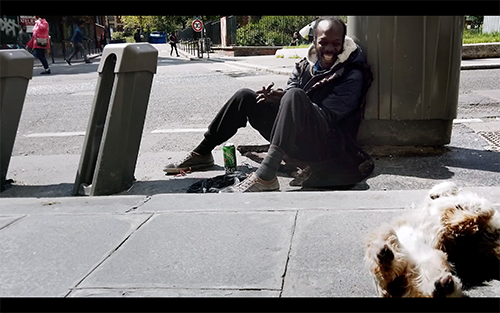
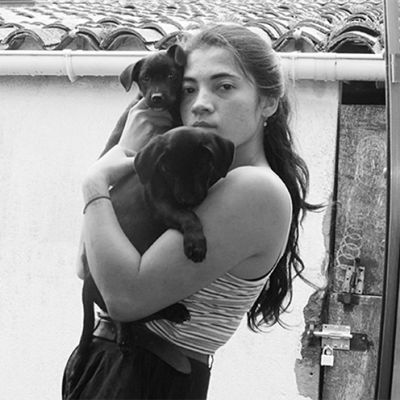
Amie Barouh creates an experimental documentary giving voice to those at the margin of society. ‘Film diary’ provides the foundation for her work as does the idea that all knowledge is subjective. Driven more by affinity than dogma to ‘make a film’, the video of Barouh, between documentaries and visual essays, aims first to transmit an experience, lived as it is.
The search of right proximity with those who she films gives constant tension to Barouh’s work. The camera, the third eye and arm of the artist, negotiates the nature of the relations in real-time that she, as a documentary artist but as a person before anything else, maintains with her subjects.
Presentation and subjective editing espouse her heartbeat where impressionistic or realistic images originate, reconstructing the full complexity of documenting the world to which we do not belong.
Written by Julie Akermann (shortened by the gallery)
Related galleries
Yamamoto Keiko Rocheix

- Address
- 19 Goulston Street, E1 7, London, United Kingdom
- Phone
- +442072471167
- keiko@yamamotokeiko.com
- Website
- www.yamamotokeiko.com
Yamamoto Keiko Rochaix és un reflex de Spitalfields, East London, on el local es troba amb l’internacional, el vell amb el nou, per a una sinergia millor i dinàmica. És una galeria jove perquè va obrir les seves portes a principis de 2017, s’esforça per presentar artistes emergents a la meitat de la seva carrera les obres s’inspiren en temes de llum, espai i ambigüitat d’identitat, i cada exposició és fruit d’un procés de cooperació profundament involucrat entre els artistes i la galeria, per oferir a l’audiència l’oportunitat d’experimentar l’univers únic dels artistes.
Preocupada per la difusió d’idees darrere de les obres, la galeria organitza esdeveniments que inclouen sessions de xerrades d’artistes, curadors o acadèmics sempre que sigui possible.
Reflectint l’esperit internacional de la galeria i la importància que li dóna al diàleg i la inclusió, té com a objectiu exhibir la meitat de les mostres anuals d’artistes japonesos i asiàtics i l’altra meitat d’artistes locals i europeus.