Hotel Catalonia Ramblas
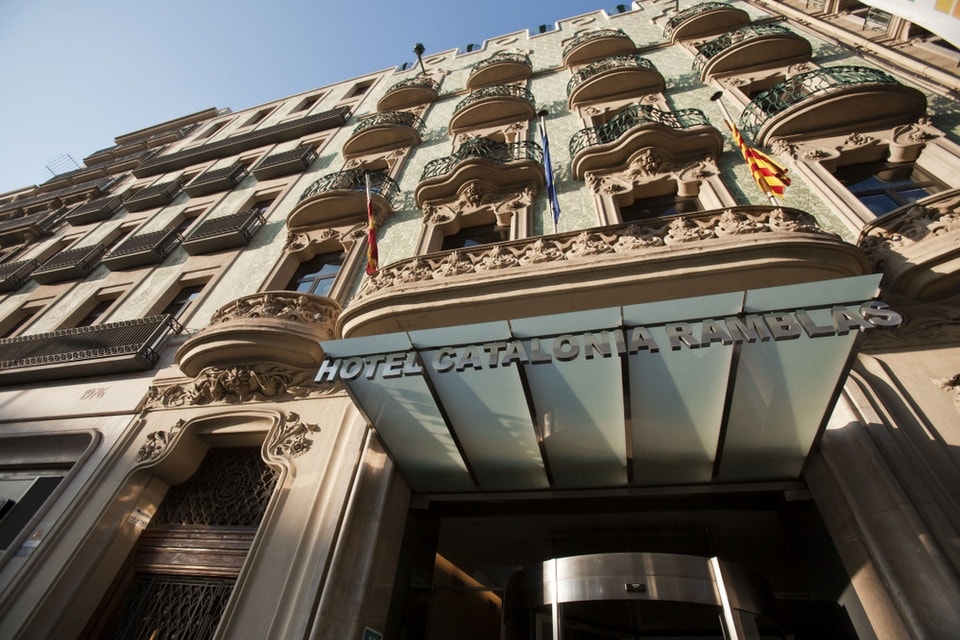
- Address
- Carrer Pelai, 28, 08001, Barcelona
- Phone
- +34 93 316 84 00
- ramblas@hoteles-catalonia.es
- Website
- en.hotelcataloniaramblas.com
- Map
- Veure plànol
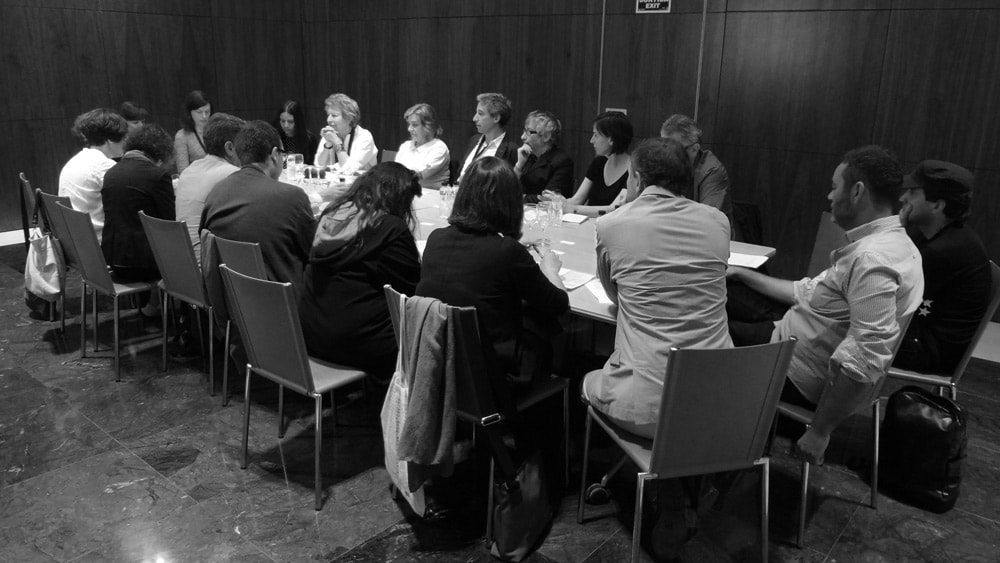
Diana Sans, Bòlit. Centre d’Art Contemporani, Girona
Antoni Jové, Centre d’Art La Panera
Antoni Perna López, Centre d’Art Tecla Sala de l’Hospitalet de Llobregat
Antònia Maria Perelló, MACBA
Arantza Morlius, Departament de Cultura / Generalitat de Catalunya
Carme Cruañas, Fabra i Coats: Centre d’Art Contemporani de Barcelona
Carlos Durán, LOOP
Conxita Olivier, Departament de Cultura / Generalitat de Catalunya
Emilio Alvarez, LOOP
Gisel Noé,
Jaume Reus, Arts Santa Mónica
Jordi Abelló Vilella, El Teler de Llum Centre d’Art de Tarragona
Marta Ramos, Comisaria
Vicent Fibla, Lo Pati – Centre d’Art Terres de l’Ebre
Oscar Abril, Sectors Culturals i Innovació de l’Institut de Cultura de Barcelona
Marta Gustá, Departament de Cultura / Generalitat de Catalunya
Rose Cupid, FLAMIN
Anne Marie Charbonneaux, Presidenta de Le Magasin de Grenoble
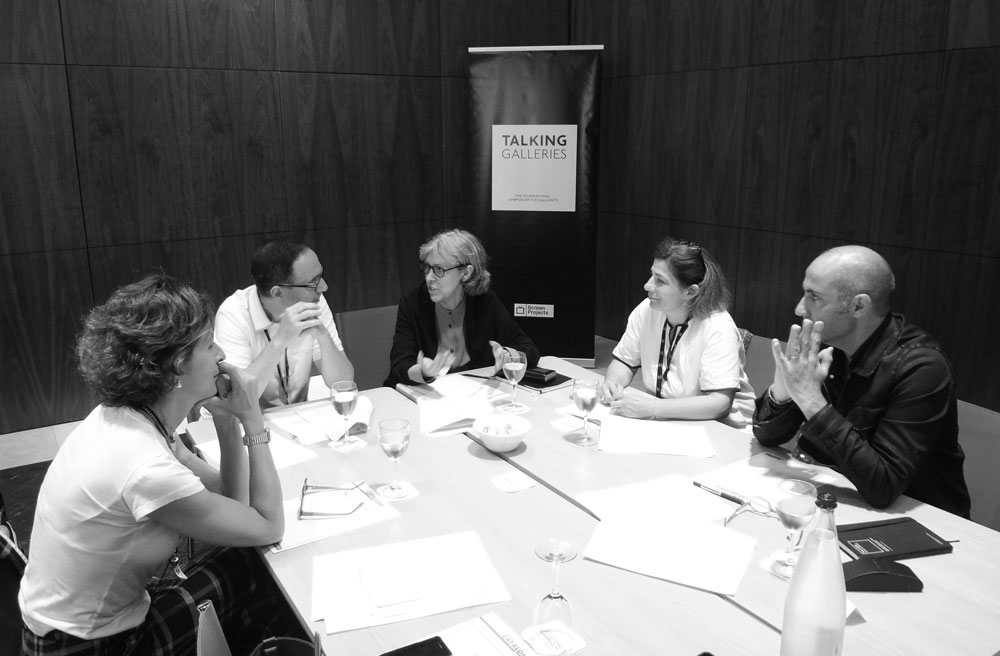
Read the summery (ES)
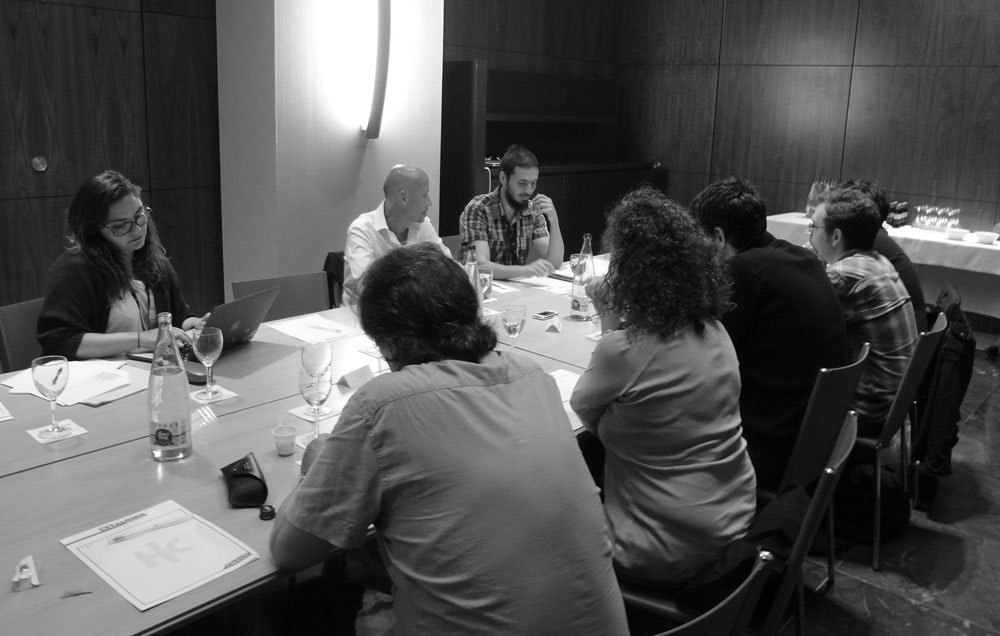
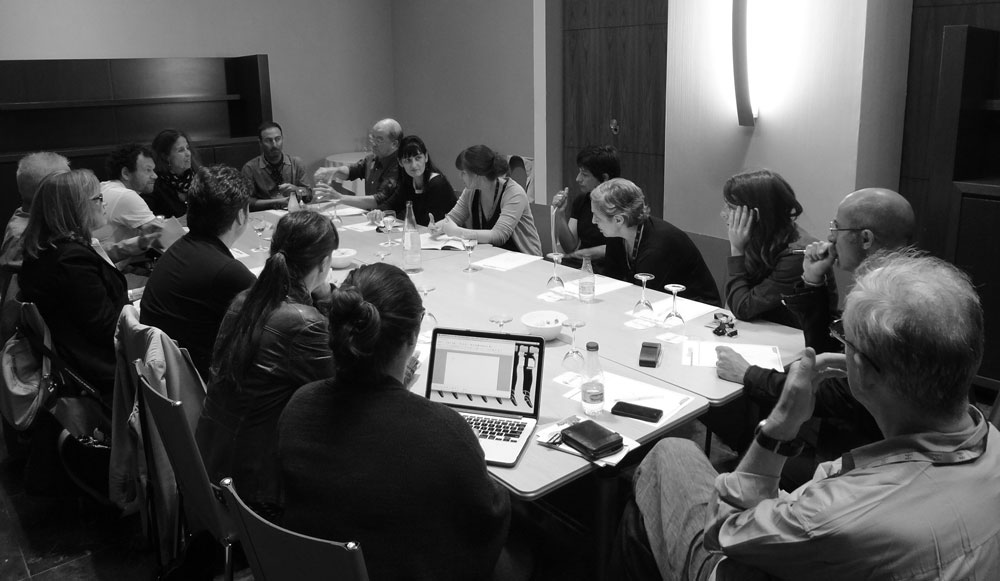
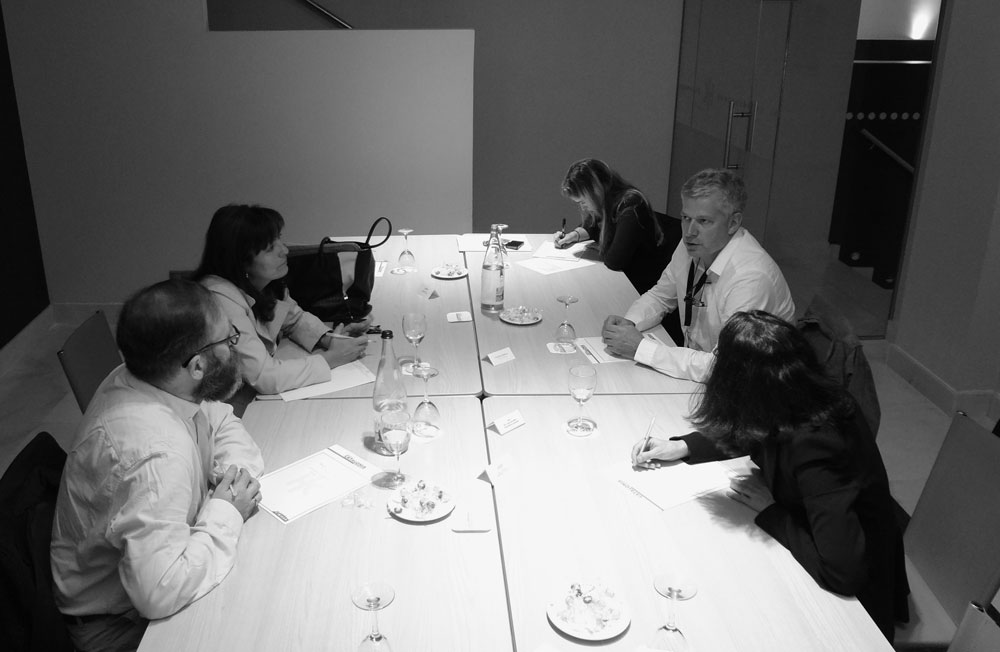
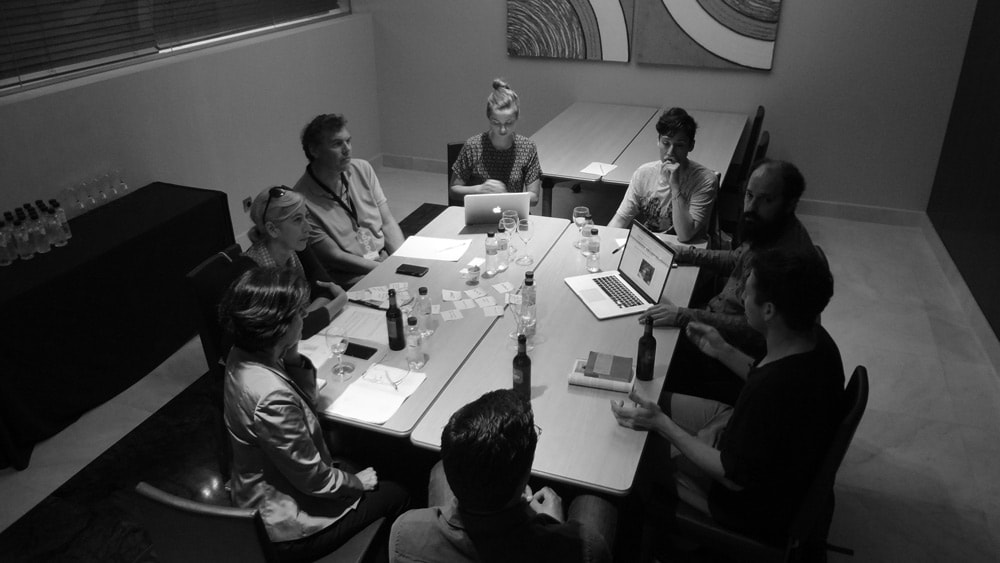
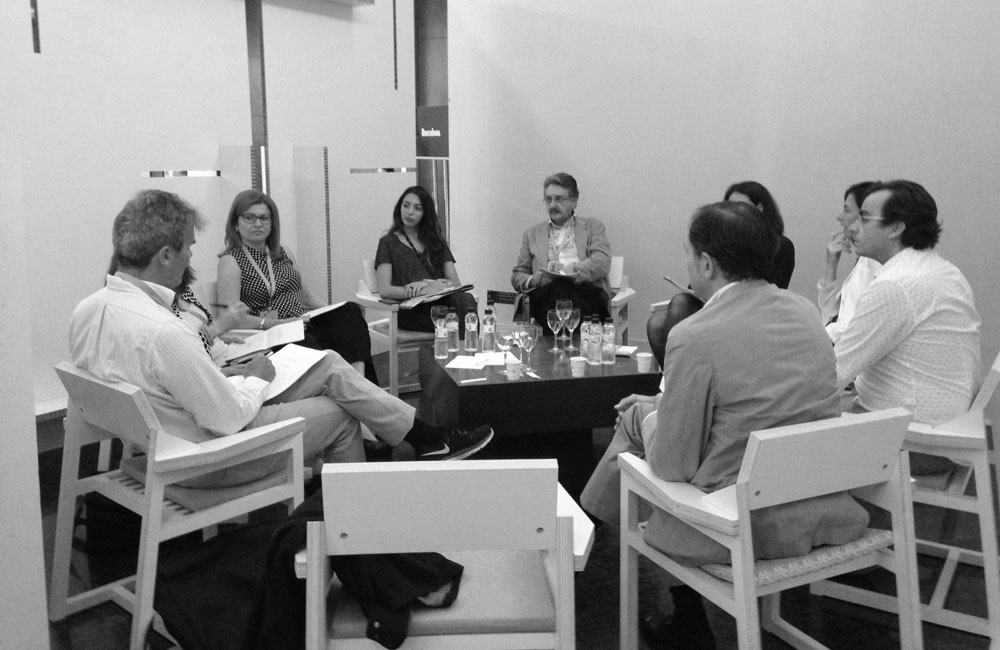
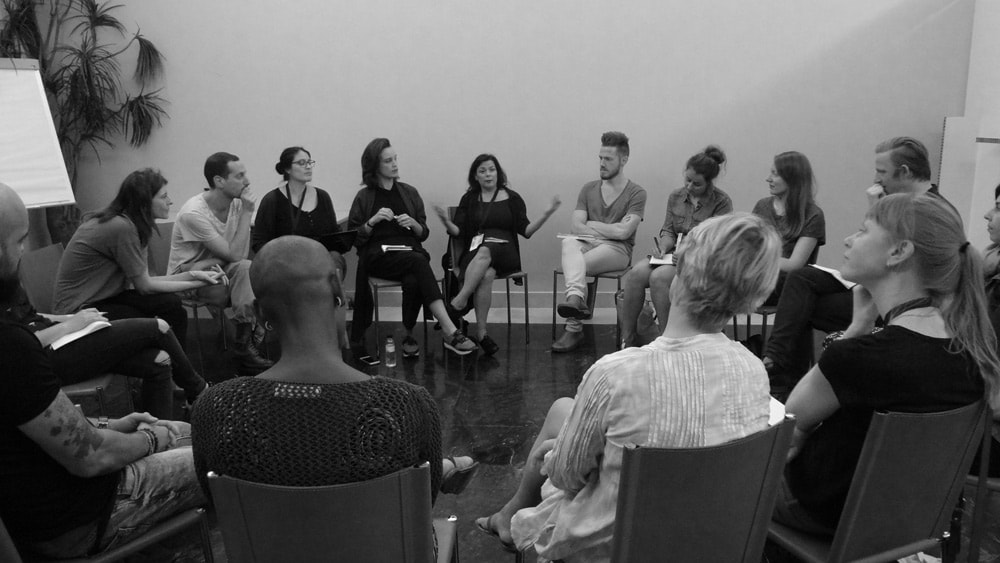
THE LOOP PROTOCOL – Three Party Audiovisual Works Acquisition Agreement, is a document for the acquisition of video art which was written up and agreed between representatives of the three parties involved: Artists, Galleries and Purchasers.
It has been used during LOOP Fair 2016 edition for the purchase of the video art pieces. Taking this fact into account, during the meeting, some amendments were proposed in order to improve the Protocol and to adapt it to any kind of jurisdiction.
This session has limited seating.
Over the last few decades, we have witnessed the progressive migration of cinema to the art space, i.e. the intermingling between the so called “black box” and “white cube”, timidly started with the appearance in the late 1970s of video art departments and collections in public institutions. However, if museums seem to have quite promptly welcomed moving image based productions, private galleries proved to be more resilient – except for sporadic early experiments, such as that of gallerist Julian Levy in the 1930s and the duo Castelli-Sonnabend, forty years later. In departing from the acknowledgement of the galleries’ key role within the contemporary art ecosystem, this conversation between gallerists Ani Molnár (Budapest) and Anthony Reynolds(London), independent producer Jacqui Davies (London) and chaired by Gabriela Galcerán, will then take into consideration the challenges (or advantages) for an art gallery of representing artists that orbit between video art and cinema, and it will at the same time tackle the related issues of acquisition, display, production and distribution. According to film expert and critic Jonathan Walley, the latter are indeed the parameters, or “modes of film practice”, that should be deployed when evaluating, comparing or differentiating video art from experimental filmmaking. In addition, the gallery’s relationship to independent producers and private collectors, the notion of authorship, as well as the question of whether or not cinema and gallery goers could share the same interests will also be addressed.
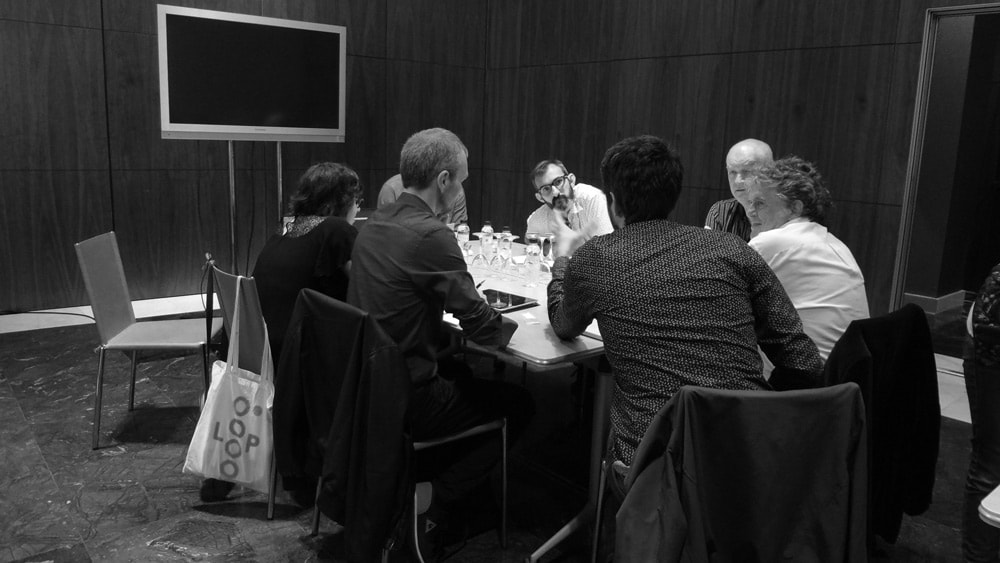
A round table gathering different profiles related to the audiovisual arts to discuss the question “is it possible to establish a return of audiovisual production towards the society, and which strategies or systems exists currently?”. As introduction to the debate a fragment of “La Asamblea 2.0” a work by Miquel Garcia will be shown, where through a participatory system he conducted an Assembly of Educators, Curators, Artists, and cultural Programmers to debate about artistic local production.
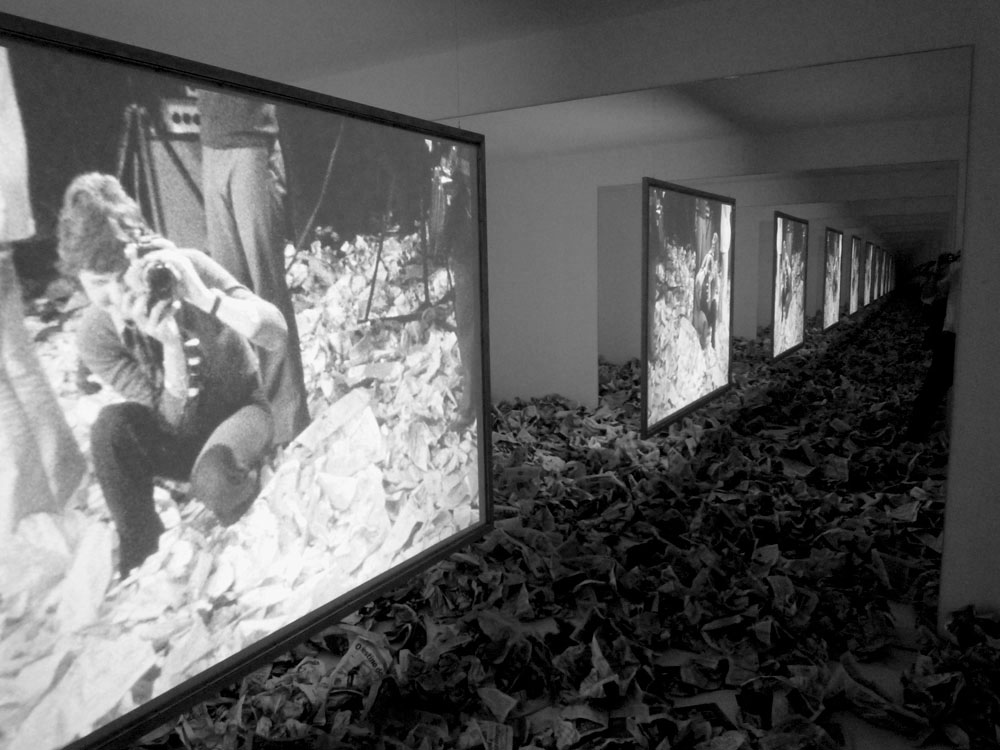
A lunch box will provided for 15€.
This session has limited seating.
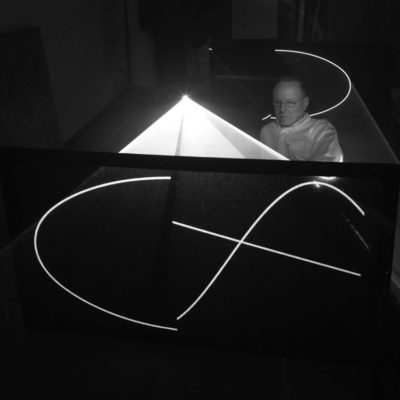
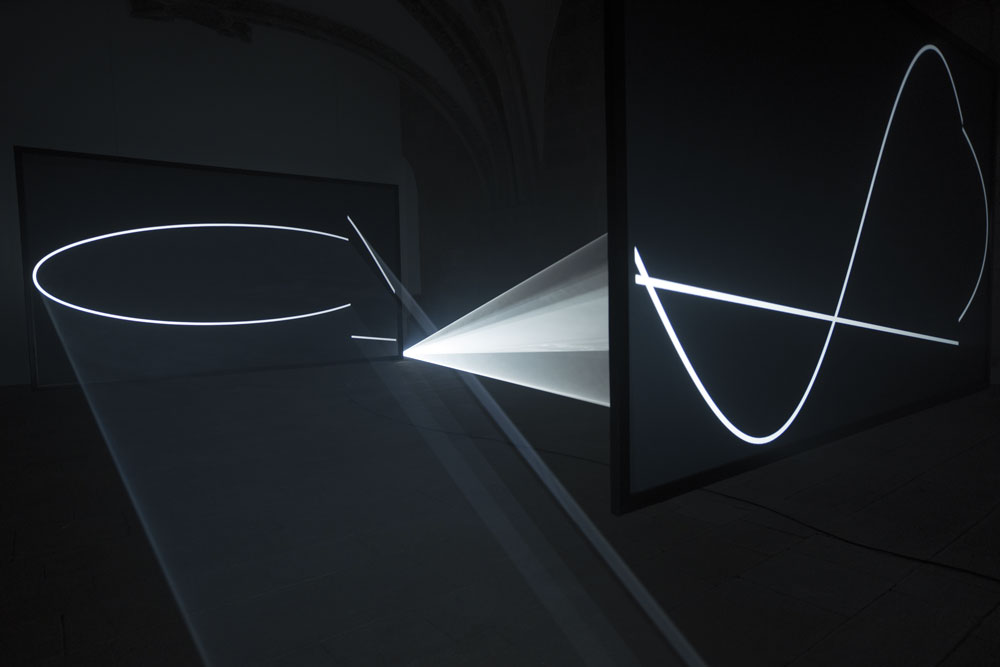
Since 1972 I have made a series of ‘solid light’ installations, from Line Describing a Cone in 1973, to Coming About in 2016. Within the series there are two distinct groups of works: one from the nineteen-seventies, made on 16mm film and horizontally oriented; the other, from 2000 to the present, made digitally, and in various orientations –horizontal, vertical and diagonal.
Most of these works are continuous, three-dimensional installations, projected in a darkened gallery or museum space, for an audience of visitors that come and go in their own time. It has been useful to me to think of them as occupying a zone somewhere between cinema, sculpture and drawing.
The twenty-year period between 1980 and 2000 was the period when the use of digital technology gathered speed; when “cinema” ceased to carry a capital ‘C’’ gradually fracturing into different shards and practices; and when art museums and other art world institutions like Biennials, expanded and proliferated. It was also the period when I made no new work.
Some of the differences between the early and late work have proved fertile. For instance, I have re-made early films (ie Line Describing a Cone 2.0) while retaining the original version in the world, which complicates the status of each; I’ve completed early performance works that resisted completion prior to the computer (like Circulation Figures); and I have lifted live performance ideas from the early seventies, like my progressively changing 36-point grid central to the “Fire” series and re-cast a similar grid into a programmable present (Eclipse, 2012).
My talk will review both the early and later works, and discuss this back and forth between the two periods.
©Anthony McCall, 2016
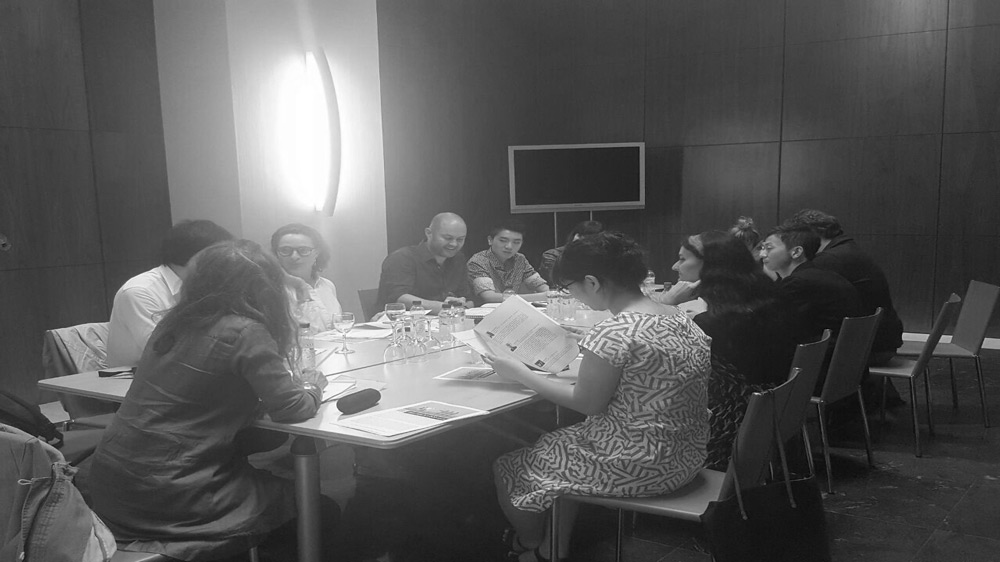
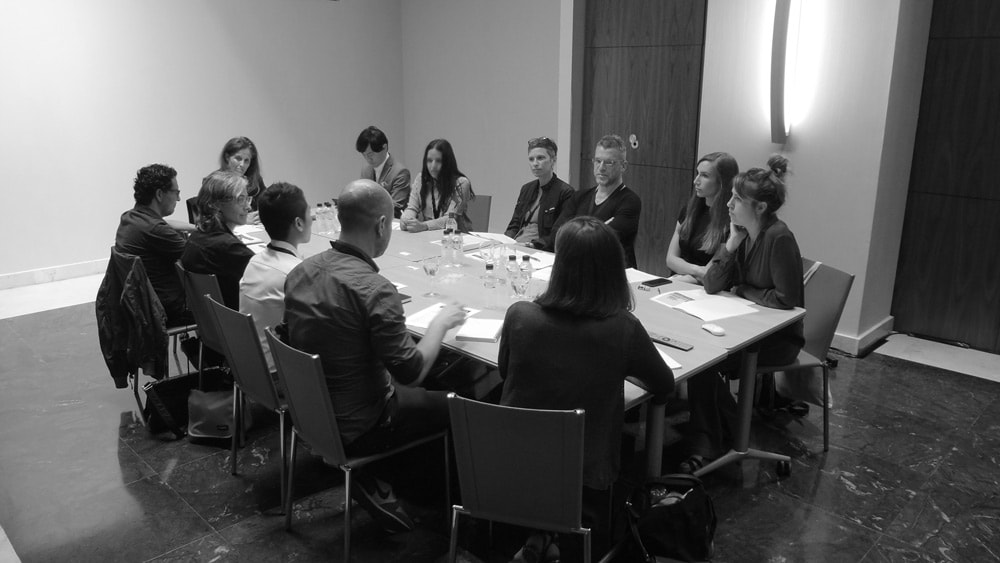
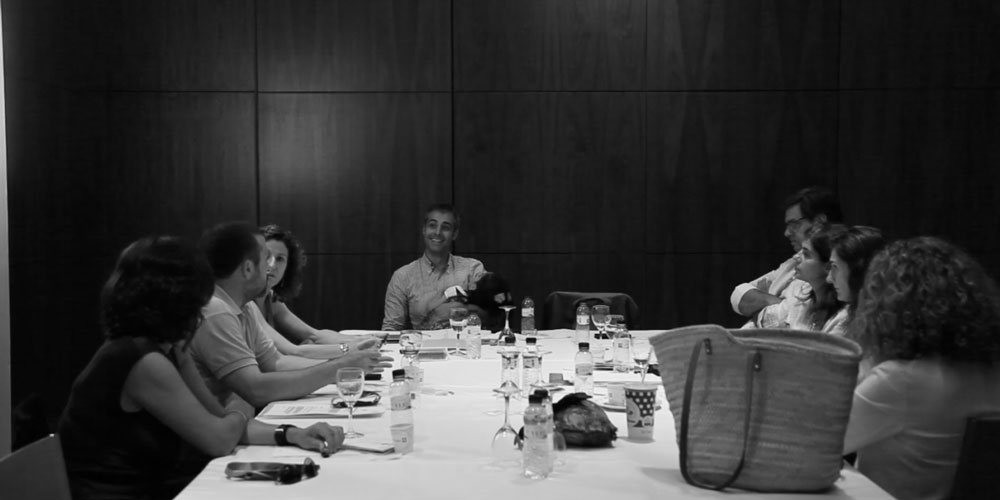
LOOP + Marseille expos
Talking Galleries + Estonian Contemporary Art Development Center
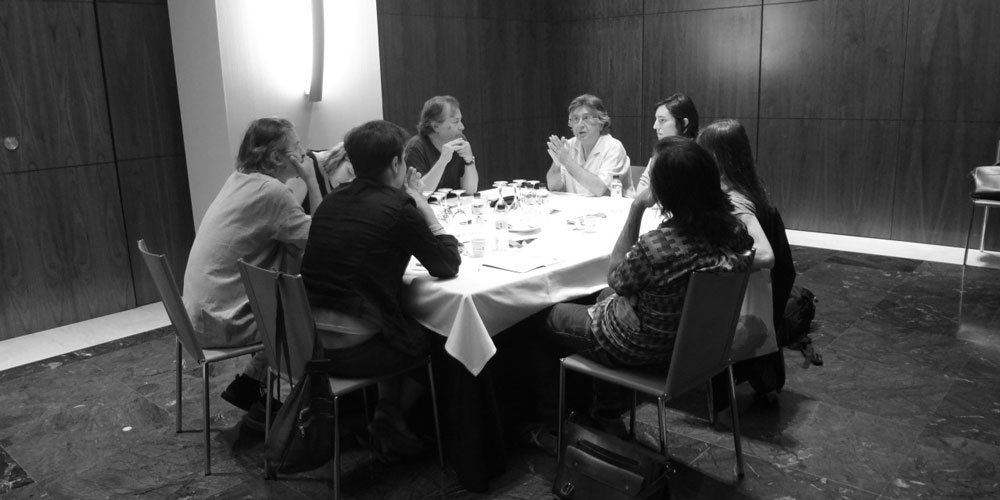
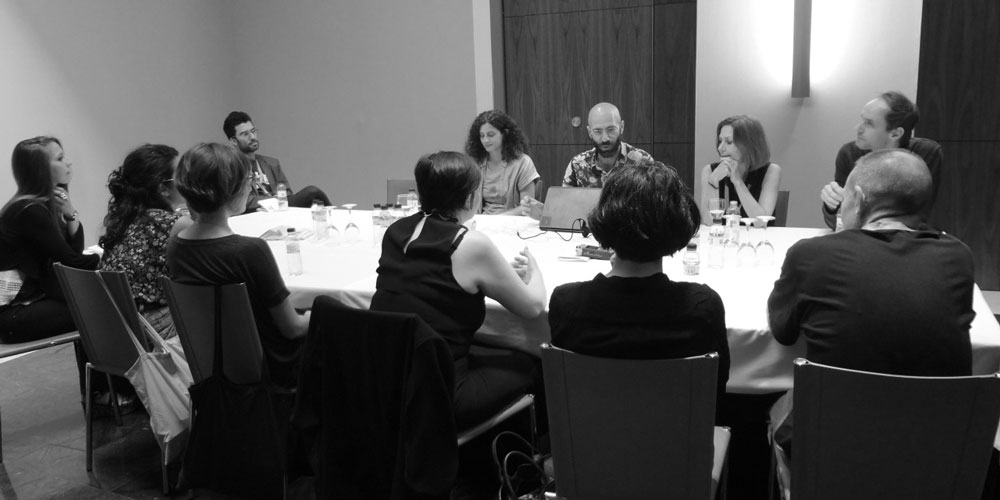
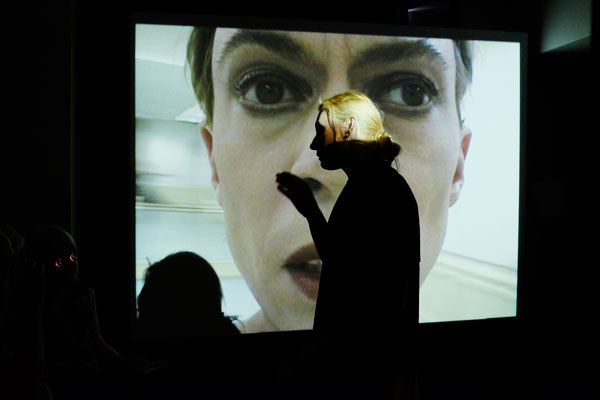
Des de l’any 2003, LOOP ha estat la primera fira dedicada exclusivament al vídeo i la imatge en moviment, i un punt de trobada internacional per la comunitat artística i el debat.
Els projectes de vídeo han estat escollits d’artistes i galeries que mostren propostes innovadores. Moltes de les obres presentades són estrenes mundials. La selecció de peces s’ha dut a terme per part d’un comitè de col·leccionistes de vídeo format per Haro Cumbusyan, Renee Drake, Josée & Marc Gensollen i Isabelle Lemaître, presidit per Jean-Conrad Lemaître.
Pots conèixer els artistes i galeries 2016 aquí.
Aquesta sessió té una capacitat limitada.
Departing from the first Spanish survey dedicated to media artist Anthony McCall at the Fundació Gaspar (Solid Light, Performance and Public Works), independent curator and editor Gloria Moure converses with curators Caroline Bourgeois (Pinault Collection) and Sabine Breitwieser (Director, Museum der Moderne Salzburg) about the exhibition of cinematic sculpture or three-dimensional cinema in the art space.
Over the last few decades, we have indeed witnessed the recuperation of experimental film by galleries and museums as well as its resurrection as a plastic work of art, all of this being a symptom of artists’ general tendency to deploy always different formats and the testimony of a shared nostalgia towards the cinema’s early days. What does it mean for artists to address seemingly contradictory media such as film and sculpture? How does it change the gallery’s viewing conditions and how does it affect the audience’s reception? All of these questions will be tackled during the talk.
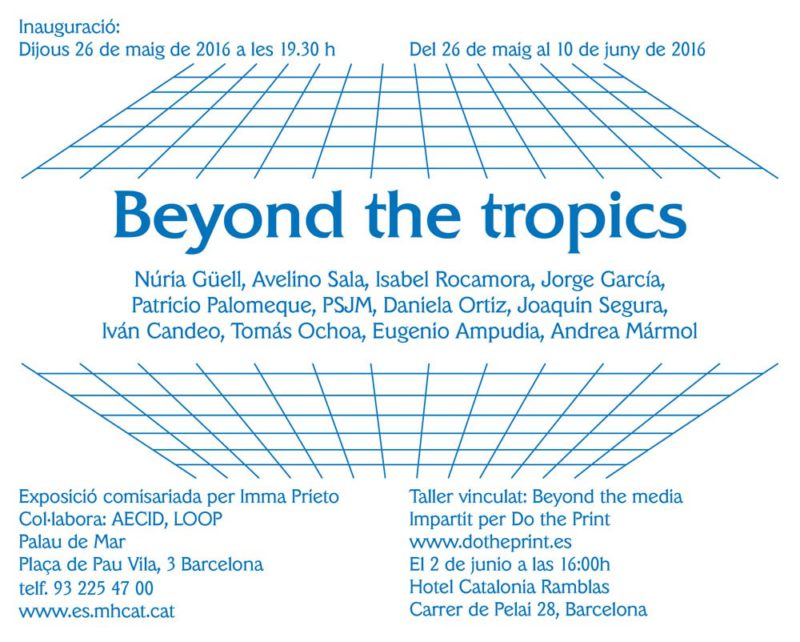
Aquest taller té una disponibilitat limitada. Els participants seran proveïts d'un certificat d'assistència i s'ha concedit l'accés gratuït a la fira LOOP.
Si desitja assistir, envieu un correu electrònic a tots dos DoThePrint - info@dotheprint.es - i Carolina Ciuti - loopstudies@screen-barcelona.com
OBJECTIU: L’objectiu del taller és pensar sobre com les imatges en moviment es tradueixen en mitjans impresos i analitzar com construir un catàleg de vídeo o pel·lícula. Seguint aquestes premisses, la impressora s’utilitza com el mitjà fonamental per a compondre la publicació.
METODOLOGIA: Els catàlegs dels artistes participants a l’exposició seran utilitzades com a eines de documentació bàsica i funcionarà com a punt de partida per generar un nou manuscrit. S’analitzaran les similituds d’ambdós mitjans visuals i impresos i les seves llengües.
El nombre màxim de participants al taller és de 12 .
Per participar cal inscriure-s'hi prèviament. Envieu un correu electrònic a projects@loop-barcelona.com incloent el seu CV i carta de presentació breu per justificar el seu interès.
Quin és el poder de la veu en off? Quina relació es pot establir entre la veu en off i la política de la imatge? La idea és pensar les funcions de la veu en off a l’art
contemporani. Desenvoluparem plegats una fenomenologia crítica dels sentits i dels usos de la veu en off en videocreacions contemporànies, guiats per exemples de Harun Farocki i amb l’ajut de teòrics i artistes.
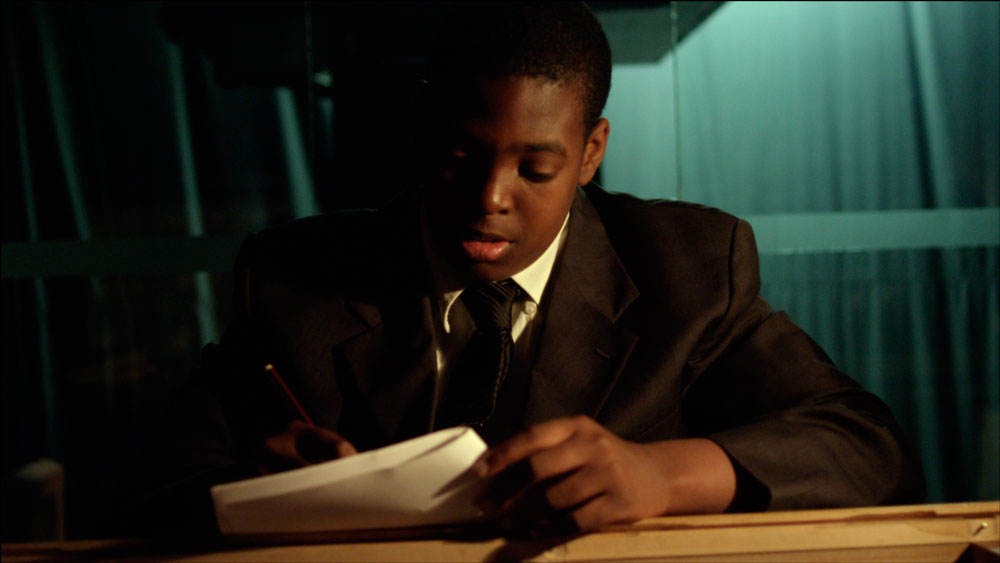
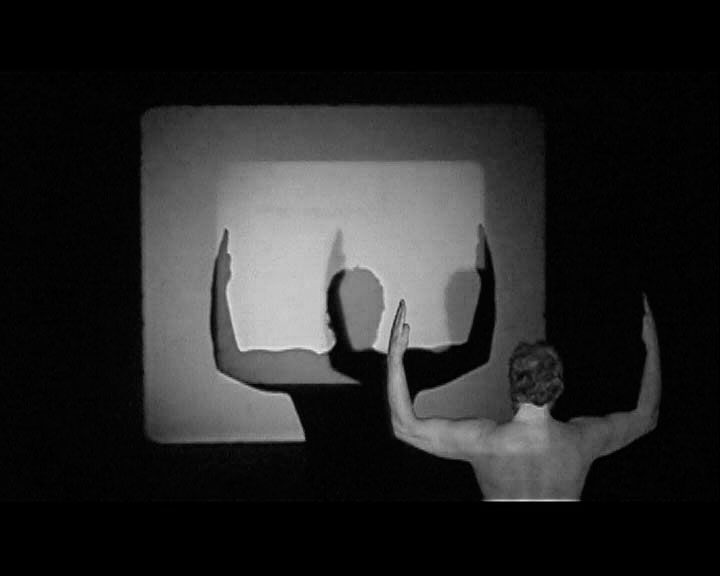
Les relacions de poder de la societat de masses ja no són les mateixes que organitzava la societat disciplinària que descrivia Foucault. La interrogació sobre aquestes noves formes de poder, des del desbordament de les metàfores abstractes i la imaginació liminal de l’adolescència, és la proposta de Claudio Zulian en el seu treball Power No Power (2013), una pel·lícula per a adults realitzada per un grup d’estudiants de 5è curs de l’escola Victor Hugo de la comuna de Aulnaysous-Bois, un dels nuclis tensos de la banlieue parisenca. Als nens d’un món sense poder els va proposar que pensessin què és per ells el poder.
Una producció pel Jeu de Paume en col·laboració amb la Fondation d’Entreprise Hermès i la Association Cinémas 93.
Claudio Zulian (Campodarsego, Pàdua) és un director de cinema, videoartista, músic i escriptor italià. Des de l’any 1993 és director de Acteon, la productora amb seu a Barcelona amb què durà a terme els seus projectes, entre ells Born (2014), pel·lícula de ficció ambientada en la Barcelona de 1714.
*La pel·lícula s’estrenarà a Barcelona el 3 de juny a les 6 pm, i la projecció serà seguida d’una xerrada amb l’artista i la comissària Diana Padró.
Aquesta sessió té una capacitat limitada.
One of the seminal filmmakers to emerge from the London Filmmaker’s Cooperative in the 1960s, Malcolm Le Grice’s oeuvre spans cinema and gallery, analogue and digital, theory and practice. Deemed by the British Film Institute to be “probably the most influential modernist filmmaker in British cinema,” Le Grice is known for his rigorous interrogation of filmic materiality, innovative engagements with found footage, expanded cinema experiments, and commitment to a politicized critique of the illusionism of Hollywood cinema. More recently, he has engaged deeply with the aesthetic possibilities of digital technologies, including digital 3D. In this conversation, Le Grice will discuss the guiding concerns of his nearly-fifty year career as an artist and writer, and will reflect upon how the relationships between art and the moving image have developed and transformed since the 1960s.
Seating is limited for this session.
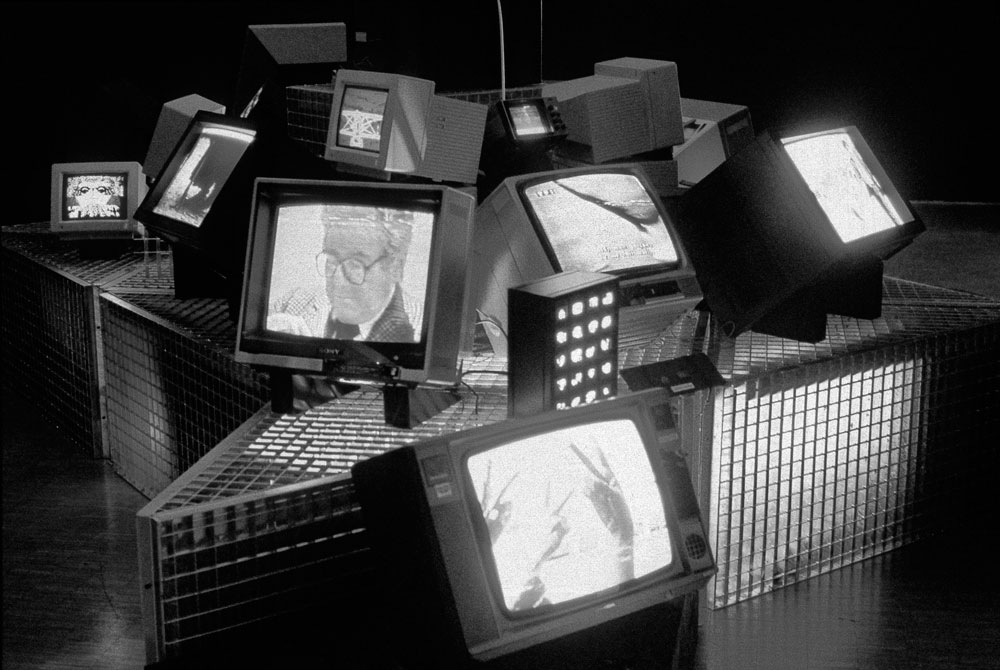
In November 2015 part of Harun Farocki’s estate moved to a separate area in the new archival spaces of the “Arsenal–Institute for Film and Video Art” at silent green Kulturquartier in Berlin. The holdings are including film and video material (especially “odds and ends”) and various other materials on Farocki’s individual projects. One of the goals of the Harun Farocki Institute is to preserve and provide access to the extensive holdings in order to facilitate scholarly, artistic, or curatorial work tp those who are interested.
The Harun Farocki Institute was founded in 2015. It is both a platform for research on the practice and work of Harun Farocki and a flexible framework for new artistic, scholarly, and pedagogical projects that investigate the past, present, and future of visual culture. “With such an institution we can also organize an association of working people, not gathered from an abstract understanding, but from the contact points of work.” (Harun Farocki, 1976)
Seating is limited for this session.
The Centre Georges Pompidou exhibition Passages de l’image, curated by Christine van Assche, Raymond Bellour, and Catherine David in 1990, marks a key turning point in both the exhibition of moving images in a gallery setting and the reconfiguration of the relationship between art and cinema that has taken place in the last 25 years. Comprised of a gallery exhibition, an extensive film programme, and a viewing room for “synthetic images,” Passages de l’image defied traditional museological practice to stage an investigation of the intermedial “passages” across cinema, photography, video, and digital images. In so doing, it delineated a field of inquiry that would be taken up internationally throughout the 1990s and which remains pressing in our contemporary moment. This conversation between Raymond Bellour, Christine van Assche, and artist David Claerbout, chaired by Erika Balsom, will revisit Passages de l’image in light of the present in an attempt to chart the legacy of this landmark exhibition. The panellists will together consider how its central questions – such as the relationship between stillness and movement, the changing character of analogy in an increasingly digital culture, and the place of cinema in the museum – continue to resonate with us today.