Critical aspects of video art conservation politics
martes 21 noviembre 2023, 4 — 5 pm
- Participantes
- Gabriel Virgilio Luciani, Angel Leung, Hamaca, Vanina Hofman, Lluís Roqué Comas, Grégory Castéra y Ayça Okay
- Sedes
- Almanac Barcelona
- Idioma
- English
Añadir al calendario
La conservación de videoarte se enfrenta a varios retos, como la rápida obsolescencia de los formatos. En el contexto actual de evolución de las tecnologías y rápida obsolescencia de los formatos de vídeo y equipos de reproducción más antiguos, se requieren actualizaciones y transferencias continuas para asegurar la accesibilidad a las obras. <br />
<br />
La reunión girará en torno a metodologías de documentación adecuadas, almacenamiento de metadatos, consideraciones éticas, el papel de los distintos agentes y otras estrategias para preservar la integridad de las obras de arte para las generaciones futuras. Además, la conservación y restauración del arte de los nuevos medios plantea nuevos retos en torno a la longevidad y las estrategias de restauración. ¿Cómo podemos mitigar estos riesgos?
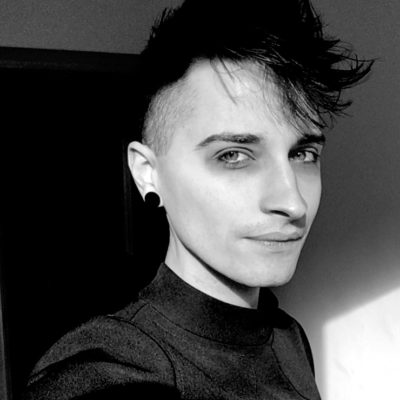
Gabriel Virgilio Luciani (Atlanta, USA, 1995) is a curator, editor-in-chief of exibart.es and contemporary art history professor based in Barcelona. Their sphere of research is situated at a liquid intersection between neo-corporealities, poetry, queer theory, magic and objectual affectivity. Over the past eight years, they have curated shows in various galleries, art centres and alternative spaces in the Barcelona area, some within the framework of festivals such as LOOP Barcelona, Art Nou and Barcelona Gallery Weekend. They hold a Masters degree in Digital Arts Curation from the Universitat Ramon Llull – ESDi and a Bachelors degree in Fine Art from the Universitat Autònoma de Barcelona – Escola Massana.
Actualización: 20 noviembre 2023
Angel Leung
1986
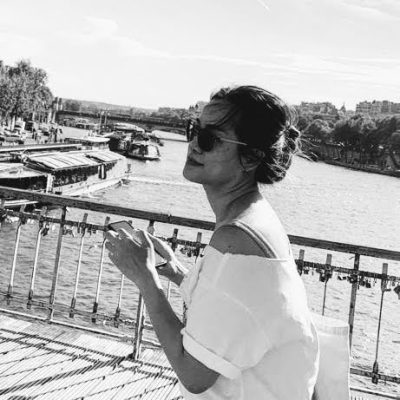
Angel Leung es una curadora de imagen en movimiento y media arte que trabaja a HK, París y Londres.
Es la curadora de Micromégas (2021-2023), Video Gaze (2023) a Videoex, y Ersilia – Body of Gateway Cities (2022). Sus programas co-curatoriales incluyen Foundation: A Web3 Media Arte Festival (2022-23), Virtual Bodies Micro Residency in Peer tono Peer: UK/HK (2022), Birds without Legs: Body & Mobility (2022) y Digital Birth: Zooming in donde NFT (2021) a Arte Basel Hong Kong.
Acabó su máster en de Screen Art en la Universidad de Estrasburgo el 2016 y obtuvo su grado en Medios Creativos en la Universidad de la Ciudad de Hong Kong el 2009. También es investigadora y escritora de cine. Co-editó el libro David Lynch (Kubrick, 2017) mientras sus artículos se publicaban en varios medios.
Hamaca
Hamaca es el archivo referente de la historiografía del audiovisual experimental vinculado al estado español. En torno a su catálogo de piezas monocanal desarrolla una programación y red de colaboraciones para la difusión de este tipo de trabajos y hace una labor de distribuidora promoviendo unas condiciones dignas en la remuneración del trabajo artístico. Es iniciativa de la propia comunidad artística a través de la AAVC, está operativa desde 2007. Todo el fondo está digitalizado y puesto a disposición del público para su consulta a través de la plataforma web hamacaonline.net .
Vanina Hofman
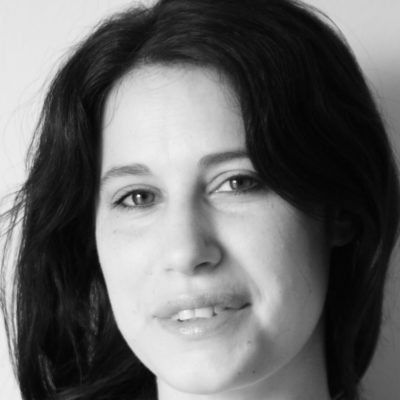
Vanina Hofman es profesora en el Departamento de Historia e Historia del Arte de la Universitat Rovira i Virgili (Cataluña), donde también dirige el Aula de Cine y Artes Audiovisuales. Desarrolla su trabajo en un territorio híbrido entre la investigación académica y la producción cultural. Su campo de interés son las intersecciones entre Arte, Ciencia, Tecnología y Sociedad. Está particularmente interesada en los procesos implicados en la construcción de la memoria en la cultura digital, el archivo de las artes mediáticas, las historias de las artes no convencionales y las materialidades digitales. Recientemente ha publicado el libro «Divergent Practices of Media Arts Preservation. Remembering and Forgetting in the Digital Culture», basado en un trabajo de campo previo realizado en Argentina. Forma parte del Grupo de Investigación interdisciplinar MIRMED-GIAC (URV, Universitat Autònoma de Barcelona e Institut Català d’Arqueologia Clàssica).
Lluís Roqué Comas
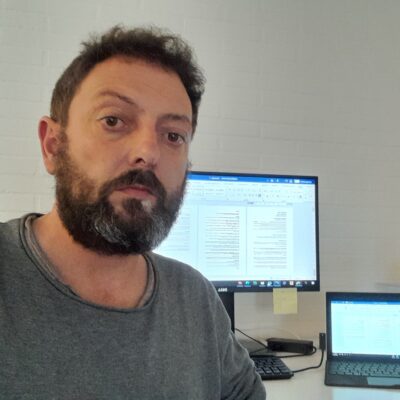
Lluís Roqué Comas, Licenciado en Bellas artes en la Universitat de Barcelona, es Conservador-restaurador del Museo de Arte Contemporáneo de Barcelona. Está especializado en la conservación y restauración de *mèdia arte y fotografía y se encarga de la preservación de los fondos audiovisuales, fotográficos y digitales. Coordina con el resto del departamento la gestión de la documentación relativa a la conservación y restauración en el sistema de base de datos del museo y participa en el proyecto transversal de digitalización de los fondos audiovisuales de la Colección MACBA – Repositorio Digital MACBA desde su creación. Realiza tareas de conservación- restauración, supervisión y montaje de obras de la Colección MACBA y de exposiciones temporales.
También es profesor asociado del Grado de Conservación y Restauración de la Universitat de Barcelona donde imparte la asignatura de Infografía y Software para la Conservación-Restauración.
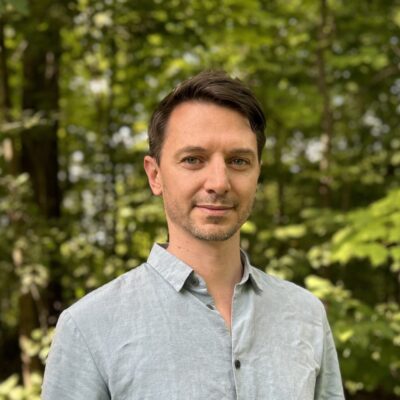
Grégory Castéra (he/him) is a curator, an educator, a director and an institution advisor working in the field of contemporary art. He works at the intersection of curating, artistic research and institution development.
He is currently curator-at-large and chief of «Learning from the Commons» at KANAL-Centre Pompidou (Brussels). As an advisor, he works with the Calouste Gulbenkian Foundation (Paris and Lisbon), the Jan van Eyck Academie (Maastricht), and Kerenidis Pepe (Paris and Anafi). His last essay, «Of Attentional Environments (The Pearl Necklace)» has just been published by Valiz in the anthology Sensing Earth.
Before this, Castéra was director of Council, a curatorial office for art and society that he founded together with Sandra Terdjman. They are still involved in one of Council’s projects, Afield, a translocal network of artist-led social initiatives, that continues to grow independently. From 2019 to 2022, he was guest professor of collective practices at the Royal Institute of Art Stockholm. From 2010 to 2012, he served as co-director of Les Laboratoires d’Aubervilliers, a center for artistic research situated in the outskirts of Paris, together with Alice Chauchat and Nataša Petrešin-Bachelez. From 2007 to 2009 he was coordinator and educator at Bétonsalon, a center for art and research located in the new 13th’s ‘city university’ in Paris. From 2007 to 2014, with the collective L’Encyclopédie de la parole, he created an online encyclopedia and several productions exploring the spoken word in all its forms.
Grégory Castéra has worked with artists such as Agency, Tarek Atoui, Pauline Boudry & Renate Lorenz, Eglė Budvytytė, Jennifer Lacey, Franck Leibovici, Mobile Akademie Berlin, Carlos Motta, Rosalind Nashashibi & Lucy Skaer, Marjetica Potrč, Zhou Tao and Akram Zaatari. Among projects that he has curated and co-curated are The Against Nature Journal (2020-2022); Shoreline Movements at Taipei Biennial (2020); Collectively at Iaspis (2019); Infinite Ear at Sharjah Biennial (2013), Bergen Assembly (2016), Garage Museum (2018) and CentroCentro (2019-2020); Foreign Places at Wiels (2016); The Manufacturing of Rights at Ashkal Alwan (2015); On Ordinary Narratives at Villa Arson (2014); and Playtime at Betonsalon (2008, 2009).
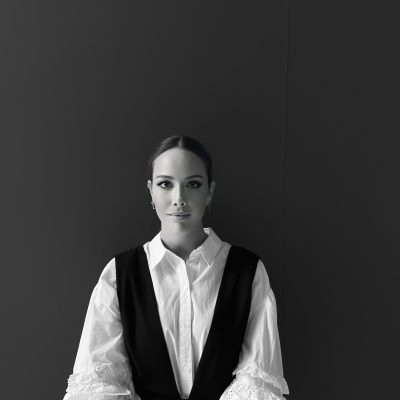
Ayça Okay, born in 1991 in İzmir, is an active curator between Istanbul and Berlin. As a member of AICA Turkey and CIMAM, she prioritizes research-based curatorial projects, emphasizing developing intellectual resources, knowledge-sharing, and establishing sustainable support systems. Collaborating with individuals, communities, and institutions, Okay values the practice of listening. She believes in the value of listening practice while collaborating with individuals, communities, and institutions. Okay views art as a byproduct of processes such as thoughts, ideas, texts, theories, and experiments, aiming to generate original discourses on contemporary issues and transcend artificial boundaries in contemporary art. Her research focuses on urbanism, anthropocentrism, eco-criticism, tangle theory in archaeology, and feminist and queer curating, with a notable master’s degree in Art Theory and Criticism.
Since 2018, Okay has curated and managed exhibitions for various collections, including Borusan Contemporary Museum, Baksı Museum, Contemporary Istanbul Foundation and Yves Rocher Foundation. She has curated exhibitions in Berlin at Vorfluter Projektraum, Scope Berlin, and Somos Arts. She co-curated Istanbul The Lights, the first light festival in Turkey, and curated a solo exhibition for prominent Turkish contemporary artist Canan Tolon. In addition to managing art projects for organizations like Turkish Airlines and QNB-Finansbank, she was the Art Programs Director at Contemporary Istanbul Foundation. She engaged in fundraising projects with the Consulates General of Ukraine and Poland.
Selected for the Culture Route program by IKSV and UNESCO in 2021, Okay completed the International Curatorial Program at NODE Curatorial Studies Center in Berlin. In 2022, the SAHA Association supported her as a member curator for the CIMAM platform, which selected three curators from Turkey. Her articles have been published in Stir World, Milliyet Sanat, and Artdog Magazine. She moderated and participated in panels and meetings at Loop Barcelona Fair, BASE Istanbul, and the Collective Healing Project Public Program supported by ZOMA Museum in corporation with Istanbul Metropolitan Municipality and Turkish Women Association. In 2022-2023, she served as a jury member for APEXART’s art competitions in New York. Elected as a board member of the BAKSI Museum, Ayça Okay represents the contemporary art ecosystem for TÜSİAD Berlin Bosphorus Initiative.
Last updated: November 20th 2023