Mausoleé Quad-Core
Pierre Gaignard
Galerie Eric Mouchet, Paris
— Log in to watch the artist video if you have been given an access
- Artist
- Pierre Gaignard
- Título
- Mausoleé Quad-Core
- Galería
- Galerie Eric Mouchet, Paris
- Año
- 2021
- Duración
- 4 h
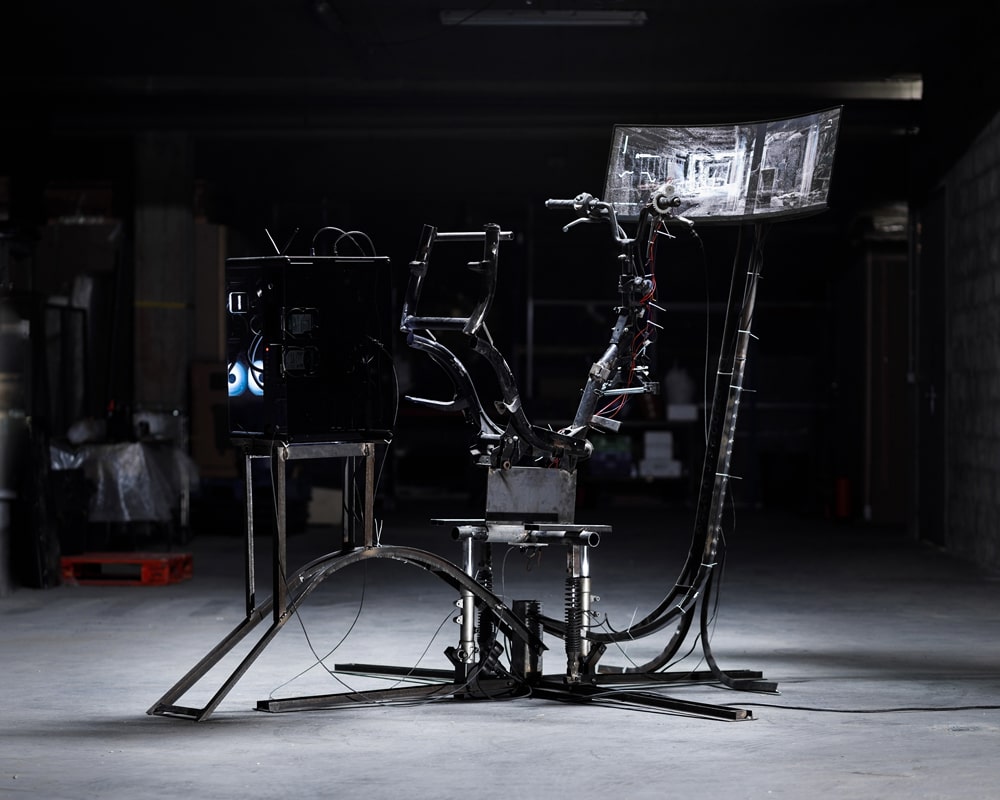
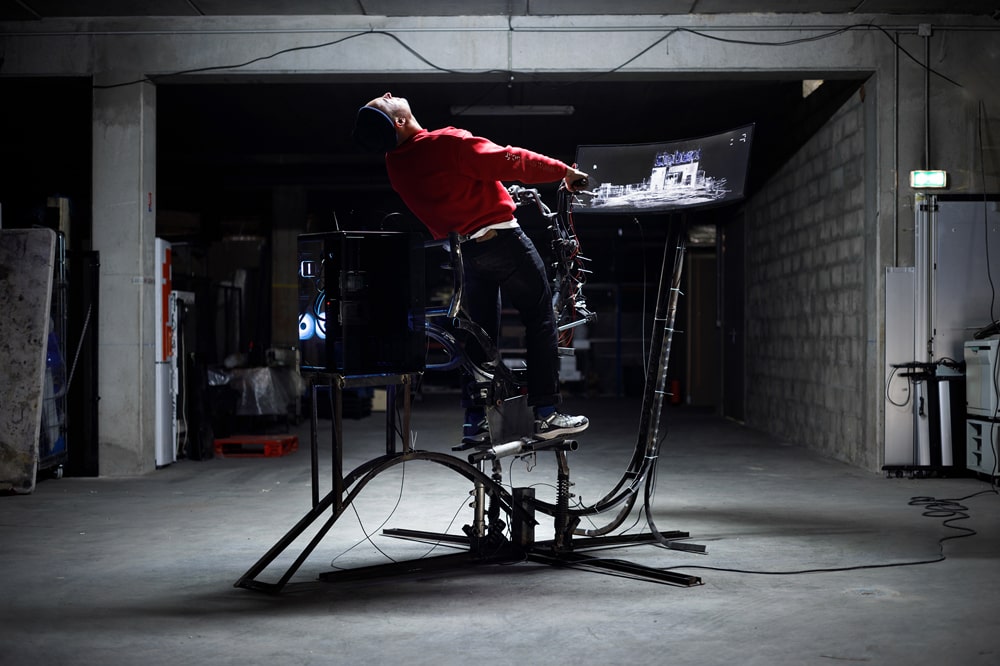
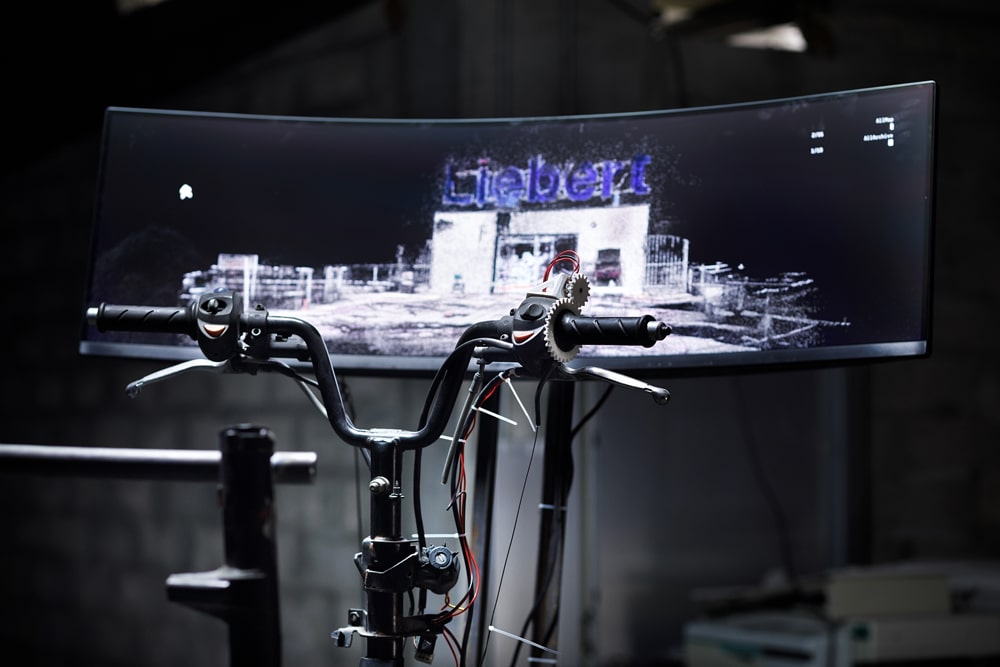
Mausoleum Quad-Core es un videojuego documental hecho a partir de un escaneo tridimensional del Wonder / Liebert (un edificio ocupado por el colectivo de artistas Wonder en Bagnolet entre 2016 y 2019). Esta historia documental interactiva está diseñada como una película, y se muestra en una instalación que adopta la forma de una biblioteca “Mad Max” o un centro de datos “raro”. Fue diseñado a lo largo de 3 años por Pierre Gaignard. El juego ofrece un recorrido libre (mundo abierto) dentro y fuera del edificio, que ha dejado de existir en la actualidad. La experiencia está acompañada por el testimonio de los antiguos ocupantes (el fantasma), por sonidos y archivos de vídeo de la hemeroteca del colectivo Wonder. El juego regresa a la utopía creada por esta comunidad de artistas unida en torno a la vida y las actividades en común. La historia se basa en su intento poético de cuestionar la ciudad moderna. Al ponerse a los mandos del juego Mausoleum Quad-Core, el jugador entra en un mundo fantasmagórico en blanco y negro. Inmaterial, evanescente, oculto y desgarrado, este mundo desaparecido obtiene color a medida que lo descubrimos. Una ruina contemporánea que entregará la historia del pensamiento libre y colectivo que habitaba el Wonder / Liebert.
Stills
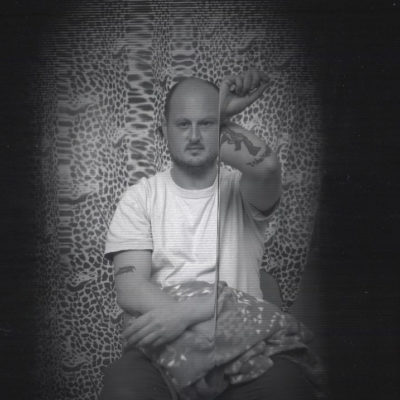
Pierre Gaignard is an artist, sculptor and film-maker, co-founder of Wonder (artist-run-space) and researcher in the laboratory «Effondrement des Alpes», ESAAA Annecy. For ten years, he has been producing a documentary work composed of sculptures, performances and experimental films, both documentary and fictional. This body of work is driven by a strong intention: to witnessing time at work and bringing to light the survivals that operate there. To this end, he is conducting parallel artistic and academic research in DSRA. He questions the relationship between man and his memory and environment and, inevitably, with forgetting. The different forms that make up these narratives have a functionality that is sometimes pragmatic, sometimes political. They are inspired by the context in which they are set, but also by a more universal idea about our society.
Last update 22nd October 2021
Vídeos relacionados
— Log in to watch the artist video if you have been given an access
- Artist
- Pierre Gaignard
- Título
- Bagnolet Chamanique 4K
- Galería
- Galerie Eric Mouchet, Paris
- Año
- 2019
- Duración
- 15 min
- Formato
Video 4K, single channel, sound
Ed. 3 + 2 AP- Contact
Léo Marin
leomarin@ericmouchet.com
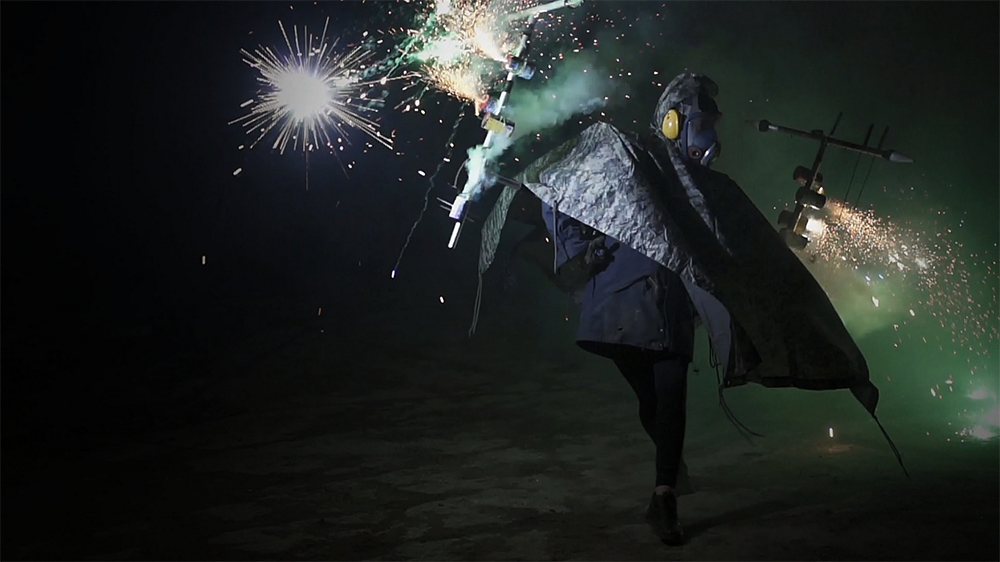
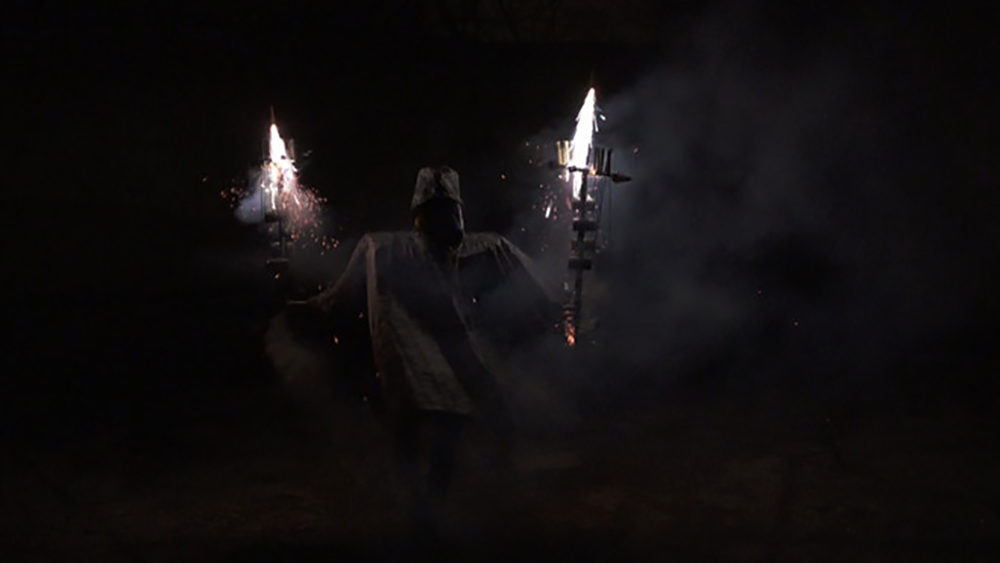
Bagnolet Chamanique 4K es un homenaje póstumo, donde la danza ritualizada hasta el agotamiento cura las heridas, regenera y reconecta con lo que nos rodea: el tiempo que pasa, la amistad, nuestros cuerpos, los recuerdos y el espíritu de los que se han ido y de los «que quedan» (1). Este momento de ritual, un ceremonial mitad salvaje mitad guerrero, se ha desarrollado en diferentes formas para servir como cemento para una comunidad.
Siendo a la vez una performance, un video y una escultura, Bagnolet Chamanique 4K fue producida durante una ópera por Wonder/Liebert en 2017, cuando el colectivo Wonder tenía su sede en Bagnolet. En este escenario industrial y crudo, los bailarines o guerreros, disfrazados y portando fuegos artificiales, se mueven lentamente, como los contrabandistas animistas hacia un mundo más espiritual. La película está rodada en cámara lenta y el sonido de los fuegos artificiales se convierte en una inquietante canción de ballenas. La lúgubre melancolía que rodea a esta obra pronto se rompe con el resplandor de las hogueras y la aparente furia por la vida de estos bailarines urbanos, chamanes contemporáneos, vecinos de la circunvalación parisina.
Pierre Gaignard es cofundador del colectivo Wonder que ocupa temporalmente y transforma los lugares vacantes en estudios de artistas en las afueras de París.
(1). De Vinciane Despret
Stills
Related galleries
Galerie Eric Mouchet
- Address
- 45, rue Jacob, 75006, Paris, France
- Phone
- +33 01 42 96 26 11
- Website
- www.ericmouchet.com
La Galerie Eric Mouchet representa principalmente a jóvenes artistas contemporáneos con un enfoque futurista, cuyos temas de investigación son la geopolítica, la sociología, la ecología, la sociedad y las cuestiones de género, sin limitación de medios o formas. La galería también se beneficia de una experiencia en las vanguardias históricas francesas y alemanas, lo que ofrece la posibilidad de confrontaciones e interconexiones entre el arte del siglo XX y el arte vivo de hoy. En 2022, la galería abrió un nuevo espacio en Bruselas, en asociación con Galerie Martin Kudlek (Colonia) y Patrick Heide Contemporary Art (Londres).