Antoni Muntadas
- Artist, Speaker
1942, Barcelona
Muntadas works with photography, video, publications, Internet, multi-media installations and public intervention. His work addresses social, political and communication issues, the relationship between public and private space as well as the different channels of information. In 1971 he moved to New York where he created most of his video works and installations, and made prototypes for experimental alternative television, such as Cadaqués Canal Local, 1974 and Barcelona Distrito 1, 1976. Since 1995, Muntadas has grouped together a set of works and projects titled On Translation. Highly diverse in their contents and features, they all focus on the author’s personal experience and artistic activity in numerous countries over a period of thirty years. By grouping such works together under this epigraph, Muntadas places them within a body of experience and concrete concerns regarding communication, the culture of our times and the role of the artist and art in contemporary society. His most recent projects are About Academia (2011-2017) and Asian Protocols, (2012-ongoing). Currently he lives where he works and works where he lives.
Related Activities
VIDEO REWIND: Antoni Muntadas
18 May — 1 June 2017
— 'Pamplona-Grazalema,' 1975-1980
- Artists
- Antoni Muntadas
- Curators
- Eugeni Bonet
- Venues
- Fundació Vila Casas
- Price
- Free admission
- Tickets & register
- www.fundaciovilacasas.com
Add to calendar
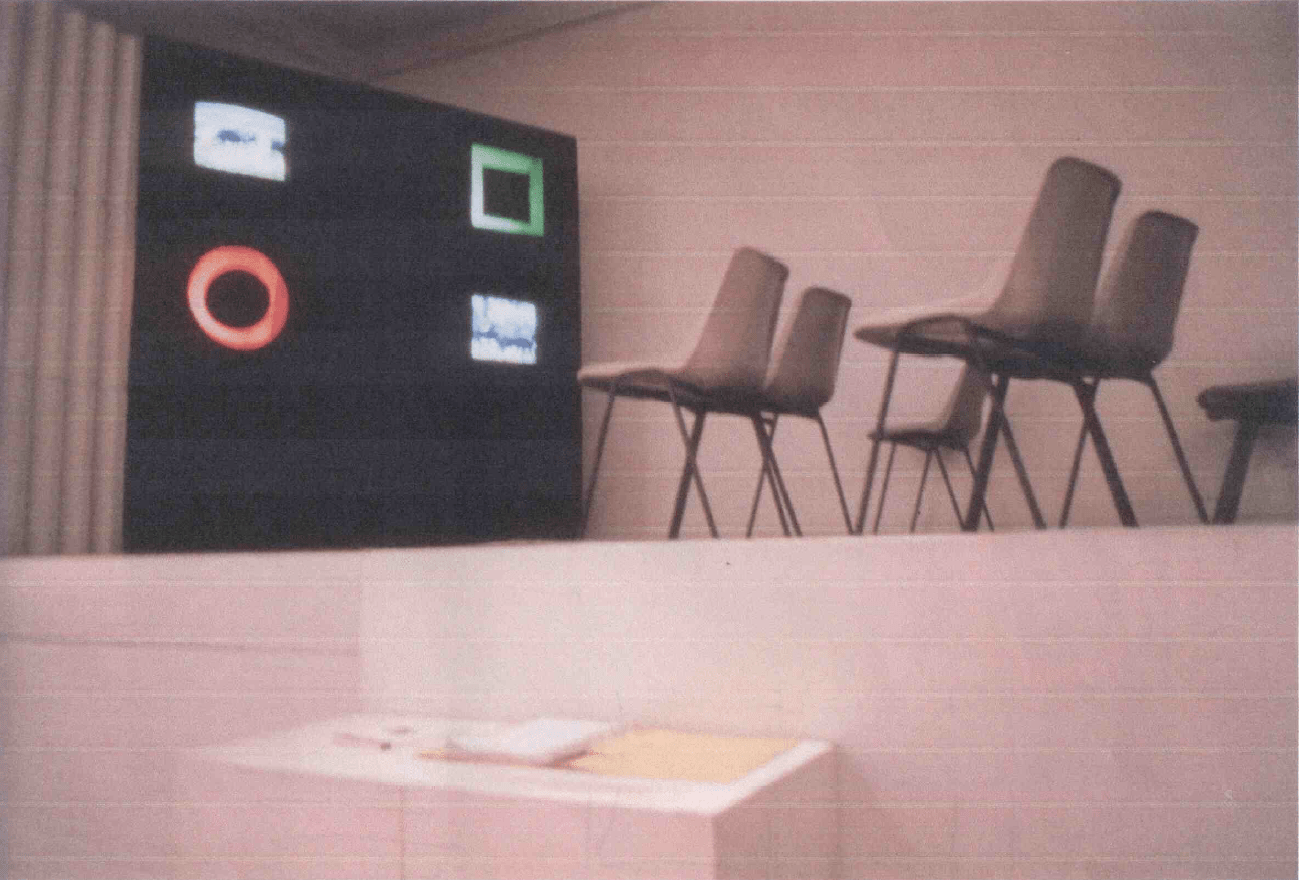
As part of 'VIDEO REWIND: A look back from early video works from the 1970s and 1980s', 'Pamplona-Grazalema' (1975-1980) considers the spectacle of cultural traditions.<br />
Pamplona-Grazalema, a project developed by Antoni Muntadas (Barcelona, 1942) with Spanish anthropologist Ginés Serrán Pagán, is an installation consisting of the publication of a book and two videos projected simultaneously. This hybrid work of visual art and social anthropology makes an interdisciplinary enquiry into bullfighting’s geographic and cultural permutations within Spain’s recent history. Pamplona is famously the modern capital of bullfighting and home to its most sophisticated practitioners, but the city’s “fiesta of the bull” is a predominately commercial and touristic enterprise. In places like Grazalema, a mountain town in Cádiz (Andalusia), the oldest known form of bullfighting is still practiced. The male residents symbolically sap the bull’s virility and power as the animal becomes weaker. As the relationship between human and animal is increasing rationalized, these social and spiritual connections become obscure. This work offers a fascinating study in ritual, myth, and community for the citizen of the global world.
(Re)visionats, (Re)visitats
2 — 27 May 2017
— An approach to the pioneers of Spanish video production
- Artists
- Antoni Muntadas, Eugènia Balcells and Carles Pujol
- Curators
- Albert Alcoz
- Venue
- Arts Santa Mònica
- A project by
- LOOP Barcelona
- Contributor
- produced by Arts Santa Monica
- Price
- Free admission
Add to calendar
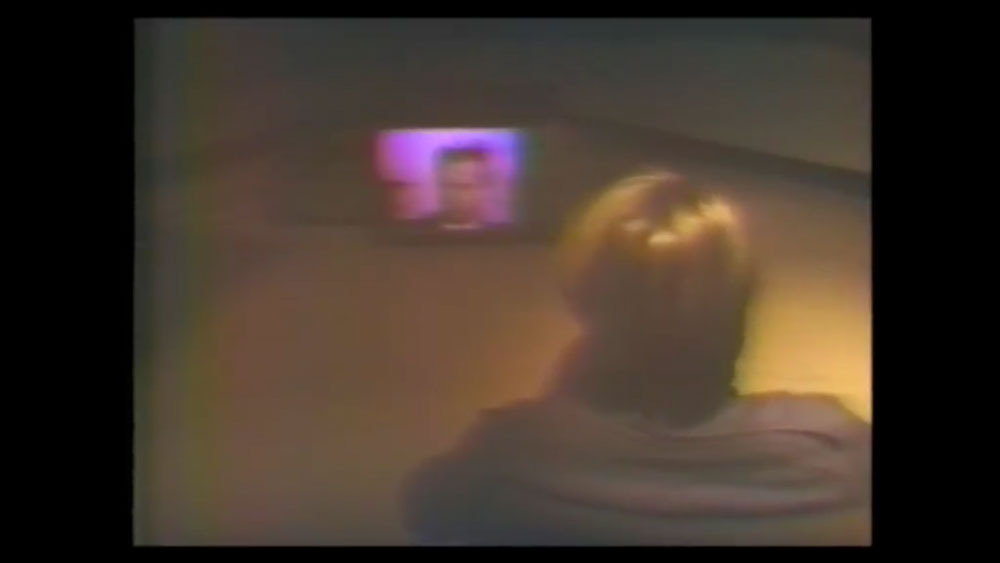
This retrospective, curated by Albert Alcoz, will feature three pioneering video artists whose work is emblematic of the discipline's emergence. It will consider how rapid technological development influenced the form's early days.
In the mid-1970s, video technology was a novel tool whose artistic potential had yet to be discovered. A generation of video producers complicated the process of capturing sound and the moving image. It represented an ideological shift that, due to the existing political situation, involved the debating the conceptual practices linked to the dematerialization of the art and calling into question the conventions conventions of audiovisual communication that had become standard at that time. Analyzing the almost seductive strategies of cinema and television; Demanding the critical involvement of the spectator in the processes of perception; Pointing the need for feminist perspectives in the field and investigating the aesthetic possibilities intrinsic to analogue video are some of the approaches present in the work of this brief selection of pioneers of video production in Spain. Revising and revisiting their work allows us to appreciate, from a contemporary perspective, the value of some of the pieces that are already part of the cultural video-artistic heritage of this country.
Antoni Muntadas in conversation with Niels Van Tomme
Friday 26 May 2017, 11:15 am
Add to calendar
In the words of Niels van Tomme
What have we learned from Muntadas? After having had the honour to experience a body of work that has grown expansively throughout a more than four decades long career devoted to detecting and decoding the mechanisms of control and power through which hegemonic ways of perception are constructed, what is it that makes us return time and time again to the politically apt works of Muntadas?
There is an old-age idiom that goes “seeing is believing”, but if there is one thing to be absorbed from Muntadas’ insightful practice, it is the fact that seeing can never be straightforwardly aligned with believing. For Muntadas the media-saturated ways in which we experience the world are always already ideologically, politically and socially coded. In order to see properly we need a proper “translation”, a moment that allows the passive stance of seeing to transform into the more active act of knowing, which is the becoming aware of the very mechanisms of mediation itself. These are the tools Muntadas’ multidimensional media practice provides. “Warning: Perception Requires Involvement” goes the artist’s well-known 1999 slogan, thereby highlighting the multifaceted relationships between seeing, transcribing, perceiving and knowing, which are key to understanding his work. We cannot think the world without acting within, and becoming actively part of that world. And so Muntadas’ practice, besides offering a constructive way in which to perceive the media fabric around us, primarily makes us involved and active participants within the reality that surrounds us.
Muntadas’ early video works shift impressively from merely documentation of ‘actions’ towards a more complex investigation of the medium’s intrinsic political and ideological framings. Even though the work often looks scientifically detached, the emphasis lies not in following the protocols of documentary media production, but on forging new ways of seeing. It is a seeing that makes us aware of the intricate ways in which media filter and reshape the events we watch, or, conversely, how we are shaped by the manifold mediations that persistently take place right before our eyes. Once you see this, there is no way to unsee it.
Tribute to Guada Echevarría: founder of Festival de Vídeo de San Sebastián
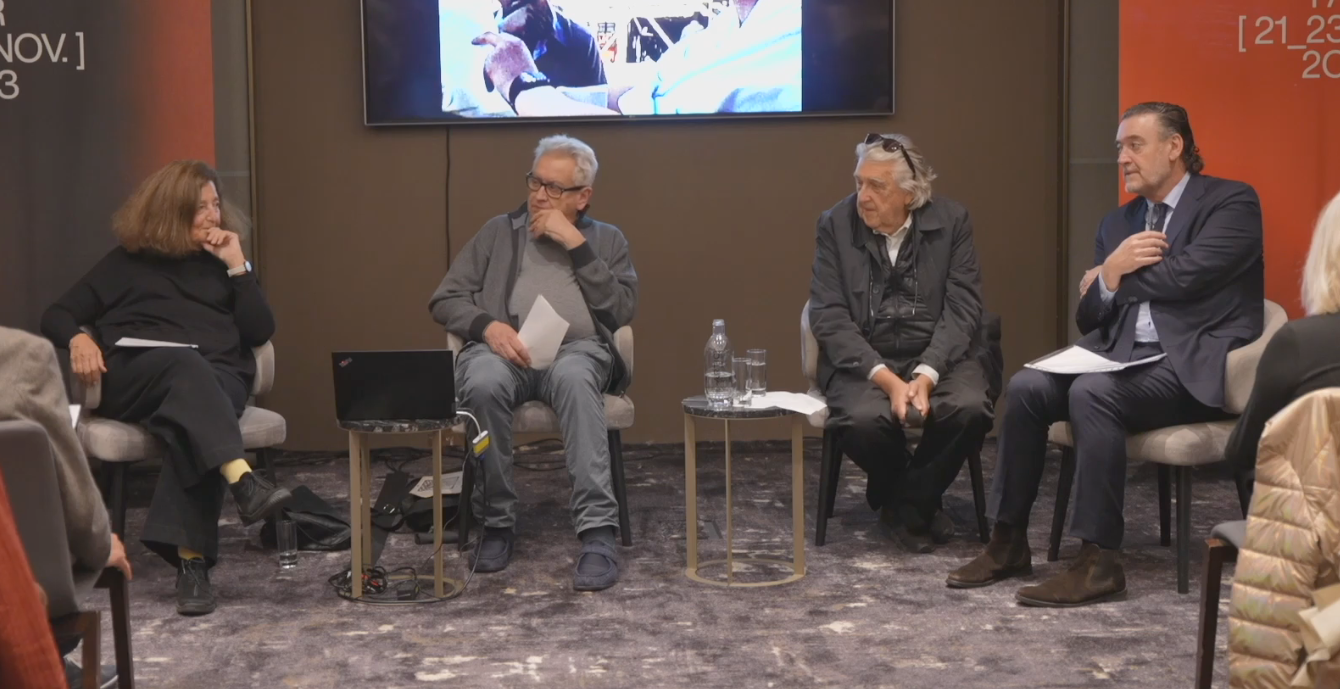
Wednesday 22 November 2023, 5 pm
- Speakers
- Eugeni Bonet, Anne-Marie Duguet, Antoni Muntadas and Miguel Zugaza
- Venues
- Almanac Barcelona
- Price
- Free admission
- Language
- Spanish
Add to calendar
Antoni Muntadas (Artist), Eugeni Bonet (Curator), Anne-Marie Duguet (Academic) and Miguel Zugaza (Director, Museo de Bellas Artes Bilbao) in conversation.
Guada Echevarría (Bilbao, 1948 – San Sebastián, 2023) had a distinguished career in the art world. She founded the mythical Video Festival in Sant Sebastià in the 1980s, directed the Bordeaux Art School for two decades and was the cultural director of the project Donostia 2016. She began as a specialist in rock history and became a leading figure in video art in Spain. She presented artists such as Bill Viola and Bob Wilson at the San Sebastián International Video Festival. Shee organized a music video festival of radical Basque rock in Vitoria and worked at the Contemporary Art Television Fund in Boston. At the Queen Sofia Art Center, she collaborated on major exhibitions such as those of Antonio Muntadas, Christian Boltanski and John Baldessari, and was curator of the minimal art collection of Count Panza di Biumo. In 2012, she curated an exhibition of contemporary Basque art at the Bilbao Museum of Fine Arts.
In this meeting, participants will remember their outstanding record in homage mode to a key figure in the field of video art.
(Re)visionats, (Re)visitats. ‘Antoni Muntadas’
Friday 5 May 2017, 7 pm
— A roundtable discussion with Carolina Cabrerizo and Miquel Martí Freixas.
- Artists
- Carolina Cabrerizo and Miquel Martí Freixas
- Curators
- Albert Alcoz
- Venues
- Arts Santa Mònica
- A project by
- Activity co-organized by LOOP Barcelona and Arts Santa Mònica
- Price
- Free admission
- Tickets & register
-
artssantamonica.gencat.cat/ca
Limited seatings.
Add to calendar
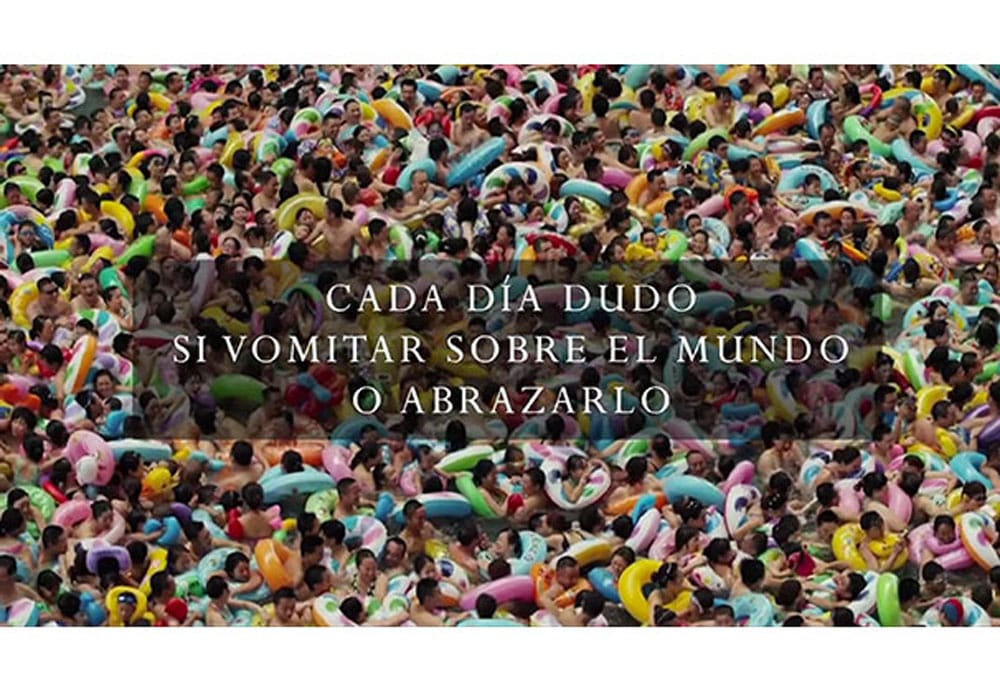
A parallel activity to '(Re)visionats, (Re)visitats'. This presentation will focus on the work of 'Antoni Muntadas' through the eyes of contemporary creators Carolina Cabrerizo and Miquel Martí Freixas.
Establishing a debate around ‘Antoni Muntadas’ initial video work is the main reason for this roundtable. To do so we propose the presentation of a series of recent audiovisual practices made by current filmmakers and video creators who dialogue with the artist’s pieces present in the show. Miquel Martí Freixas –co-director of the appropiation video of group of hooligans Sedated Army Crazy Mirror (2014)–, Carolina Cabrerizo –responsible for the microvideos of El Pressentiment, inspired by the critical reflections of the collective Espai en Blanc – and a selection of the television crew responsible for Gabinete de Crisis, ‘a TV show you will not see on TV’–Kikol Grau, Arturo Bastón and Féliz Pérez-Hita– will be the participants of this first meeting moderated by Albert Alcoz, curator of the exhibition.
Previously Antoni Mercader will explain the work of recovery and digitalisation of an extensive selection of documents from the first years of Spanish video art, held in the framework of this year’s LOOP Barcelona.
Parallel activity to the exhibition (Re)visionats, (Re)visitats. A re-reading of the beginnings of Spanish videoart.