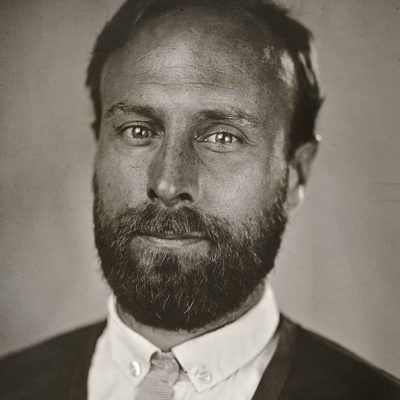
Aurélien Le Genissel is an art critic and independent curator based in Barcelona. One of his current lines of investigation is the deconstruction of fiction through the persistence of literary language and the grammar of the moving image. He is also exploring the interconnection between visual art hermeneutics and contemporary forms of narrative. He is the former Artistic Director of the Blueproject Foundation in Barcelona (2013-2018), where he curated solo shows by Wolfgang Laib, Pieter Vermeersch, José Dávila and group shows like Little Is Left to Tell: Calvino after Calvino, Idolatry -What sacred games shall we have to invent? or Passe/Impasse. He was the director of Barcelona’s LOOP video art fair in 2019 & 2020 where he curated The bee who forgot the honey (2019), a group show featuring works by David Claerbout, Jon Rafman, Michael Sailstorfer, Hans Op de Beeck, Guido van der Werve, and many others and Tales From an Old World (2020). He has contributed to several catalogues, including Little Is Left to Tell: Calvino after Calvino (Blueproject Foundation, 2015) and a good neighbour – Stories (Istanbul Foundation for Culture and Arts, 2017), the publication of the 15th Istanbul Biennial. He is a regular collaborator of several magazines like Neo2 (Spain), ArtPress France or Mousse Magazine (Italy)
Related Activities
The Bee Who Forgot The Honey: David Claerbout
12 — 24 November 2019
- Artists
- David Claerbout
- Venue
- Casa Vicens
Add to calendar
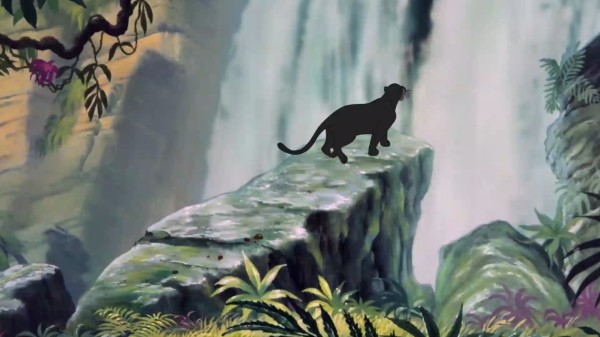
The pure necessity is based on David Claerbout’s idea of returning his original behavior to the animals of The Jungle Book. A way for the Belgian artist to deconstruct the anthropocentric dimension of Disney’s story while offering a reflection on the traditional narrative mechanisms. The work plays with the idea of cause-effect, plot and action, creating a 50-minute film that seems suspended in time, in a kind of contemplative limbo in which the expectations of the viewer are always denied or postponed. Like Claerbout’s other works, The Pure Necessity subverts the classic relationship -established by painting- between the content and the form to criticize the simplifying reduction of the jungle and its inhabitants to setting and sidekicks for its human protagonist.
The landscape is no longer presented as a functional context, full of signs whose meaning is given by human rationality but as an open world in which events overcome the simple subject/object approach, posing an existential openness -of that incapturable- that resonates throughout The bee who forgot the honey, the larger exhibition that includes this installation at Casa Vicens.
Over a period of 3 years, David Claerbout and a team of professional artists painstakingly redrew the frames of the original movie by hand, one by one, and then assembled them to create an entirely new, lifeless animation, which stands in raw contrast to the lively and rythmical original. Now devoid of narrative, the animals move amidst the jungle as if the story were of their own making.
The Bee Who Forgot The Honey: Línies de fuga
12 November 2019 — 12 January 2020
- Artists
- Guido van der Werve, Taus Makhacheva, Paulo Arraiano, Serafín Álvarez, Gelare Khoshgozaran, Marcin Liminowicz, Justin Barton & Mark Fisher, Saïd Afifi, Jon Rafman, Ariane Loze, Mit Borràs and Mario Santamaria
- Venue
- Museu d’Història de Catalunya
Add to calendar
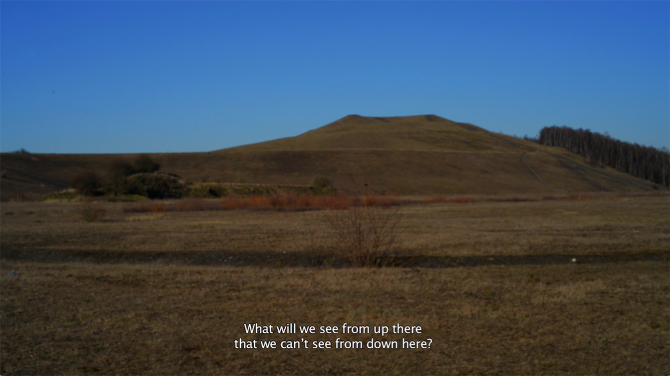
Within the broader, more delocalized scope of The bee who forgot the honey, Línies de fuga offers a reflection focused on the historical-political and social dimension of the notion of landscape, understood in this case as a collective imagination, an element that is displayed as both constructing us and being constructed by us as a society and citizens. It is a collective exhibition in which a number of artists elaborate on contemporary issues related to ecology, transhumanism or the value of the image.
Like a vanishing line, ever visible but unattainable – ideal but impossible -, in this case, the landscape is presented as something we destroy but must protect, something we seek but cannot find, an obstacle that limits us but that we can sometimes unwittingly surpass. This display approches the way in which men address landscapes or how they become the reflection of an ideology, a collective imagination or a sphere of intimacy.
The Bee Who Forgot The Honey: Hans Op de Beeck
12 — 24 November 2019
- Artists
- Hans Op de Beeck
- Venue
- Reial Cercle Artístic
Add to calendar
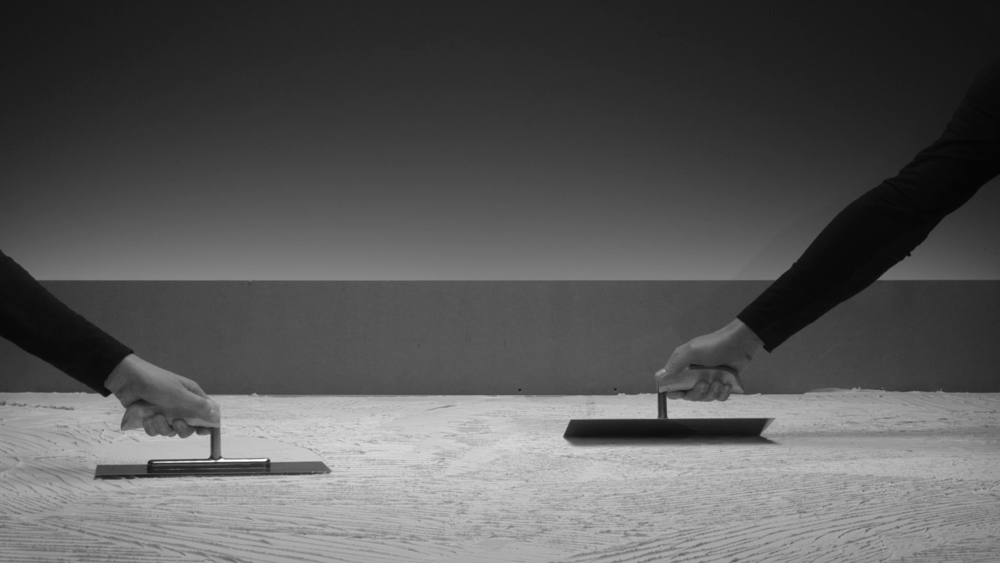
Staging Silence (3) is the third and final instalment in a series of autonomous art films by Hans Op de Beeck, all of which have been directed according to the same principles. Two pairs of anonymous hands construct and deconstruct fictional interiors and landscapes on a mini film set of just three square meters in size. These anonymous hands, like a double Deus ex Machina of sorts, decide on the life and death, growth and blossoming or decay of the places that are conjured up.
It is a reflexion on how landscape, and nature in general, has been seen as a metaphysical object by mankind, a world-at-hand (Vorhandenheit) as Heidegger calls it, and the way in which man ‘humanises’ open space in an attempt to create meaning, identity and control. Intimate surroundings become open landscapes in a visual journey through depopulated, enigmatic and often melancholic territories, which are built up and taken down before the eye of the camera. This theatre of landscape acquires its full meaning against the backdrop of the magnificent stage of the Reial Cercle Artístic, in a sort of ironic and beautiful mise en abyme.
The installation is part of the exhibition The bee who forgot the honey.
The Bee Who Forgot The Honey: Michael Stailstofer & Emilio Vavarella
12 — 24 November 2019
- Artists
- Michael Stailstofer and Emilio Vavarella
Add to calendar
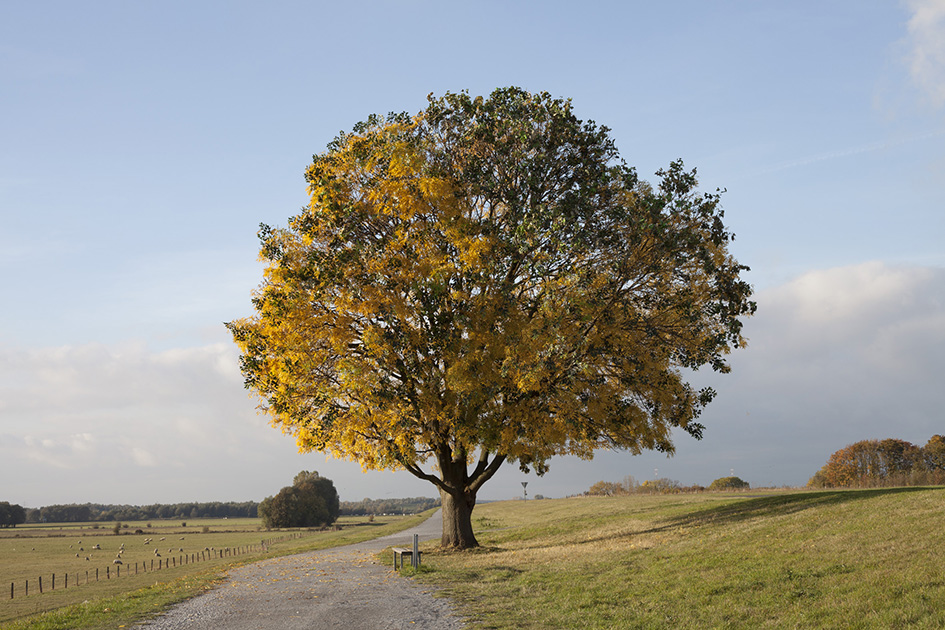
The Museu de Ciències Naturals de Barcelona presents Antiherbst, by Michael Stailstofer, and Animal Cinema by Emilio Vavarella, as part of the deslocalized exhibition The bee who forgot the honey, visible in several locations around the city. Both videos, temporarily integrated into the permanent collection of the center, reflect on the limits of an anthropocentric approach to the landscape, questioning the way in which men have traditionally related to it, often putting it away or using it as a beautiful decoration or a place to colonize or invade.
In Antiherbst, Sailstorfer collect the leaves that fall from a tree in autumn to paint them green again and return them to their original place. The result is an ironic trompe-l’oeil in which the leaves change, move and seem increasingly unreal and artificial, but, in contrast to the trees in the background, do not fall to the ground. A reflection on the footprint, the responsibility of men in the landscape and, in general, in the idea of care of nature.
On the other hand, and in an antagonistic way, Animal Cinema – composed of fragments of YouTube videos in which you can see animals manipulating a camera – proposes a completely different relationship to the environment, much more fusional and direct, based on the famous analyzes by German biologist Jakob Johann von Uexküll whose notion of Umwelt (the world of the perception of animals in relation to their environment) has influenced many contemporary thinkers on issues of ecology or sustainability.
The Bee Who Forgot The Honey: Jennifer Douzenel
12 — 24 November 2019
- Artists
- Jennifer Douzenel
- Venue
- Museu Frederic Marès
Add to calendar
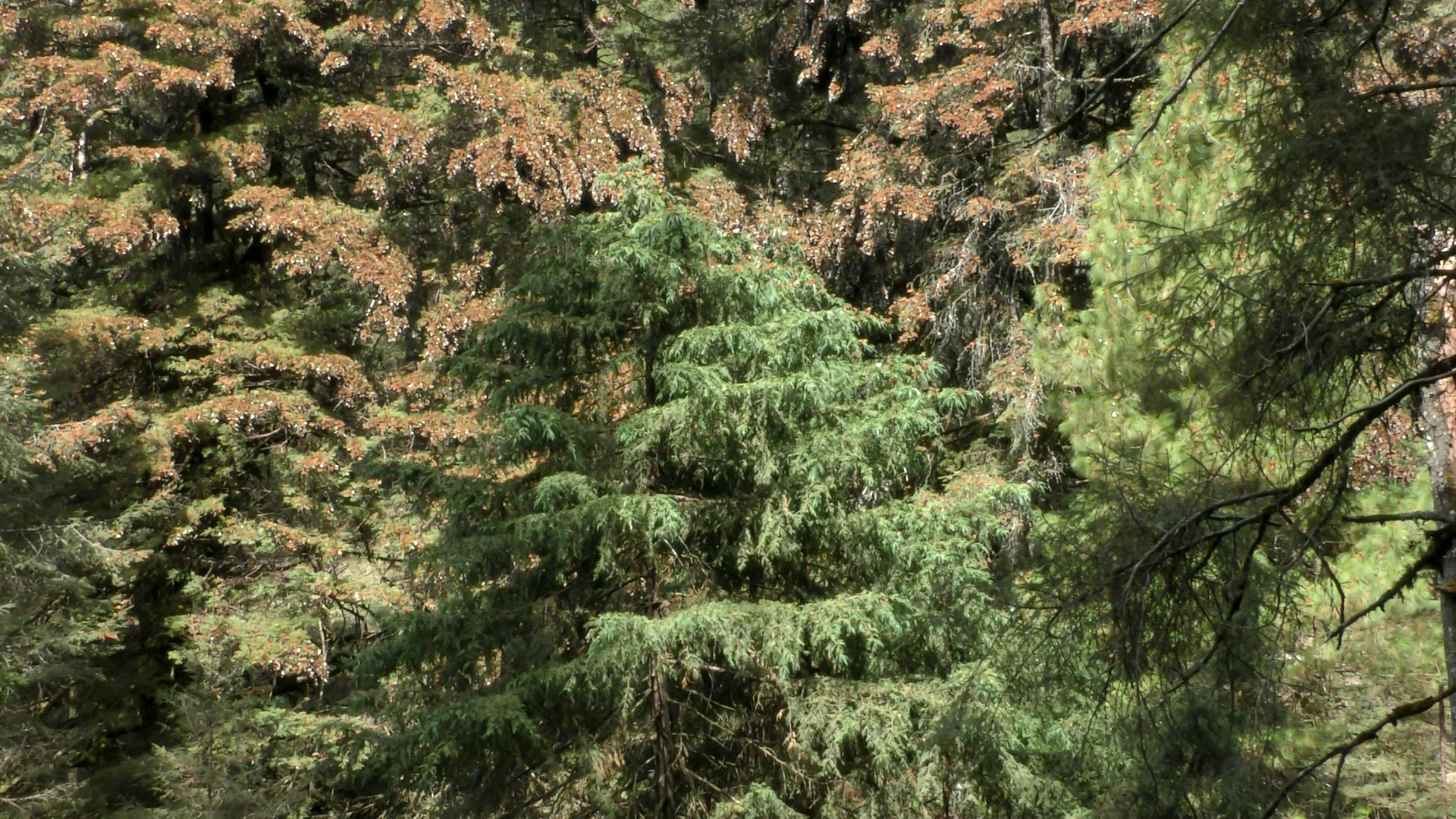
Jennifer Douzenel conceives her videos as pictures that are inscribed in the continuity of the pictorial tradition and where temporality is embodied as a plastic element. Within the framework of the multiple exhibition The bee who forgot the honey, the young French artist presents Monarques, a work in which stands out, as in many of her other videos, the importance of the fixed plane, the framing and a visual texture full of an impressionistic phenomenology.
A poetic 4-minute work whose circular structure captures what Douzenel calls “ephemeral moments of grace”, suspending the narration and the action to focus on what is around, the pure sense of composition and an image that transcends the simple projection frame. In the silent, intimate and almost spiritual context of the arches of the Museu Frederic Marès, the work invites to a contemplation of the useless, which is no more, deep down, than the reflection of the complex arbitrariness of existence.
The Bee Who Forgot the Honey
12 — 24 November 2019
- Artists
- David Claerbout, Hans Op de Beeck, Jennifer Douzenel, Guido van der Werve, Taus Makhacheva, Paulo Arraiano, Serafín Álvarez, Gelare Khoshgozaran, Marcin Liminowicz, Justin Barton & Mark Fisher, Saïd Afifi, Jon Rafman, Mit Borrás, Michael Sailstorfer, Emilio Vavarella and Mario Santamaria
Add to calendar
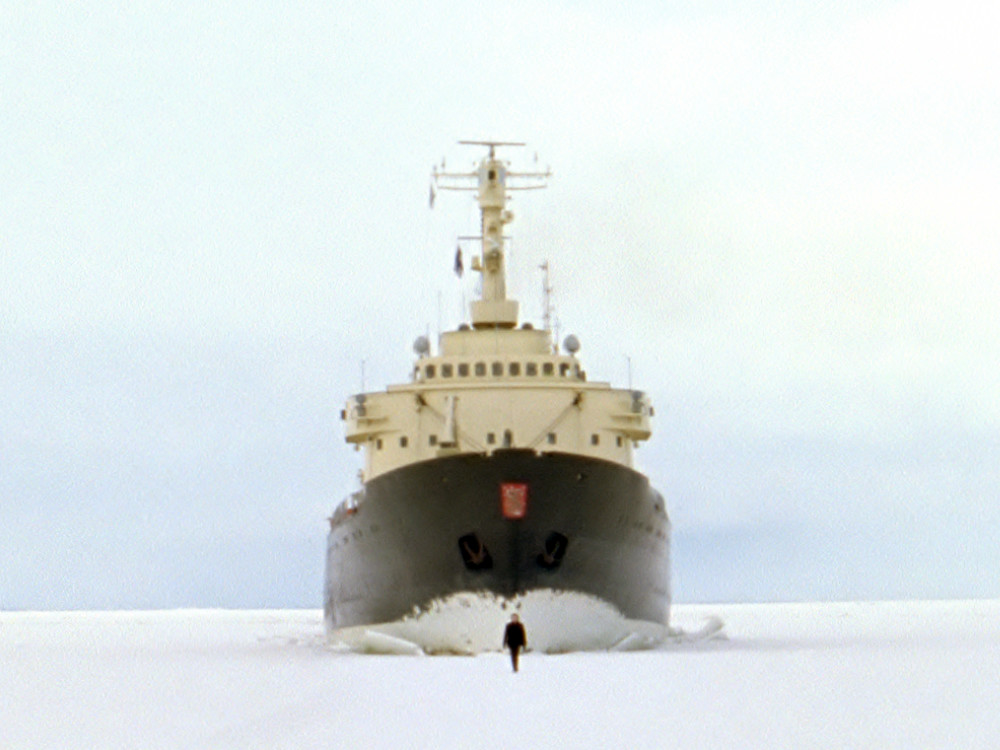
This multiple and decentralized exhibition, spread across several spaces and locations in the city, offers a new approach to the notion of landscape based on a perspective that goes beyond the simple issues of representation, nature or the environment that surrounds us, portrayed as a mere container. It is an urban walk of sorts, indomitable and always incomplete, with ramifications and possible stops, each of which delves into the questions implicit in our modern notion of landscape in its own unique way.
To this end, its reflection starts from the notion of “inappropriability” developed by Italian philosopher Giorgio Agamben in order to rethink the metaphysical idea of a world-at-hand (Vorhandenheit) that is transparent to the knowledge of mankind. Through a critique of the very status of the image – its ontological reality and its symbolic function -, the subversion of a merely reassuring narrative of Progress, or a return to a more existential and phenomenological temporality, the artists on display put forward a new, more spiritual, humble or affective way of Being-in-the-world, that is, entering into a relationship with the landscape, understood as that natural environment that man has often deemed to be a mere backdrop or a simple stage for humankind.
In the works of David Claerbout, Hans Op de Beeck, Guido van der Werve, or Michael Sailstorfer, for example, the landscape no longer appears as a setting or a horizon to be explored, as a whole that is alien to man or as a reserve of assets to be exploited, but as the symbol of the ontological significance of a state of the world (and of being), as a space, a thought that constantly eludes us, slipping between our fingers, inaccessible and untouchable, beyond the realm of use and utility in which we tend to categorize everything in this age of consumption and obsolescence.
Curated by Aurélien Le Genissel.
LOOP SALON
17 — 19 November 2020
- Curators
- Aurélien Le Genissel
- Venues
- Museu d’Història de Catalunya
Add to calendar
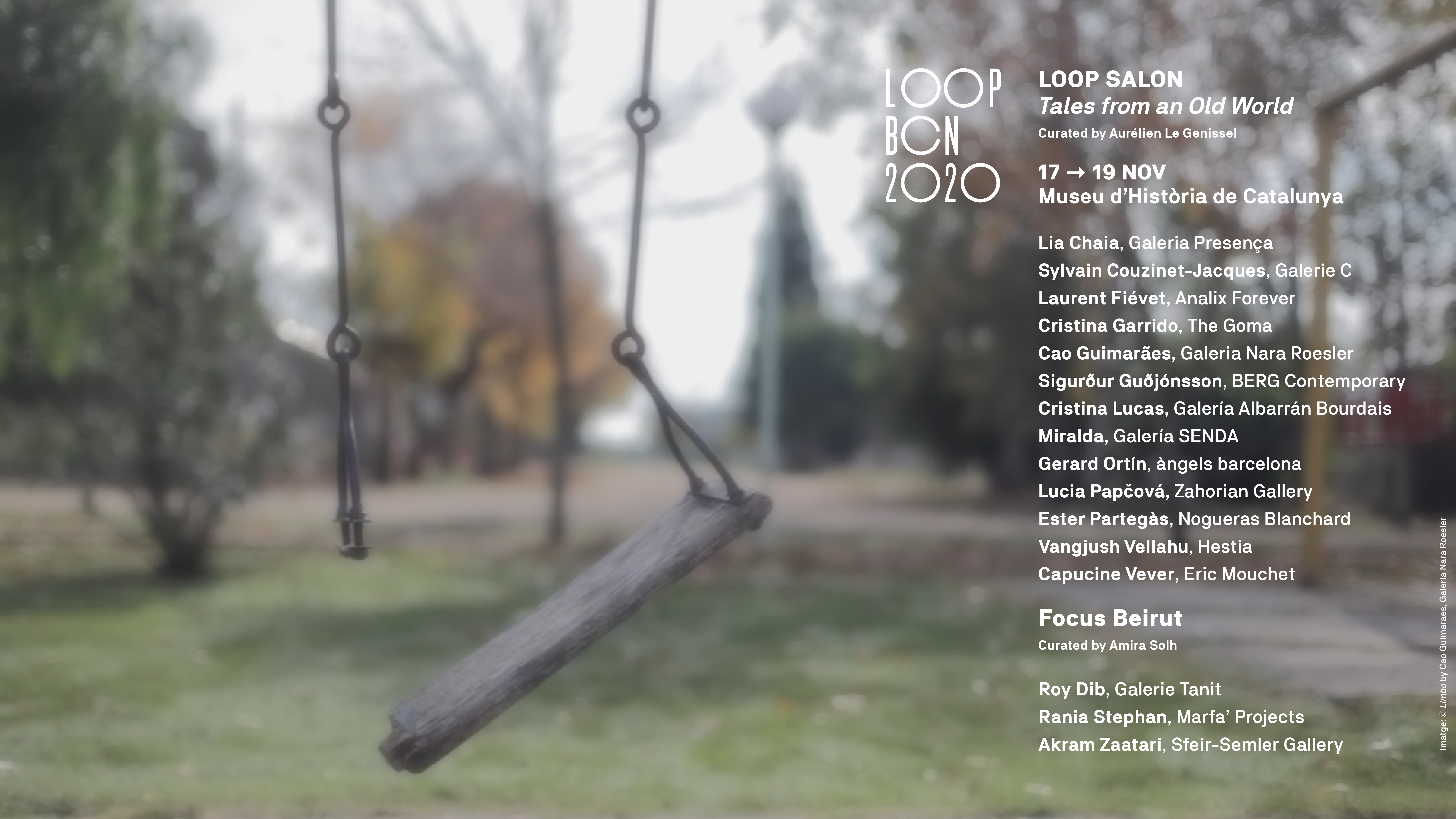
LOOP will maintain its physical offer transforming the traditional LOOP Fair into LOOP Salon, a curated exhibition showcasing a highlight of international video artworks from the fair at the Museu d´Història de Catalunya (17-19 November).
Organized by the fair’s director Aurélien Le Genissel, the exhibition titled Tales from an Old World reflects on the meaning of approaching narratives and images that today seem taken from another time, the one before the pandemic. The exhibited works will draw a panorama of pre-Covid issues as seen by our new gazes and updated by our new concerns.
LOOP Salon will also include a special section, curated by Amira Solh and untitled Focus Beirut, presenting a selection of galleries from Beirut art scene after the disaster of August 04th.
Participants: Galerie C: Sylvain Couzinet Jacques / Galerie Eric
Mouchet: Capucine Vever / The Goma: Cristina Garrido / BERG Contemporary: Sigurður Guðjónsson / Galeria Nara Roesler: Cao Guimaraes / Galeria Presença: Lia Chaia / Galería Albarrán Bourdais: Cristina Lucas / Galería SENDA: Miralda / àngels barcelona: Gerard Ortin / Zahorian Gallery: Lucia Papcová / HESTIA: Vangjush Vellahu / Nogueras Blanchard: Ester Partegàs / Analix Forever: Laurent Fiévet. FOCUS BEIRUT: Marfa’ Projects: Rania Stephan / Sfeir-Semler Gallery: Akram Zaatari / Galerie Tanit: Roy Dib
Curatorial Text
“What is an event? Everything that happens or occurs in the present, according to Paul Ricoeur. True as this may be, we could also say that an event is that which doesn’t leave the past intact. What is more, it is that which changes the former a posteriori, a kind of premonitory storytelling of the past that mingles revision and anticipation.
With a title that makes reference to the magnificent TV show Tales From the Loop, Tales From an Old World proposes an updated and contemporary (re)vision of the essential problems of an outdated world, the world before COVID-19, from a video art perspective. Not that it was outdated because the challenges aren’t the same. Nor because the world itself has changed. No. Quite the contrary. It is we who have changed. We have changed our way of seeing. Images no longer reveal the same things they did in February 2020. The artwork resonates in a different context; in the era of afterwards, a time of post-lockdown, of post-capitalism, of the (long-awaited but not yet-to-be-achieved) post-pandemic, full of deeper interpretations and sensibilities, of pressing needs and emotions renewed by the experience. From within this game-changing event, Tales From an Old World approaches images from a different period, investigating their new energies and prevailing questions.
Some of the selected videos, such as Cristina Lucas’ environmental urgency in The People That Is Missing (El Pueblo Que Falta), or the critique of mass consumption agriculture in Gerard Ortin’s Future Foods, burn the retina more than ever. Other videos, such as Boothworks by Cristina Garrido, intensify their stinging criticality in the way they address the saturation of the Art World or the incongruous notion of sovereignty held by states in a globalized era –a very vivid topic during the pandemic– at play in Vangjush Vellahu’s Fragments I.
Some of the images now seem to come from a different epoch: mythical, distant, somewhat scrambled -probably idealized-, like those adolescent and melancholic bodies that touch and coexist in Sylvain Couzinet-Jacques’ splendid Sub Rosa or the invisible forms, beautiful despite being imperceptible to the human eye (not all invisible things are dangerous…), from Sigurður Guðjónsson’s Enigma. However, we read all of these images through the prism of recent events, from the fictitious/fictionalized truth of a retrospective feeling.
In the past months, we have supported the weak with actions and gestures; applause and solidarity, caring for fragile bodies much like the protagonist of Lucia Papčová’s 24 hours and 35 years for Mariana. We have wandered through deserted spaces and abandoned squares, haunted by the echoes of the shadows of absent ghosts, where everything was reminiscent of the Limbo that Cao Guimarães tries to capture. And what about those distressing shots from Laurent Fiévet’s Tuesday, with well-known frames, familiar sentences, and strangely relatable routines, having somehow experienced what Jack Torrance himself underwent in an Overlook Hotel of our own?
In a way, these are new works if we agree with Borges when he writes that Pierre Menard’s and Cervantes’ Don Quixotes were the same but different. Some are, in fact, new productions like Quarantinetrains III: Rodalies by Miralda. Others seem hauntingly foreboding in their depiction of humanity’s Promethean hubris, such as Capucine Vever’s work, whose beautiful title (Et il fut accusé par ses contemporains d’impiété et d’arrogance pour avoir franchi les limits permises aux mortels) resonates restlessly with our current uncertainty. The same occurs with Urgente by Lia Chaia, whose concerning, neurotic reiteration lies halfway between a warning and a plea.
LOOP Fair 2020 takes the form of audiovisual murmurs that come to us from an old life, distorted echoes of a world that seems far away, tales from another time, from the state of affairs prior to the big event of 2020. Without knowing where we will go from here, we are certain that the forthcoming challenges already lurked within the pre-covid audiovisual works that we present today in this salon.”
Text: Aurélien Le Genissel