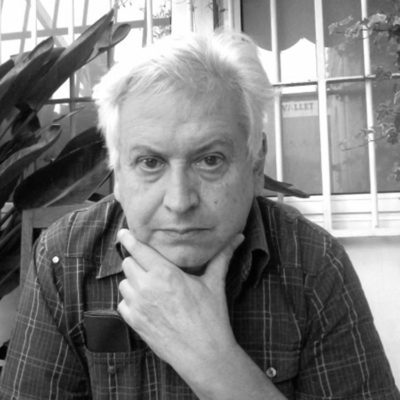
Eugeni Bonet works with film, video and digital media. Since the 1970s, he has been moving across research and creative practice, spanning both audiovisual art and the moving image.
He curated several exhibitions and programmes, such as: Desmontaje: film, vídeo/apropiación, reciclaje (1993), Señales de vídeo: aspectos de la videocreación española de los últimos años (1995-1997), El cine calculado (1999-2001), Movimiento aparente: la invitación al viaje inmóvil en las tecnologías ubicuas del tiempo, la imagen y la pantalla (2000), Comer o no Comer, o las relaciones del arte con la comida en el siglo XX (2002, with Darío Corbeira y Carlos Jiménez), Properament en aquesta pantalla: el cinema lletrista, entre la discrepància i la sublevació (2005, with Eduard Escoffet), Gustavo Romano. Sabotaje en la máquina abstracta (2008), Desbordamiento de Val del Omar (2010-2011) and De trencar i estripar (2016). He co-authored two reference books on video art and film: En torno al vídeo (Barcelona: Gustavo Gili, 1980), together with Joaquim Dolls, Antoni Mercader and Antoni Muntadas; and Práctica fílmica y vanguardia artística en España, 1925-1981/The Avant-Garde Film in Spain (1983), together with Manuel Palacio. Many of his texts and essays were compiled in Escritos de vista y oído (2014). Beginning in the 1970s, he has created film sculptures, multiple channel projections, as well as feature films, like Tira tu reloj al agua (2003-2004) and eGolem (2007- ongoing), also conceived for an online version. He also works with shorter formats and multi-screen devices and often experiments with found footage and recycled images.
In 2014, the MACBA (Museo de Arte Contemporáneo de Barcelona) dedicated him a large exhibition titled El ojo escucha. Eugeni Bonet: pantallas, proyecciones, escritos, which testified to his activity as an artist, curator and writer.
Related Activities
Eugeni Bonet. ‘Lectures de Cirlot’
26 May — 10 June 2016
— Curated by José Luis Corazón Ardura
- Artists
- Eugeni Bonet
- Venue
- Biblioteca Nacional de Catalunya
- Price
- Free admission
Add to calendar
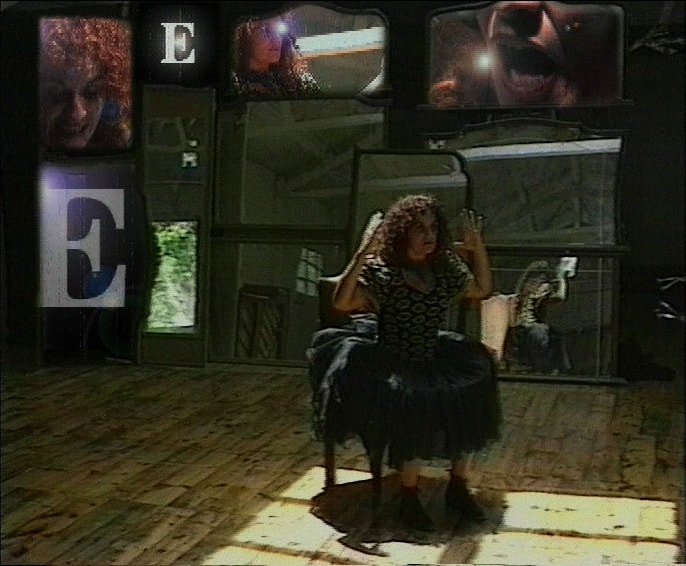
On the occasion of the centenary of the birth of poet, symbolist and art critic Juan Eduardo Cirlot in Barcelona, this exhibition revisits 'Lectures de Cirlot', a series of videos by Eugeni Bonet (Barcelona, 1954) devoted to exploring this outstanding figure.
On the occasion of the centenary of the birth of poet, symbolist and art critic Juan Eduardo Cirlot in Barcelona, this exhibition revisits Lectures de Cirlot, a series of videos by Eugeni Bonet (Barcelona, 1954) devoted to exploring this outstanding figure. By drawing a link between his poetry and audiovisual images, the videos allow us to approach Cirlot through reflections on his intellectual context and life history made by figures that were closely connected to him, including Joan Perucho and his daughters Lourdes and Victoria Cirlot.
Bonet explores ideas that convey the aesthetic philosophy of the poet, such as alliteration, elimination or the development of so-called phonetic symbolism, through the use of images where first-hand accounts converge with a setting of some of the most experimental books by Cirlot.
Lectures de Cirlot is made up of five videos: Einai (12 min), Visio smaradigna (11 min), Homenaje a Bécquer (13 min 30 s), Inger, permutaciones (18 min) and Cristo cristal (11 min).
Robert Cahen. Voyage
29 April — 25 June 2017
— Intermitents
- Artists
- Robert Cahen
- Curators
- Eugeni Bonet
- Venue
- La Virreina Centre de la Imatge
- Price
- Free admission
- Tickets & register
- ajuntament.barcelona.cat/lavirreina/en/visit
Add to calendar
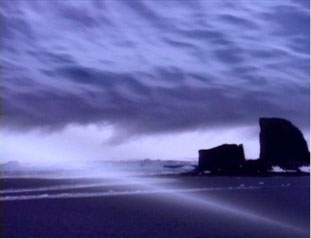
LOOP 2017 presents fifteen years of Robert Cahen's work — the most comprehensive collection of his pieces ever shown in Spain.
The exhibition Voyage gathers a selection of video installations made by Robert Cahen during the last fifteen years, as well as regular projections of the artist’s audiovisual production since 1970, for cinema, video and television. Among the greatest innovators of the moving image language in Europe, Cahen’s works analyze the notions of voyage, landscape, portrait, and time in order to access the thresholds of the image, the sounds and the silence of the world and its inhabitants. The show, thus, takes the form of an invitation to the viewers to take on a journey through “the deep emotions, beautiful yet terrible, that constitute the basis of our existence”, as in the artist’s words. This exhibition is the most exhaustive survey of Robert Cahen’s work ever presented in Spain.
VIDEO REWIND: Mary Lucier
18 — 27 May 2017
— 'Ohio to Giverny: Memory of Light',
- Artists
- Mary Lucier
- Curators
- Eugeni Bonet
- Contributor
- Made possible with public funds from the New York State Council on the Arts and by a grant from the Jerome Foundation. Produced in association with the Television Laboratory at WNET/Thirteen, Carol Brandenburg, Executive Producer. With special assistance from the JVC Company of America, the cooperation of the Versailles Foundation, Musee Claude Monet, and the Bucyrus Historical Society.
- Price
- Free admission
- Tickets & register
-
www.museunacional.cat/en
Free entrance is only for the people with a Loop Festival credential. Otherwise, the cost of the entrance to the Museum is 12 €
- Audio postproduction and original music}
- Production assistant}
- Videotape editor}
- Introductory quote from 'Swann’s Way'}
Add to calendar
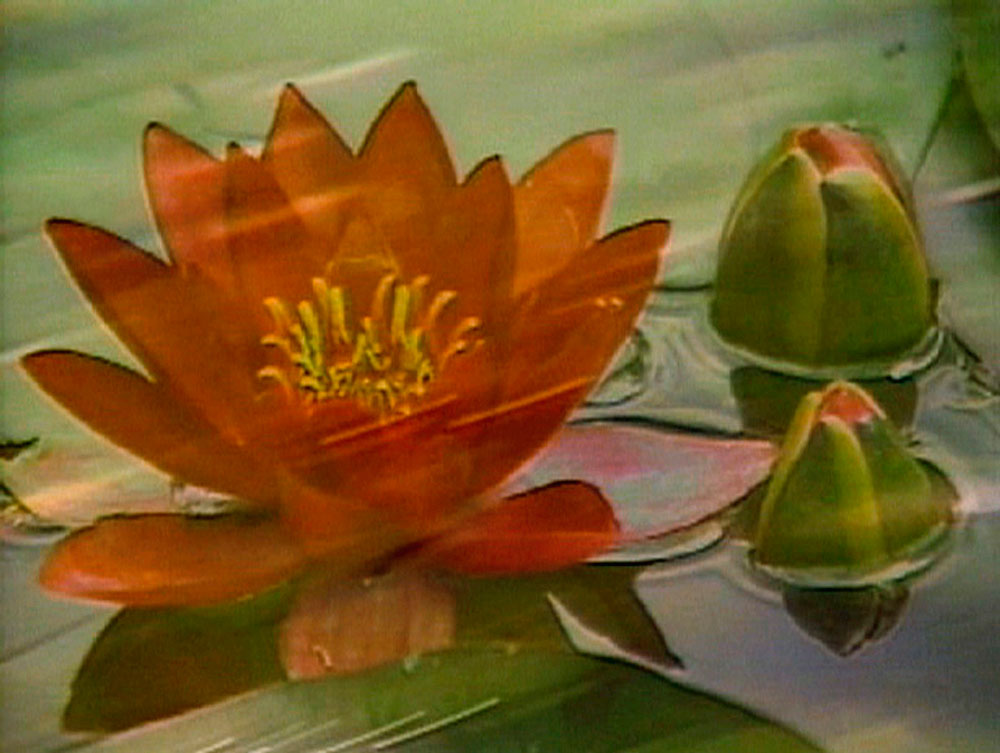
As part of 'VIDEO REWIND: A look back from early video works from the 1970s and 1980s', 'Ohio to Giverny: Memory of Light' by Mary Lucier ponders on the icons of modern society and the spectacle of a future of intense consumerism.
This single-channel video work is a condensed version of the 2-channel installation, Ohio At Giverny, both dated 1983. It is an investigation of light in landscape and its function as an agent of memory, both personal and mythic. The work deals with convergence of disparate entities—geographies, epochs, sensibilities; with transitions from one state of being to another; and how, within the frame of imagination and collective memory, these “dissolves” take place. It is structured as a journey of the camera from the relative simplicity of a bucolic Ohio heritage, through an evocation of medieval France, to the impressionist landscapes of Monet’s Giverny, ending finally in the avenues of Pere Lachaise cemetery. In this adventure, landscape is the chief protagonist—articulated by changing light and by camera movement, animated by highly pictorial sound, and made poignant by the virtual absence of inhabitants. References to the motifs of Monet function throughout as the art historical memory, underlying the more personal evocation of French and American personae. It is dedicated to the memory of my uncle and aunt, William C. Beer, Jr. and Jacqueline Sommeyevre.
Special thanks to Margaret Glosser.
©1983, Mary Lucier
VIDEO REWIND: Beryl Korot
18 — 27 May 2017
— 'Dachau 1974', 1974
- Artists
- Beryl Korot
- Curators
- Eugeni Bonet
- Venue
- Museu d’Historia de Barcelona, Capilla de Santa Ágata
- Contributor
- in collaboration with bitforms
- Price
- 7 €
- Tickets & register
- museuhistoria.bcn.cat/ca/muhba-placa-del-rei
Add to calendar
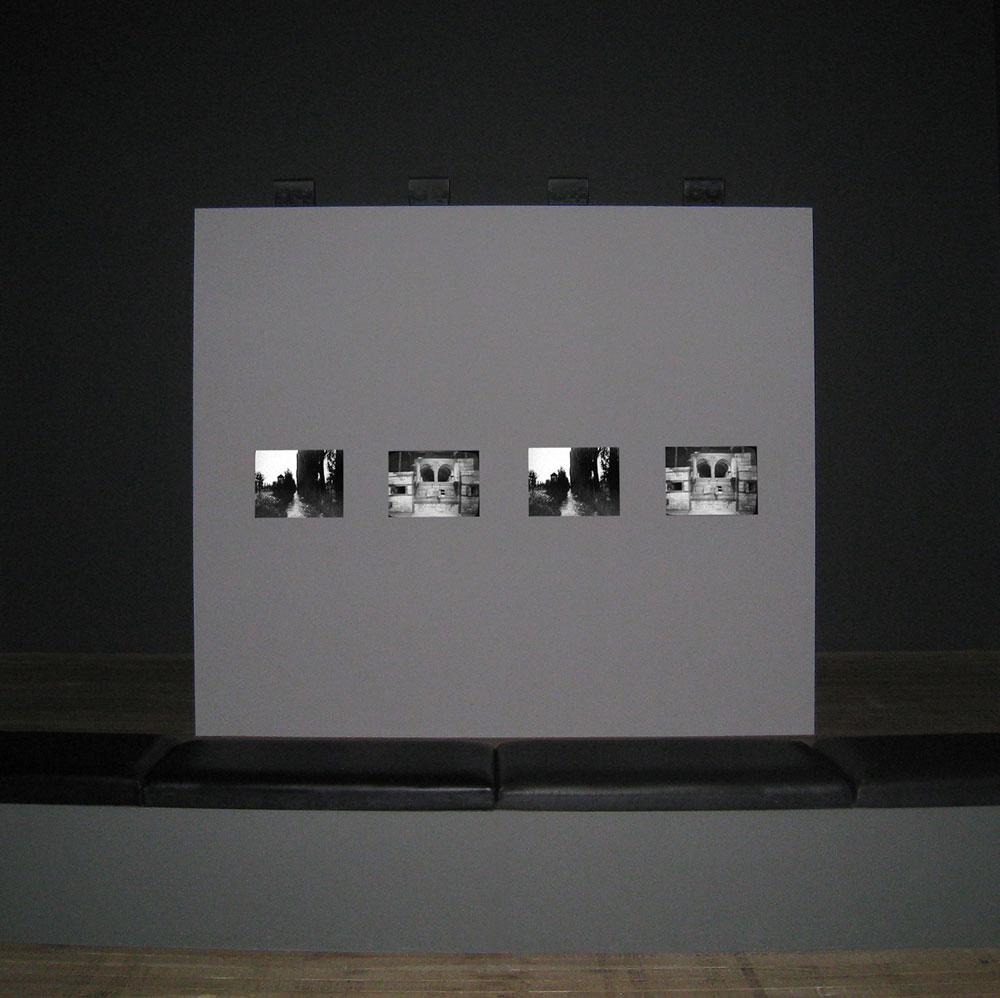
As part of 'VIDEO REWIND: A look back from early video works from the 1970s and 1980s', 'Dachau 1974' by Beryl Korot addresses the memory of places and shadows of history in a recent but still dark and murky past.
In 1974 I visited Dachau, the site of the former concentration camp. It seemed to me a very strange tourist site: very much cleaned up, tourists strolling thru the site, sometimes murmuring, sometimes playing with their children.
Having learned to weave months before, and interested in the multiple channel genre just developing, a video tapestry of Dachau emerged. The minimum number of threads necessary to bind a cloth is four. Paired channels (l and 3) and (2 and 4), though rhythmically different, formed the interlocking “thread” combinations of image and 1 second blanks as the work proceeded in time. This paired structure takes the viewer on a journey from outside the camp’s walls, passed guard towers, to the barracks and finally to the crematoria.
The blanks interrupt the narrative, allowing the identical images of each pair to appear at slightly different times. In its verbal silence, rigorous formalism and focus on the present, the work must ultimately engage the memory of the viewer to endow it with meaning.
VIDEO REWIND: Ant Farm
18 — 27 May 2017
— 'Media Burn', 1975
- Artists
- Chip Lord
- Curators
- Eugeni Bonet
- Venue
- Parking Ortigosa
- Price
- Free admission
Add to calendar
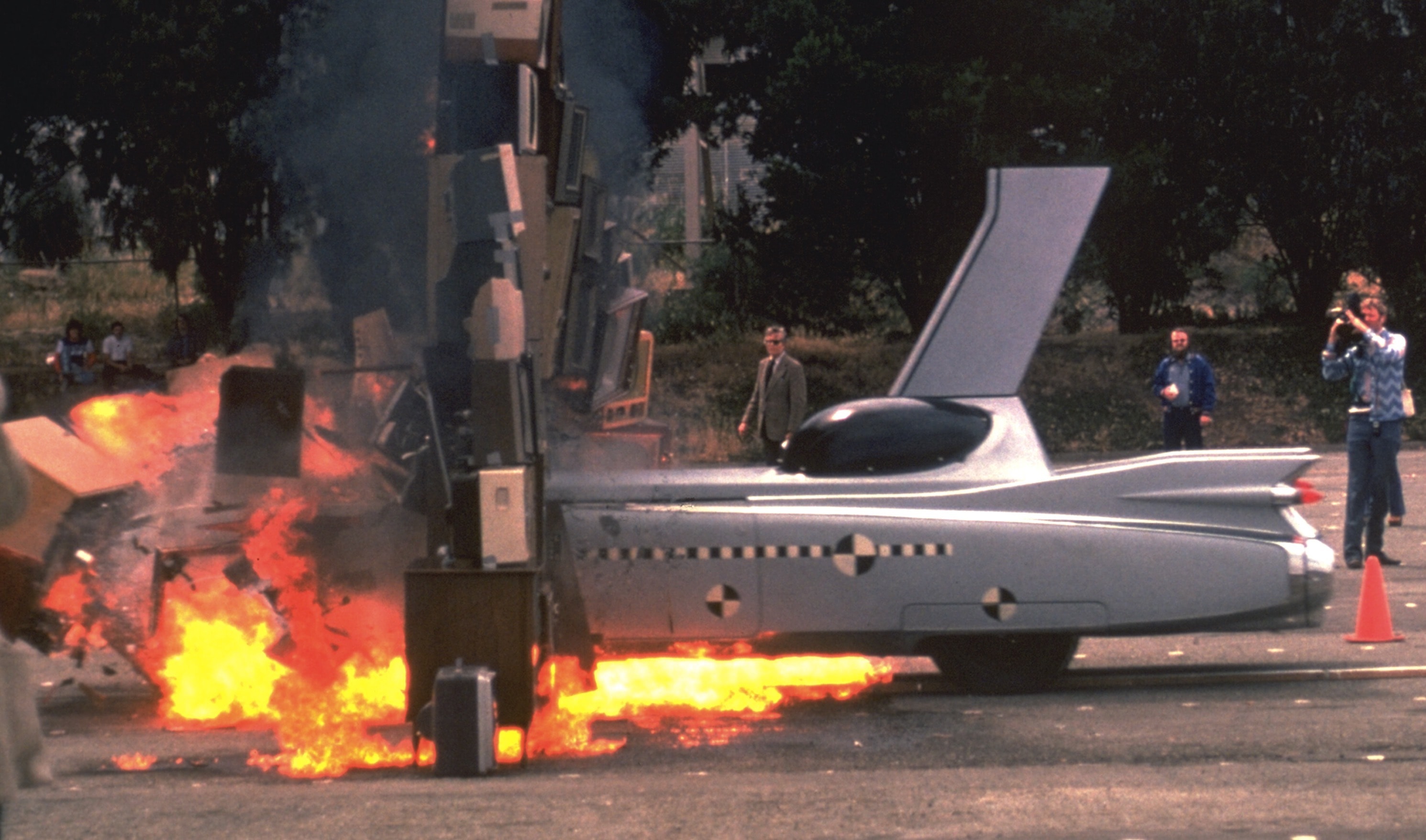
As part of 'VIDEO REWIND: A look back from early video works from the 1970s and 1980s', 'Media Burn' by the US based collective Ant Farm ponders on the icons of modern society and the spectacle of a future of intense consumerism.
MEDIA BURN by Ant Farm was a public performance event that grew out of the desire to create a singular image – a rocket-car crashing a pyramid of television sets. What began as a simple image idea, became a complex performance and video production during more than one year of planning. Within the context of the alternative media movement of the early 1970’s, it was a statement against the monopoly of American broadcast media. It took place on July 4, 1975 in a parking lot in San Francisco in front of an audience of 400 people and featured a speech by the “Artist-President”and other rituals of “media events.” Local television coverage was included in the final video art edit and it was also distributed as a post card.
Tribute to Guada Echevarría: founder of Festival de Vídeo de San Sebastián
Wednesday 22 November 2023, 5 pm
- Speakers
- Eugeni Bonet, Anne-Marie Duguet, Antoni Muntadas and Miguel Zugaza
- Venues
- Almanac Barcelona
- Price
- Free admission
- Language
- Spanish
Add to calendar
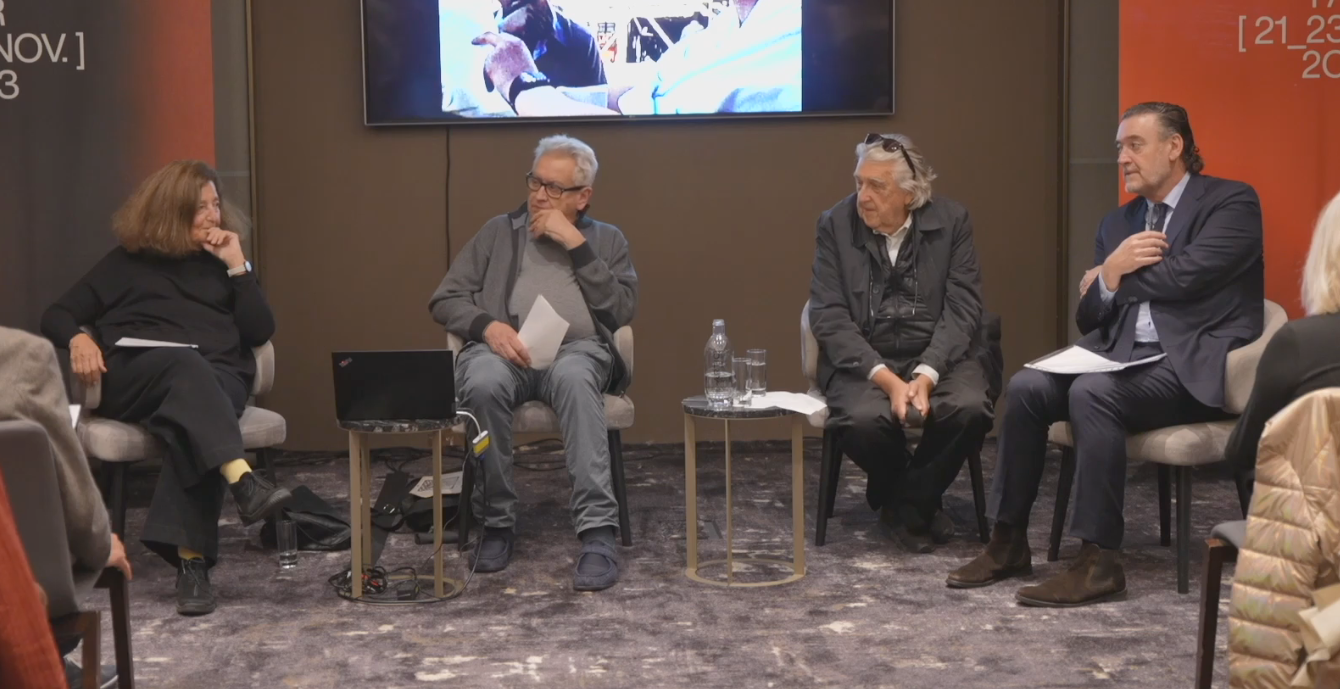
Antoni Muntadas (Artist), Eugeni Bonet (Curator), Anne-Marie Duguet (Academic) and Miguel Zugaza (Director, Museo de Bellas Artes Bilbao) in conversation.
Guada Echevarría (Bilbao, 1948 – San Sebastián, 2023) had a distinguished career in the art world. She founded the mythical Video Festival in Sant Sebastià in the 1980s, directed the Bordeaux Art School for two decades and was the cultural director of the project Donostia 2016. She began as a specialist in rock history and became a leading figure in video art in Spain. She presented artists such as Bill Viola and Bob Wilson at the San Sebastián International Video Festival. Shee organized a music video festival of radical Basque rock in Vitoria and worked at the Contemporary Art Television Fund in Boston. At the Queen Sofia Art Center, she collaborated on major exhibitions such as those of Antonio Muntadas, Christian Boltanski and John Baldessari, and was curator of the minimal art collection of Count Panza di Biumo. In 2012, she curated an exhibition of contemporary Basque art at the Bilbao Museum of Fine Arts.
In this meeting, participants will remember their outstanding record in homage mode to a key figure in the field of video art.
‘En la ciudad’. Filmacions urbanístiques, inquietuds artístiques
6 — 22 November 2018
- Artists
- Iván Zulueta, Benet Rossell, Eugènia Balcells, Juan Bufill, Manuel Huerga, Francesc Abad, Eulàlia Grau, Antoni Miralda, Fina Miralles, Antoni Muntadas, Joan Rabascall, Francesc Torres and Valcárcel Medina
- Curators
- Albert Alcoz
- Venues
- Museu d’Historia de Barcelona, Capilla de Santa Ágata
Add to calendar
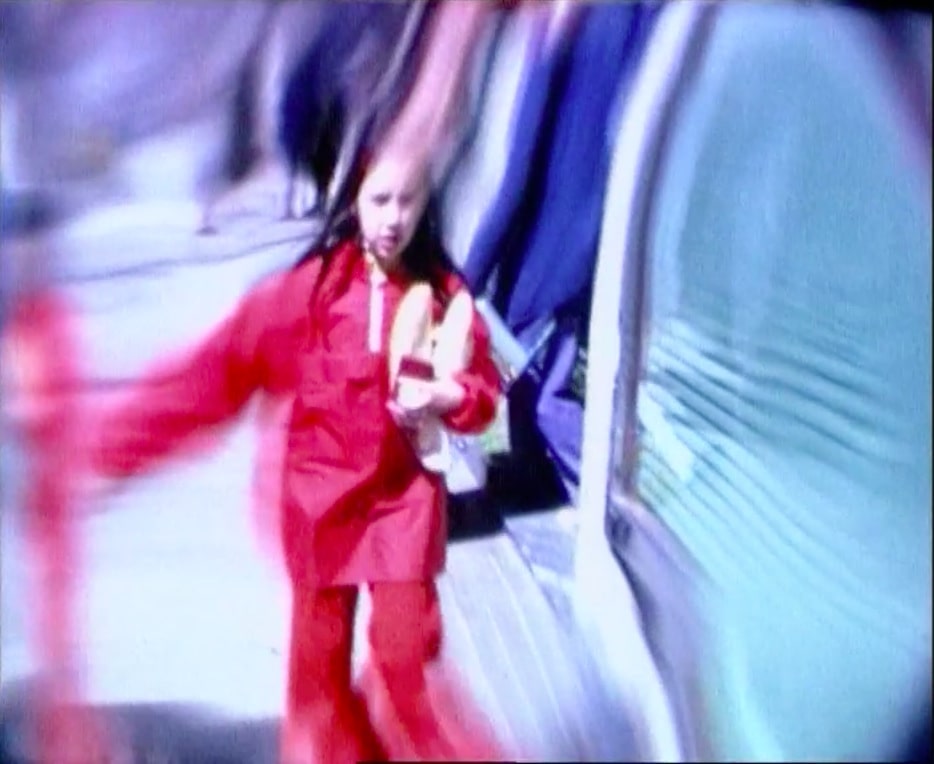
En la ciudad [“In the City”] was the title of an unusual collective film that followed an initiative by Eugeni Bonet in 1976. The film project consisted of a series of Super-8 short films made by a series of different artists. Reflecting on the role of the city, expressing personal concerns and interrogating the different urban logic of places such as Barcelona, Madrid, Paris or New York was the main objective of a heterogeneous film that put together the analytical recordings of the surroundings with an artistic format that was close to cinema. Recognised experimental filmmakers –such as Iván Zulueta, Eugènia Balcells, Manuel Huerga– and renowned visual artists linked to conceptual practices –like Eulàlia Grau, Muntadas, Antoni Miralda, Fina Miralles, Francesc Torres– were some of the participants in such plural work that speaks truth to a period of hopeful socio-political change. Today the film has become a historical document.
VIDEO REWIND: Antoni Muntadas
18 May — 1 June 2017
— 'Pamplona-Grazalema,' 1975-1980
- Artists
- Antoni Muntadas
- Curators
- Eugeni Bonet
- Venues
- Fundació Vila Casas
- Price
- Free admission
- Tickets & register
- www.fundaciovilacasas.com
Add to calendar
As part of 'VIDEO REWIND: A look back from early video works from the 1970s and 1980s', 'Pamplona-Grazalema' (1975-1980) considers the spectacle of cultural traditions.<br />
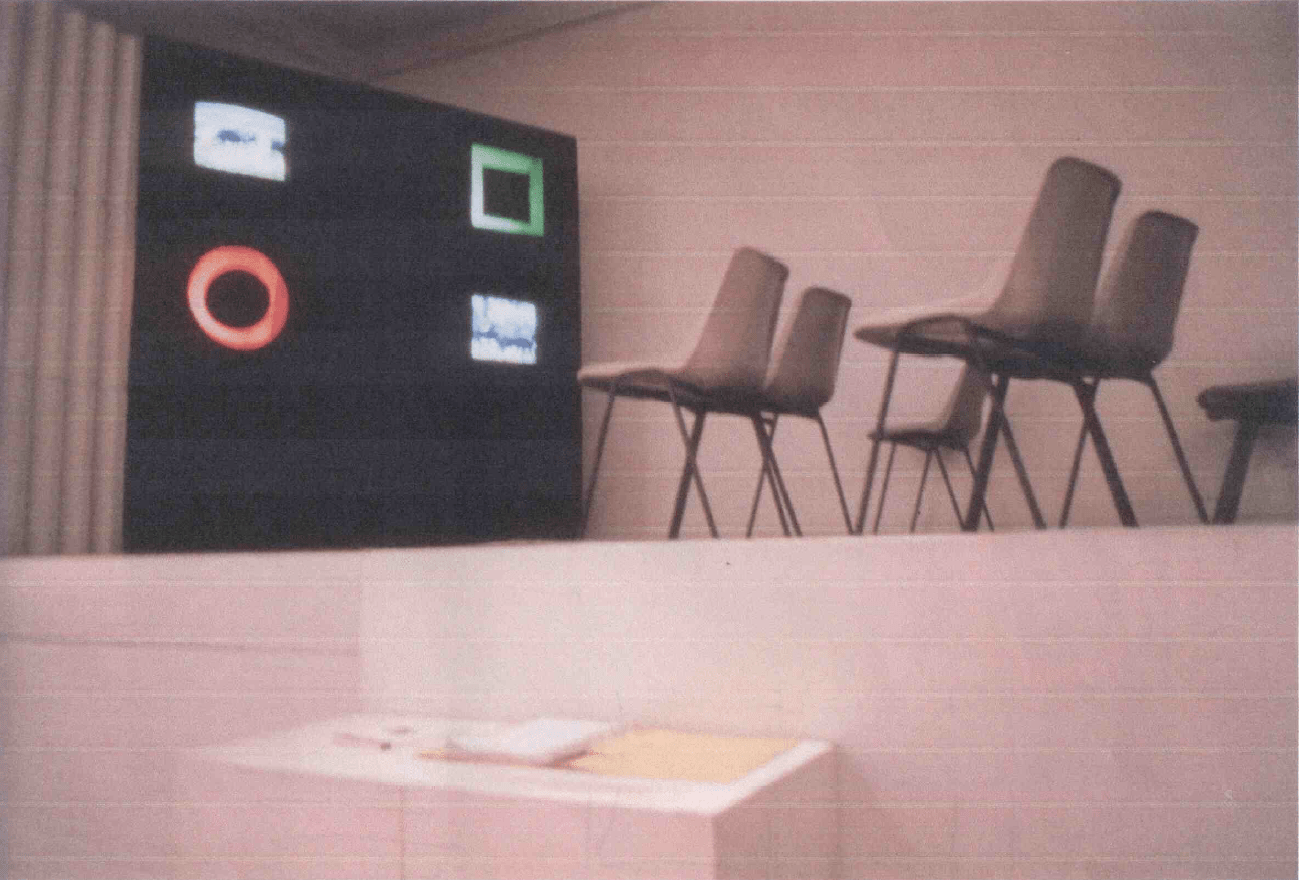
Pamplona-Grazalema, a project developed by Antoni Muntadas (Barcelona, 1942) with Spanish anthropologist Ginés Serrán Pagán, is an installation consisting of the publication of a book and two videos projected simultaneously. This hybrid work of visual art and social anthropology makes an interdisciplinary enquiry into bullfighting’s geographic and cultural permutations within Spain’s recent history. Pamplona is famously the modern capital of bullfighting and home to its most sophisticated practitioners, but the city’s “fiesta of the bull” is a predominately commercial and touristic enterprise. In places like Grazalema, a mountain town in Cádiz (Andalusia), the oldest known form of bullfighting is still practiced. The male residents symbolically sap the bull’s virility and power as the animal becomes weaker. As the relationship between human and animal is increasing rationalized, these social and spiritual connections become obscure. This work offers a fascinating study in ritual, myth, and community for the citizen of the global world.
VIDEO REWIND: Steina Vasulka
18 — 27 May 2017
— 'Machine Vision', 1978
- Artists
- Steina Vasulka
- Curators
- Eugeni Bonet
- Venue
- CosmoCaixa
- A project by
- LOOP Barcelona & CosmoCaixa
- Contributor
- BERG Contemporary and the National Gallery of Iceland
- Tickets & register
- agenda.obrasocial.lacaixa.es/es/cosmocaixa-barcelona?educativa=true
Add to calendar
As part of 'VIDEO REWIND: A look back from early video works from the 1970s and 1980s', 'Machine Vision' by Steina allows for a reflection on mechanical perception and artificial vision.
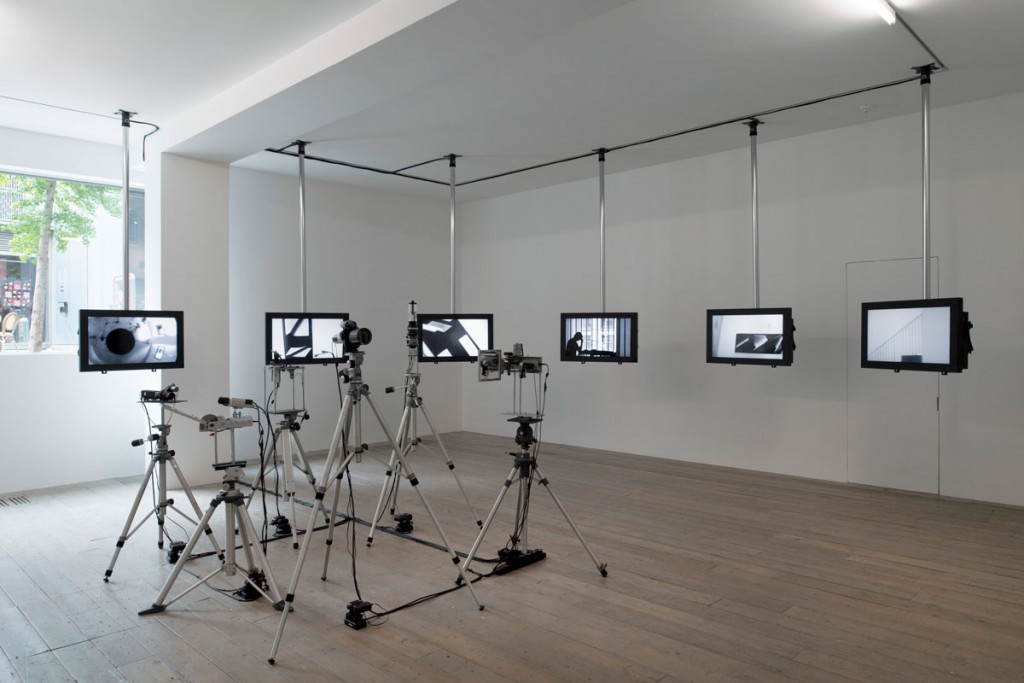
“When a human being operates the camera, the assumption is that the camera is an extension of the eye. You move the camera the way you move the head and the body. In video, unlike photography or film, the view finder is not necessarily an integral part of the camera apparatus. . . . In the late seventies, I began a series of environments titled Machine Vision and Allvision, with a mirrored sphere. Another variation has a motorized moving mirror in front of the camera so that depending on the horizontal or vertical positioning of the mirror, the video monitor displays a continuous pan or tilt either back/forth or up/down. A third variation is a continuous rotation through a turning prism, while still another has a zoom lens in continuing motion, in/out. These automatic motions simulate all possible camera movements freeing the human eye from being the central point of the universe.” — Steina
A mirrored sphere, positioned in the middle of a crossbar reflects the image of surrounding space. Two video cameras, attached to each end of the crossbar are looking in at the mirrored surface. The crossbar — now an assembly of mirrored sphere and two cameras — slowly rotates on the turntable with cameras orbiting the sphere. Since each camera sees half of the reflected space, the whole space becomes observable.
The turntable, which sits on a low pedestal, holds the driving mechanism for the rotation — a slip-ring assembly and a DC motor. The slip-ring assembly provides uninterrupted video signals from, and power to, the cameras. The video signal from two cameras connects to two (or more monitors) arranged in the exhibit space.