Imma Prieto
- Curator, Participant
1975, Vilafranca del Penedès
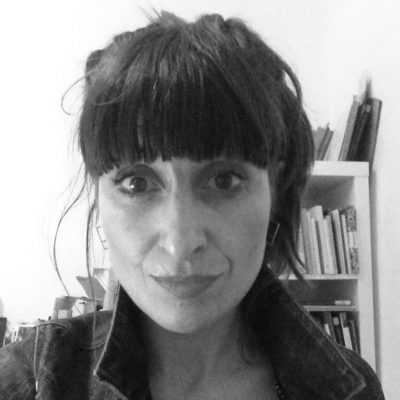
Imma Prieto is an art critic and independent curator. She teaches Contemporary art and New Media at the Eram School of the University of Girona, and lectures in the MA Program in Curatorial Studies at the Ramon Llull University of Barcelona. She has curated several exhibitions nationally and internationally (TempArtSpace-NewYork, Hirshhorn Museum-Washington, MucaRoma-Mexico Central American Isthmus Biennial-Guatemala, Palazzo Ca ‘Tron-Venice, Joan Miró Foundation Barcelona, Fabra i Coats-Barcelona, Bòlit-Girona, among others).
She regularly writes in newspapers and magazines (such as La Vanguardia, Bonart, A*Desk and Artichoke) and is the author of artists catalogs as well as of books on art theory and aesthetics. She has been manager of the research group ELAA (European Live Art Archive), formed by the University of Girona, the University of Oxford and the artist residence Glaugair in Berlin, and is a member of the Chair of Contemporary Art and Culture of the University of Girona, the AICA (International Art Critics Association) and the IAC (Institute of Spanish Art).
Last update: April 4th, 2017
Related Activities
Beyond the Tropics
26 May — 4 June 2016
- Artists
- Núria Güell, Avelino Sala, Isabel Rocamora, Jorge García, Patricio Palomeque, PSJM, Joaquin Segura, Iván Candeo, Tomás Ochoa, Eugenio Ampudia and Andrea Mármol
- Curators
- Imma Prieto
- Venue
- Museu d’Història de Catalunya
- A project by
- LOOP Barcelona with the collaboration of the Spanish Agency for International Cooperation and Development (AECID), and DoThePrint
- Price
- 4.50 €
- Tickets & register
- www.en.mhcat.cat/content/view/full/83
Add to calendar
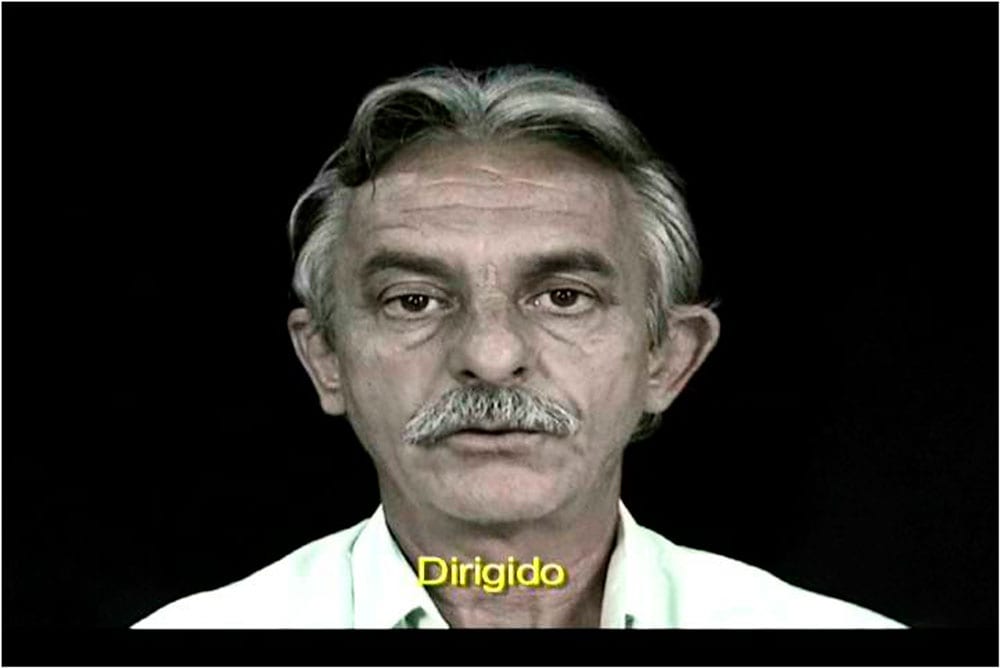
The exhibition "Beyond The Tropics" is the result of the work of 12 artists reflecting upon social differences caused by economic inequalities.
Beyond The Tropics is the third and last phase of the project titles Sobre paradoxes democràtiques (On Democratic Paradoxes), and it showcases the works of a dozen international artists as they reflect on social, political and economic inequality. The exhibition is displayed as an open conclusion that arises from the forays of the first two phases Hic et Nunc and Ibi et Nunc, into the American continent.
The exhibition puts the spotlight on new artists and works in thelight of the evolution of some of the project’s initial considerations. That is why Beyond the Tropics has been conceived as a discursive action that can only take place after having displayed, exchanged and expanded one’s horizons and reflections. All of the artists hail from and live in ostensibly democratic countries but, as we all know, this does not in any way guarantee basic welfare or fundamental rights. The twelve selected works contain clear and direct proposals and denunciations. Thus, their political essence is used to point an accusatory finger through artistic practice.
Artists and works:
1st Screen
PSJM (Spain)
ANCAPS, 2015
Joaquín Segura (Mexico)
Casa Popolurui, 2015
2nd Screen
Andrea Mármol (Guatemala)
Ri Kach’ (The Gum), 2014
Isabel Rocamora (UK, Spain)
BodyWar, 2015
3rd Screen
Eugenio Ampudia (Spain)
Dónde dormir # 5-El Palau (Where to Sleep # 5-El Palau), 2015
Iván Candeo (Venezuela)
Retrato Populista (Populist Portrait), 2009
4th Screen
Jorge García (Spain)
This is Not the End, 2015
Tomás Ochoa (Ecuador)
Indios medievales (Medieval Indians), 2007
5th Screen
Núria Güell (Spain)
Sweet Europe #1 (Support Swedish Culture), 2014
6th Screen
Patricio Palomeque (Ecuador)
Cabezas (Heads), 2015
Avelino Sala (Spain)
The Letter (Delfina), 2015
Beyond the Media
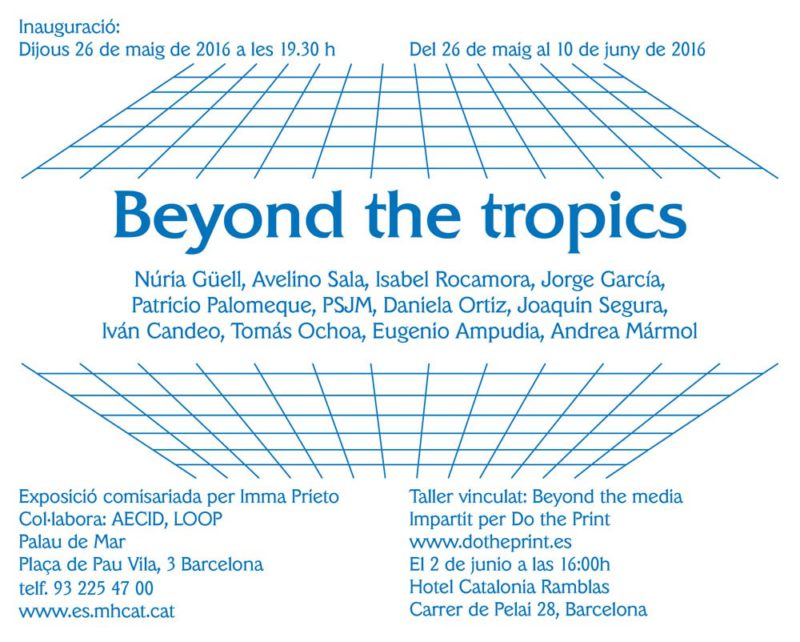
Thursday 2 June 2016, 4 — 7 pm
— On how video and film translate into printed media, by DoThePrint
- Venue
- Hotel Catalonia Ramblas
- Price
- Free admission
- Tickets & register
-
This workshop has limited availability. Participants will be provided with a certificate of attendance and granted free access to the Fair.
If you wish to attend, send an email to both DoThePrint - info@dotheprint.es - and Carolina Ciuti - loopstudies@screen-barcelona.com
- Language
- Spanish
Add to calendar
"Beyond the Media" is a workshop that explores how video and film translate into printed media. Led by independent publisher Do The Print, it departs from the exhibition "Beyond the Tropics", curated by Imma Prieto.
OBJECTIVE: The aim of the workshop is to think about how moving images translate into printed media, and to analyse how to build a video or film catalogue. Following these premises, the printer will be used as the fundamental means to compose the publication.
METHODOLOGY: The catalogues of the artists participating to the exhibition will be used as basic documentation tools and will function as the point of departure to generate a new manuscript. The similarities of both visual and printed media will be encompassed and their languages analysed.
Tha maximum number of participants to the workshop is 12.
Without Pause, Dialogues
26 May — 10 June 2016
- Artists
- Lisa Bause, Jordi Cané, Lúa Coderch, Jordi Colomer, Patricia Dauder, Raquel Friera, Pieter Geenen, Elias Heuninck, Eleni Kamma, Els Opsomer, Ria Pacquée, María Ruido and Sarah Vanagt & Katrien Vermeire
- Curators
- Imma Prieto
- Venue
- Reial Cercle Artístic
- A project by
- LOOP BArcelona, Argos - Centre for art and media, Flanders Arts Institute and Flanders Image
- Price
- Free admission
Add to calendar
Curated by Imma Prieto, "Without Pause, Dialogues" is the result of a collaboration between Argos - Centre for art and media, Flanders Arts Institute, Flanders Image and LOOP Barcelona.
Without Pause, Dialogues is an exhibition project made up of a dozen perspectives that establish six common lines of research. It is built around two determining factors: a formal one, which is concerned with matters unrelated to the work itself, and a conceptual one, which emerges from the desire for dialogue between the works in the form of diptychs (two adjacent screens). The dialogue fostered by the diptychs reinforces and highlights the contents of each one of the projects, thus creating a feedback loop between them.
María Ruido (Lo que no puede ser visto debe ser mostrado) & Sarah Vanagt & Katrien Vermeire (The Wave)
Lúa Coderch (ARKADI. A guide for the perplexed) & Ria Pacquée (As long as I see birds flying I know I am alive)
Jordi Cané / Lisa Bause (Cicatrices) & Pieter Geenen (Relocation)
Raquel Friera (Space of Possibles-Istanbul) & Els Opsomer (10th of November |09:05)
Patricia Dauder (March 5th 1979) & Elias Heuninck (I’ll be late for dinner)
Jordi Colomer (Svartlamon Parade) & Eleni Kamma (Notes of Parrhesia)
Núria Font: Cosmogonia del moviment
17 November 2018 — 20 January 2019
- Artists
- Núria Font
- Curators
- Imma Prieto
- Venues
- Arts Santa Mònica
Add to calendar
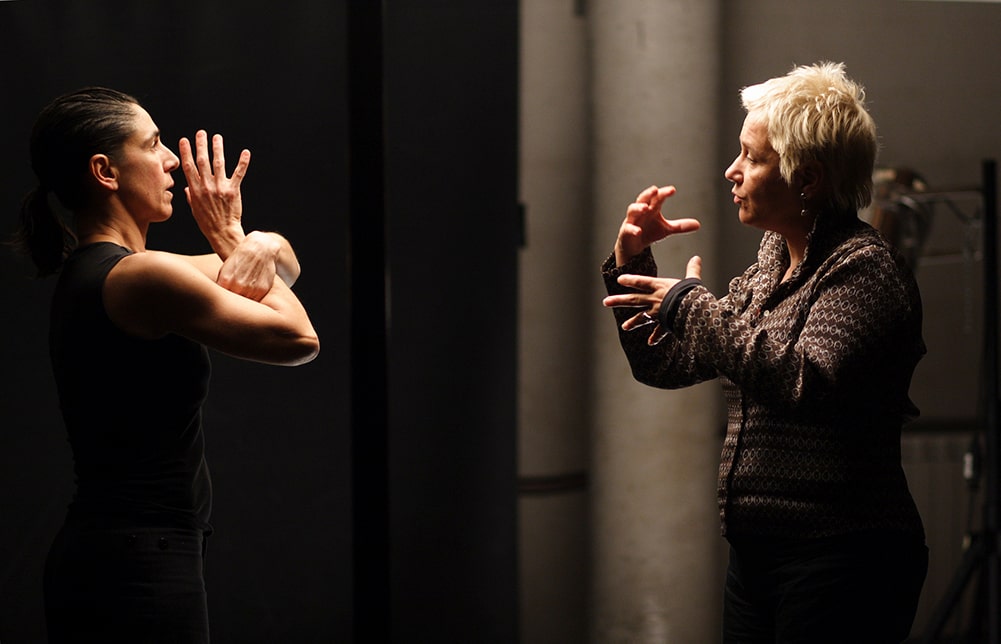
A monographic exhibition of the artist who works with a concept that mixes video and dance.
Núria Font: cosmogonia del moviment [“Núria Font: Cosmogony of Movement”] is a tribute to the pioneer of video dance in Spain, Núria Font, who played a decisive role in the dissolution of the borders between visual arts, technology and dance. Her multiple interests and concerns were reflected both in her creative works and in her efforts in education and production (of festivals, programmes or shows). Núria Font was one of the great professionals of this country, someone who altruistically and generously facilitated lasting meetings and collaborations, as well as personal ties that continue to be a way to get closer to the history of dance and video art.
In the 1980s, she began her career in Barcelona, joining the Community Video Service. Before entering the world of dance, she directed documentaries for TV3, TVE and Barcelona TV.
Together with the choreographer Àngels Margarit, she created pieces such as Subur 305, Geographic Ritual and Estances, among others. With Cesc Gelabert, she collaborated in the installation Akeronte and with the dance company Mal Pelo she did not only do some works, but a documentary about the group. Between 1984 and 2003, she was in charge of the direction of the Videodance Show, which she made compatible with the introduction of various video dance programs to museums and art centres. For eight years, Font was responsible for the Espai Vídeo at the Arts Santa Mònica centre and for the electronic arts and video creation biennials between 1998 and 2002. Since 2003 she has directed the VAD, an international festival for video and digital arts in Girona.
A contributor to the CaixaForum Media Library for video dance programmes, Font was also responsible for the activities of NU2’s, an association that organised the show Territoris dansa for the TV channel Canal 33 and the research laboratories of Mal Pelo, with which she collaborated closely through her centre L’Animal a l’esquena.
Primera Mort
Thursday 11 May 2017, 8 pm
— A Roundtable discussion with Jordi Galí, Sílvia Gubern, Antoni Llena & Imma Prieto
- Artists
- Silvia Gubern, Jordí Galí and Antoni Llena
- Curators
- Imma Prieto
- Venue
- Col·legi d’Arquitectes de Catalunya (COAC)
- Tickets & register
- www.arquitectes.cat
Add to calendar
As a parallel activity to the exhibition of 'Primera Mort'. The CoAC will premier 'Ecos de Primera Mort' and a roundtable discussion.
On the occasion of the opening of the exhibition Primera Mort at the CoAC, the premiere of the documentary Ecos de Primera Mort (2017) directed by Imma Prieto will take place. To put the work into context, the centre will host the screening of Primera Mort to commemorate the original presentation of the very first piece of video art in Spain. To follow the screening, Alex Mitran will chair a roundtable discussion among artists and authors of Primera Mort Jordi Galí, Sílvia Gubern, Antoni Plena and curator Imma Prieto.
FLUXUS: present memories
Friday 19 May 2017, 6 pm
— Performance & Screening
- Artists
- María Pérez, Philip Corner and Willem de Ridder
- Curators
- Imma Prieto
- Venues
- La Virreina Centre de la Imatge
- Price
- Free admission
- Tickets & register
- ajuntament.barcelona.cat/lavirreina/es
Add to calendar
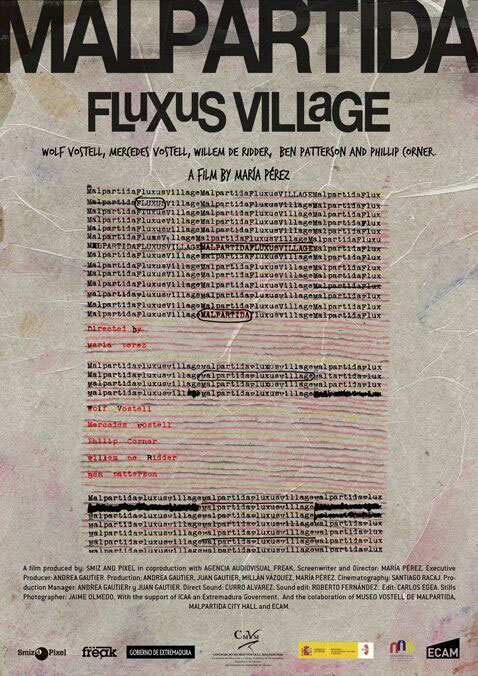
FLUXUS. Present memories will unfold into a performance by pioneer Fluxus artists Willemde Ridder (Holland, 1939) and Philip Corner (New York, 1933), and the projection of the documentary Malpartida. Fluxus Village (2015) directed by María Pérez (Plasencia, 1984). The event will close up with a roundtable discussion chaired by Imma Prieto.
Primera Mort
11 — 27 May 2017
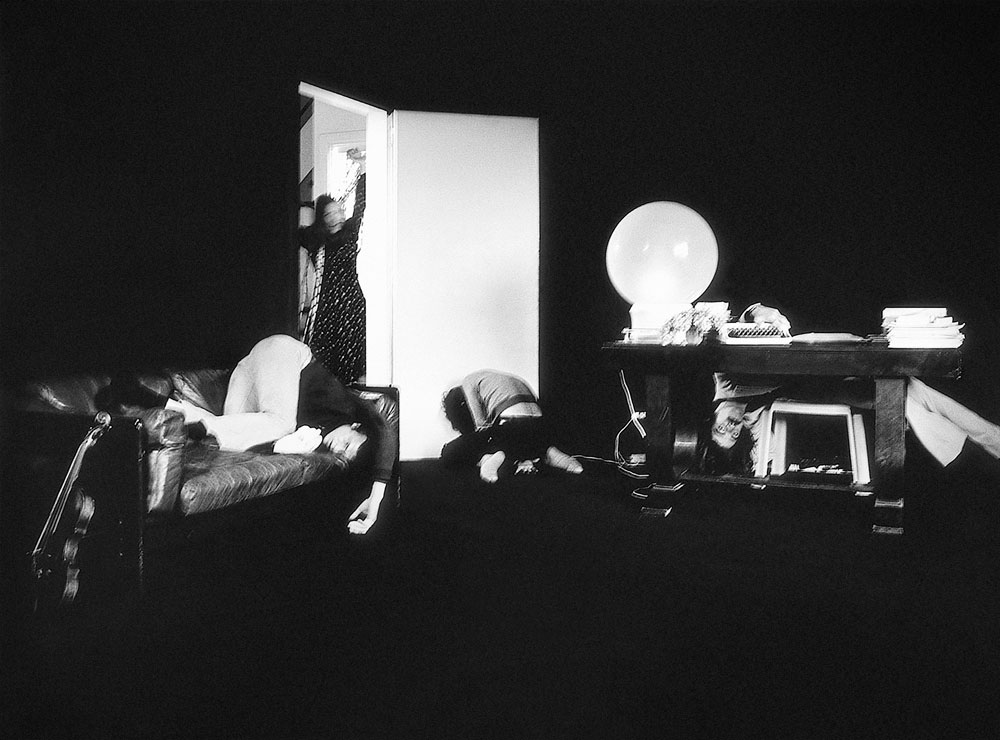
— Jardín del Maduxeir group (Angel Jové, Silvia Gubert, Jordi Galí, Antoni Lena), 1970
- Artists
- Silvia Gubern, Jordi Galí, Antoni Llena and Àngel Jové
- Curators
- Imma Prieto
- Venue
- Col·legi d’Arquitectes de Catalunya (COAC)
Add to calendar
LOOP Barcelona and the Association of Architects of Catalonia (CoAC) present the first piece of video art in Spain, first released in 1969 at the CoAC.
Primera Mort is the title of the video made in 1969 by Jordi Galí, Àngel Jové, Silvia Gubern and Antoni Llena. Considered to be the first piece of video art in Spain, it was lost in 1987 after being exhibited at the Reina Sofia in Madrid, in the context of the first retrospective dedicated to video organized by the museum. Lost for almost thirty years, Primera mort’s tape was found again in 2010 among TV3 files, during a research process that Blanca de la Torre and I carried out on the occasion of the exhibition Video(s)torias, held at Artium (Vitoria). Despite the considerable deterioration of the video and its sound, we presented it anyway. In 2014, Primera Mort became part of the collection of the MACBA and the museum’s technical staff restored the audio in January 2017.
This fact has allowed for an entirely new reading of the video and its content. Not only can we emphasize the relevance of the relationship between image and sound, but we can also think of montage as a radical mode of audio-visual writing.
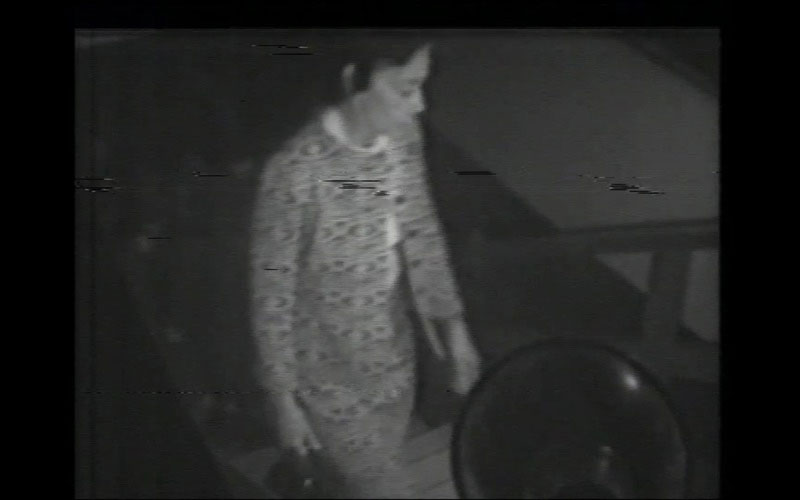
In 1969 a conference titled “Art and News” was held at the Association of Architects of Catalonia (CoAC). Artists Jordi Galí, Àngel Jové, Silvia Gubern and Antoni Llena were invited to give a lecture focusing on their aesthetic approaches, which were considered to be quite revolutionary at the time. They accepted the invitation and, without given anyone notice, decided to make a video. On the day of the symposium, they recorded many of the attendees. In the auditorium where everyone was waiting, they had placed a monitor on the conference table. Then they turned off the lights and turned on the monitor: Primera Mort was finally being shown to the public.
The piece is clearly divided into two parts, the first one taking place in the very house that the four artists shared in Barcelona (located in Clarassó street, in the area of the Maduxeir). This first part gathers together everyday moments and some gestural games that acquire a symbolic meaning, while referring to the ideas of sex, death and creation and the relationship between them. The images follow one another while their authors appear and disappear, interact with each other and let life inhabit the empty spaces. The scenes are recorded in a black room and the patio of the house. The video also features the participation of a girl, the daughter of a gypsy family that lived near the house, the son of Silvia and Jordi, and a hen.
The images are accompanied by the voice-over of Àngel Jové and William Burroughs reading fragments of the book The Naked Lunch by Burroughs, and by selected fragments from the Pink Floyd’s album Ummagumma.
The second part of the video presents the images that were recorded at the CoAC. The scene focuses on the attendees going up the stairs leading to the main conference room and is accompanied by Let it be, the renowned song by the Beatles. After viewing the video, the authors were able to identify Esther Tusquets, Salvador Clotas, Santiago Roqueta, Gonzalo Herralde, Frederic Amat, and some of their relatives.
Primera Mort is definitely a visionary piece that speaks truth to a moment in which different creative forces emerged. Although nothing apparently happens, it is quite a complex piece. Image, text and sound merge with an astonishing coherence, while they summon life, causing it to reveal itself.