àngels barcelona
- Address
- Calle Pintor Fortuny, 27, 08001, Barcelona
- Phone
- +34 93 412 54 00
- info@angelsbarcelona.com
- Website
- www.angelsbarcelona.com
- Map
- View map
This film in colour from 2013 could have well been a classic black and white performance register from the seventies. It’s mute, it’s “poor” and it explores the possibilities of the artist’s body as a tool for transgressing cultural paradigms in and by itself. When I say the video is “poor” do not take me wrong, the artist never wanted anything but to do poor art, using just her own unadorned body, a few props and, when the occasion allows for it, an installation as frame. Indeed, the only prop she has here is one of her most cherished: a chair, which, despite being invisible, mustn’t be taken for granted. This anthropomorphic stage prop is as recurrent in Ferrer’s work as it is in Bruce Nauman’s. These two artists share common interests in repetition, in senselessness (which repetition brings about), in gestures that are profoundly banal and, at the same time, reveal the existential hardship of social interaction. Esther Ferrer’s interest in time and repetition has been one of the constants of her career ever since the sixties, when she became part of the transgressive artistic collective known as ZAJ alongside Juan Hidalgo, Ramón Barce and Walter Marchetti.
Esther Ferrer is an artist from the seventies and, in a way, this is also an art work from the seventies. When first watching Extrañeza, desprecio, dolor y un largo etc.(Strangeness, disregard, sorrow and a long etcetera) one finds it comical; the facial expressions reverberate with silent cinema. The gestures, which as we know draw the human face further and further away from an idealized depiction, are exaggerated and clownish but, we gradually realize, real as life. This is a repertoire of gestures we resort to in weddings, funerals, grand openings and a long etcetera of events. At first the gestures are defined as pertaining to a specific feeling, but soon they start to drift into a nebulous ambiguity in which the simulacra becomes devoid of meaning. In the repertoires of gestures of the Renaissance the “others” (the elderly, the ethnic) were always the ones disfigured by radical facial expressions; otherness was the perfect platform for us to recognize the extremity of existence. By performing this clownish repetition of extreme social gestures, Ferrer assumes this role, bringing us face to face (literally) with the extreme mechanisms of communication. After all, this is an artist who for half a century has worked with time, space and presence, and for whom nothing else (nothing less) will do.
Text by Claudia Rodriguez-Ponga Linares
Entrance to the Fair is free with the professional accreditation. The tickets' cost is otherwise listed on the website.
LOOP Barcelona BALCONY proposes an overview of video and film today, within the context of artgenève. There lies the reason for the name ‘Balcony’.
The section features 10 stands as individual projections rooms, in the likes of the LOOP Fair. The selection results into a series of monographic presentations, so to facilitate the reception of the medium while slowing down a fair’s hectic pace. Picked among the participants of last year’s LOOP Fair in Barcelona, the galleries have been selected with the intention to establish a dynamic dialogue with artgenève’s overall programme. This collaboration was first initiated at LOOP Barcelona 2019, with a dinner-gathering and party promoted by artgenève at the Ocaña Rastaurant in Plaza Real, an emblematic venue located in the centre of the city.
In museums, biennials and galleries people tend to wonder about the duration of the videos, and this is exaclty why we decided to emphasize the temporal aspect of the medium – and particularly in a country like Switzerland !
Hence we thought of the title “131 minutes & 48 seconds of video art”, which simply refers to the total duration of the works presented in our section. Following the same reasoning, the participating galleries are being addressed and distributed according to the duration of the film they present. Time, thus, becomes the guiding principle of the section in its entirety.
5’10’’
David Maljkovic, Afterform, 2013 / Georg Kargl Fine Arts, Vienna
6’
Zbynek Baladran, Catastrophe, 2019 / Gandy gallery, Bratislava
6’03’’
Cecilia Bengolea, Lighting Dance, 2018 / àngels barcelona, Barcelona
6’19’’
Nashashibi / Skaer, Lamb, 2019 / GRIMM, Amsterdam & NY
8’32’’
Angelika Markul, Marella, 2019 / Albarrán Bourdais, Madrid
9’26’’
Adrián Balseca, Phantom Recorder, 2018 / Galería SENDA, Barcelona
11’50’’
Olga Chernysheva, Park, 2017 / Iragui, Moscow
22’14’’
Patrick Hough, And If In A Thousand Years, 2017 / narrative projects, London
27’49’’
Sigurður Guðjónsson, Enigma, 2019 / BERG Contemporary, Reykjavik
29’
Peter Forgács, Venom-A Diva in Exile, 2018 / Ani Molnár Gallery, Budapest
LOOP Barcelona, the platform that since 2003 has been dedicated to the study and promotion of the moving image, has been invited to participate to artgenève 2020 with a section dedicated to offer visitors a glimpse of the broad panorama of video and film in today’s contemporary art scene.
Departing from a selection of 10 international art galleries, the program aims at exploring through video and film a series of closely intertwined topics, which deeply affect our fragile contemporaneity: the global economy, ecology, technology, and migration.
In an era marked by the impact of uncontrolled human activity on Earth, the importance of protecting our ecosystem becomes a core research subject for contemporart art and other disciplines alike. The collaboration between diverse agents working in fields as different as science and dance, results in the production of new forms of knowledge. And this is precisely what viewers will see reproduced on the screens of LOOP Barcelona BALCONY at artgenève.
The connecting thread between nature and culture, its close observation and its effects on humanity, becomes clear in the works of artists such as Angelika Markul (Albarrán Bourdais, Madrid), Sigurôr Guojonsson (BERG Contemporary, Reykjavik), Cecilia Bengolea (àngels barcelona, Barcelona) or Adrián Balseca (Galería SENDA, Barcelona).
At the same time, it is our fragility as human beings that is constantly pushed into the foreground, as we are also affected by geopolitical and geo-economic affairs in the construction of our personal (hi)stories. The imagery produced by artists illustrating personal testimonies –in the form of a shared collectivity or a common memory –, can be found in the works by Peter Forgács (Ani Molnár Gallery, Budapest), Nashibi / Skaer (GRIMM, Amsterdam), Olga Chernysheva (Iragui, Moscow) or Patrick Hough (narrative projects, London).
Finally, let’s not forget that the origin of video art, is intrinsically linked to society’s technological advancements. This is, indeed, the last thread to touch upon when thinking about the themes that LOOP Barcelona BALCONY aims to survey. A critical view of the power embodied in the algorithms of a digital society, controlled by big corporations, is something to be perceived in the work by Zbynek Baladran (Gandy gallery, Bratislava) whereas David Maljković’s film (Georg Kargl Fine Arts, Vienna), inspired by a cartoon published in a Croatian architectural magazine from the 1960s, satirizes modern architecture and urban planning.
àngels barcelona presents one film by Harun Farocki and two video installations by Antje Ehmann and Harun Farocki:
Harun Farocki
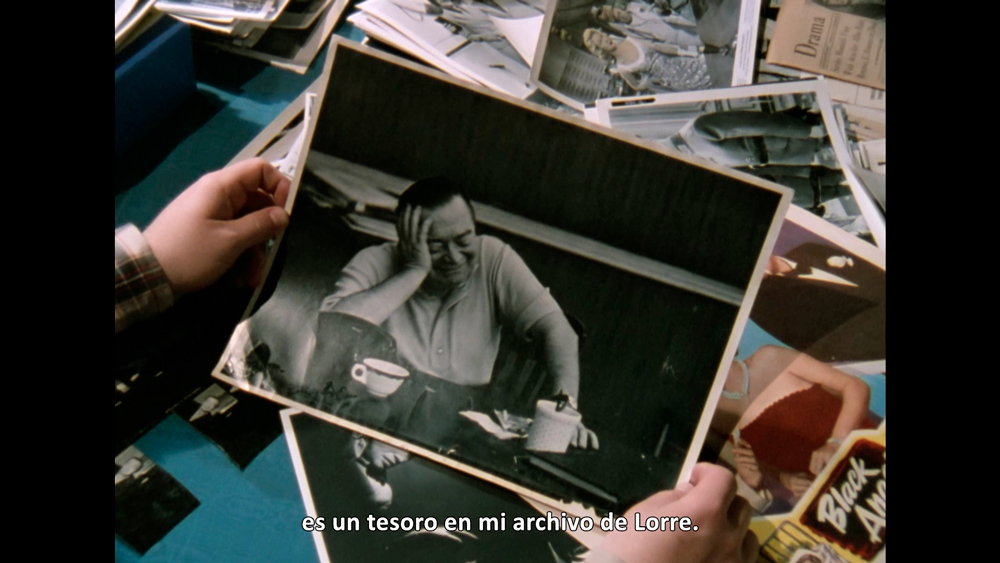
“The Double Face of Peter Lorre” (1984, 16 mm transferred to digital file, col., b/w, 59 min.)
Using photographs and film extracts, this film reconstructs the ups and downs of Lorre’s career, taking into consideration the economic imperatives and workings of the film industry at the time.
Harun Farocki and Antje Ehmann
“Dubbing” (2006, video, col., sound, 3 min.)
A soliloquy by Robert de Niro. The same image, the words in seven languages.
Harun Farocki and Antje Ehmann
“Feasting or Flying”(2008, 6 videos, b/w & colour, sound, 24 min.)
A deconstruction of the tragic male hero in cinema.

Mabel Palacín (Barcelona,1965) shows her latest project, The missing link, in which she continues her research on the relationship that we currently maintain with images, the way they function and how they relate to the reality in which we inhabit—or what is also known as “the cinematization of society in everyday life”.
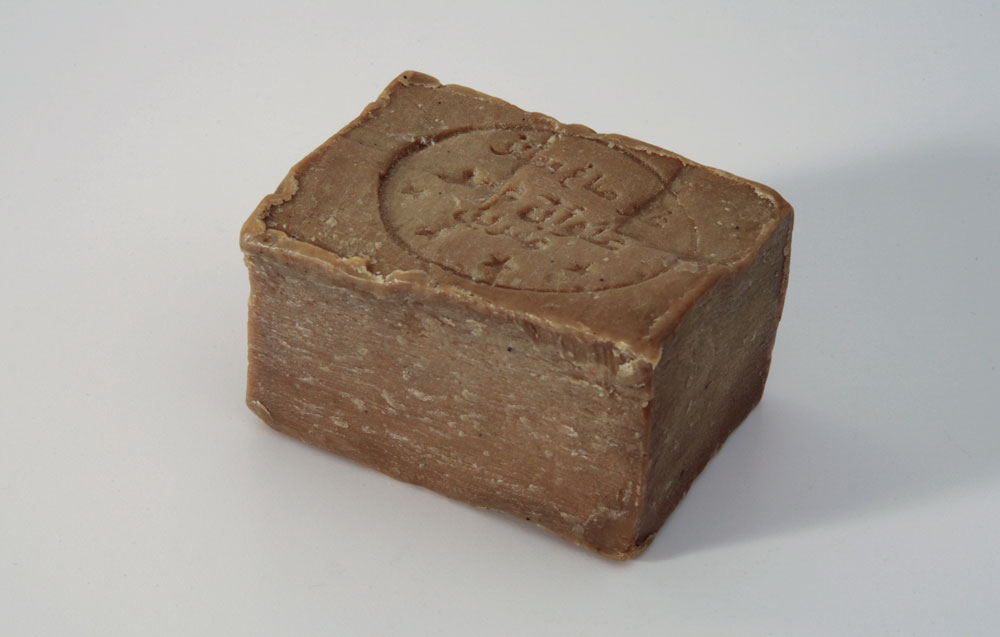
Jabón de Alepo, is a single channel video that shows the long process by which a new aleppo soap bar is being used by more than 400 people, coming from a wide variety of colectives, to wash their hands until its disappearance. The waning soap bar acts as a metaphor for the city itself in which a fratricidal war is provoking the extinction of its civil society as many first world societies wash their hands literally and metaphorically. The long duration of the video promotes its fragmented viewing thus reducing the reality of Aleppo to the status of consumable information provided regularly through the media.