Arts Santa Mònica
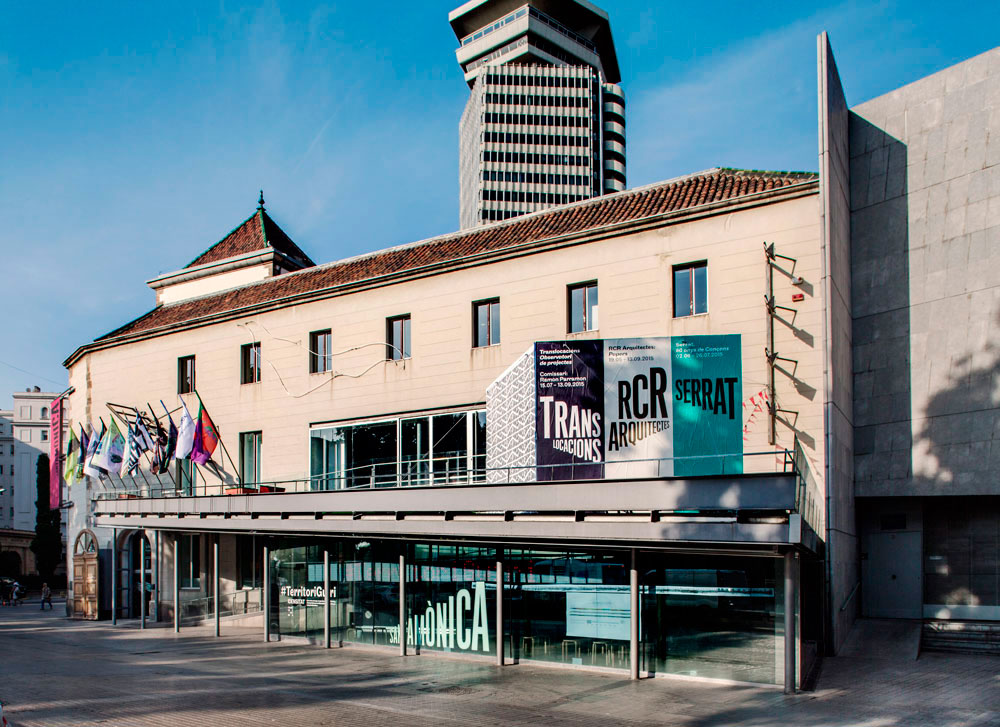
- Address
- Les Rambles, 7, 08002, Barcelona
- Phone
- +34935671110
- Website
- artssantamonica.gencat.cat
- Map
- View map
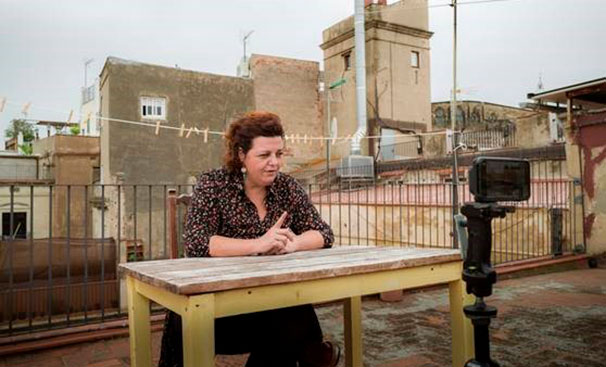
As in the telephone charades, a message leaves Barcelona and crosses Europe, going from one person to another, from one language to another, until it arrives in Moscow were the final recipient issues an answer. The characters never meet in person yet they are connected through the recorded message. Throughout this journey, the true protagonist is the voice, the spoken word.
The message travels in constant transformation from one person to another, until it reaches the final recipient having been inevitably modified. Thieves portrays communication as an aesthetic experience — not in terms of the accuracy with which the message has been conveyed, but by emphasizing the nature of exchange that every act of communication implies. As the French thinker Georges Bataille postulated, Thieves conceives language as a contagious process, nothing more than a conduit for communication processes.
Palacín has deliberately chosen mobile phones to make the project’s recordings, as they are devices that have completely transformed and altered the tradition of screens. Cinema implies a large screen for many viewers, while the mobile screen is designed for an individual viewer, but simultaneously that viewer is hyper-connected. On the other hand, the information and data that users provide on their mobile phones have blurred the boundaries between the public and private sphere. Accordingly, Palacín also analyses this boundary between intimacy and exposure.
The project is a co-production of the Public Network of Visual Arts Centers of Catalonia, Arts Santa Mònica – Department of Culture and LOOP.
** The Public Network of Visual Arts Centers of Catalonia is made up from: ACVIC. Centre d’Arts Contemporànies, Vic; Fabra i Coats: Centre d’Art Contemporani de Barcelona i Fàbrica de Creació; Centre d’Art Tecla Sala, L’Hospitalet de Llobregat; Centre d’Art la Panera, Lleida; M|A|C Mataró Art Contemporani; Bòlit. Centre d’Art Contemporani, Girona; Lo Pati – Centre d’Art de les Terres de l’Ebre i Centre d’Art de Tarragona.
![Design banner for Right Now: Everything is yet to be done and everything is possible [Ara mateix: Tot està per fer i tot és possible]](https://fervent-sinoussi.5-196-224-241.plesk.page/wp-content/uploads/2020/10/01-ARA-MATEIX_Banner-web-loop-1.jpeg)
The “now” is so complex that it is as difficult as it is painful to think about. This exhibition is somewhat like observing an iceberg or the crater of a volcano submerged under water: it is only a tiny part of the whole artistic community and its production. Even so, it is essential for this small part to show its face, as it offers us an expression of the whole. This exhibition should instil us with the need to get closer to the artists close to us, spark up situations in which we can see and talk about their work, lay the questions they propose on the horizon of the ever-changing relationships that define our identity, our gender, our rights, our will to carry on transforming the way we experience reality and life. This is not an exhibition about video, or rather the term does not matter. Here images narrate how they borrow, from poetry, a deeply personal way of expressing the struggle against their denial, against those who continually relegate art to oblivion, who refuse to accept that this sensory space is directly linked to life and, therefore, explicitly or otherwise, to the values that make it possible to live together as a community.
Unwaveringly approaching nearby artists, those around us, is the best rehearsal, the most lucid way of knowing what we feel. What do we repeat endlessly? What do we always dramatise? Pain? Love? What do we always intellectualise? What do we victimise? What is it that impels us to describe? Living in consonance with our artistic life is our only chance to generate a dynamic capable of shifting the system, of transforming through observation, of being able to spot the external alliances that might help us to forge unbreakable bonds and true mutuality. An organism that fails to understand itself is blind. That is the purpose of images. Political invention passes through communities in which a sense of militancy coexists with certain indifference towards the “now”, towards “living up to the moment”, because they know that positioning themselves down low, as if the great political machine were really just smoke and mirrors, is the greatest gesture of generosity towards us.
Chus Martínez and Rosa Lleó
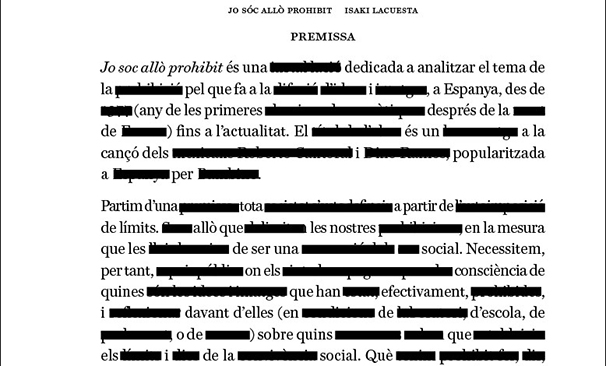
I Am What Is Forbidden is an installation designed as a mapping of prohibition and its archetypes in the here and now, as there is no better way to understand a society than to reflect on everything it denies itself. What are forbidden from doing, saying, thinking, conveying, imagining? According to which consensuses are the limits and dykes of social coexistence established? What are forbidden from doing, saying, thinking, conveying, imagining? According to which consensuses?
Spectators are confronted to an exhaustive anthology of fleeting images and narratives in an intimate space: an imagination as elusive as a selfie taken when no-one is looking, glancing at ourselves as we stand in front of a mirror.
In order to face the forbidden image, spectators must learn to become as Perseus facing Medusa.
2018 Co-Production Award of Centres d’Art de Catalunya, Arts Santa Mònica and LOOP Barcleona.
Capital makes the worker ill, and then multinational pharmaceutical companies sell them drugs to make them better. The social and political causation of distress is neatly sidestepped at the same time as discontent is individualised and interiorised.
Mark Fisher, Capitalist Realism
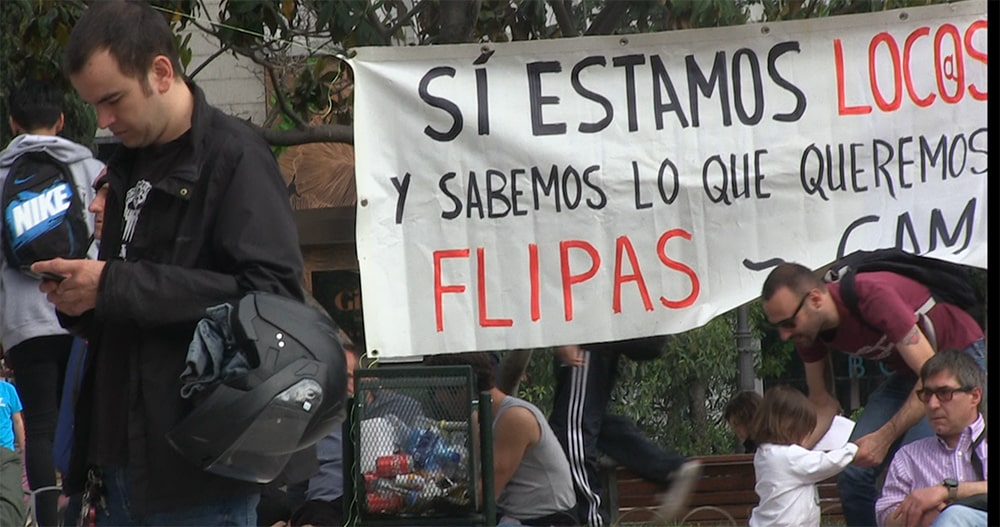
Estado de malestar (malestar_exhuberancia_anomalía) [“State of Distress (distress_exuberance_anomaly)”] (2018) takes as its starting point a series of texts by Mark Fisher, Franco Berardi and Santiago López Petit, as well as conversations with philosophers, psychiatrists and patients or diagnosed people, notably with the activist collective InsPiradas, in Madrid, in order to present itself as a visual essay about the social symptomatology and psychic suffering in the age of capitalist realism, about the pain that our life system inflicts upon us, and about the places and actions of resistance and change that we can build to combat it.
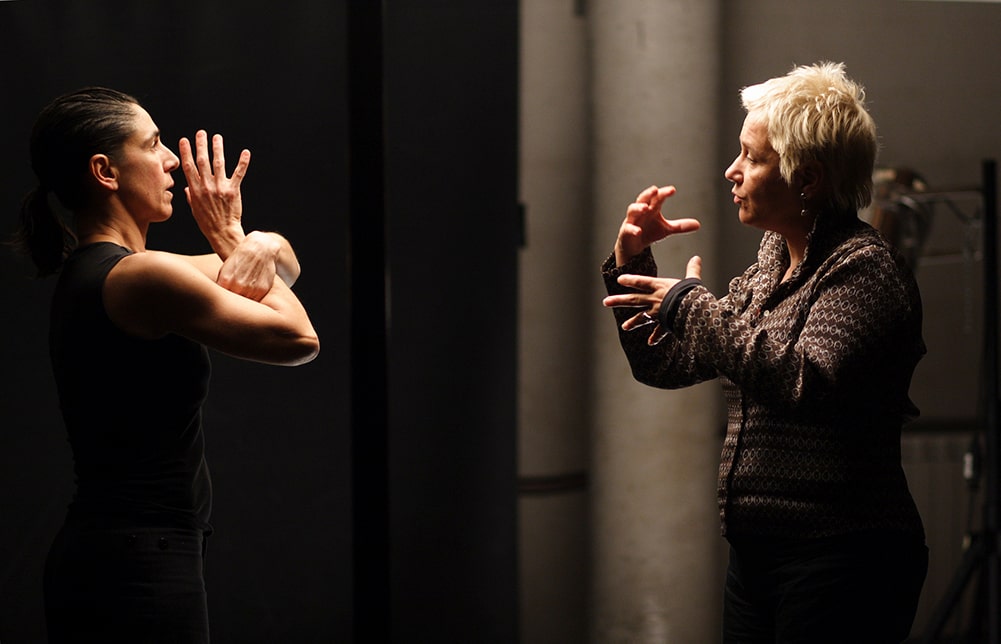
Núria Font: cosmogonia del moviment [“Núria Font: Cosmogony of Movement”] is a tribute to the pioneer of video dance in Spain, Núria Font, who played a decisive role in the dissolution of the borders between visual arts, technology and dance. Her multiple interests and concerns were reflected both in her creative works and in her efforts in education and production (of festivals, programmes or shows). Núria Font was one of the great professionals of this country, someone who altruistically and generously facilitated lasting meetings and collaborations, as well as personal ties that continue to be a way to get closer to the history of dance and video art.
In the 1980s, she began her career in Barcelona, joining the Community Video Service. Before entering the world of dance, she directed documentaries for TV3, TVE and Barcelona TV.
Together with the choreographer Àngels Margarit, she created pieces such as Subur 305, Geographic Ritual and Estances, among others. With Cesc Gelabert, she collaborated in the installation Akeronte and with the dance company Mal Pelo she did not only do some works, but a documentary about the group. Between 1984 and 2003, she was in charge of the direction of the Videodance Show, which she made compatible with the introduction of various video dance programs to museums and art centres. For eight years, Font was responsible for the Espai Vídeo at the Arts Santa Mònica centre and for the electronic arts and video creation biennials between 1998 and 2002. Since 2003 she has directed the VAD, an international festival for video and digital arts in Girona.
A contributor to the CaixaForum Media Library for video dance programmes, Font was also responsible for the activities of NU2’s, an association that organised the show Territoris dansa for the TV channel Canal 33 and the research laboratories of Mal Pelo, with which she collaborated closely through her centre L’Animal a l’esquena.
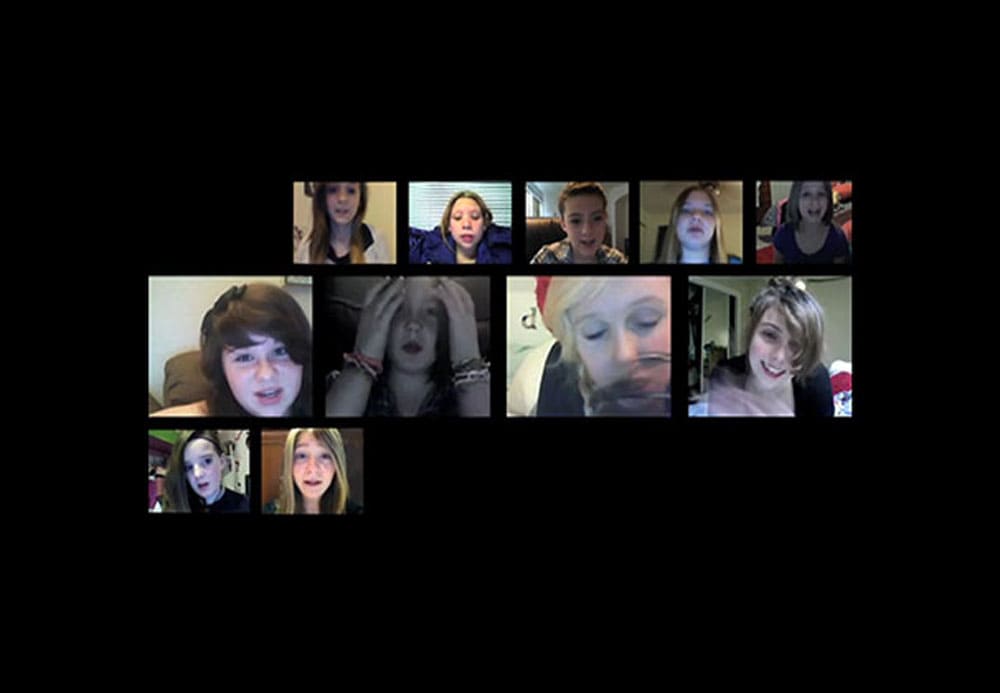
Limited seatings.
Establishing a debate around ‘Eugènia Balcells’ initial video work is the main reason for this roundtable. To do so we propose the presentation of a series of recent audiovisual practices made by current filmmakers and video creators who dialogue with the artist’s pieces present in the show. Virginia García del Pino –director of documentary films that interrogate the complexity of social identities–, Flor Aliberti –filmmaker and video editor, author of the series (Auto)exhibitions, a project of found footage on self-representation in the network – and Valentina Alvarado –visual artist who interrelates the practice of analog cinema (super 8, 16 mm) with graphic design and fashion– will be the participants of this third meeting moderated by Albert Alcoz, curator of the exhibition.
Parallel activity to the exhibition (Re)visionats, (Re)visitats. A re-reading of the beginnings of Spanish videoart.
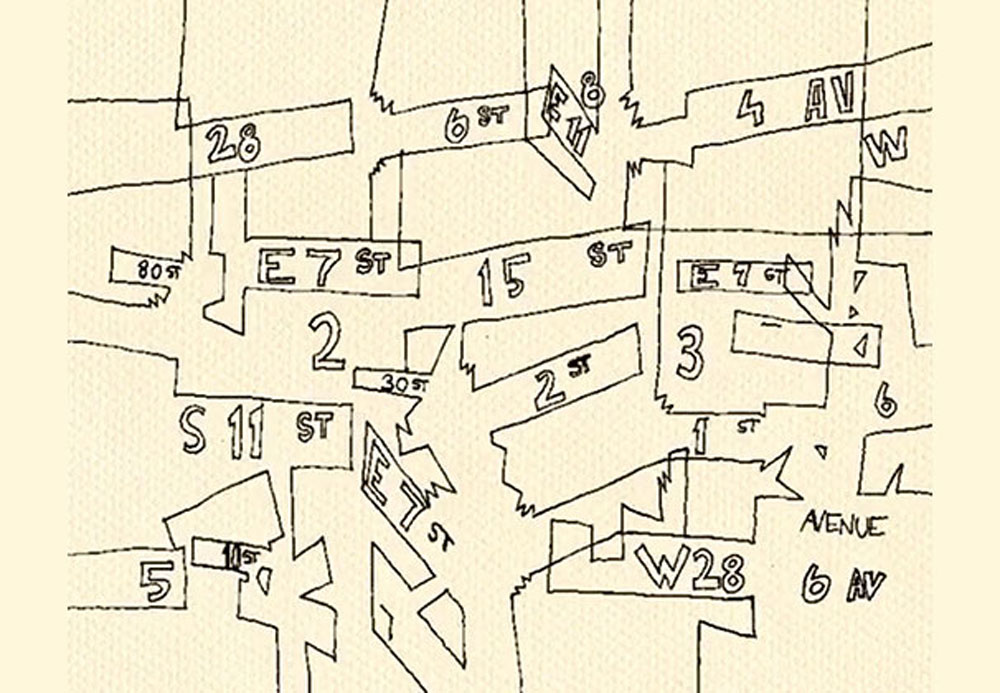
Limited seatings.
Establishing a debate around ‘Carles Pujol’ initial video work is the main reason for this roundtable. To do so we propose the presentation of a series of recent audiovisual practices made by current filmmakers and video creators who dialogue with the artist’s pieces present in the show. Marcel Pié –producer of experimental animation and co-director of the study of design, graphics and multimedia programming Taller Estampa–, Pere Ginard – illustrator, filmmaker and co-founder of the multidisciplinary study Laboratorium– y Pepón Meneses –animator and co-founder of the independent education project A Home in Progress, dedicated to the cinema of collective animation – will be the participants of this second meeting moderated by Albert Alcoz, curator of the exhibition.
Parallel activity to the exhibition ‘(Re)visionats, (Re)visitats’. A re-reading of the beginnings of Spanish videoart.
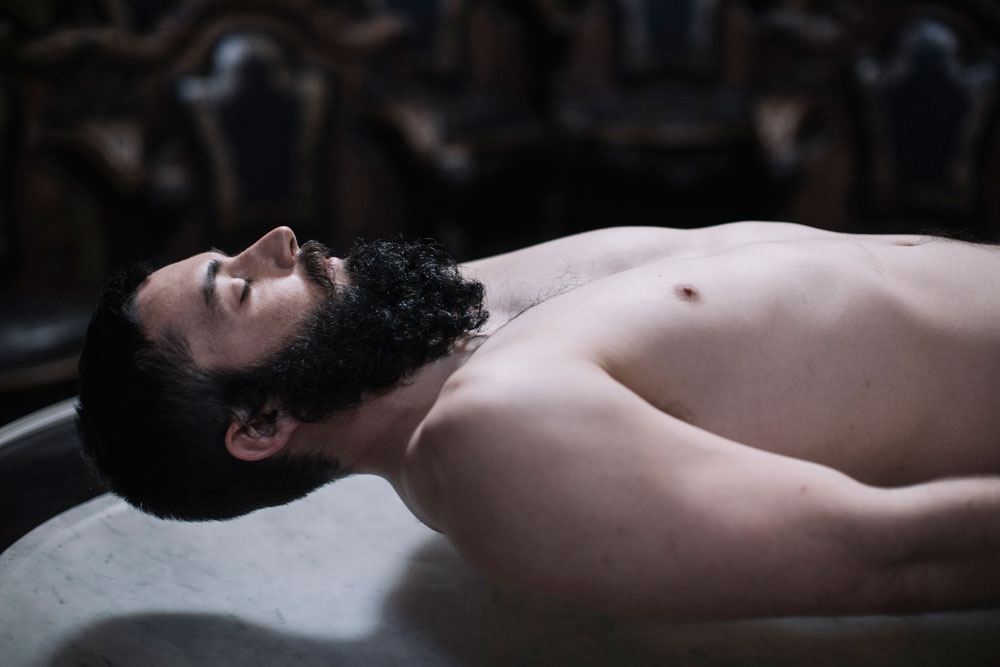
COS SOCIAL [Llicó d’anatomia] deals with the body and its immanence, putting the human figure at the centre of the stage. Focused on the individual as a social instrument, the project explores the objectuality of his physical condition and how this impacts the place a person holds in the world; furthermore, the piece hints at the effects that power instances have over the individual and suggests a linguistic understanding of affection. Morey’s project also dialogues with the historical representation of the body in Western art and its contemporary presence in the field of performance.
Taking the anatomy lessons depicted in Renaissance and Baroque paintings as a starting point, this video performance establishes itself as a vast three-dimensional device that remains closed in itself, exhausting all its being and action. Here, the body is made up of flesh and bones, while the camera is a manifold character that replaces the audience. COS SOCIAL [Llicó d’anatomia] places the actor and the spectator under the same experience, one in which observation is conditioned by audiovisual language and rooted in performance.
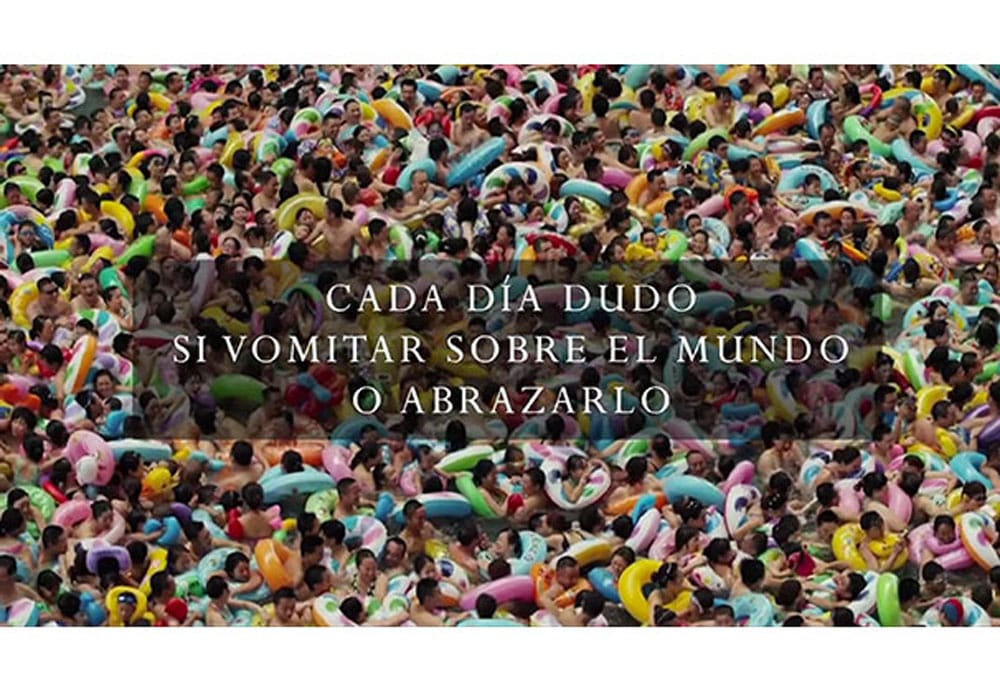
Limited seatings.
Establishing a debate around ‘Antoni Muntadas’ initial video work is the main reason for this roundtable. To do so we propose the presentation of a series of recent audiovisual practices made by current filmmakers and video creators who dialogue with the artist’s pieces present in the show. Miquel Martí Freixas –co-director of the appropiation video of group of hooligans Sedated Army Crazy Mirror (2014)–, Carolina Cabrerizo –responsible for the microvideos of El Pressentiment, inspired by the critical reflections of the collective Espai en Blanc – and a selection of the television crew responsible for Gabinete de Crisis, ‘a TV show you will not see on TV’–Kikol Grau, Arturo Bastón and Féliz Pérez-Hita– will be the participants of this first meeting moderated by Albert Alcoz, curator of the exhibition.
Previously Antoni Mercader will explain the work of recovery and digitalisation of an extensive selection of documents from the first years of Spanish video art, held in the framework of this year’s LOOP Barcelona.
Parallel activity to the exhibition (Re)visionats, (Re)visitats. A re-reading of the beginnings of Spanish videoart.
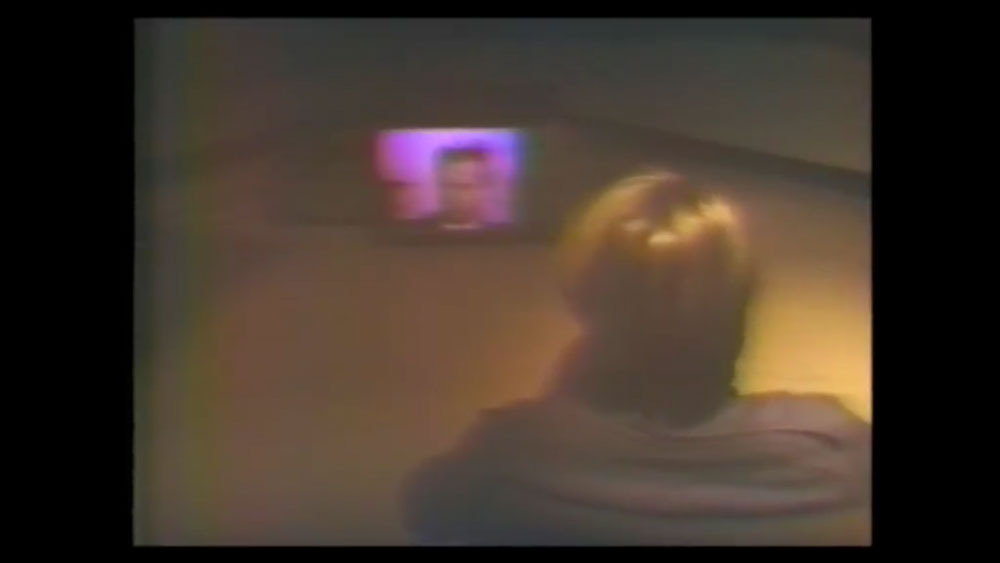
In the mid-1970s, video technology was a novel tool whose artistic potential had yet to be discovered. A generation of video producers complicated the process of capturing sound and the moving image. It represented an ideological shift that, due to the existing political situation, involved the debating the conceptual practices linked to the dematerialization of the art and calling into question the conventions conventions of audiovisual communication that had become standard at that time. Analyzing the almost seductive strategies of cinema and television; Demanding the critical involvement of the spectator in the processes of perception; Pointing the need for feminist perspectives in the field and investigating the aesthetic possibilities intrinsic to analogue video are some of the approaches present in the work of this brief selection of pioneers of video production in Spain. Revising and revisiting their work allows us to appreciate, from a contemporary perspective, the value of some of the pieces that are already part of the cultural video-artistic heritage of this country.
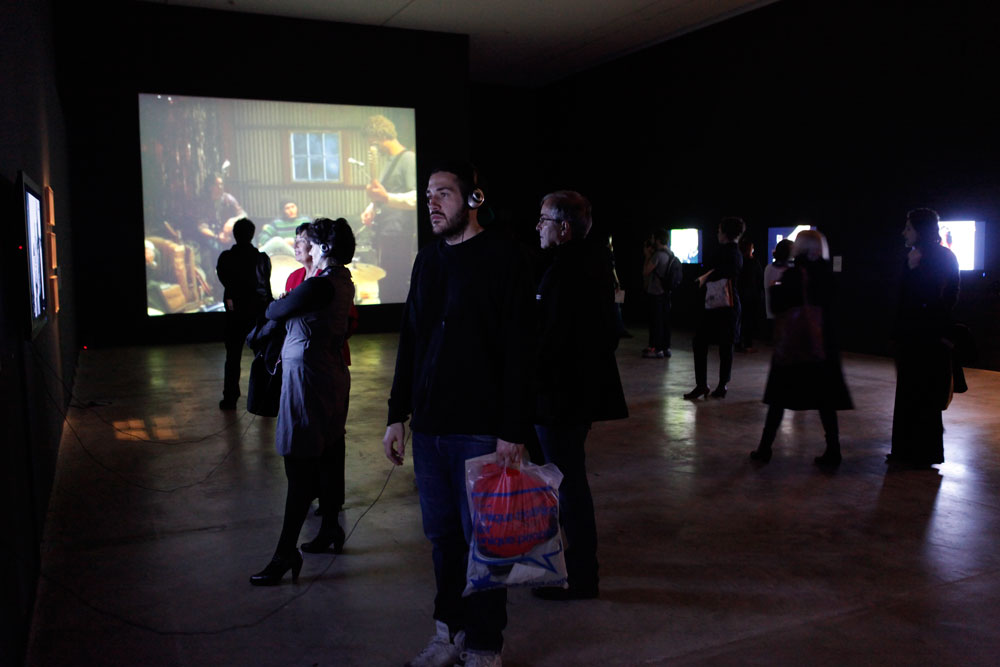
Haute Fidelité was one of the main exhibition of LOOP 2013. An exhibition based on the art collection of the Contemporary Art Fund of the City of Geneva (FMAC). Thirty seven pieces have been carfefully selected from this valuable public collection, one of the biggest and most important video collections in Europe, and shown in Barcelona for the first time outside of Switzerland. Haute Fidélité goes over various decades of acquisitions to propose and outlook of the history of video in relation to several experimental fields: contemporary art and music, image and sound. The selection includes pieces by artist such as Samuel Beckett, John Cage, Cerith Wyn Evans or Bill Viola. This exhibition is complemented by a specific programme of concerts and performances.

Installation view of ‘Haute Fidélité’ at Arts Santa Mònica, for LOOP Festival 2013

Installation view of ‘Haute Fidélité’ at Arts Santa Mònica, for LOOP Festival 2013
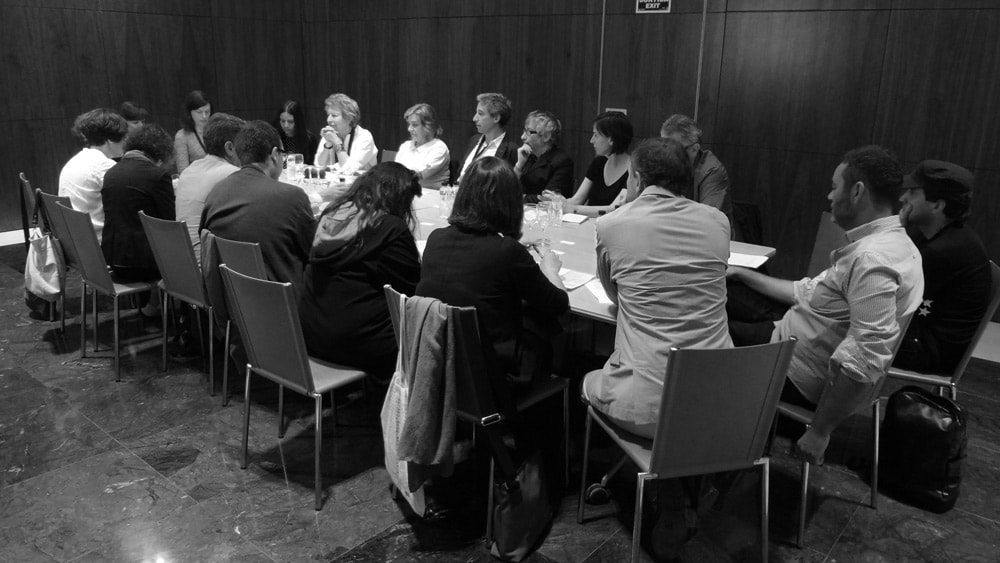
Diana Sans, Bòlit. Centre d’Art Contemporani, Girona
Antoni Jové, Centre d’Art La Panera
Antoni Perna López, Centre d’Art Tecla Sala de l’Hospitalet de Llobregat
Antònia Maria Perelló, MACBA
Arantza Morlius, Departament de Cultura / Generalitat de Catalunya
Carme Cruañas, Fabra i Coats: Centre d’Art Contemporani de Barcelona
Carlos Durán, LOOP
Conxita Olivier, Departament de Cultura / Generalitat de Catalunya
Emilio Alvarez, LOOP
Gisel Noé,
Jaume Reus, Arts Santa Mónica
Jordi Abelló Vilella, El Teler de Llum Centre d’Art de Tarragona
Marta Ramos, Comisaria
Vicent Fibla, Lo Pati – Centre d’Art Terres de l’Ebre
Oscar Abril, Sectors Culturals i Innovació de l’Institut de Cultura de Barcelona
Marta Gustá, Departament de Cultura / Generalitat de Catalunya
Rose Cupid, FLAMIN
Anne Marie Charbonneaux, Presidenta de Le Magasin de Grenoble
8 pm
Live | Perfomance
Shana Moulton
‘Every now and then I fall apart’
8.30 pm
Live | DJ Session
Josep Live / Josep Xortó + The Congosound DJ Set
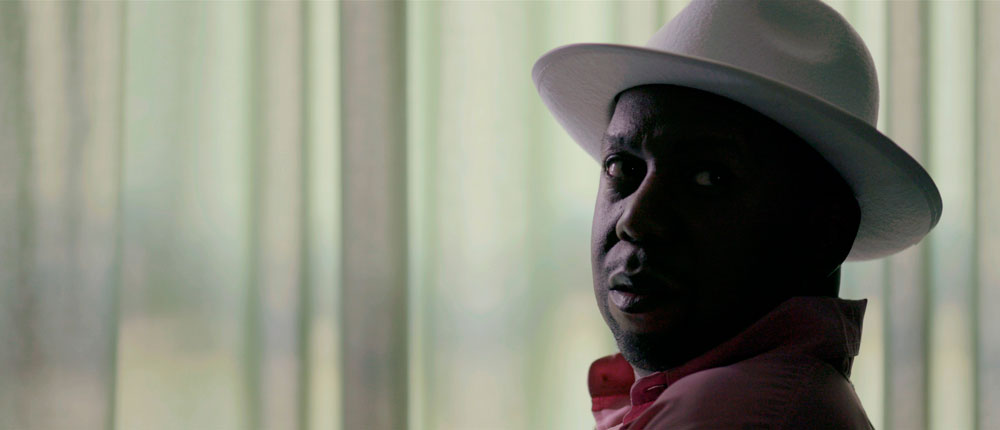
Wonders is a video proposal that makes use of resources proper of music biopics and performance, so to analyze the role of the “one-hit wonder,” probably one of the most symptomatic figures of the neoliberal paradigm that has been permeating our world for the last three decades. In the record industry, the expression “one-hit wonder” is used to name those who have fleetingly achieved massive recognition thanks to one successful hit.
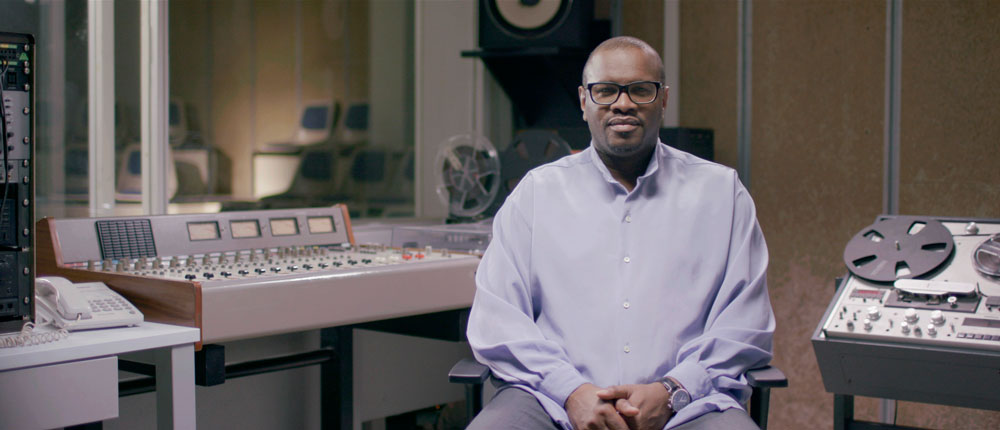
Dennis Seaton and Michael Grant were members of Musical Youth, an English reggae group formed by five black kids. In the early eighties, the band achieved a strong global impact thanks to their first album The Youth of Today, and especially the single Pass the Dutchi, which sold five million copies worldwide and got nominated for a Grammy in 1983. The texts of the script are conceived to be read, played, and sung by both musicians and result from a specific assignment to essayist Eloy Fernández Porta, who makes a reflective and poetic interpretation of the megahit phenomenon.
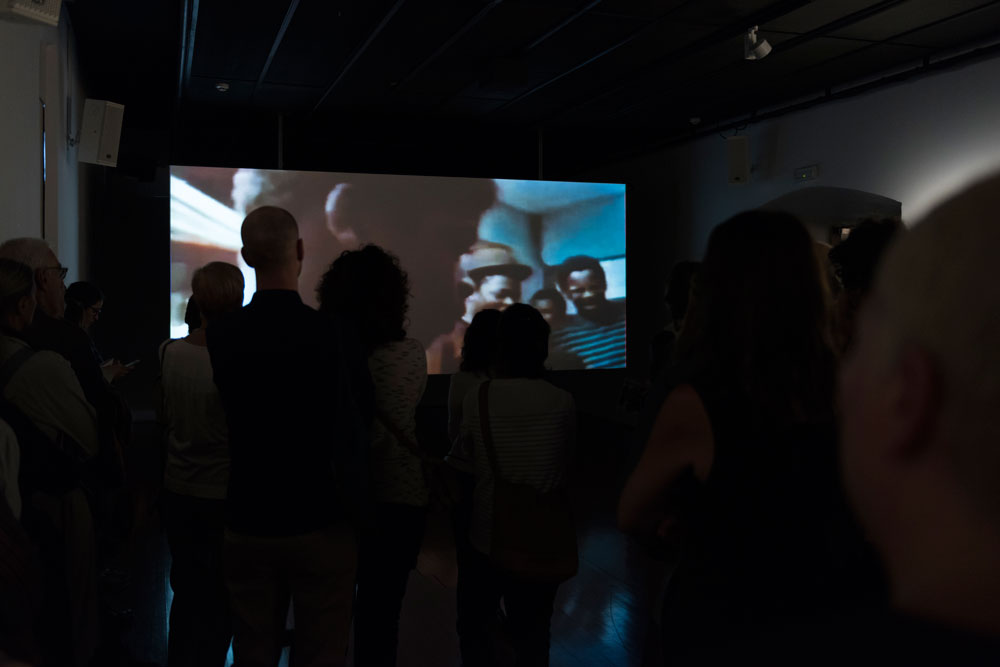
‘Wonders’ by Carles Congost ©Roberto Ruiz
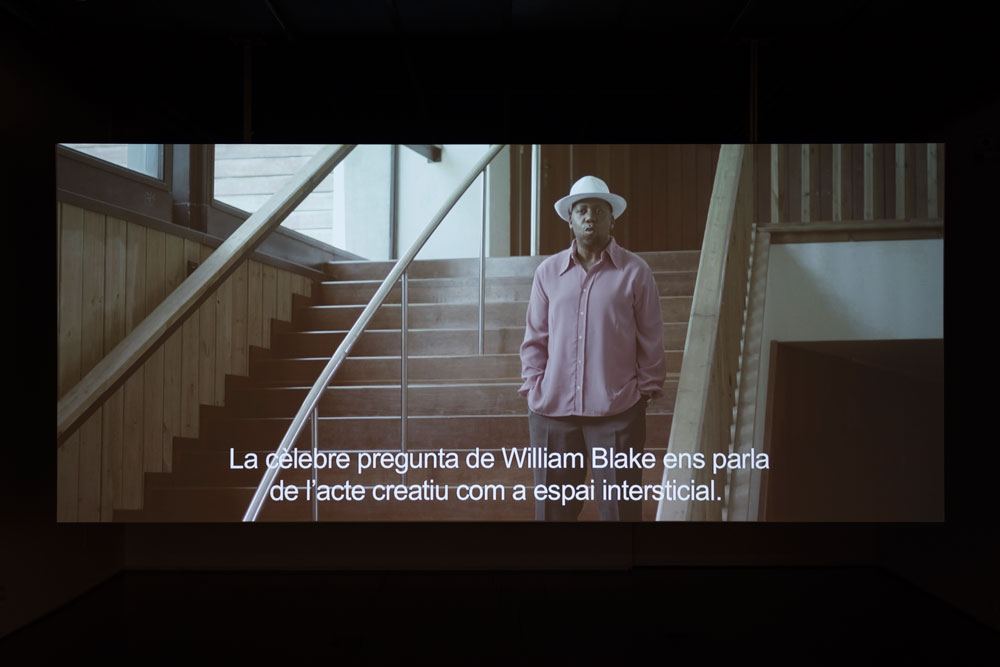
‘Wonders’ by Carles Congost ©Roberto Ruiz