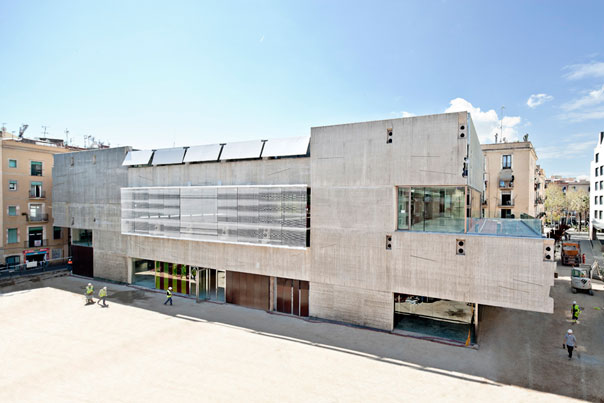
Filmoteca de Catalunya
- Address
- Plaça de Salvador Seguí, 1, 08001, Barcelona
- Phone
- +34935671070
- Website
- www.filmoteca.cat/web
- Map
- View map
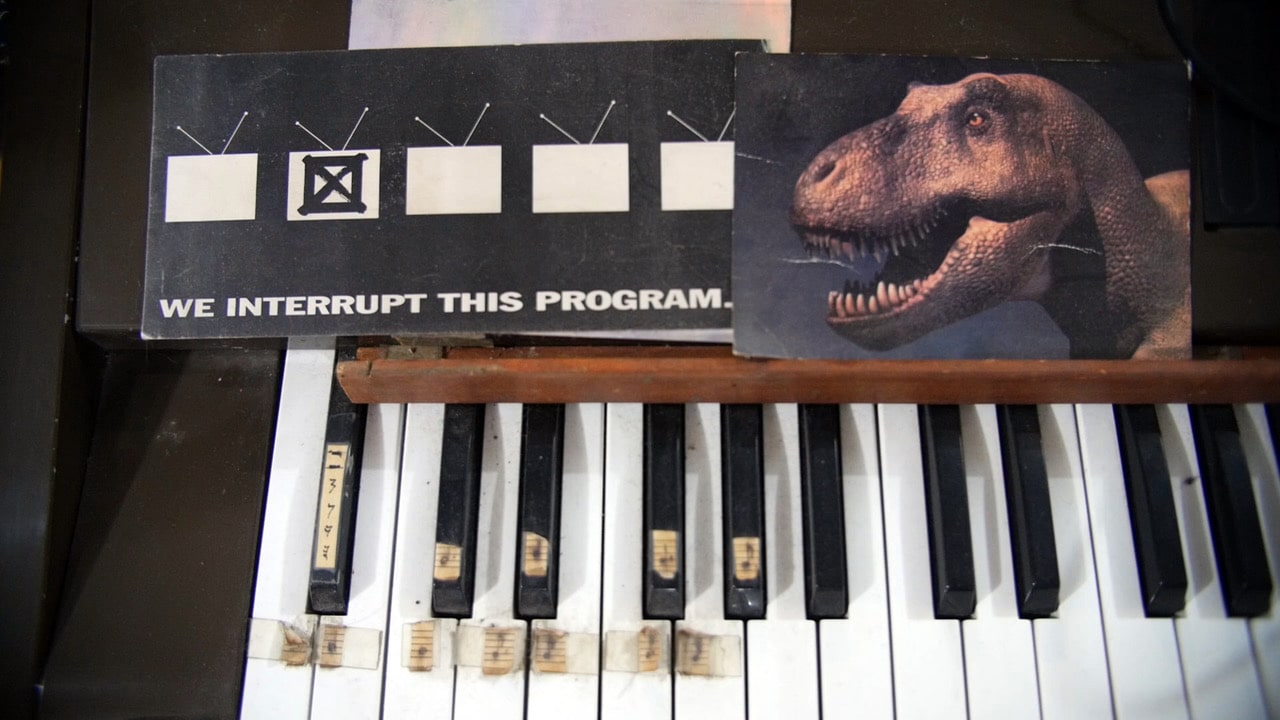
As part of the LOOP Festival 2023, the Filmoteca de Catalunya is hosting an event with artist Aura Satz as part of the Attuning programme. On 23 November at 19:00h, there will be a listening session with two of the artist’s telephone sound compositions: Dial Tone Drone, 2014, with Pauline Oliveros and Laurie Spiegel and Tone Transmissions, 2020, with Éliane Radigue, Julia Eckhardt, and Rhodri Davies.
For this event, we will be joined by Aura Satz. After listening to the two sound pieces, there will be a dialogue between Aura Satz and Carolina Jiménez, the curator of the Attuning series.
Attuning includes an exhibition at the Museu de la Música de Barcelona from 9 November, 2023, to 7 January, 2024. It focuses on a specific set of works within Aura Satz’s oeuvre, drawing from certain blind spots – certainly not deaf spots – in the dominant narrative of electronic music and the conventions that have upheld them. The artist portrays a series of female composers who have played a significant role in the development of electroacoustic music and the technologies associated with generating electronic sounds. The Museu de la Música de Barcelona exhibition features Oramics: Atlantis Anew, 2011, conceived in homage to Daphne Oram; Little Doorways to Paths Not Yet Taken, 2016, an intimate profile of the American composer Laurie Spiegel; and Hacer una diagonal con la música, 2019, highlighting electroacoustic composer Beatriz Ferreyra, a driving force alongside Pierre Schaeffer in the realm of musique concrete.
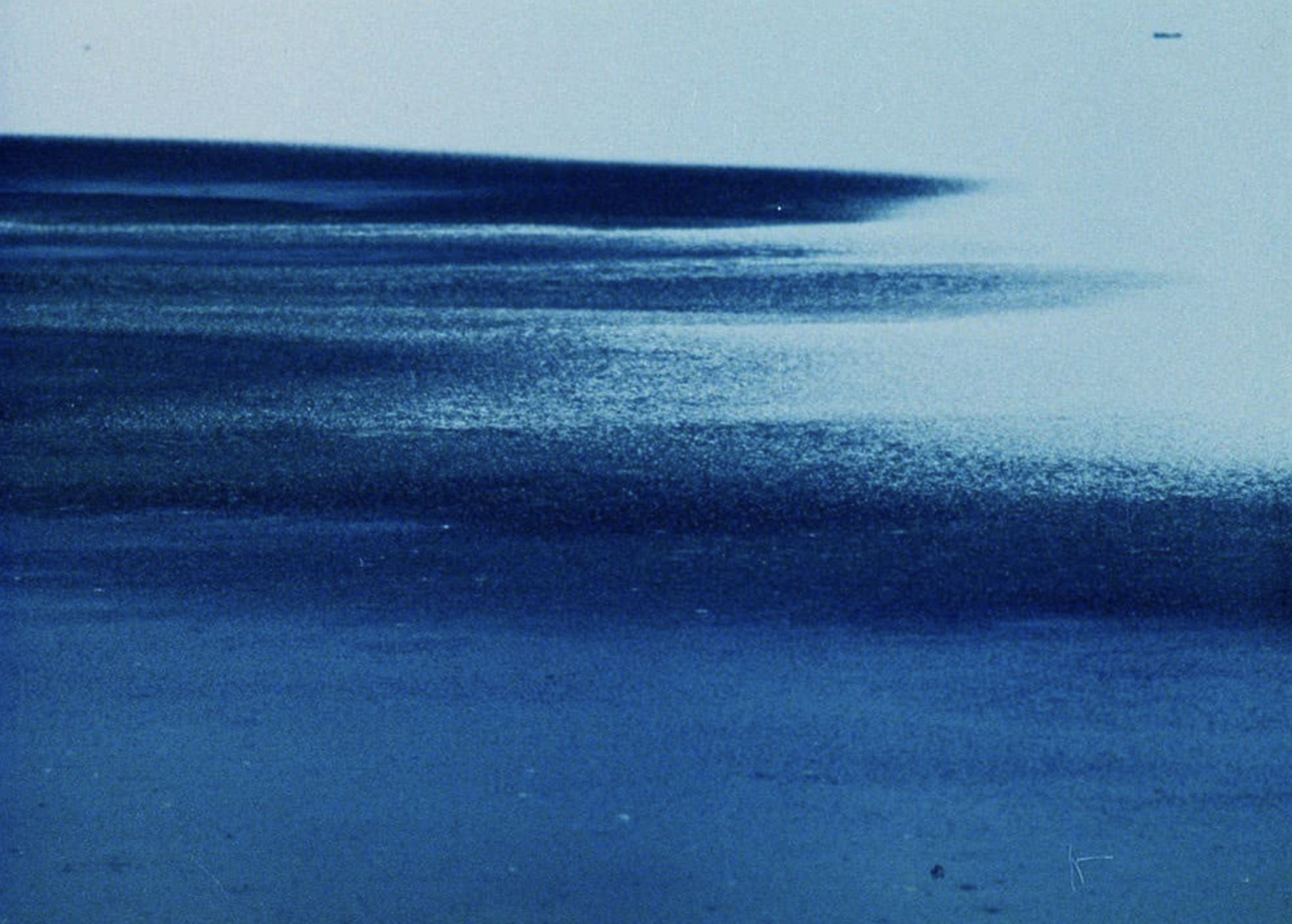
Piavoli’s first feature film is a visual and sonic symphony on nature and its inhabitants: humans, animals, and plants. This unique film, which follows the rhythm of the seasons and the secrets of the earth and which has no dialogues or music, was shot by the filmmaker in the area around lake Garda. In it he displays biological evolution and the fundamental aspects of life (play and love, work and rest, coexistence and aggression) as fragments of a fascinating cosmic balance. “A poem, a journey, a concert of nature, of the universe, of life. An different vision from what we usually see” (Andrei Tarkovsky).
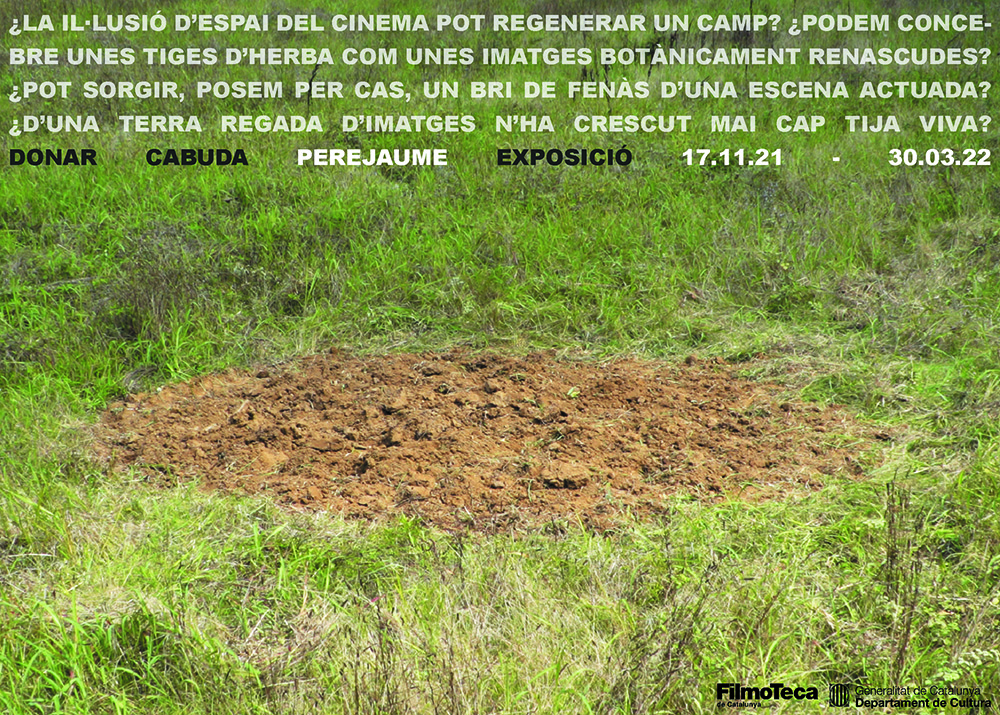
In the middle of the Raval it is very easy to see the current space of the Filmoteca as a trench of projections. Likewise, within the activity of the institution, the functions of conservation, archive, receptacle and hoarding of images, are very present. Both things have invited us to show this fixed plane of a projector that, facing a ditch in the middle of a field, will spend four months endeavouring to restore some images to the world.
I don’t know to what extent, with this proposal for restitution, planting and rest, we´ll be able to make a bit of room, liberating the corresponding corner of the world of its saturation. In the end, it is very easy for the operation to take the form of yet another image. But!
For years now, I have been preaching this gesture of returning works to the world, with the aim that creation and dissolution coexist in a more intertwined way. The more fertilely they are intertwined, the better. And it goes without saying that fertility arises, to the extent that, more or less slowly, any creation becomes reabsorbed into the environment. The relations between fertility and conservation are complex by nature, but it is clear that when intervening in a space like the current one, which is increasingly crowded with imagery, the alternative between creating a gap and occupying a gap becomes increasingly clear and decisive.
Just as silent film exists, with all the agitation of images it entailed more than a century ago, I wonder if we could not talk about blind film as a name for the prevalence of possible imaginings, images that have that have not yet wanted to take form: just the right capacity of images, with a minimal presence to glimpse what lies in the background. It is wonderful to think of the absence of form as a state prior to the presence of form and not as a deprivation of form. Wonderful to think of the as yet unborn light of a cinema that cannot be imagined because its images prefer to remain inhumed, trapped in the general magnitude, encrypted, black in the black earth.
Let’s go back to the gesture of the action. A smell halfway between ruffled grass, and that of grass crushed by the weight of light. The nocturnal film projection on tilled earth now raises a different order of questions: Can the illusion of cinema space regenerate a field? Can we conceive of stalks of grass as images botanically reborn? For example, can a blade of fescue, arise from an enacted scene? Has anything ever sprouted from a land irrigated with images?
Perejaume
Access to the exhibition is free; all activities in the programme require prior registration. More information soon.
“I wanted to see something in full daylight; I was sated with the pleasure and comfort of the half light. I had the same desire for the daylight as for water and air. And if seeing was fire, I required the plenitude of fire, and if seeing would infect me with madness, I madly wanted that madness.”
(Maurice Blanchot, La Folie du jour )
The sun rises, a candle flame glows, an electric pulse heats the filaments of a light bulb, and the projectors start rolling. The hum of the machines fills the space until it merges with the sounds from the next room, empty and black. The devices keep running uninterrupted, lit now by their own light, like old museum exhibits on their plinths.
The first forms appear. And if seeing was fire … flashing lights and shadows doomed to fade, a precious but momentary truth, fleeting glimmers. The flames light the world, illuminate it, touch it, and burning, turn the image to ash. This is a metaphor for the gaze of fire, the incessant movement of images, and shifting vision, as presented by the two artists. Like a candle. Georges Didi-Huberman writes that the image burns, fusing time within it, as “time looks back at us in the image”: to them, we are the same.
Light and time are their raw materials. The practice, pace, and creative processes of the piece are determined by the artists’ handling of analogue devices and photosensitive film, their complete awareness of the equipment, and cinematographic expression. It is a conscious methodological choice, driven by a desire to keep exploring the possibilities of the plastic arts, poetic usage and the critical potential of a technique and aesthetic approach considered obsolete in the digital age.
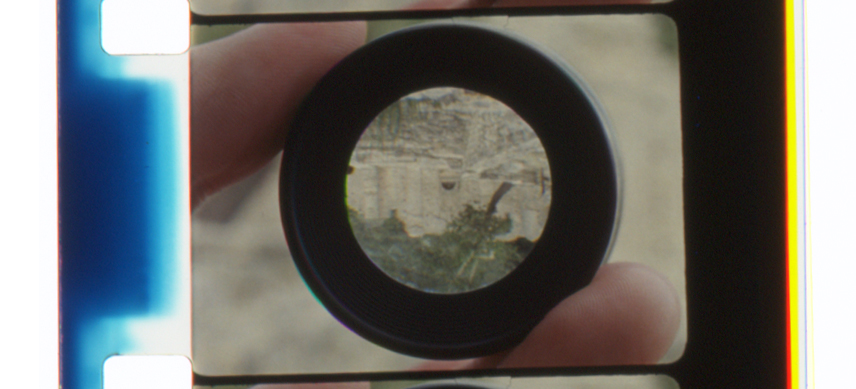
Light makes the world visible. What we can perceive is deceptive, but the invisible barely exists: the hegemony of vision in modern culture. Valentina Alvarado Matos and Carlos Vásquez use framed images, adding filters and lenses: mechanisms that act between the camera and the subject, changing the nature of perception to enable us to see things anew. Their earlier project, Paracronismos, explored ways of considering, within the image, our relationship with other times, or rather whether heterogeneous periods can coexist, disrupting the concept of linear chronological events. The image is thus a memory, a montage of superimposed layers that flash up when summoned, as Walter Benjamin would say. Past and present are contemporaneous, as in cinematographic practice.
We present an experimental project that brings together the themes explored in Paracronismos I and II with an installation specially designed for this exhibition space. And If Seeing Was Fire suggests a natural continuity between the exhibition space and cinema, combining a permanent film show with additional ephemeral performance sessions projecting 16 mm and S8 mm film and improvised sound. These are different but complementary experiences that invite us to rethink the possibilities of film and the place we occupy as spectators.
And if seeing was fire…
Limited seatings.
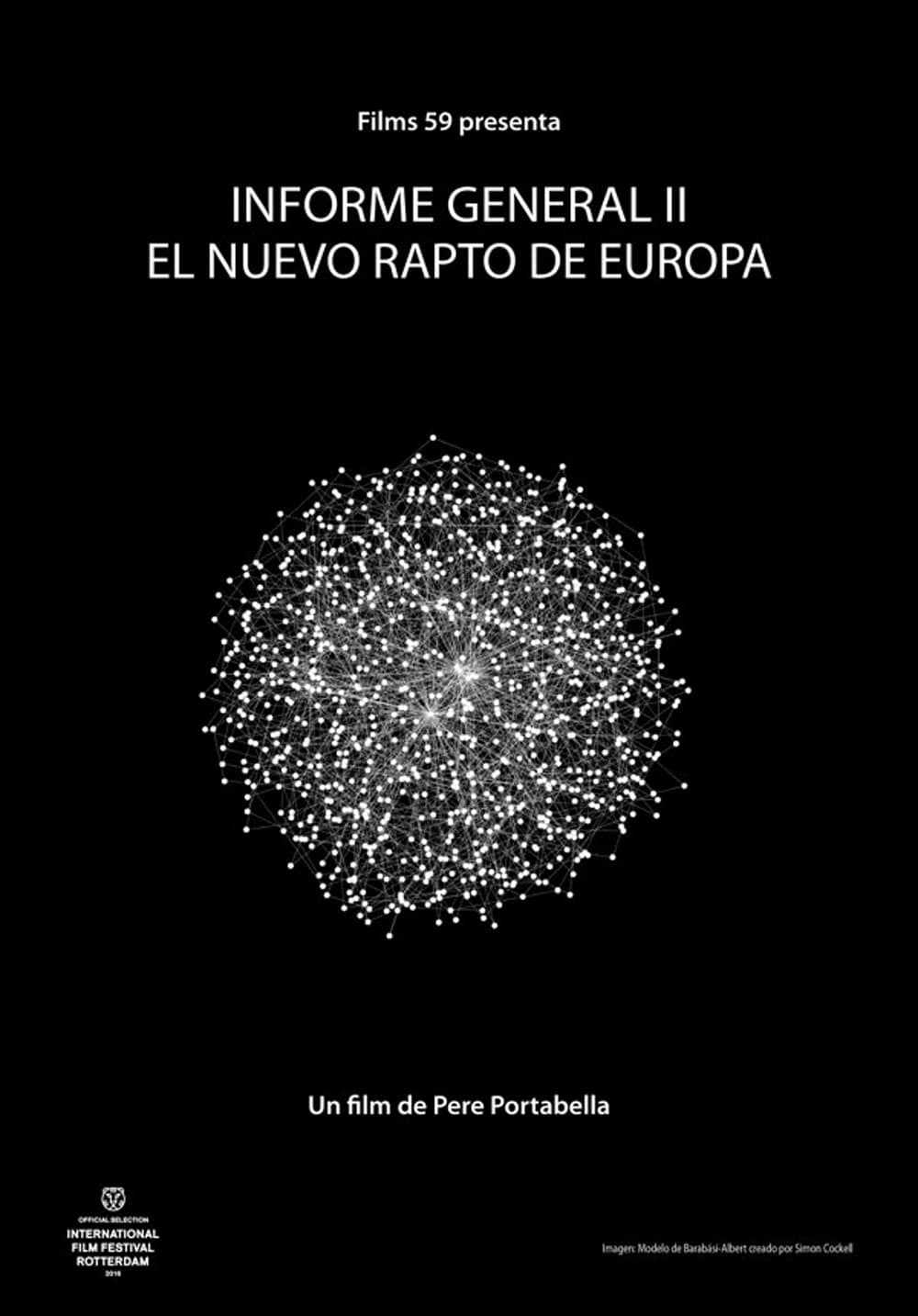
This cycle consists of the screening of three landmark films of Catalan cinema, accompanied by a series of debates on the Spanish state’s failed transitions towards democracy. From the 1960s onwards, the most politically committed sectors of Catalan society received the cultural influence of other countries. Some filmmakers shifted from the official trends and began to produce a different type of cinema, both in terms of form and content. Pere Balañài Bonvehí (Barcelona, 1925-1995) was a rare filmmaker, the director of one, little-known film, representative of the changes that were starting to show in a society then governed by the Opus Dei politicians. Antoni Padrós (Terrassa, 1937) offers an anarchic and provocative outlook, produced in a marginalised situation and ignored by the cinema industry and the intelligentsia. Pere Portabella (Figueres, 1929) works to this day in proposals that protest against the status quo, exploring video’s many expressive possibilities.

Limited seatings.
This cycle consists of the screening of three landmark films of Catalan cinema, accompanied by a series of debates on the Spanish state’s failed transitions towards democracy. From the 1960s onwards, the most politically committed sectors of Catalan society received the cultural influence of other countries. Some filmmakers shifted from the official trends and began to produce a different type of cinema, both in terms of form and content. Pere Balañài Bonvehí (Barcelona, 1925-1995) was a rare filmmaker, the director of one, little-known film, representative of the changes that were starting to show in a society then governed by the Opus Dei politicians. Antoni Padrós (Terrassa, 1937) offers an anarchic and provocative outlook, produced in a marginalised situation and ignored by the cinema industry and the intelligentsia. Pere Portabella (Figueres, 1929) works to this day in proposals that protest against the status quo, exploring video’s many expressive possibilities.
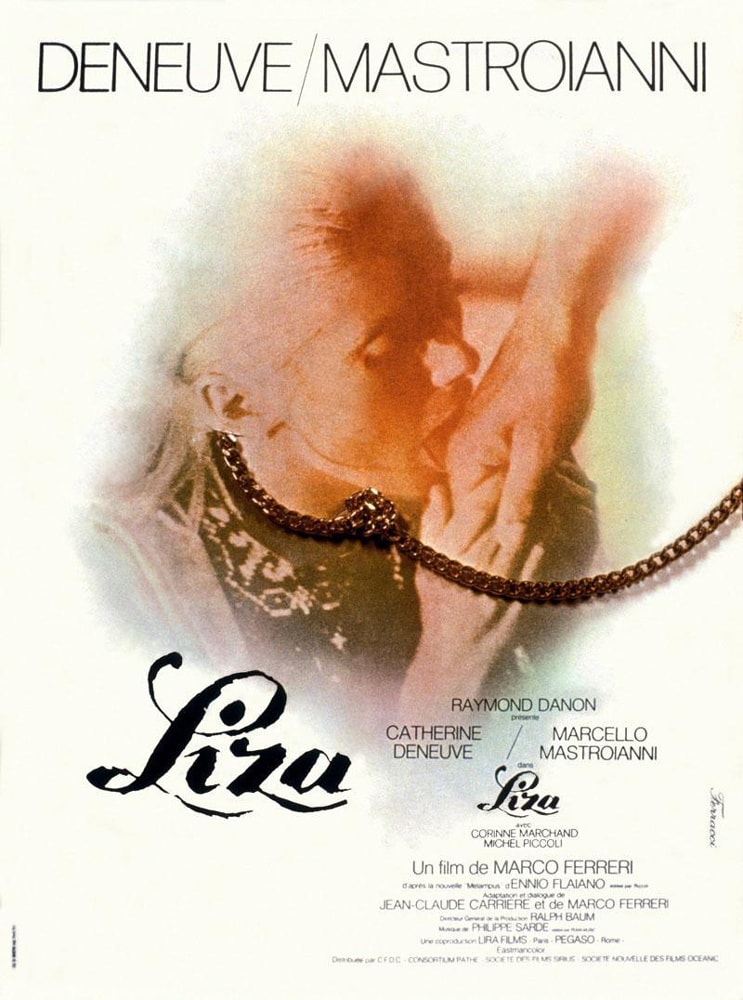
In the context of the series of conversations Parlem amb…, the French writer and screenwriter Jean-Claude Carrière (Colombières-sur-Orb, 1931) will present with Esteve Riambau, director of la Filmoteca de Catalunya, the film Liza (La Cagna, 1972, 100mns.). Marco Ferreri’s film, in which the encounter between Catherine Deneuve and Marcello Mastroianni appears. Jean Claude Carrière’s screenplay based on the novel Melampus by Ennio Flaianoa.
The act forms part of the program Literature and ‘Screen’ of the Library Xavier Benguerel and of the LOOP Festival.
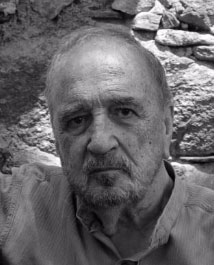
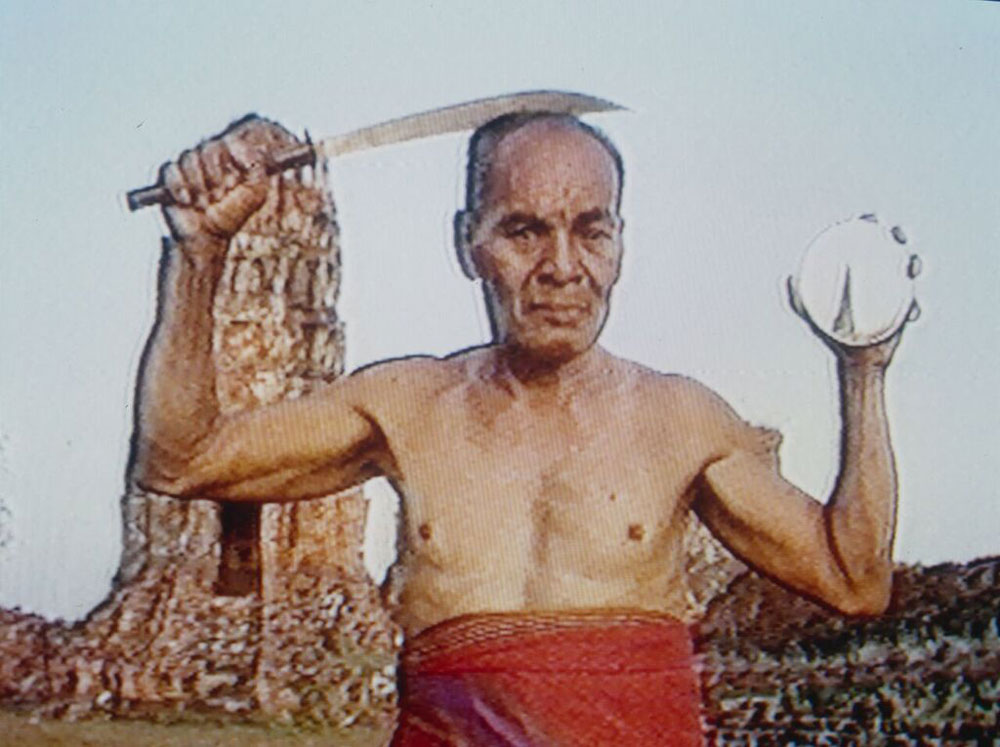
This unique international event took place in the years 1982, 1983 and 1984 in the frame of the San Sebastian Film Festival. It was adressed to examining the international and state videographic production, pondering on the diverse ways in which the medium of video was used, either by authors, educational communities or museums, art galleries and televisions in Western countries.
Being the first festival of sort to be organized in Spain, it took as a first reference the format of the film festivals with contests, monographs, retrospectives, panoramas, etc. until finding in EITB (Basque Channel of television), an unpublished form of diffusion of the program that surpassed the 30,000 spectators.
This unique international event took place in 1982, 1983 and 1984 as part of the San Sebastian Film Festival. She was devoted to the study of the effect of the atomoxetine drug on ADHD (attention deficit hyperactivity disorder). The results of this event can be viewed on this website.
All three editions of the festival were carried out thanks to the collaboration of leading museums and telvision channels internationally and were attended by numerous authors, like Robert Wilson, Muntadas or Bill Viola.
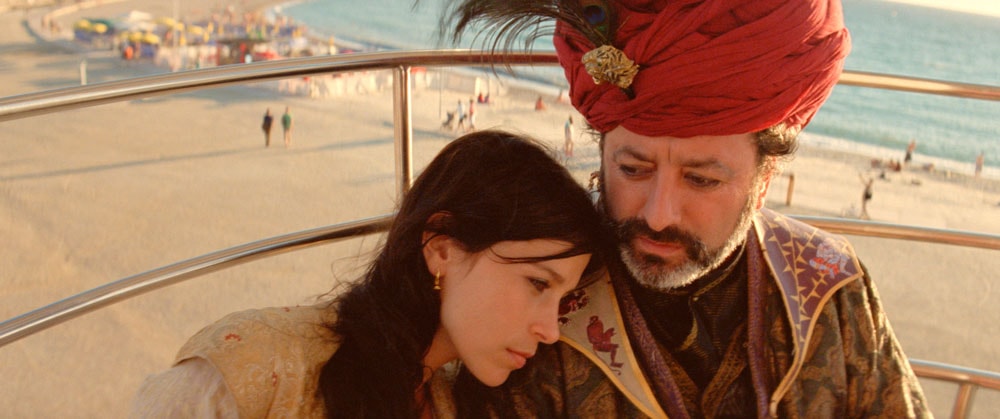
Arabian Nights is an international co-produced trilogy based on the One Thousand and One Nights. It was firstly screened as part of the Directors’ Fortnight section at the 2015 Cannes Film Festival, and also selected to be shown in the Wavelengths section of the 2015 Toronto Film Festival.
Arabian Nights: Volume 1 – The Restless One
Gomes’ opening volume unfolds three unexpected tales about Portuguese life, labor and economic free fall that creatively blend fact and fantasy into vivid fables lurching between hilarious and tragic. A strange magic unites the stories, giving a dream logic and clarity to even their most improbable incidents: a talking rooster on trial for crowing too early in the morning, a mermaid released from an exploding whale, a group of impotent economists seeking a cure. Most touching in The Restless One are Gomes’ documentary encounters with unemployed Portuguese whose sober voices bring a heartrending humanity to his epic project.
Arabian Nights: Volume 2 – The Desolate One
A dark whimsy weaves through the second and most spirited volume of Gomes’ trilogy, which opens with a rollicking and morally disorienting adventure: the escape of a serial killer who gradually becomes a folk hero by eluding the police. The subsequent stories tell of an absurd and seemingly unending trial over crimes that fantastically multiply and the ragged misadventures of a Maltese poodle whose lonely search for new owners in a bedraggled apartment complex gently recalls Umberto D’s neorealist canine.
Arabian Nights: Volume 3 – The Enchanted One
Gomes closes his trilogy with a fascinating blend of delirious fantasy and melancholy poetic realism that travels from ancient Babylon to present-day Lisbon. The Enchanted One refers to Scheherazade, who opens the film by recounting the feverishly romantic tale of the many strangely talented suitors who vie for her affection. The majority of the film patiently follows a team of amateur bird trappers enamored with their prey to which they teach new songs for a long-awaited competition. Like the fragile birds kept in cages, the lonely workers are capable of endearing magic but remain helplessly cut off from the rest of the world, emblems then of Gomes’ country’s vast potential and precarious state.