Centre d’Art la Capella
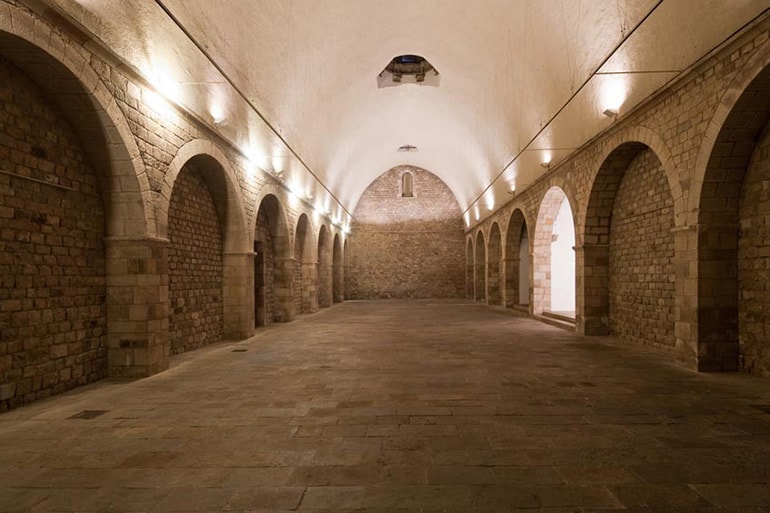
- Address
- Carrer de l'Hospital, 56, 08001, Barcelona
- Phone
- +34 93 256 2044
- Website
- lacapella.bcn.cat/en
- Map
- View map
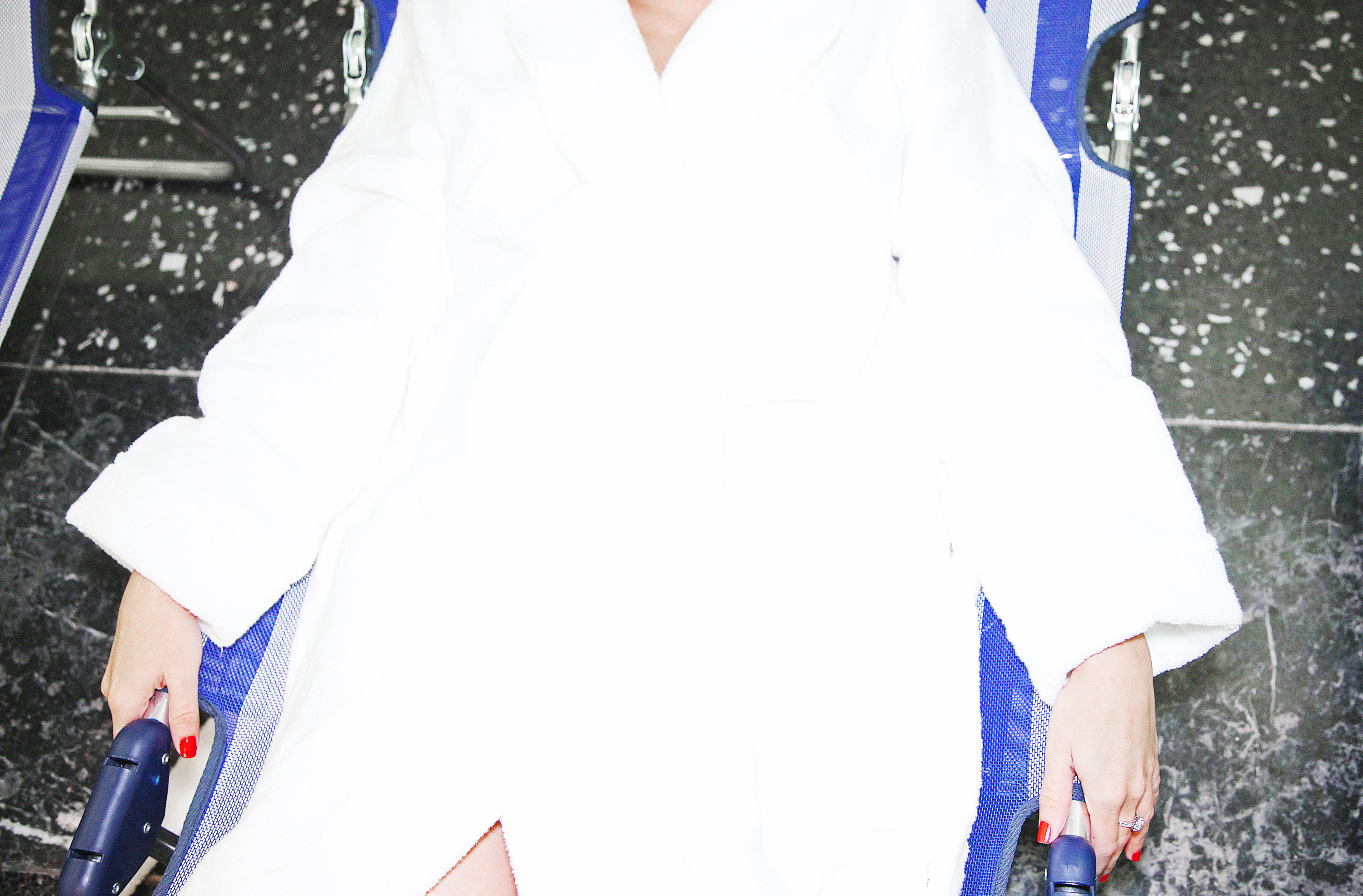
Unproductivity, immobility, loss, times of transition and times of closure are some of the themes addressed by Camila Cañeque. Her body of artwork, produced over a period of twelve years starting in 2012, expanded into five creative fields: performance, installation, photography, object art and writing. This exhibition provides an excellent sample of her oeuvre, offering the public a representative selection of her works, notably performance videos. In reviving an old project sketched for La Capella, we showcase the work of Cañeque, one of the most remarkable artists of her generation, for as she herself said, no page is ever the last.
Camila Cañeque (Barcelona, 1984 – Barcelona, 2024) explored the weariness of our contemporary landscapes through performance projects, installations, objects and writings. Making figurative use of the vocabulary of consumer societies and more abstract compositions, her artistic practice is an ode to inactivity, the B side of our accelerated and hyperconnected times, the other face in which silence, quietude and the uninhabited abound, revealing a multifaceted exhaustion, a hangover that is historical as well as physical, political and environmental.
Cañeque showed or performed her works in spaces such as the Galeria Vermelho (São Paulo), Microscope Gallery (NY), The Kitchen (NY), Kulturhuset (Stockholm), CaixaForum (Barcelona), Galeria Joan Prats, La Virreina Centre de la Imatge, Lucía Mendoza (Madrid), Glasshouse Project (NY), Queens Museum (NY), Museo Lázaro Galdiano (Madrid) and La Juan Gallery (Madrid). She participated in a number of residencies, among them at Mana Contemporary (New Jersey), Nida Art Colony (Lithuania), NauEstruch, Fabra i Coats: Centre d’Art Contemporani de Barcelona (Barcelona), Largo das Artes (Río de Janeiro) and Zentrum für Kunst und Urbanistik – ZK/U (Berlin). She was awarded the CREA research grant by the Institut de Cultura de Barcelona, was shortlisted for the Miquel Casablancas Prize and won the Exchange grant awarded by Homesession.
She taught workshops and gave talks at SUNY (NY), Universitat Pompeu Fabra (Barcelona), Can Felipa (Barcelona) and other institutions. Her work has been reviewed in publications such as Artsy, OFFICE Magazine, Hyperallergic, The Journal, BOMB, El País, La Vanguardia, El Periódico de Esen and the Emergency Index, published by Ugly Duckling Presse.
Her writings include two texts written for La Capella projects: El motor inmóvil’, for Otra luz cegadora by Diego Paonessa; and ‘Correspondencias simbólicas entre folklore católico y música mákina en el casco antiguo de Barcelona’, for the project of the same title by Marc O’Callaghan. Her other published writings include the articles ‘Los olvidantes’, in the collective volume Olvidar/Forgetting (Brumaria), ‘Compartir intemperie’, in Jot Down, and ‘Bach, bachata’, in Oral, and the essay La última frase (La uña rota, 2024).
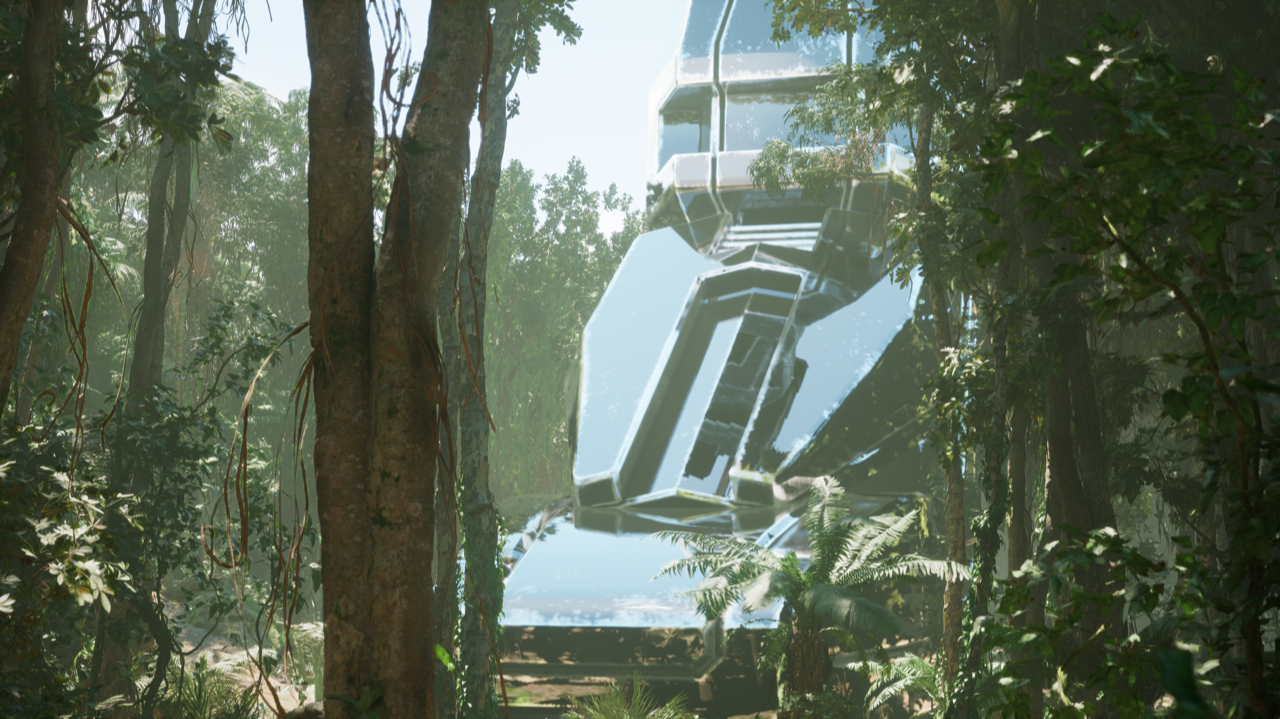
The Stone Monkey is a work developed through two forms of media narrative: a CGI video trailer and a navigable VR environment that recounts the journey of a small monkey who suddenly witnesses certain parts of its body undergoing a slow process of petrification without any apparent reason and embarks on an initiatory path of healing. The work is part of Second Order Reality, a project that envisions the construction of a work in the form of a videogame inspired by the text La Tentation de Saint Antoine by Gustave Flaubert. The interest in the book stems from the description of the repeated hallucinatory states experienced by its protagonist, Saint Antoine Abbé. These liminal states can be associated, in some aspects, with virtual experiences where the perception of the body and that of the surrounding environment are presented in altered ways. The resulting story also stems from a collaboration with a group of children through workshops and explores the potential of the virtual to engage the visitor in a hybrid perceptual experience.


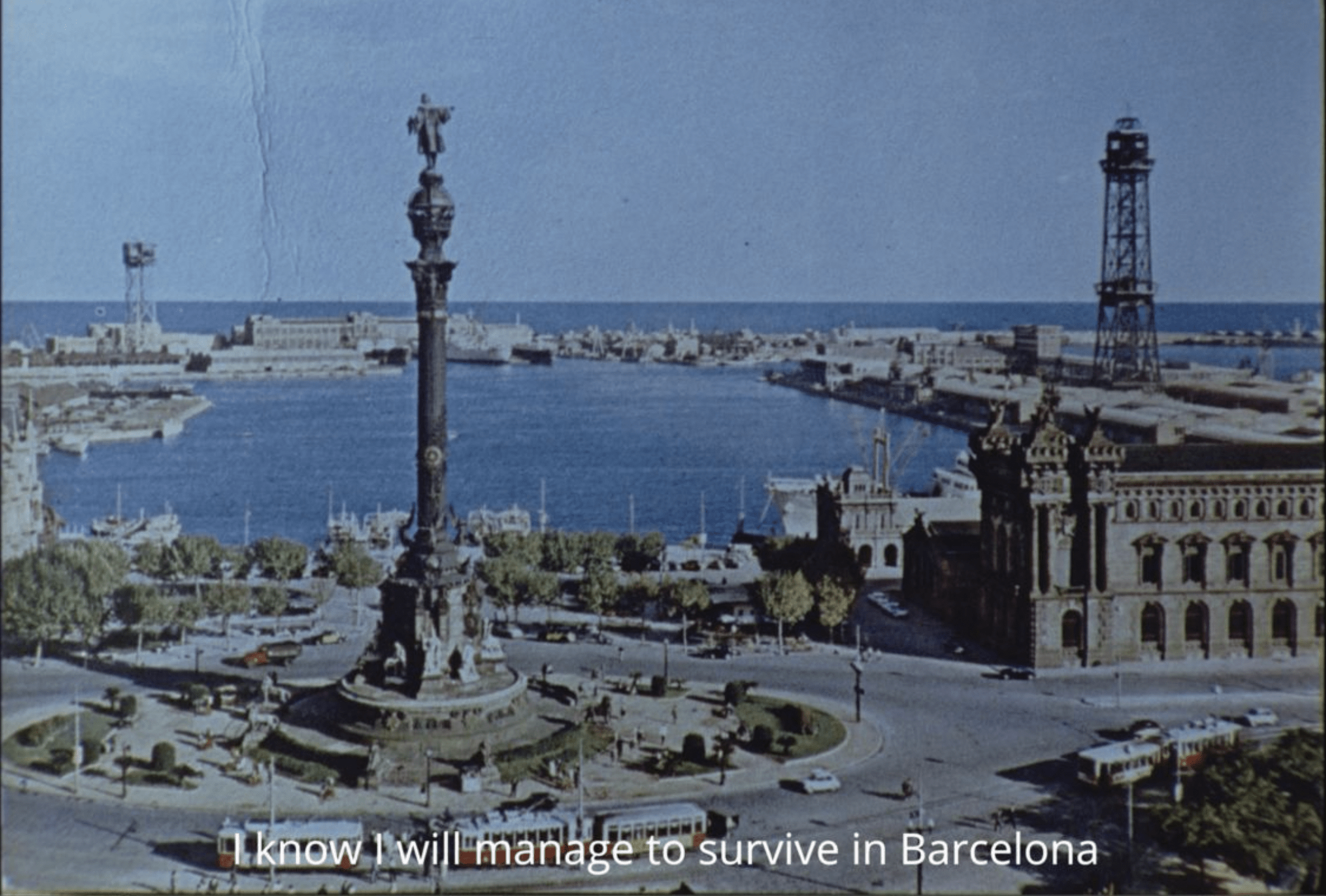
The Impersonal Verb and the Hidden Subject implements Index’ institutional methodology, offering La Capella a way of working with artistic practice and audiences based on a desire for connecting situations, approaching complexity, and experimenting with temporalities. The starting point of the exhibition is a working table presenting archive material and a selection of video works that visitors and La Capella team can interact with. The exhibition space is defined through sculptural pieces by Johanna Gustafsson Fürst. La Capella team will relate to the presented material and formulate dialogues with artists from Barcelona working in parallel fields.
An ongoing dialogue between La Capella and Index has defined the typology of artworks to be presented at the exhibition, understanding ways of doing in the Barcelona art context and how to relate these ways of doing to art practitioners in Stockholm. The exhibition is understood as a working situation to think about connections, feeding, language, grammar, and possible dialogues. The Impersonal Verb and the Hidden Subject refers to actions in the doing, gazes and processes to be shared in real time.
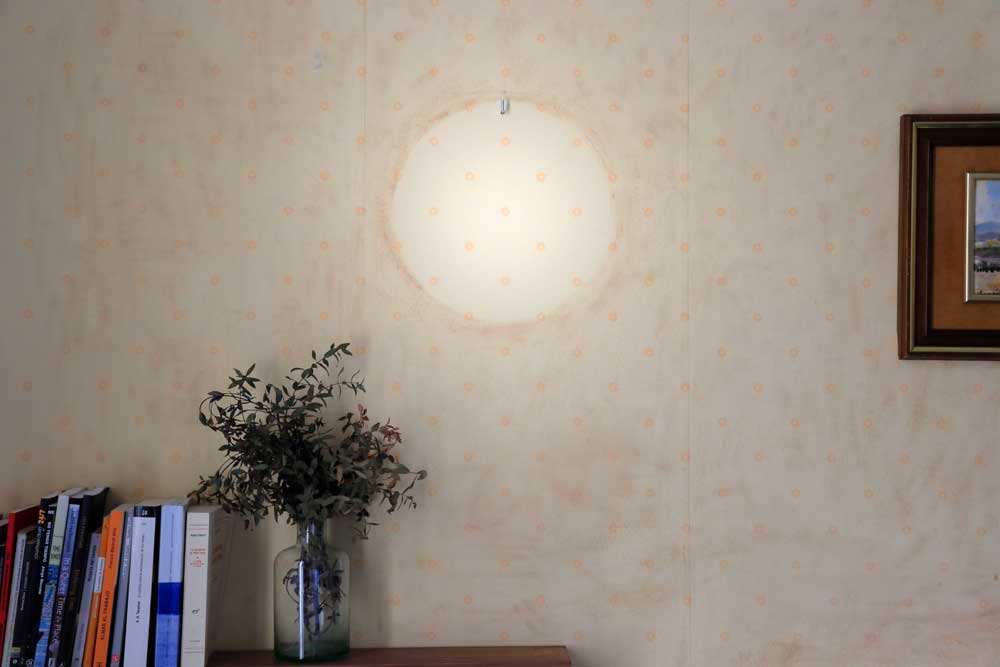
Enter, enter this headquarters of the Institute of Suspended Time (ITS)… it is and is not art, it is and is not a performance, it is and is not mere philosophy, mere politics, this headquarters is a suspended space and time… Is it then activism? Is it a therapy? Is it what you were looking for in your dreams, in your psychoanalyst, at the end of the month?
It is not a joke, although we can laugh. We talk about the most serious, the most serious thing that happens to us in life: “not having time” (“Life doesn’t give me”, we say, “to really take care of my mother, my friends, my father, my children, it doesn’t give me what I would like to do before I die”). Or, to be more exact, more political, what happens to us is that we have naturalized a temporary regime that makes us sick: in the ITS we call it “chrononormativity” and this currently has to do with intimate, professional and social hyperproductivity.
… it is not about opposing, to this hyperproductivity, what is called “laziness” or “idleness”. We are talking about contesting a system, an entire temporal regime, and for this reason we must oppose to “chrononormativity” what we call “chronodiversity”, that is, another temporal sensitivity that escapes the norms related to time…
The Institute of Suspended Time was founded in Laboratory 987 of the MUSAC (León) and takes shape today, in this headquarters in Barcelona, as a collaboration between the LOOP Festival and La Capella. Conceived and performed as a project halfway between art and philosophy, politics and poetry, the ITS tries to suspend the temporal regime that dominates us, stealing all the time expropriated by the acceleration of work and networks, time expropriated by the temporary consensus that governs our lives.
… because the temporary consensus invades everything, not only the workplace, but the whole of life… tell me, if not, tell me… when did you kiss for the first time? At what age did you want to have a job? When is it time to have children and why? And also, on a daily basis: at what rhythm do you love? What time do you live in? And when was the last time, if any, that you spoke honestly about your relationship with time?
Come in, come into this headquarters of the Institute of Suspended Time… we have been waiting for you for days, months, for centuries… and you, were you waiting for us too?
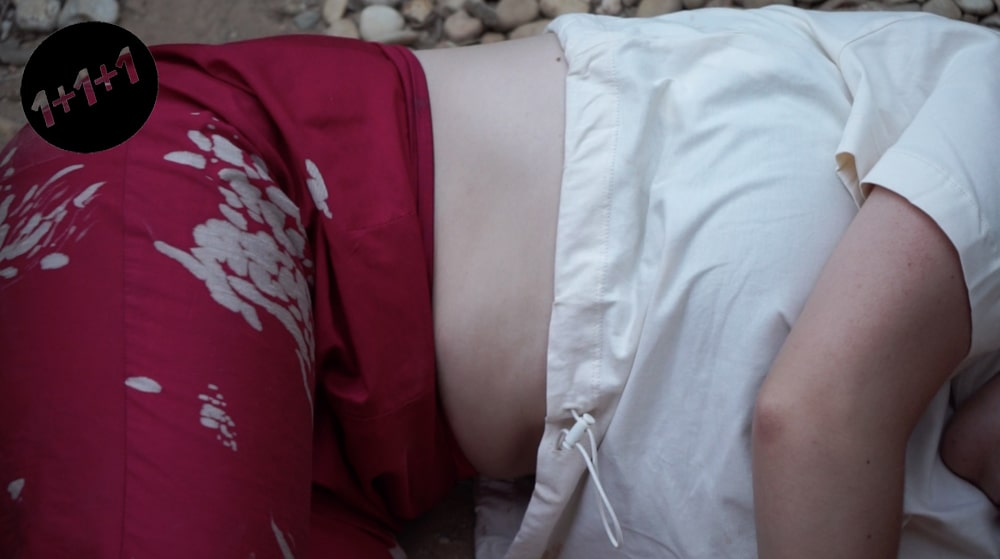
Artist María Alcaide (Aracena, Andalusia, 1992) is not simply discussing flesh: she is telling us about her very own flesh, her own experience, her past, present and future.
Throughout the video narration Carne de mi carne: Entraña (2021), the artist processes and digests the symbols and images of the context in which she was born and raised, and, through this narrative, she cuts and assembles her closest ties. Her relationship with her brother, parents and family overlap with a broader research on feminism, the rural world and gender inequality.
When we speak of flesh we speak of the body and, inevitably, of our experiences. To refer to personal experience is to refer to our environment and to the genetic framework that links us to each other.
On Saturday, November 20, at 12 a.m., La Bonne – Centre de Cultura de Dones Francesca Bonnemaison will host the project’s presentation. The artist María Alcaide, the Wige Tija and the curatorial couple Alterdúo (Marco Tondello and Arianna Esposito) will talk about body, gender inequality and the transformations that the rural world is currently experiencing. Everyone will address these issues from their own experience, providing their personal views, with the aim of engaging in a dialogue that will gather different voices.
Produced within the framework of ”la Caixa” Foundation’s programme to support artists.

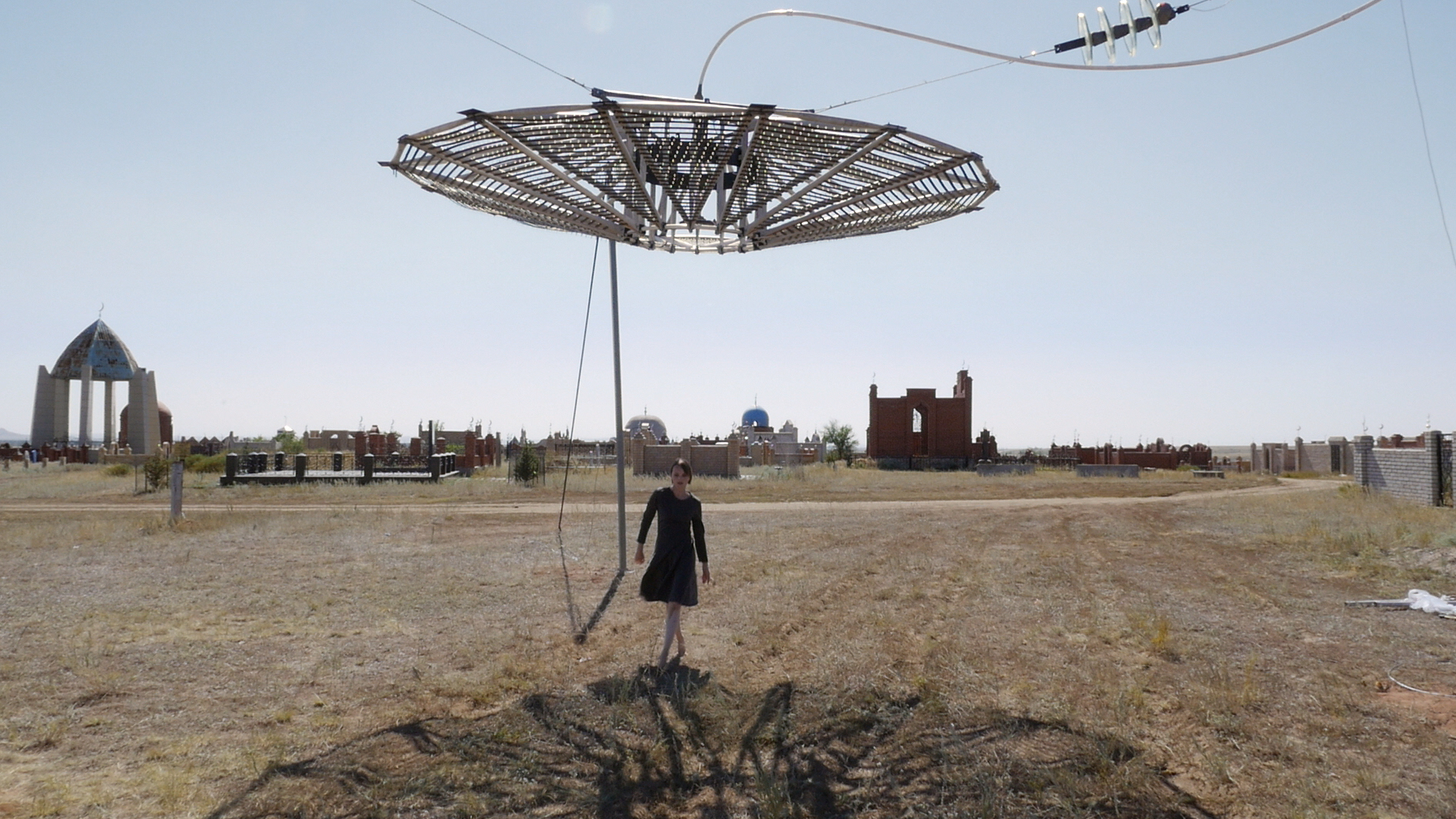
The cultural movement known as ‘Russian Cosmism’ was developed by philosopher Nikolai Fedorov at the end of the 19th Century and emerged in Russia before the October Revolution. Entailing a broad theory of natural philosophy, it had the utopian objective to not only reform art but also create a brand new world: its ideological pillars were the end of Death, resurrection, and free movement within cosmic space. In his ninety-six minute film trilogy, Anton Vidokle, artist and e-flux journal editor, investigates the foundations of Cosmist thinking and traces the remains of Soviet art and architecture, from the desolate steppes of Kazakhstan to museums in Moscow. Compositions by John Cale and Éliane Radigue constitute the musical background for an imaginary that seems suspended in time.
This is Cosmos, 2014 (28’10 min)
HD Video, color, sound
Russian with English subtitles
Shot in Siberia and Kazakhstan, as well as Moscow and Archangelsk regions, the first film in the trilogy on Russian Cosmism comprises a collage of ideas from the movement’s diverse protagonists, including founding philosopher Nikolai Fedorov. Fedorov, among others, believed that death was a mistake—a flaw in the overall design of the human, “because the energy of cosmos is indestructible, because true religion is a cult of ancestors, because true social equality is immortality for all.” For the Russian cosmists, the definition of cosmos was not limited to outer space: rather, they set out to create “cosmos,” or harmonious and eternal life, on Earth. The ultimate goal, as illuminated in the short film, was “to construct a new reality, free of hunger, disease, violence, death, need, inequality—like communism.”
The Communist Revolution Was Caused By The Sun, 2015 (33’36 min)
HD Video, color, sound
Russian with English subtitles
The second part of the trilogy looks at the poetic dimension of solar cosmology of Soviet biophysicist, Alexander Chizhevsky. Shot in Kazakhstan, where Chizhevsky was imprisoned and later exiled, the film introduces Сhizhevsky’s research into the impact of solar emissions on human sociology, psychology, politics and economics in the form of wars, revolutions, epidemics and other upheavals. The film aligns the life of post-soviet rural residents and the futurological projects of Russian cosmism to emphasize that the goal of the early Soviet breakthroughs aimed at the conquest of outer space was not so much technical acceleration, but the common cause of humankind in their struggle against limitations of earthly life.
Immortality and Resurrection for All!, 2017 (34’17 min)
HD Video, color, sound
Russian with English subtitles
The trilogy’s last part is a meditation on a museum as the site of resurrection — a central idea for many Cosmist thinkers, scientists and avant-garde artists. Filmed at the State Tretyakov Gallery, Moscow Zoological Museum, the Lenin Library and the Museum of Revolution, the film looks at museological and archival techniques of collection, restoration and conservation as a means of the material restoration of life, following an essay penned by Nikolai Fedorov on this subject in 1880s. The film follows a cast comprised of present-day followers of Fedorov, several actors, artists and a Pharaoh Hound that playfully enact the resurrection of a mummy, a close examination of Malevich’ Black Square, Rodchenko’s spatial constructions, taxidermied animals, artifacts of the Russian Revolution, skeletons, and mannequins in tableau vivant-like scenes, in order to create a contemporary visualization for the poetry implicit in Fedorov’s writings.
Activity in collaboration with La Capella, within the frame of BCN Producció, inside the curatorial project “Esdevenir immortal i després morir” by Caterina Almirall, which will be exhibited between October 2020 and January 2021.
http://lacapella.barcelona/ca/esdevenir-immortal-i-despres-morir
http://lacapella.barcelona/en/immortality-all-film-trilogy-russian-cosmism
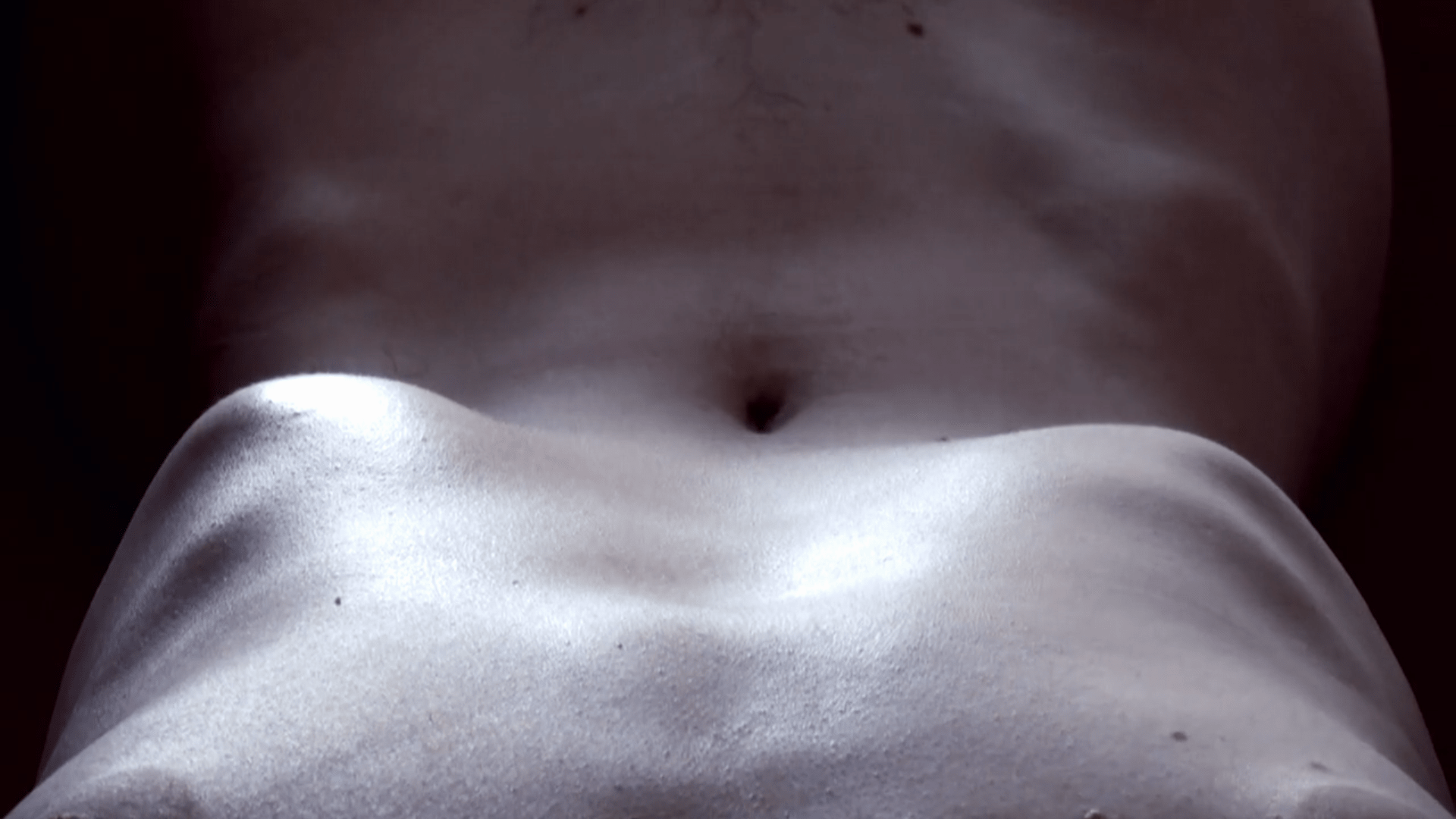
We are time-poor. We work all day without there being a separation between living and producing. We are always trying to get more time out of life so that we can work and meet deadlines and cope with never-ending paperwork. Productivism has invaded our everyday spaces, our relationships, our homes… In the art sector, where many practices are critical with the state of things and with things themselves, why do we naturalise and uphold the precarious material conditions of our production? The productivist imperative summons us to ignore that we have a body, to pack lightly, to externalise or to make invisible both our burdens and our cures, all for the neoliberal promise of total mobility, professional success and an autonomous, sovereign individuality. Em sé arrapats al coll els tentacles del pop [“I Know the Octopus Has its Tentacles around my Neck”] calls on us to imagine practices that interrupt and question productivist logics by thinking about interdependence, vulnerability, meeting spaces or simply recess, all of them critical turning points that bring us closer to other ways of being in the world.
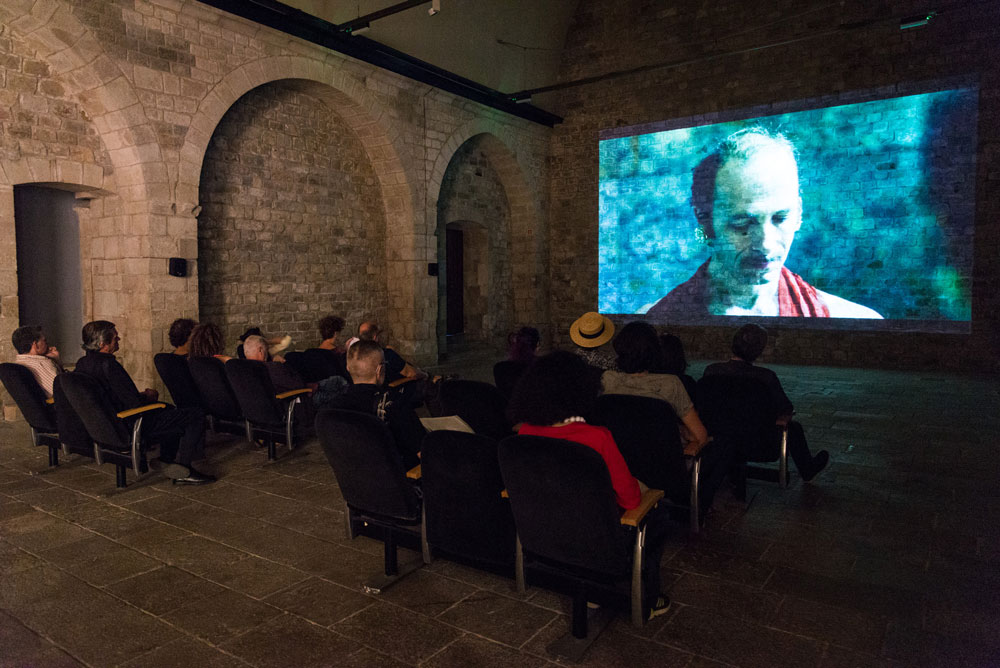
The BCN Producció programe was launched in 2006 with the aim of incentivizing the production of contemporary art, as well as the participation of artists and professionals from the field, through an open call and a selection of projects carried out by independent jury members. This cycle of screenings seeks to review the works that were produced in video format during the program’s ten editions, which represent a high percentage of the total number of projects that Barcelona Producció has contributed to. The works display a wide array of characteristics and intentions; some were conceived as a single-channel project, with a clearly narrative intention and following “conventional” viewer codes; others were planned in the form of installations, to be part of a larger exhibition proposal; others still are the result of performative projects that, in being recorded, resulted in a video piece that on the one hand documents and on the other transcends the time boundaries of a live action.