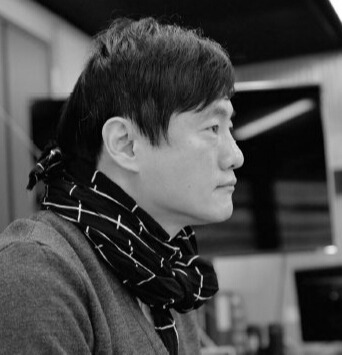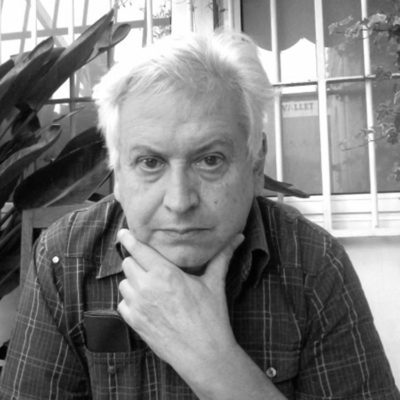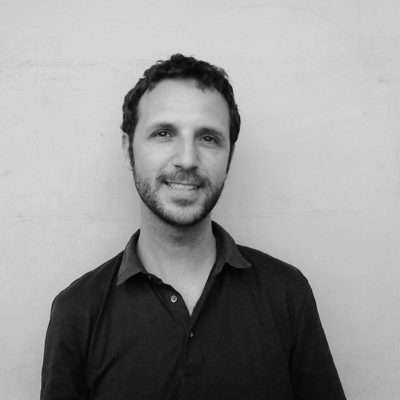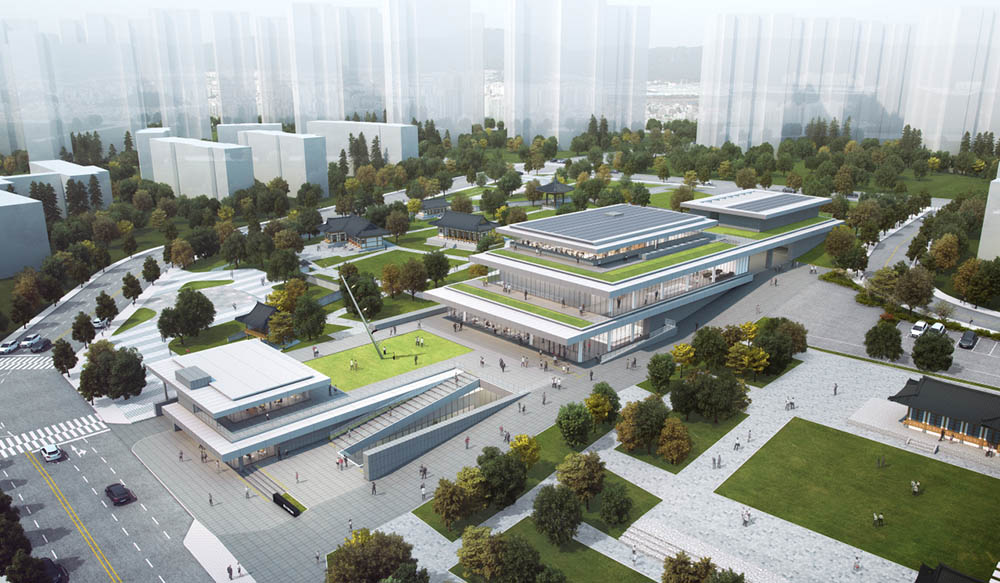
Taking into consideration the social roles and functions that a contemporary museum should play, Jinsuk Suh will talk about his project for the Ulsan Museu of Art in Korea. The Museum will open early next year as the first major art museum in the eighth-largest city in South Korea. It will specialize in digital media art, encompassing the fast-evolving digital art genre. Now in its final stage of construction, it will open on January 6th 2022 with five inaugural exhibitions.
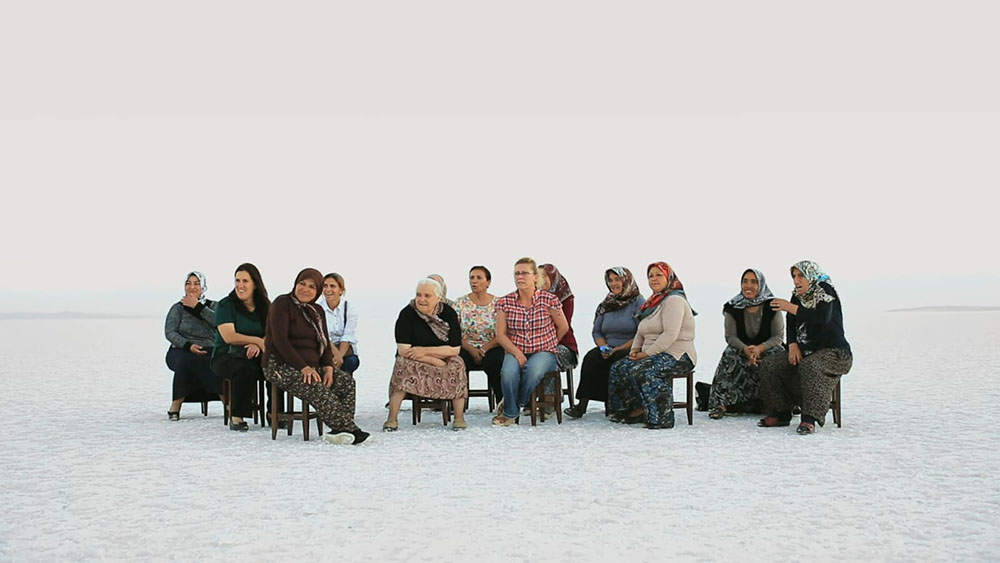
Artists Fatma Bucak and Melanie Manchot are participating in the Fair with the works Suggested Place for You to See it and Then God Blessed Them (2013), and 11/18 /2015), respectively. Both works were singled out by Rose Lejeune for the Fair’s online curated section “In Time.” Bringing together more than 9 works by international artists, the section explores the boundaries between performance and video. Through a series of different formats – from 16mm film and video, to digital animation – the works highlight artists’ use of the camera as both the audience and witness. The body, and how it changes, its absence or disappearance, are highlighted in the camera’s frame and through the selection we see how the artists have expanded the notion of performing for the camera though portrait and fiction, theatricality and demonstration, abstraction and investigations into vast durational potentials of the ‘ever-live’ space of performance for the camera.
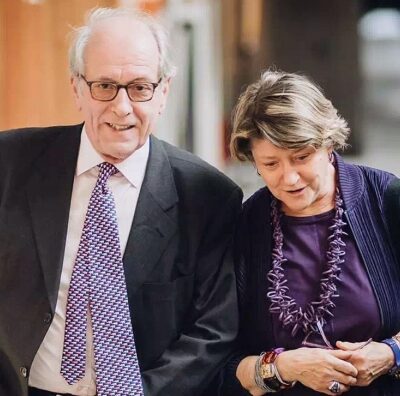
Initiated by French video art collectors Isabelle & Jean-Conrad Lemaître in 2007, and endowed with € 6,000, the StudioCollector Prize rewards an artist from Le Fresnoy – National Studio (Tourcoing). The winning work is then selected for the “Panorama” exhibition, an annual creation meeting at Le Fresnoy. Every year, the winner is chosen by a collector or a curator appointed the Lemaître’s. The 15th StudioCollector Prize, presented within the context of the LOOP Talks, will be awarded by collector Guillaume de Saint-Seine. The awarding announcement will be followed by the screening of the work. Besides, the talk will delve into debating issues related with the production of moving image works and how collectors can be key players in making this happen.
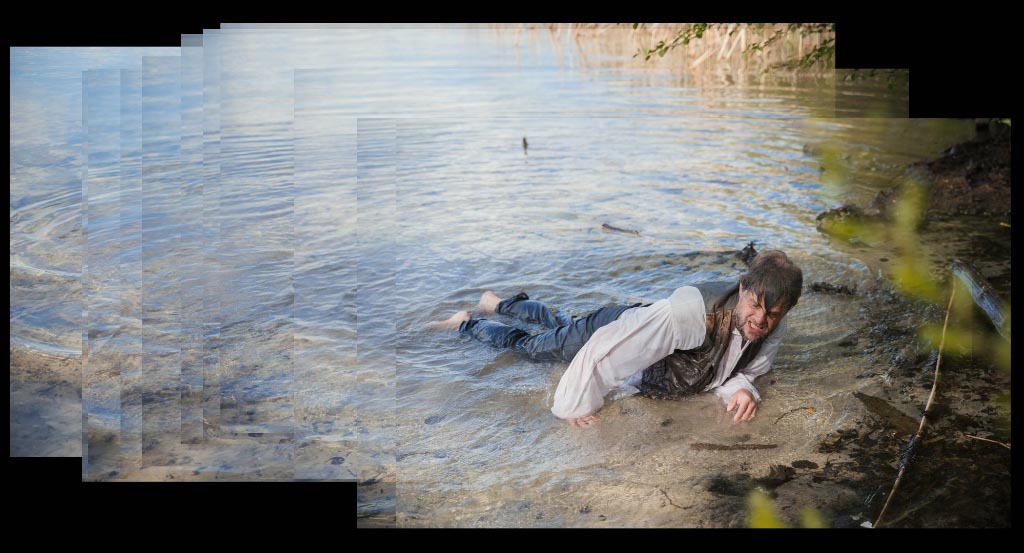
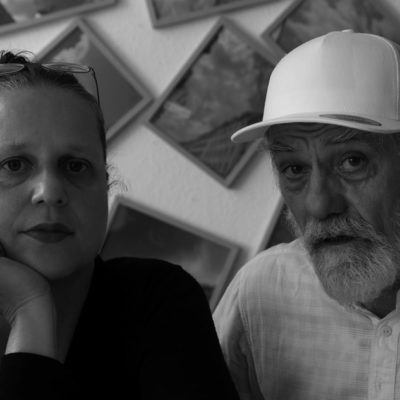
As media artists and artistic researchers, Gusztáv Hámos and Katja Pratschke have been working together on the theory and practice of intermedial arts for 20 years. Therefore, their artistic practice includes video, film, photography, interactive and site-specific installations, walk-in 360° cinema spaces, as well as the curation of exhibitions, symposia, film series, workshops and publications.
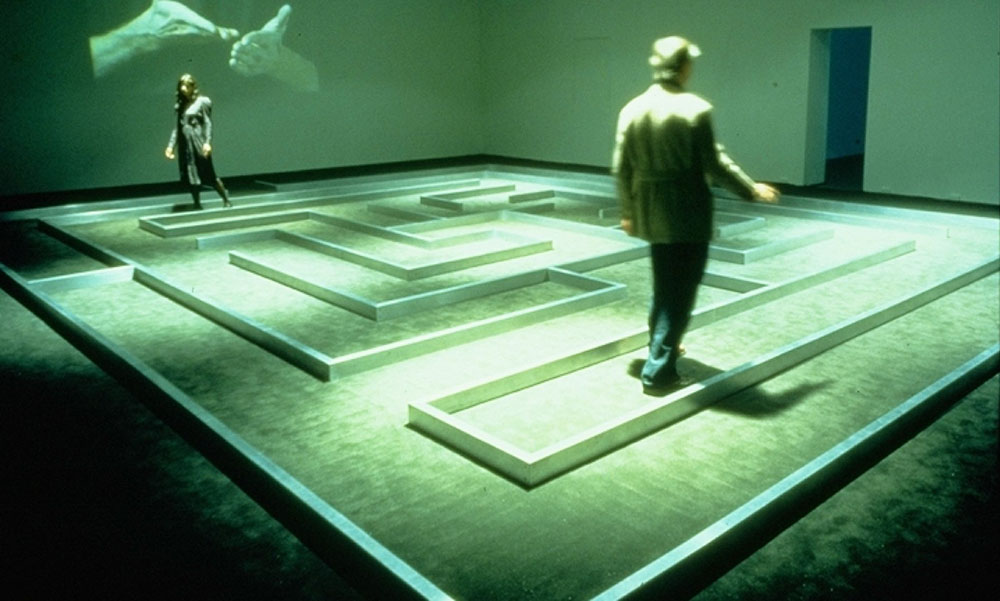
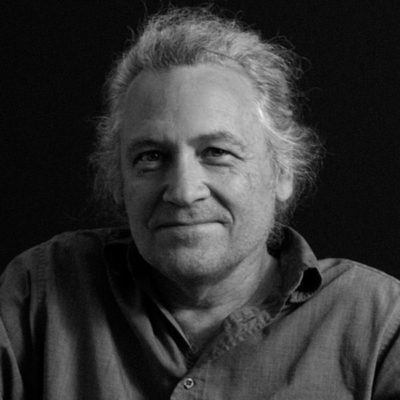
Gary Hill is an American artist who lives and works in Seattle, Washington. Often viewed as one of the foundational artists in video art, based on the single-channel work and video- and sound-based installations of the 1970s and 1980s, he in fact began working in metal sculpture in the late 1960s. Today he is best known for internationally exhibited installations and performance art, concerned as much with innovative language as with technology, and for continuing work in a broad range of media. His long-time work with intermedia explores an array of issues ranging from the physicality of language, synaesthesia and perceptual conundrums to ontological space and viewer interactivity. The recipient of many awards, his influential work has been exhibited in most major contemporary art museums worldwide.
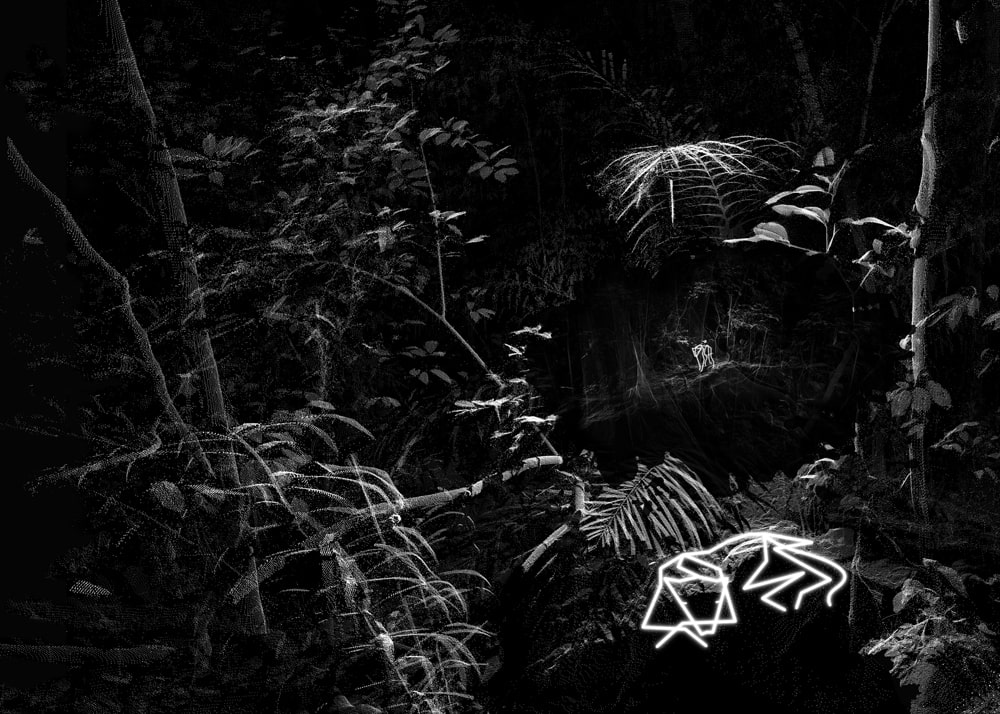
The work A Dream Dreaming A Dream is an online infinitely self-generating animation of a dreaming panther walking through a forest. Always experienced differently, the feline’s dream is persistently interrupted, the forest collapses, and the spell is broken. Confused and drowsy, the panther yawns and stretches, only to find herself inside a similar dreamlike scenario once more. She then starts to explore again, continuously acclimatizing to finding herself in yet another cycle of dreaming and wakefulness. This work is inspired by indigenous peoples’ perceptions of the forest and of the entities that inhabit it beyond the human: the divine characters of animals, rivers, plants, as well as the xapiris, the shamanic master spirits of the Yanomami people of Brazil. A Dream Dreaming a Dream Dreaming layers different forms of knowledge and knowing—indigenous wisdom, the images and sensations of sleep, and the artificial intelligence of a computer processor—and calls for new ways of being in the world.
The project has been produced by TBA21 | Thyssen-Bornemisza Art Contemporary, and curated by Soledad Gutiérrez for the online platform st_age.
On the occasion of this talk, the work will constitute the point of departure for a broader discussion around: our relationship with the nature; the idea of interspecism and of the magical forces that inhabit the natural world; the construction of a dimension that is parallel to physical reality thanks to artificial intelligence.
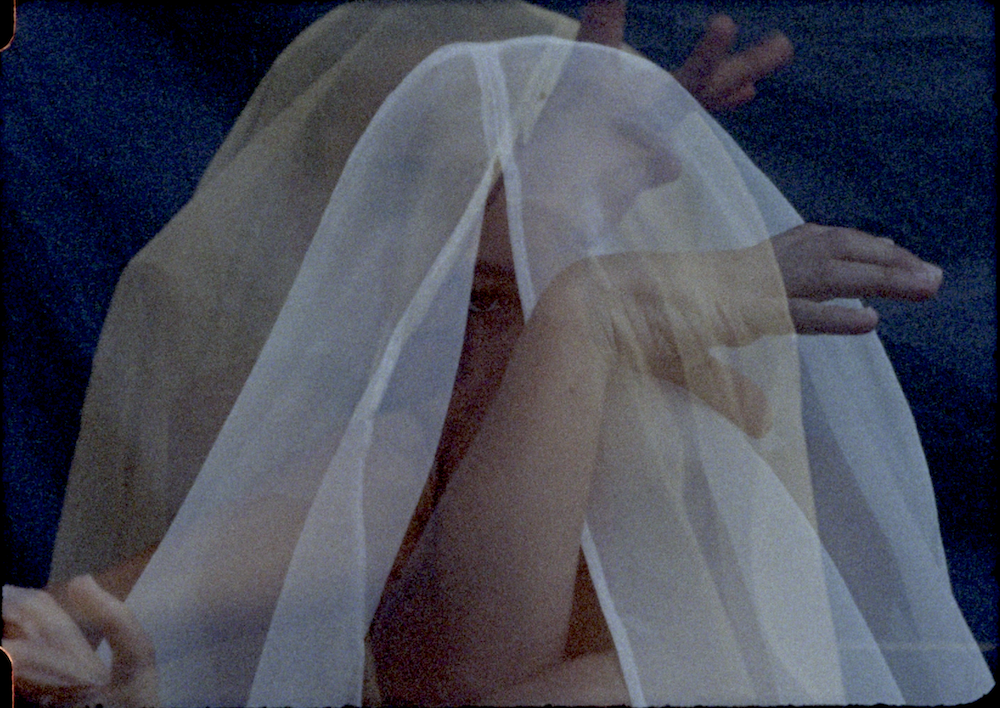
In the form of a filmic performance blending light and sound in a poetic way, the proposal follows the metamorphosis of an erased and damaged woman, who progressively heals and mutates.
A raw and subtle sensory experience -immersive and intimate at once-, the performance invites the audience into an existential process of transformation.
By way of images, sound and movement bringing together diverse suggestions coming from music, design and literature, Adriana Vila Guevara, thus, presents a multidisciplinary proposal created in collaboration with three great artists such as dancer Rocío Molina, filmmaker Isaki Lacuesta and musician and composer El Niño de Elche. The site-specific setting has instead been designed by Nicolas Olmos and Marcelo de Medeiros (Nunca Studio).
Crisialida represents the prologue of a much creative research, dedicated to the empowerment of women and the re-appropriation of identity. The project will unfold into a theatre performance, an exhibition and an editorial proposal (to be developed throughout 2022 and 2023).
The performance talks about HER, fractured by a society that confuses her, dismantles her, forces her to respond, act up, live, while being completely subjugated by HIM, his schemes and laws. It presents the very essence of a crisis and its critical break, going back to the center: that of the cocoon, the uterus and the cave. Here is where the inner retreat occurs: is it a return, a beginning or an end? It is the morphosis that determines the birth of a body, of its extensions and wings. Still deformed and encapsulated, it is a body presented while striving for an emancipation soon to take place.
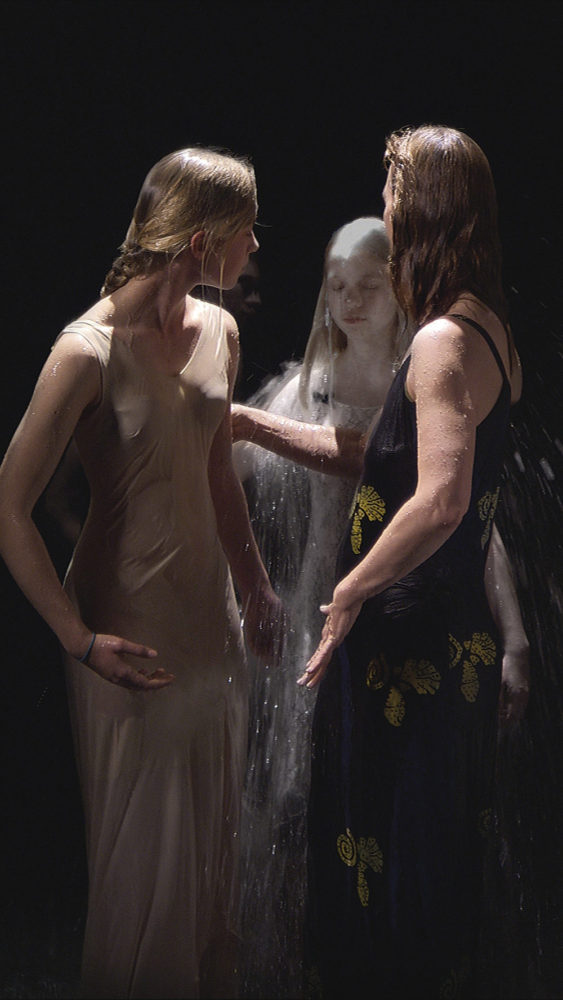
Bill Viola is one of the most notable and renowned artists on the international scene. Regarded as a pioneer of video art, he uses sophisticated audiovisual technologies with great mastery to explore and express his constant interest in what it means to be human and in the transitory nature of life.
In his work, Viola addresses universal themes such as birth, death, pain, grief, redemption and the passing of time, clearing the way for the senses to channel feelings and to generate particular moods. In his wordless creations, the image is felt and heard, and stirs and reveals deep emotions. Movement slowed down and looped immerses the viewer in an inner world, exploring in depth fundamental experiences of existence to ‘awaken the soul’.
The exhibition Bill Viola. Mirrors of the Unseen offers an extensive survey of the career of this artist, who has evolved in tandem with the advances in video technology over the last 40 years.
Round table about the collective film En la ciudad [“In the City”] (1976-77). Urban transformation, economic recovery, environmental pollution, traffic noise, the anonymity of the citizen and the media landscape are some of the themes of a feature film that explores the photochemical properties of the Super 8 and the ideological possibilities of editing. The promoter of the film project (Eugeni Bonet), one of the participating artists (Eulàlia Grau), the anthropologist Manuel Delgado and the curator of the exhibition (Albert Alcoz) will discuss the different problems touched upon in the film taking into account contextual considerations linked to the cities represented as well as to the cinematographic medium used.
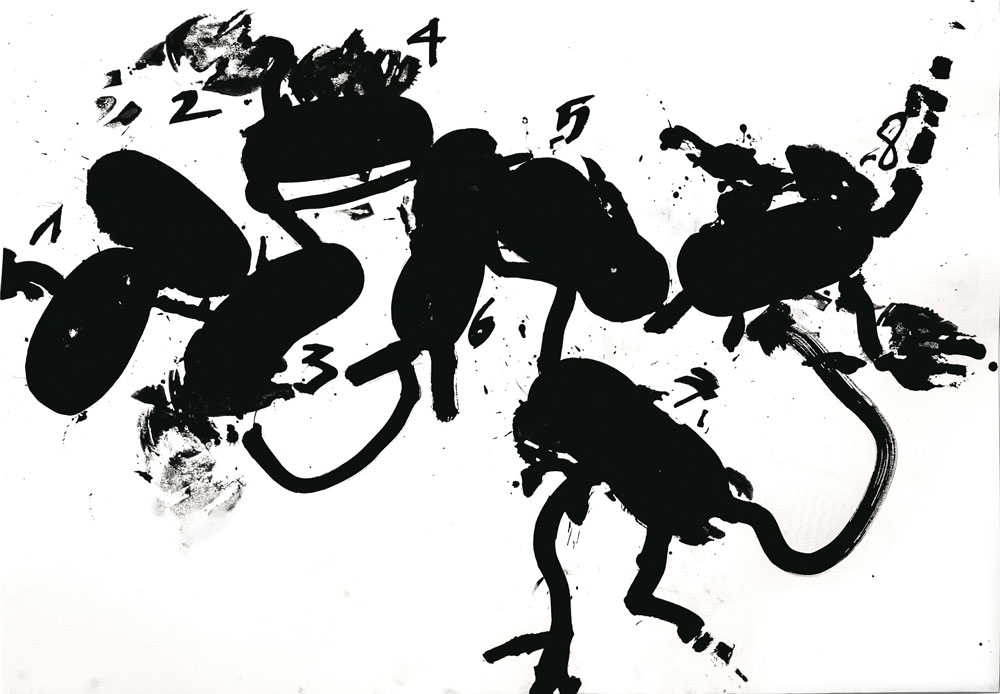
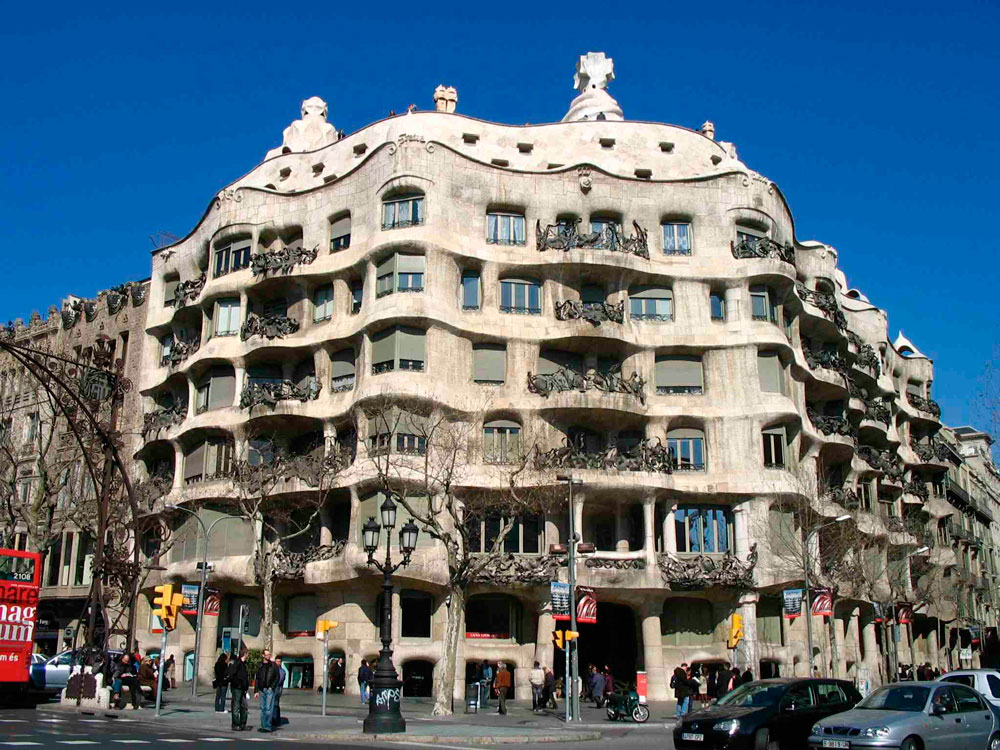
Frederic Amat_Zoetrope presents a selection of projects for interventions in natural and urban spaces, often associated with architecture, with the aim of drawing a map, a topography of the artist’s work, while seeking the poetic component present in it. The exhibition is divided into three largely independent sections that between them form a unique play in three acts that provides an excellent opportunity to discover the exuberant and original imaginary that underpins Amat’s life and his art: the first proposes to resurrect the memory of Gaudí’s building by means of an intervention created expressly for the exhibition; the second features the artist’s personal selection of works that give insights into his innermost universe; and the third brings together a group of 14 projects for interventions in public and private spaces (some of them completed, others not), a kind of ‘natural history’ archive that contains references, sketches of the creative process, making-ofs and a number of pieces that are the final results.
First Screen is a programme of monthly screenings of artists films premièrs at La Pedrera, Barcelona.
The works presented in the programme are either Spanish o European premiers and are adaquate for a cinemathic type of presentation. A delibarate emphasis was put to bring artists back to the movie theatre, and to use this exhibition model to present new works of video which were suited to this particular condition.
The presentation format relates to the criteria of the film programme, which involves tracing the exhanges and contaminations between confronted audiovisual territories.
Session 1: ROSA BARBA
Somnium (2011). Presented by the artist and Ricardo Devesa (architect, critic and editor)
Session 2: MANON DE BOER
Think about Wood, Think about Metal, (2011), Presto, Perfect Sound, (2006) and Two Times (2008). Presented by the artist and Elena Crippa (curator of Modern and Contemporary British Art at Tate Modern)
Session 3: ANTONI MUNTADAS
Alphaville e outros, (2011), extracts of On Translation: Açik Radyo, (2010). Presented by the artist and curator Valerie Smith (curator and Head of Visual Arts, New Media and Film at Haus der Kulturen der Welt, Berlin)
Session 4: FEDERIC AMAT
FORJA, (2011). Presented by the artist and filmmaker José Luis Guerin.
Session 5: MOHAMED BOUROUISSA
Boloss (2011) and Temps Mort (2009). Presented by the artist and curator Manuel Segade
Session 6: DANIEL G. ANDÚJAR AND AVELINO SALA
Cacotopía (20111) presented by the artists and curator Imma Prieto