La Virreina Centre de la Imatge
- Address
- La Rambla, 99, 08002, Barcelona
- Phone
- +34933161000
- Website
- ajuntament.barcelona.cat/lavirreina
- Map
- View map
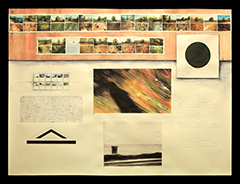
The career of Art Larson defies any attempt at pigeonholing and even questions the drive (specific to the field of art) to gain prestige from being analysed by a critical literature.
The themes that appear in The Shadow of the Flatlander include failed expectations, misunderstanding as an epistemological basis, eschatology, and the artist’s social position. The title alludes to the amusement—a far from frivolous political humour—that categorizes Larson’s approach to most of his works.
One can see in these works a rejection of big decisions and definitive projects; to paraphrase the title of the book by Larson’s compatriot Susan Sontag, everything depends where the stress falls. However, intensity also means moving through apparently contradictory territories, between unfinished or amateur works and formal virtuosity, between comic performance and video documents.
The French philosopher Jean-Luc Nancy wrote in The Inoperative Community (1983) that inoperativeness does not entail inaction but rather a plea to produce, through undetectable positions, a work from anywhere and through any material, with the aim of discarding two quintessential ontological questions: What is this? What does this mean?
We can say that this drive is observed in Art Larson’s proposals, which can be understood not only because of their processual nature but above all because of what distances them from a coherent or seamless discourse.
It is thus precisely the remains that prevent art from closing in on itself, exulting within its limits. Larson somehow operates with the remains, through which he achieves a modulable language, a language that leaps from sensitivity to humour, from the fragile to the inappropriate.
On viewing the works that make up The Shadow of the Flatlander, one wonders what would become of museums if they had not rejected tentative forms, if, instead of embracing a host of dogmatisms, they had initiated a sort of journey to nowhere, an odyssey from all places and from none in particular.
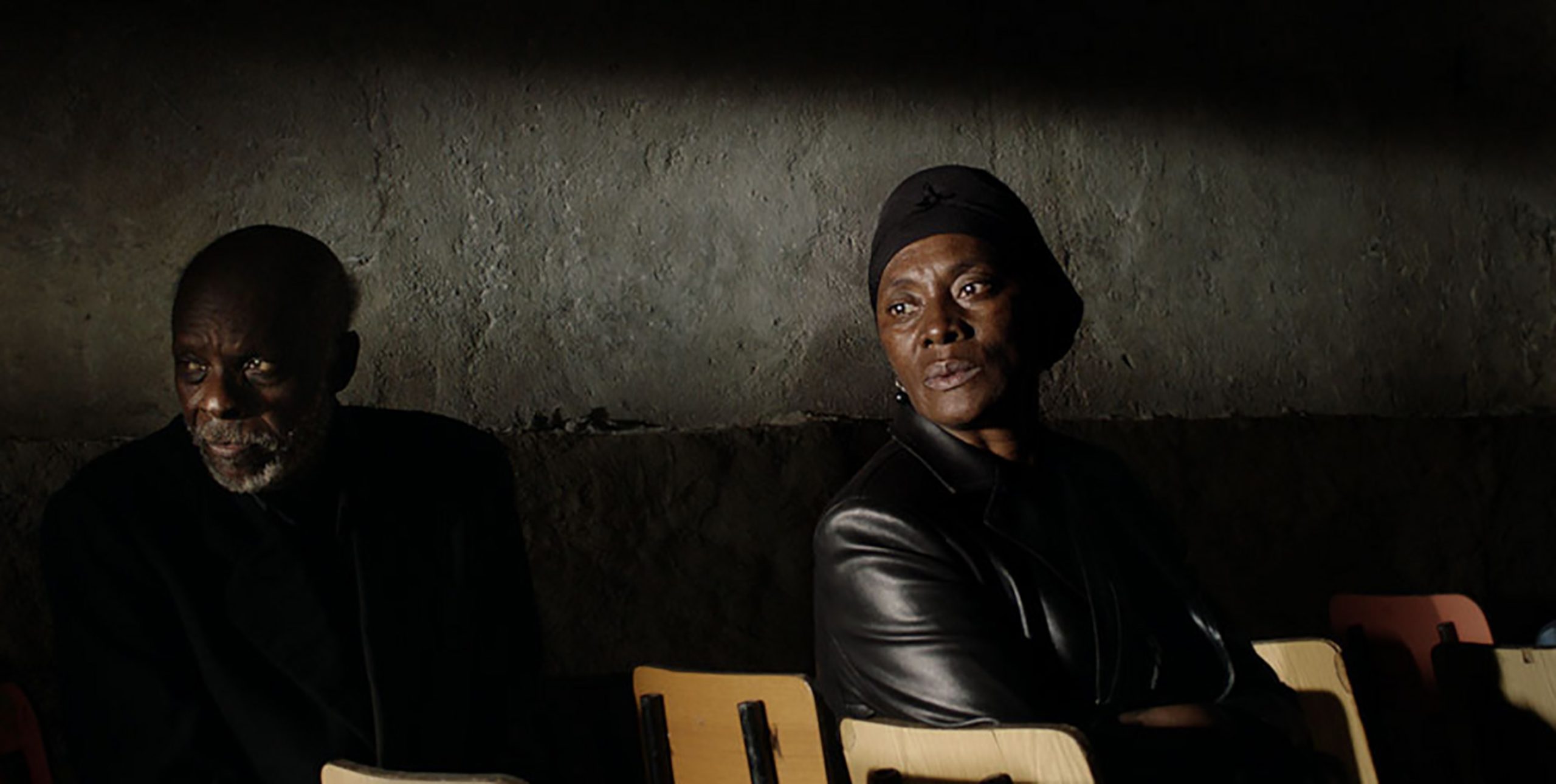
Pedro Costa (1959) is among the film-makers most appreciated by new film audiences and international critics, especially since the release of In Vanda’s Room (2000). His latest feature film, Vitalina Varela (2019), received the Golden Leopard for best film at the Locarno Film Festival.
His cinematographic approach is based on certain themes and ways of producing images, including the technical and aesthetic aspects and emphasizing the dimension of the work (economics, production structure, shooting and editing times, types of relations, etc.).
The Song of Pedro Costa is an exhibition conceived for La Virreina Centre de la Imatge. It approaches the film-maker’s work from the specific perspective of the direction it may take in the future. The exhibition revolves around faces, voices and songs as signs of what is most particular to each person and as a response to the combined pressure of history and personal life—a response to suffering and loss.
The exhibition is based on ten works, with titles alluding to the idea of singing: Down to Earth – Scrapbook (artist’s book, 1994) and Songbook of Fogo (a documentary video to display the contents of the notebook), Balar de Balibar (projection, 2009), Ventura’s Song (projection, 2014), Our Voices Will Sing No More (a set of three independent works projected in different rooms of the exhibition, 2022), Stone Song (five photographs on paper, 2015), Morna of Shadows (installation with five projections on screens suspended from the ceiling and soundtrack, 1994-2022) and Songs to Avoid Suicide (installation made up of the works On Suicide and To the Little Radio, both from 2022).
The five independent works that make up Songs to Avoid Suicide and Our Voices Will Sing No More were produced expressly for the exhibition The Song of Pedro Costa. Morna of Shadowsshows significant variations from earlier versions. Balar de Balibar, a fragment of the film Ne change rien, is presented in this form for the first time.
An essay also entitled The Song of Pedro Costa written by the exhibition’s curator, Javier Codesal, was published to accompany the exhibition.
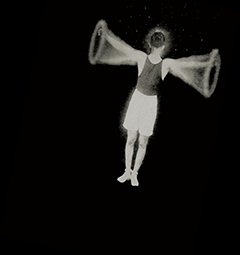
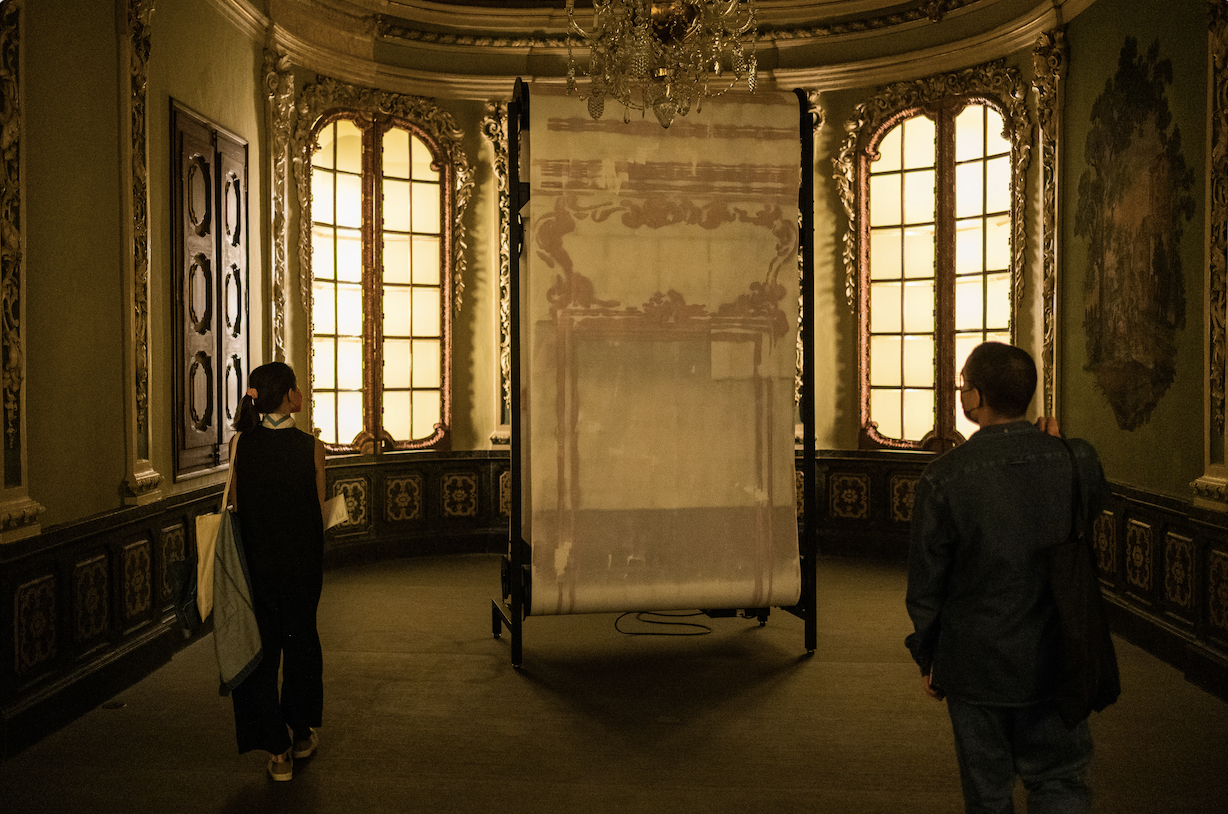
If digital devices accumulate so much data, it is to project all kinds of forecasts for the future. This is the function of algorithms, which have taken over from the old oracles. However, these new auguries have all the points to be fulfilled: when they predict the future, they discard from the present everything that does not make it possible. Likewise, they edit the past only in relation to the prediction they have made. As a result of these logics, prediction has become a tool for refining the possibilities of what can be experienced and thought in the future.
This is happening right now, under the umbrella of emergency societies where there is no time, the present is growing and only the hope of the future remains. The prediction arises as the force capable of re-expanding time, of re-recovering it, but it also reveals and allows us to see what happens to memory in a data regime in which the depository images of life have become vident and say things we do not know.
Here we have some of these new sybils. When we asked them about the last Biennial 2064, the great event of immersive art, they ended up talking about forgotten works, marginal synergies, visions discarded over forty years, some of them exhibited in the Pou Rodó showroom. They are glitches, like the actions of Kriska Li in the 2030s, the events of the Voyager probe, anarchronism, the psychic currents of the 1940s, the AIconostasics… experiments aimed to spoil the forecast, to interrupt the prediction, to desert the future. Many of these currents concurred in assuming that forecasts are also capable of neutralising omens—another of the effects of the rupture in causal time generated by chronopolitical technologies. If a model is capable of suggesting a threat will materialise, it can also foster the appearance of false positives: controversial demonstrations that mock the determinism of the prediction.
Curators: Roc Albalat, Jorge Luis Marzo and Arturo fito Rodríguez, from the collective Ángela Novo
Artist: Roc Albalat, Clara Boj and Diego Díaz, María Cañas, Col·lectiu Estampa, Nuria Giménez Lorang, Jorge Luis Marzo, Júlia Montilla, Àngela Novo, Roc Parés, Arturo fito Rodríguez
Free admission
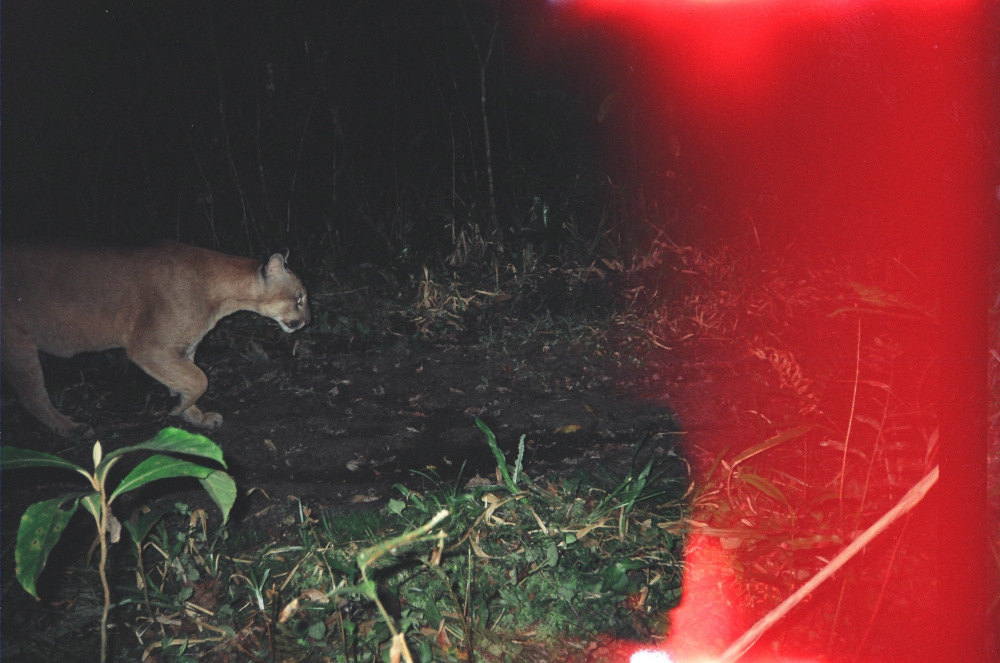
Julià’s works trigger very arduous processes of research into the historical, political and scientific regimes under which the successive cultures of the image developed. Based on an experimental understanding of the document close to that of the avant-garde filmmakers or their forerunners in optical engineering, his works adopt languages ranging from photography to performance, from expanded cinema to installations, and they invoke an equal variety of keys for understanding them. Julià operates with procedures analogous to those of the micro-historical tradition, as he rescues aspects that are sometimes anecdotal or neglected by the prevailing accounts and that he uses to address the contextual specificities through which he carries out each project.
Notes on the Missing Oh (2009-2015), a set of pieces about the trivialization and spectacularization of war; Cat on the Shoulder (2013-ongoing), on the links between machine, device and body; and Ruinas da Fala (2009-2011), in which Julià reviews the experience of the Fourierist phalansteries in Brazil during the 19th century, are a few examples that show his explorations on what we could call a technological archaeology of the production, distribution and consumption of images.
From another perspective, a possible thematic structure for this exhibition is offered by the symbolic and ideological use of architecture in the proposals Truc Trang Walls (2006) and, above all, We Used to Talk About Objects as Found (2010); the conflictive relations between central-European utopianism and colonization in Marcus Spring Cottage (2008); violence as an iconoclastic gesture in Marginalia I – XI (2017); a reflection of an agonistic masculinity in Hot Iron Marginalia (HELMETCAM) (2017); and the prolongation and translation of imperialism through the Hollywood entertainment industry in A Very White Flower (2020). In these works, Julià analyses the potential of things that are misunderstood, fragmentary, unsuccessful and lacking in normative utility (the useless referred to in the exhibition’s title), which express the dimensions, beauty and scope of certain endeavours.
Finally, the exhibition includes two projects conceived for La Virreina Center de la Imatge: the piece Exercise for an Overexposed Landscape (# 3) (2021); and America’s Sweethearts (2021), in co-production with the Centre d’Art La Panera in Lleida, a work on the closure of cinemas during the pandemic that recovers the paving of one of these establishments. The performances The Penitential Tyrant: Dolores Is Pain (2019) and The Captain, the Girl and Politics as Applied to Appetite (2010) are also presented weekly, at different times.
Curator: Valentín Roma
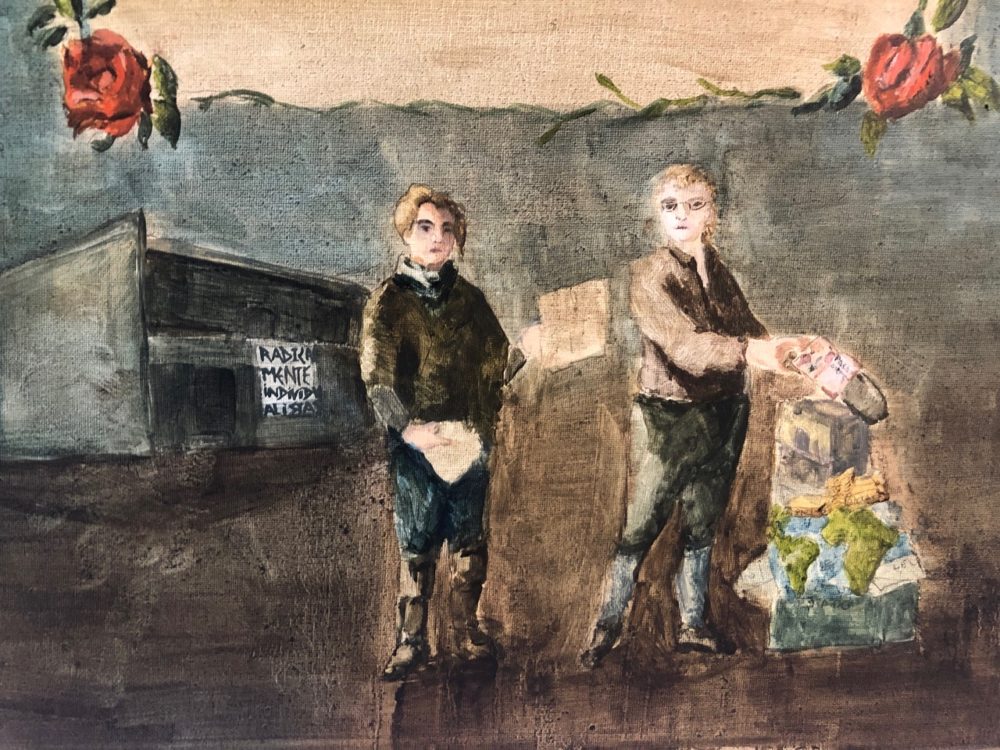
El treball de Daniela Ortiz (Cuzco, Perú, 1985) pretén crear espais de tensióper explorar nocions de raça, classe, nacionalitat i gènere i analitzar el comportament social com a estructura basada en mecanismes d’inclusió i exclusió. Durant els darrers anys, ha dut a terme diversos projectes de recerca que qüestionen la migració global, així com les accions que posteriorment han fet els estats dels països receptors i les seves societats.
Durant LOOP, La Virreina Centre de la Imatge presentarà Aquestaterra no serà mai fèrtil per haver parit colons, una exposició dedicada a la pràctica de Daniela Ortiz, comissariada per Valentín Roma. L’exposició inclourà una àmplia selecció de vídeos realitzats per la artista.
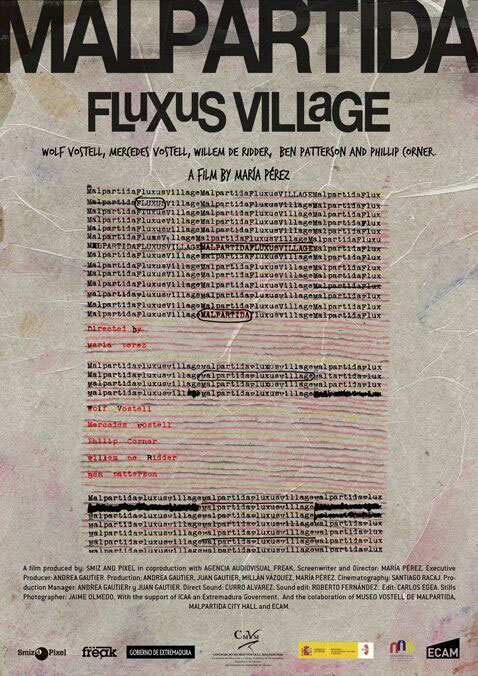
The exhibition Voyage gathers a selection of video installations made by Robert Cahen during the last fifteen years, as well as regular projections of the artist’s audiovisual production since 1970, for cinema, video and television. Among the greatest innovators of the moving image language in Europe, Cahen’s works analyze the notions of voyage, landscape, portrait, and time in order to access the thresholds of the image, the sounds and the silence of the world and its inhabitants. The show, thus, takes the form of an invitation to the viewers to take on a journey through “the deep emotions, beautiful yet terrible, that constitute the basis of our existence”, as in the artist’s words. This exhibition is the most exhaustive survey of Robert Cahen’s work ever presented in Spain.
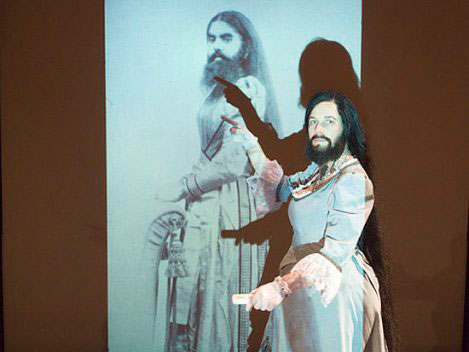
The purpose of the programme of parallel activities for the exhibition ‘Claude Cahun’ held at la Virreina Centre de la Imatge in 2011-2012 was to bring the image of this artist up to date and highlight her continued validity with regard to contemporary practices and discourses. Nonetheless, this exercise is based, not only on pointing to contemporary works, artists or discourses that invite one to think of Cahun as a precedent, but also on exploring the successive ways in which the critical frames through which “her” work has been studied have been updated themselves. These revivals and evaluations of Cahun from different perspectives have thrown light on and complemented the many different facets of the artist’s creative practice.
Session 1: Queer interstices: Pauline Boudry and Renate Lorenz
Presented by Juan Vicente Aliaga, and screening of ‘Normal Work’, ‘Salomania’, and ‘N.O. Body’ by Pauline Boudry and Renate Lorenz.
Session 2: Self-portrait in four hands: affective performativity.
Conversation betweed Barbara Hammer and Viginia Villaplana and screening of ‘ ‘Lover Other. The Story of Claude Cahun and Marcel Moore’ and ‘Tender Fictions’, by Barbara Hammer.
Session 3: Paris was a Woman
Talk with François Leperlier, Greta Schiller and Andrea Weiss, and screeining of ‘Paris was a Woman’ by Greta Schiller
Session 4: Queer Surrealism
Presentation by James Boaden, and screening of ‘The Liberation of Mannique Mecanique’ and ‘Luminous Procuress’ by Steven Arnold
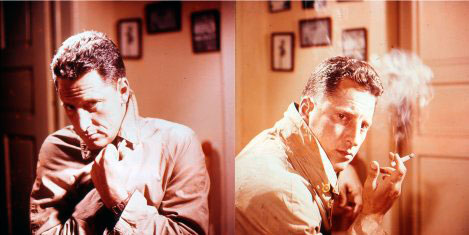
These talks, conversations and screenings are based on Bonillas’ research on the J. R. Plaza Archive, which was presented at La Virreina Centre de la Imatge in 2012. As well as including the artist’s firsthand account of his work, the sessions also strike up a dialogue with other contemporary artists using similar elements such as family archives, the idea of manipulating and looking afresh at inherited materials or the tension between documentary, biography and fictional narratives.
Session 1. Iñaki Bonillas and Rafael Lemus: Performative Conversation
Session 2. Iñaki bonillas as seen by Joan Fontcuberta: talk
Session 3: Rethinking the family archive in Iñaki Bonillas and deimantas Narkevicius, presented by Ángela Molina.
Session 4: Iñaki Bonillas’ work as seen by Lola Lasurt and Lúa Coderch
Session 5: Iñaki Bonillas’ work as seen by Paco Chanivet and Ryan Rivadeneyra
Session 6: Iñaki Bonillas’ work as seen by Sergi Botella
‘Música, mentides i cintes de vídeo’,(Music, lies and VHS Tapes) is a programme of talks with different specialist to debate and think about common issues relating to pop music and visual arts. The discussions centered on those moment when these artistic practices are reciprocally influence one another, and shape the field of experimentation, utopia and political incorrectness.
SESSION 1: Am I a musician in an artist’s body or an artist in a musician’s mind?
Abel Hernández. Musician and composer in projects like El Hijo, Emak Bakia o Migala, music producer and and author of the blog about music La Columna de Aire (www.elcultural.es), He is also art critic and curator.
Nando Cruz.Writer and cultural journalist. He, is a regular contributor in “Rockdelux” and El Periódico de Catalunya.
Ignacio Juliá. Cultural journalist (Ruta 66, Cultura/s La Vanguardia, Babelia/Cultura El País)
Javier Panera (Moderator) Curator of the exhibition This is Not a Love Song
“Rock Art” is an ambiguous term, —and, for some, opposed to the nature of popular music—, which has been used since the sixties to define a broad subgenre that is characterized by its experimental tendency and some intelectual ambition, that sometimes generates its own feedback to the visual arts. It is not surprising that musicians like John Lennon, David Bowie, Brian Eno, Laurie Anderson, Michael Stipe or Kim Gordon were formed at art schools before turning to music.
SESSION 2: This is not MTV
César Pesquera: Art Director and visual artist
Carles Congost: Visual artist and musician
Javier Panera (Moderator): Curator of the exhibition ‘This is Not a Love Song’
The video, faithful support of the record industry during the period of maximum expansion, has grown into a omnivorous monster that vampirizes visual art ideas, the cinema, comic or advertising. Yet their commercial factor has not prevented it becomes used by creators to circumvent the constraints promotional gender, appropriates aesthetics and visual deconstruct stereotypes advocating chains such as MTV to launch messages or parodic types critical.
SESSION 3: Pop politics? Artistic practices, rock and activism
David G. Torres. Art critic, co-director of A*DESK Instituto Independiente de Crítica y Arte Contemporáneo de Barcelona
Jaime Gonzalo. Journalist and writer
Javier Panera (Moderator): Curator of the exhibition ‘This is Not a Love Song’
Some recent exhibitions have focused on the moments when pop music and contemporary art have intervened in the field of activism and political incorrectness. They reveal the potential of musical underground cultures to generate ‘alternative public spheres’. Within this context, both musicians and visual artists can become either actors of the hegemonic cultural system or critical agents able to produce small forms of resistance.
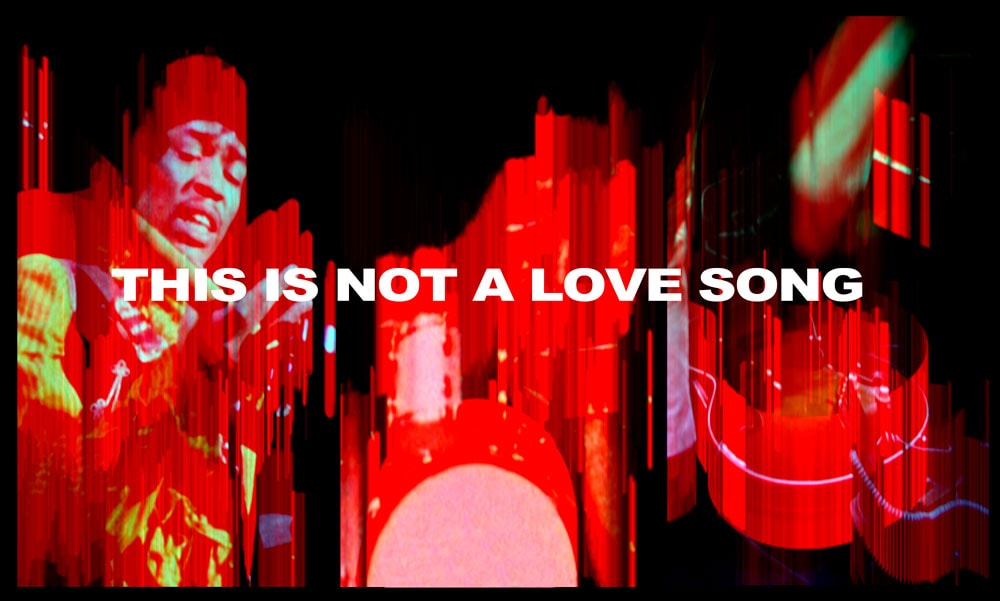
Since the 1960s, various generations of avant-garde artists have integrated into their production processes elements that are related with the attitudes and imaginaries of pop music. Artists of the calibre of Andy Warhol, Vito Acconci, Dan Graham, Nam June Paik, Joseph Beuys, John Baldessari, Rodney Graham, Tony Oursler, Christian Marclay, Mike Kelley, Douglas Gordon, Jeremy Deller o Damien Hirst, and many more, down to today, have approached this genre in some of their most outstanding works, sometimes even collaborating with different rock bands or recording their own albums. Similarly, leading musicians such as John Lennon, David Bowie, Pete Townshend, Syd Barret, Brian Eno, Alan Vega, David Byrne, Laurie Anderson and members of essential bands of the last two decades, like Sonic Youth, REM, Blur, or Franz Ferdinand all trained at art school before becoming professional musicians.
From this approach and bearing in mind that the origins of video-art run almost parallel to those of pop music, the project is divided into two sections:
1- Pop and video-creation. Shared genealogies
This section includes more than 30 significant works in the history of video art and experimental film from the 1960s to 2013 that are formally and conceptually related to the iconographies of pop and rock, with works by Andy Warhol, Nam June Paik, Yayoi Kusama. Dan Graham, Tony Oursler, Vito Acconci, John Baldessari, Christian Marclay, Douglas Gordon, Candice Breitz, Jeremy Deller, Mark Leckey, Jon Mikel Euba, Largen & Bread and others.
2- Music for your eyes. Visual arts and the aesthetics of the videoclip
This section is a journey through the history of the musical videoclip to review the careers of the most important authors of the last 40 years and their connections with contemporary visual arts and cinema and includes a programme of music videos by artists like Andy Warhol, Tony Oursler, Judith Barry, Robert Longo, Joan Morey, Damien Hirst, Ana Laura Aláez, Carles Congost, Pipilotti Rist, Dara Birnbaum, Joseph Beuys, Adel Abidin, Hugo Alonso, Charles Atlas, Marc Bijl, Olaf Breuning, Charley Case, Cheryl Donegan, Jorge Galindo i Santiago Sierra, Jesús Hernández , Bjørn Melhus, César Pesquera, John Sanborn, Kit Fitzgerald (Antarctica), etc.