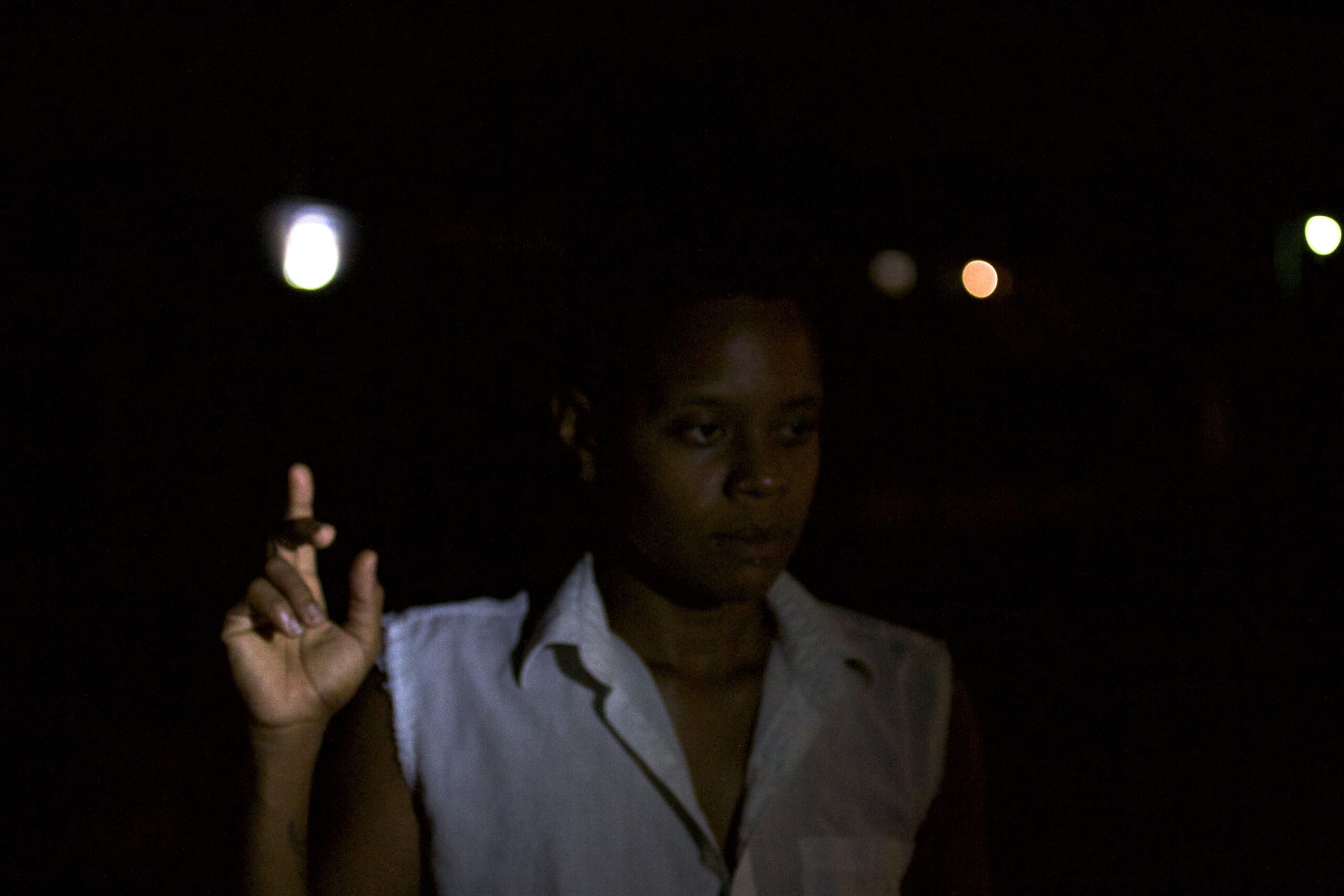
Featuring seven short videos made by artists from across the Americas, Spells Upon The Land highlights humanity’s consequential relationship to the land. Each of the artworks in this program conjures the social and political imaginaries of the earth, an awareness of animal intelligence, and the poetics of protest and play.
Programme:
Paul Kos. Ice Makes Fire, 2004. 2:53 min
Ana Vaz. Atomic Garden, 2018. 7:34 min
Elena Damiani. Intersticio, 2012. 5:26 min
Colectivo Los Ingravidos. Coyolxauhqui, 2017. 9:46 min
Minia Biabiany. Learning from the white birds, 2021. 5:58 min
Beatriz Santiago Muñoz. La Cabeza Mató a Todos, 2014. 7:33 min
Camilo Echeverri. El mato, 2023. 6:23 min
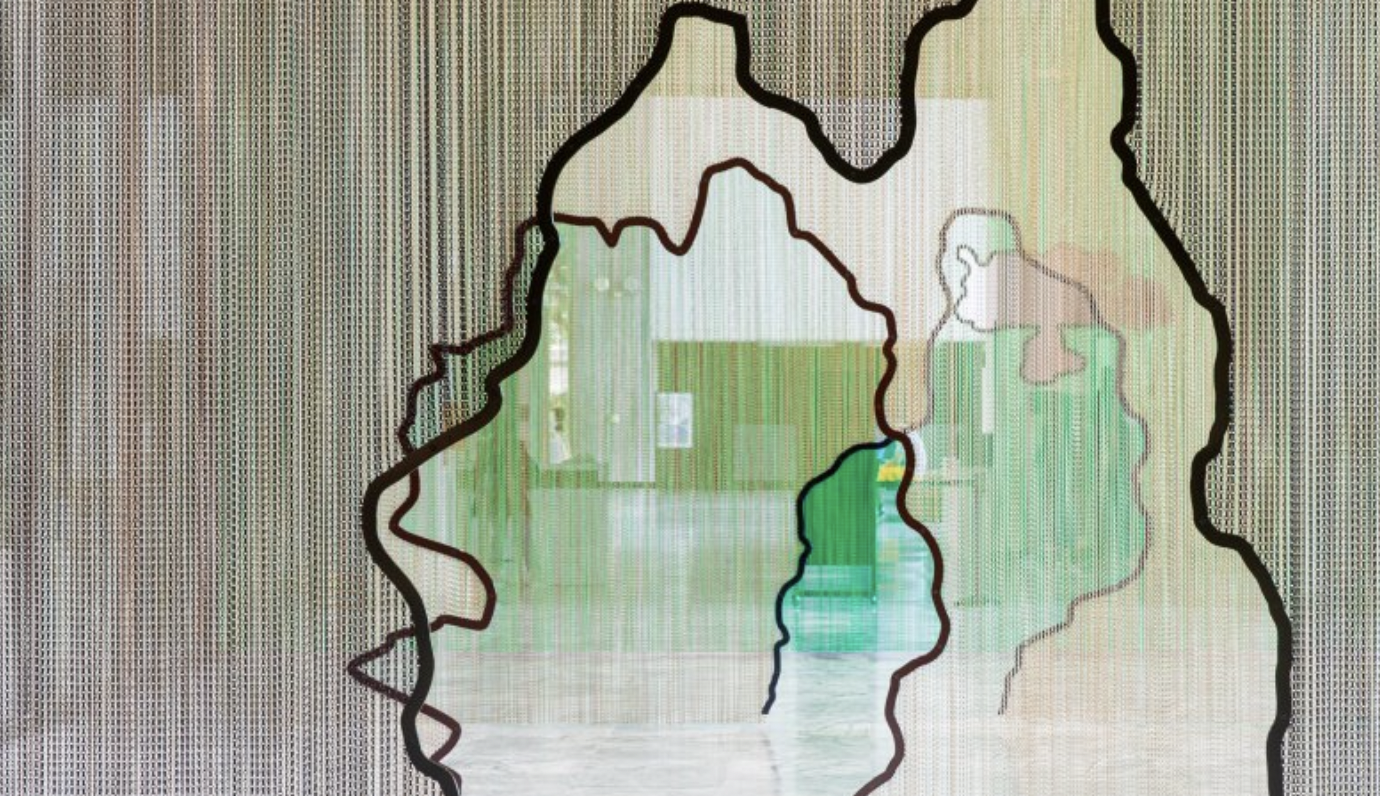
This is the first retrospective exhibition in Spain of the work of Daniel Steegmann Mangrané, born in Barcelona in 1977 and resident in Rio de Janeiro for the last fifteen years. A place, according to the artist, where he can always be in direct contact with the world’s most pressing needs, whether ecological, political or social, all of them subjects reflected in his work.
Interested in exploring the complex interdependence of the organic world and human action, Steegmann focuses on the Amazonian Forest of Brazil, while also adopting the theoretical framework of the renowned anthropologist Eduardo Viveiros de Castro, who argues against the false dichotomy between humanity and the animal world by putting forward the notion that we are all part of a shared equilibrium and incorporating the paradigm of Amerindian perspectivism.
With a language close to Brazilian Neo-Concretism, Steegmann Mangrané explores the migration and affinities of forms between nature, art and architecture. Both in his fragile sculptures, made of intervened organic material, and in his creations of augmented reality, he experiments with the correspondences between organic and geometric forms and with the complex network of dependencies that exist in the biological order.
The exhibition includes drawings, paintings, photographs, sculptures, films and installations from the late 1990s to the present. It will be accompanied by an artist’s book, in which Steegmann Mangrané puts forward a circular visual cycle that begins with the artist’s early works and moves toward the present, only to return to the past, with collage interventions on these and other works. The publication has been co-produced with the Museum of Contemporary Art Kiasma, Helsinki, and the publisher of artists’ books BOM DIA BOA TARDE BOA NOITE from Berlin.
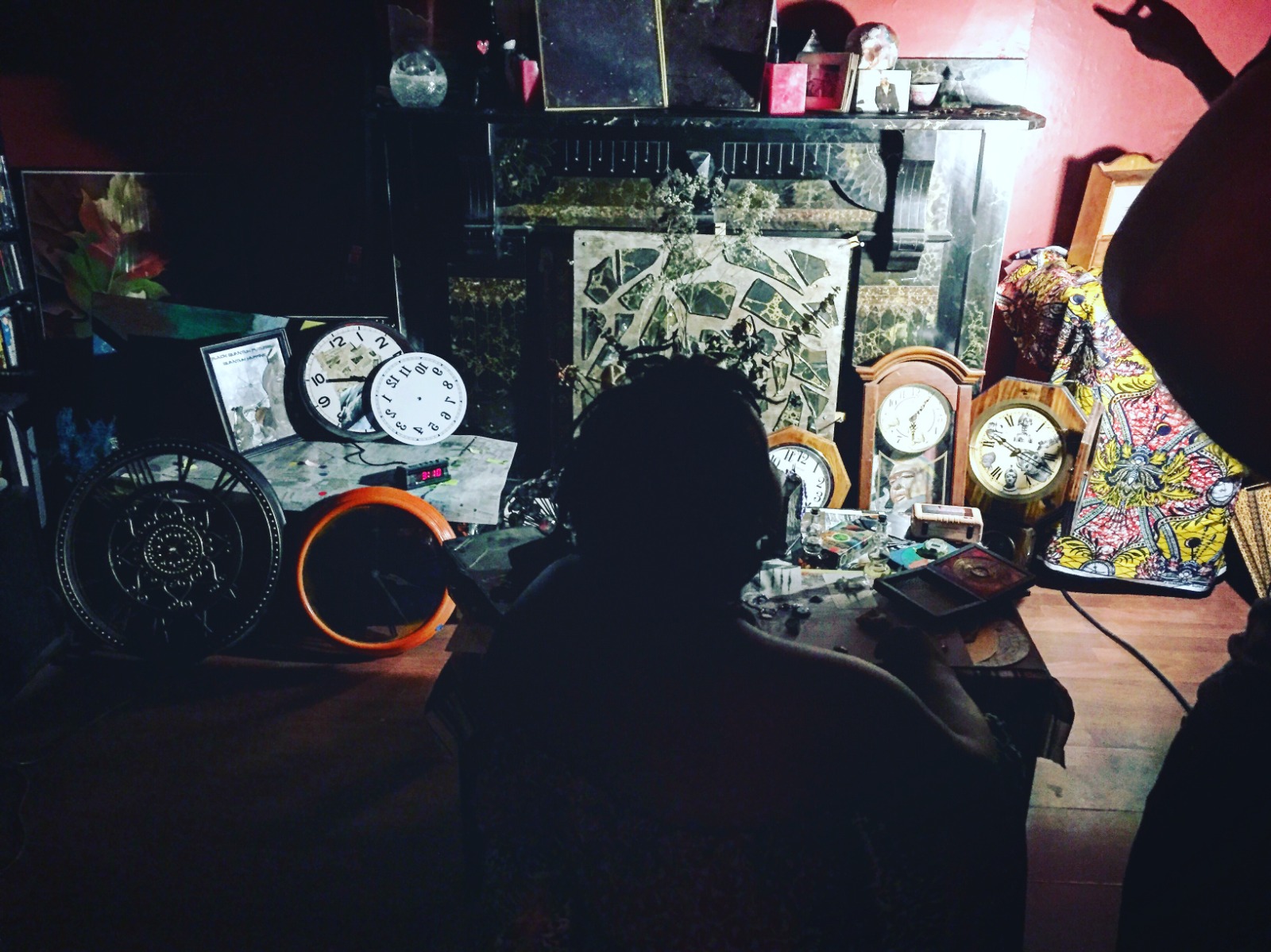
As part the 2022’s edition of the LOOP Festival, dedicated to exploring the multiple folds of time, this programme gathers together a series of video works made by Black Quantum Futurism (BQF) between 2017 and 2021. Based in Philadelphia (US), BQF is an interdisciplinary creative practice between Camae Ayewa and Rasheedah Phillips that, by way of different languages and media, proposes new interpretations of time and space, thus, questioning the constraints of linear time.
PROGRAMME:
Time Travel Experiments, 2017 (9min 30sec)
This video presents DIY time travel experiments from an embedded time travel manual in the speculative fiction book Recurrence Plot (and Other Time Travel Tales), written and published by Rasheedah Phillips. Depicted time travel experiments employ the concept of Black Grandmother Paradoxes, which emphasize matrilineal or matri-curvature timelines that are feminine and communally-generated, where the future emerges into the past by way of omens, prophecies, and symbols, while the past is a space of open possibility, speculation, and active revision by multiple generations of people situated in the relative future. The video has been written and directed by BQF, shot and edited by Bob Sweeney.
Black Space Agency Training Video, 2018 (4min 9sec)
On the occasion of the 50 year anniversary of the enactment of the United States Fair Housing Act, Black Space Agency Training Video explores the chronopolitical imaginaries of the Civil Rights and Black Liberation movements during the space race, particularly as it unfolded in North Philadelphia in 1968. The series follows the pattern of entanglements in the fight for affordable and fair housing, displacement/space/land grabs, and gentrification for a better understanding of its present day implications on Black spatial-temporal autonomy.
All Time is Local, 2019 (5 min)
Like politics and the weather, all time is local. Considering time’s intimate relationship to space and locality, this project continues the work of BQF in recovering and amplifying historical memory of autonomous Black communal space-times in North Philadelphia, meditating on the complex, contested temporal and spatial legacies of historical, liberatory Black futurist projects based primarily in North Philly -such as Progress Aerospace Enterprises, Zion Gardens, and Berean Institute.
Write No History, 2021 (15min 34sec)
Write No History is a short, speculative three-panel film featuring found and archival footage of The Temporal Disruptors, members of an ancient Secret Society of Black scientists, healers, and writers, spread out across time in the relative past/present/future at one of their meeting lodges, the Hatfield House in Philadelphia, performing quantum time capsule burying and unearthing rituals to transport quantum time capsules containing tools, maps, clocks, and codes as a technology to hack colonized timelines. Write No History is directed and produced by BQF with filmmaker Bob Sweeney. Featured Temporal Disruptors include: Dominque Matti, Iresha Picot, Marcelline Mandeng, Vernon Jordan III, Angel Edwards, Vitche-Boul Ra, Sheena Clay, Camae Ayewa, Alex Farr, Rodnie King, and Riot Dent.
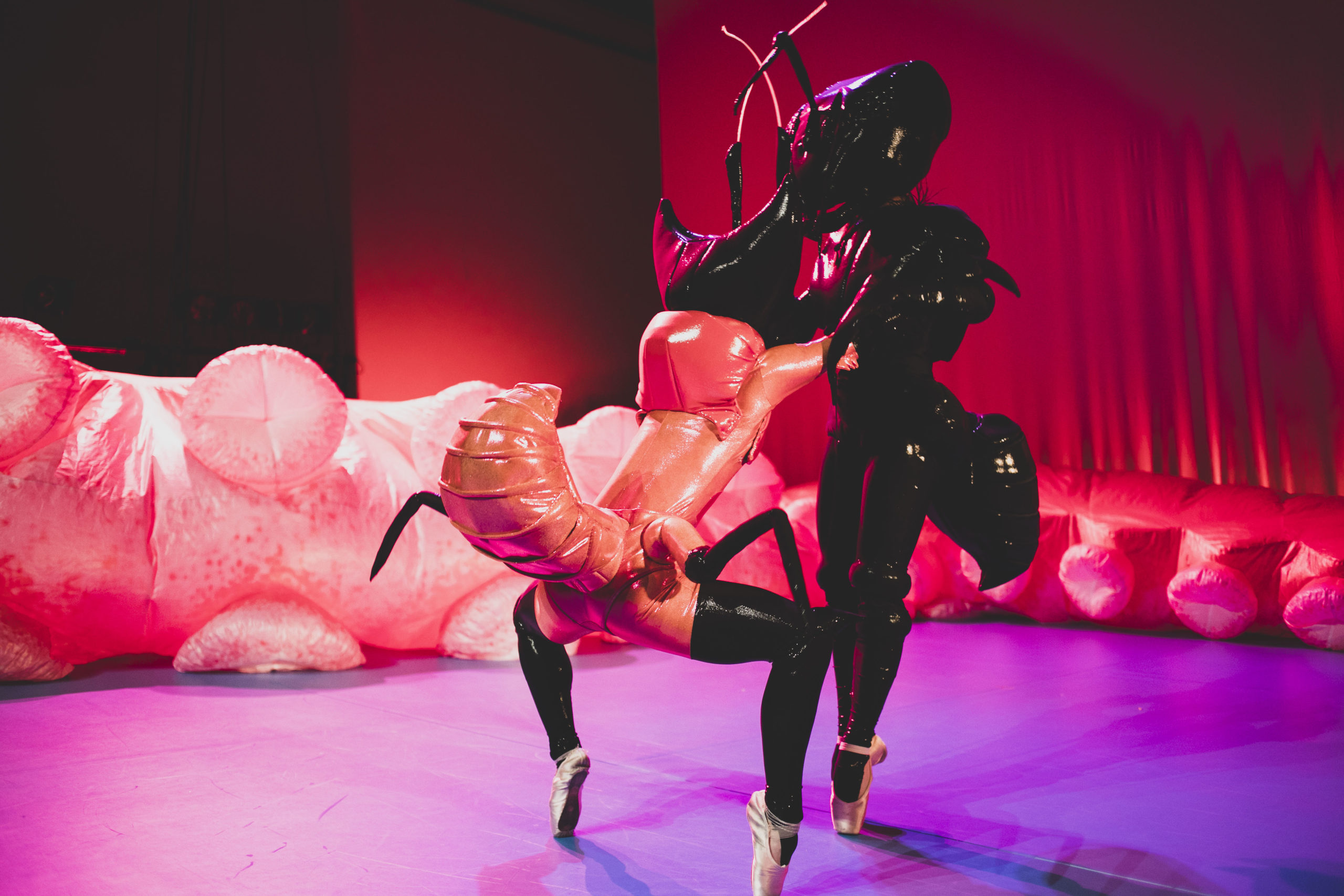
The Japanese term Hakai, stands for “destruction”; yet in Japanese culture, destruction is the starting point to improve things and rebuild. DUB music, a subgenre of Reggae with a prevailing presence of echoes, electronic effects and repetitions, originates in Jamaica from an error made by a sound engineer who forgot to record the vocal track on the instrumental. In ‘HAKAI DUB’, the artist join forces with dancer Erika Miyauchi to share her quest for the limits of real-time composition, departing from DUB music.
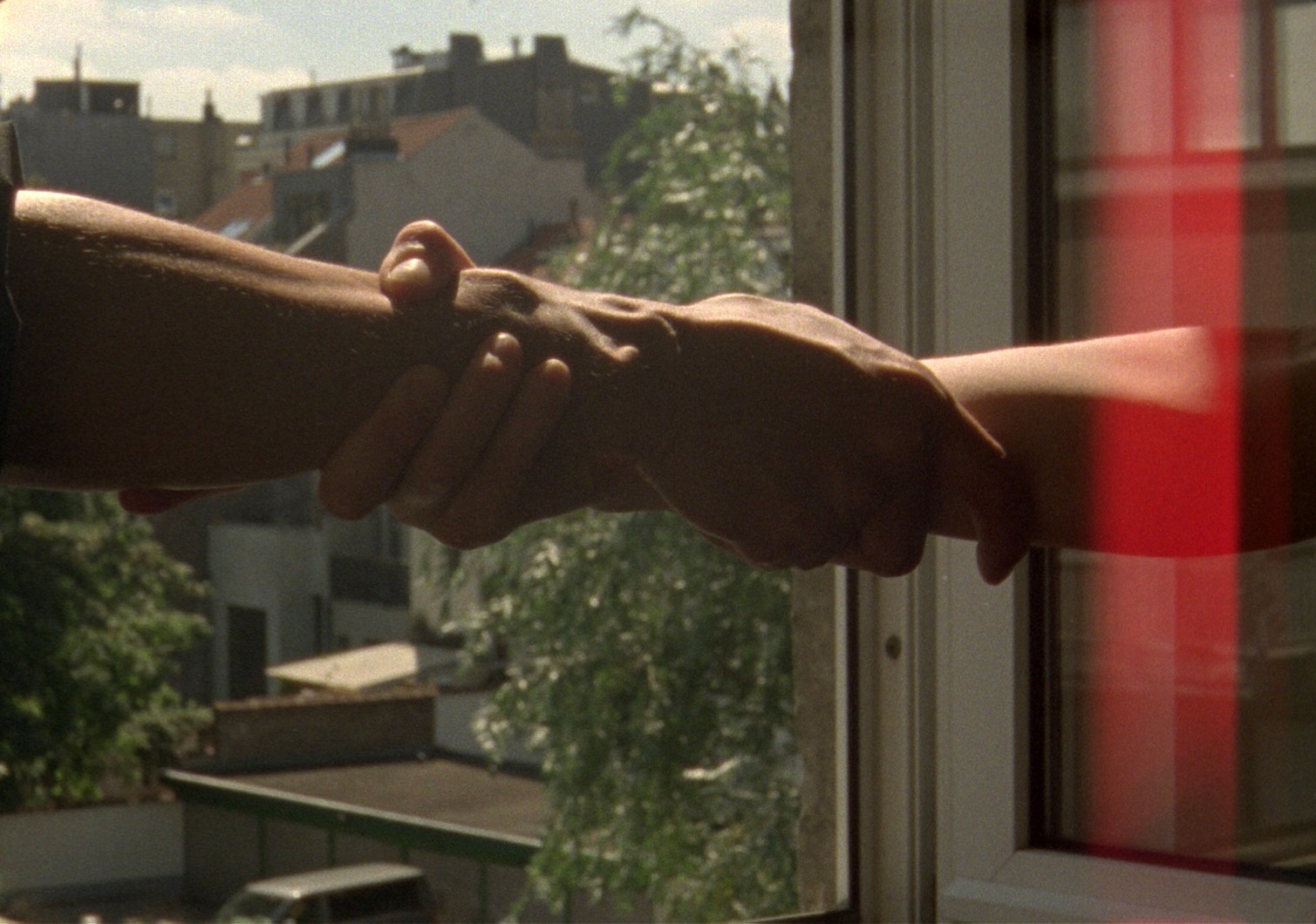
Free entrance, limited seating
Mascarilla 19 – Codes of Domestic Violence, the first project undertaken by Fondazione In Between Art Film, took the form of 8 new video projects by 8 international artists. With this ambitious series of commissioned works, the foundation wanted to further the international debate on the dramatic issue of domestic abuse, which has been exacerbated by the long months of the Covid-19 emergency.
The 8 artists who were invited to explore the theme of domestic violence during the unprecedented global lockdowns in 2020 are Iván Argote (Colombia/France, b. 1983), Silvia Giambrone (Italy/UK, b. 1981), Eva Giolo (Belgium, b. 1991), Basir Mahmood (Pakistan/Netherlands, b. 1985), MASBEDO (Italy, Nicolò Massazza, b. 1973 and Iacopo Bedogni, b. 1970), Elena Mazzi (Italy, b. 1984), Adrian Paci (Albania/Italy, b. 1969), Janis Rafa (Greece, b. 1984).
Mascarilla 19 (Mask 19) is the name of a campaign launched by Spanish Prime Minister Pedro Sanchez in response to an appeal by UN Secretary-General António Gutierrez and to the frightening increase in abuse during the pandemic, when many women, due to the lockdown, found themselves trapped at home and unable to ask for help. In a world that is digitally hyperconnected but physically separated, the victims of domestic violence found themselves in a state of double isolation, having no way to communicate with the outside world. This situation led to the idea of a secret SOS signal, a code word that victims of violence could use at pharmacies around Spain, alerting staff to set an emergency response process in motion.
With a project that directly alludes to this campaign, Fondazione In Between Art Film wanted to call attention to a global emergency while also aiding artists, providing them with tangible support to produce new work at a time when all artistic undertakings had been put on hold.
The 8 artists’ films that make up Mascarilla 19 – Codes of Domestic Violence offer different perspectives on a shared theme, captured in its full scope and urgency: each work expresses a unique sensibility, through languages and approaches that range from documentary-style exposé to the symbolic, psychological exploration of relationship dynamics.
THE PROGRAMME
On the occasion of its Spanish premiere, a selection of four films from the programme will be presented. The screening will be followed by an open conversation with curators Leonardo Bigazzi, Alessandro Rabottini and Paola Ugolini.
Prior inscription is requested. The schedule of the session will be published soon.
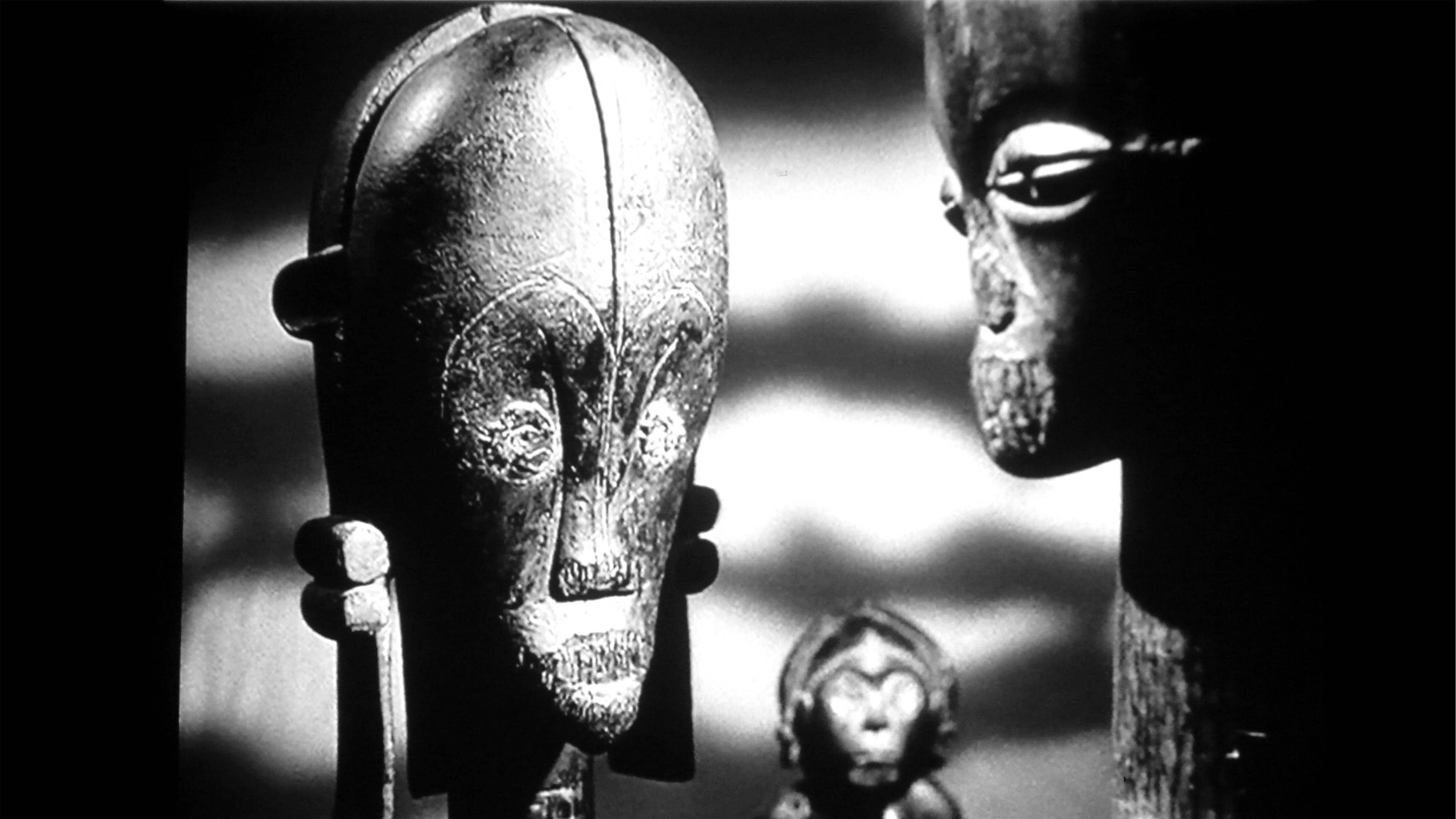
In the film Les statues meurent aussi, Resnais and Marker wonder why some works (African art or black art, they say) are to be found in the Musée del Homme, the museum of anthropology, whereas others, such as Greek and Roman classical art, are exhibited in the Musée du Louvre, the art museum. Each museum inserts them in a different context and genealogy: the history of Western art, or the history of humanity and consequently of otherness. The museum: the place of categories. We sense that in the two museums the effects and consequences of death are different.
Ariella Azoulay with Un-Document. Unlearning Imperial Plunder (2019) departs from the work of Resnais and Marker and places it into the present, to claim that these objects, sculptures or statues looted in the imperial exhibitions, in fact, do not die. Un-Document. argues that there is a strong connection between the looted objects in European museums and the demands of asylum seekers trying to enter the countries of their former European colonizers. The rights of the undocumented are inscribed in the looted objects themselves: the colonizers did not steal only statues, but the rights inscribed in those objects. Even so, the statues are still alive and can be recovered, and the rights inscribed in them can be renewed.
María Iñigo Clavo is a researcher, curator and teacher. Her research interests are colonialism, curation and museology, modernity and its inventions of otherness, untranslatability and art in Latin America. On the occasion of this session, she will be dialoguing with Guatemalan artist Benvenuto Chavajay Ixtetelá to think beyond polarization and share positions.
The project is part of the exhibition Becoming Immortal and Then Dying, curated by Caterina Almirall at La Capella.