Museu de la Música de Barcelona
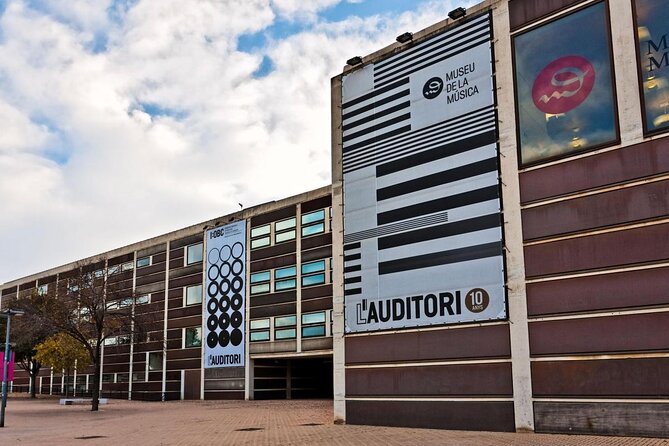
- Address
- Carrer de Lepant, 150, 08013, Barcelona
- Website
- ajuntament.barcelona.cat/museumusica/en
- Map
- View map
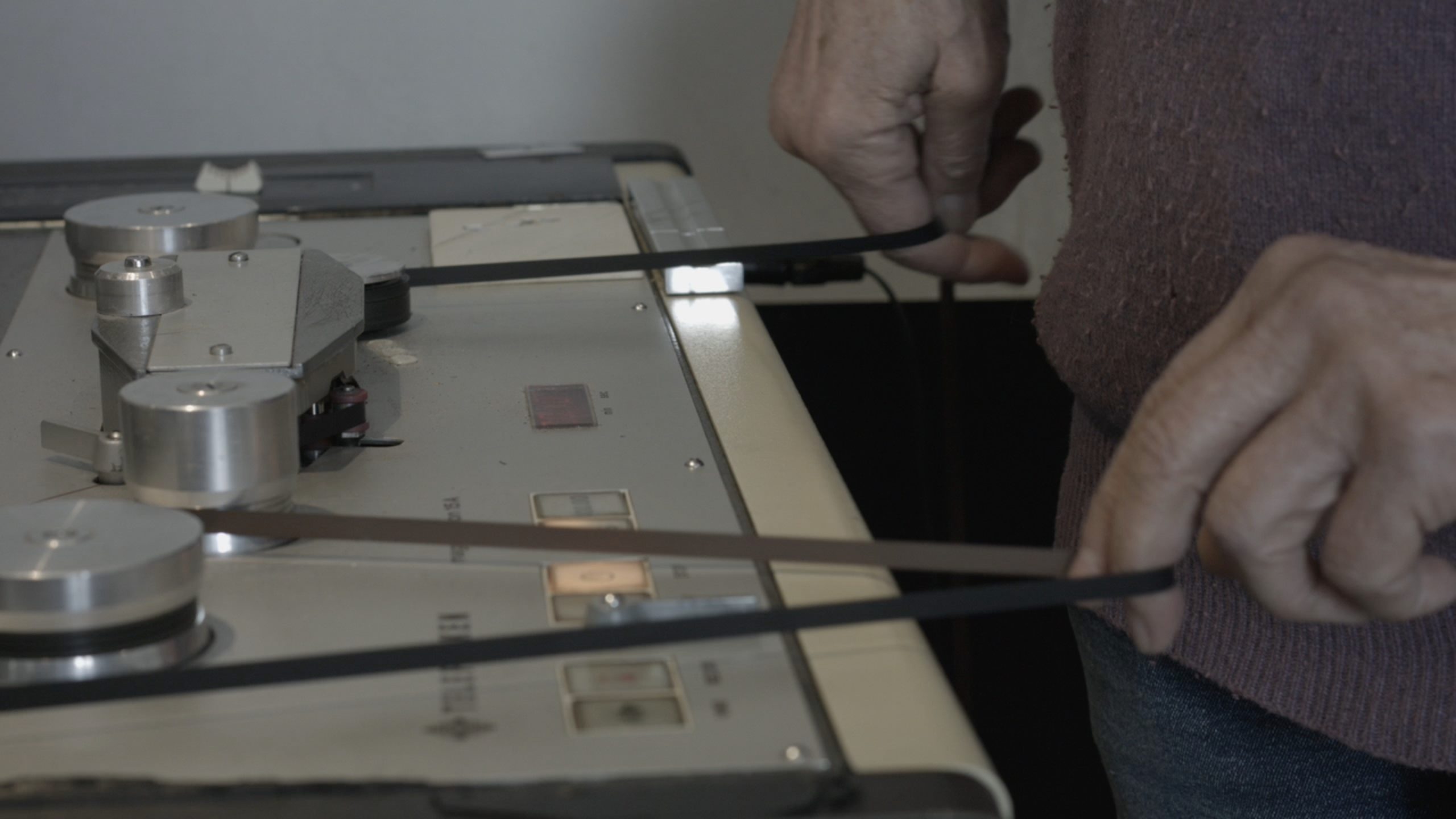
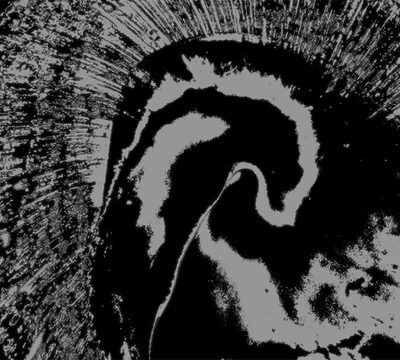
Like one of those children’s crosswords puzzles consisting of a page full of numbered dots that, when connected with lines, draw us the silhouette of an animal or a recognizable figure. This exhibition takes this displacement of the hand on the paper as a way of approaching the cinema of Aura Satz. The difference is that here the dots are not numbered. They exist, but no notation can capture them. Drawing the contour thus becomes an elusive, shifting, interchangeable procedure, but also precise and generative. Connections happen in an experiential dimension without prescription. They happen in a more intimate, affective and sensual development.
Attuning focuses on a particular set of works within Aura Satz’s body of work from some blind spots – but not deaf ones – of the dominant narrative of electronic music and the conventions that have perpetuated it. The artist portrays a series of female composers who have been relevant to the development of electroacoustic music and the technologies associated with the creation of electronic sounds. The exhibition includes Oramics: Atlantis Anew, 2011, conceived as a tribute to Daphne Oram; Little Doorways to Paths Not Yet Taken, 2016, an intimate profile of the study of American composer Laurie Spiegel; and Making a Diagonal with Music, 2019, with electroacoustic composer Beatriz Ferreyra, a promoter of concrete music along with Pierre Schaeffer.
On 23 November at 18:30h, there will be a listening session with two of the artist’s telephone sound compositions: Dial Tone Drone, 2014, with Pauline Oliveros and Laurie Spiegel and Tone Transmissions, 2020, with Éliane Radigue, Julia Eckhardt, and Rhodri Davies. For this event, we will be joined by Aura Satz. After listening to the two sound pieces, there will be a dialogue between Aura Satz and Carolina Jiménez, the curator of the Attuning series.
Brochure here.
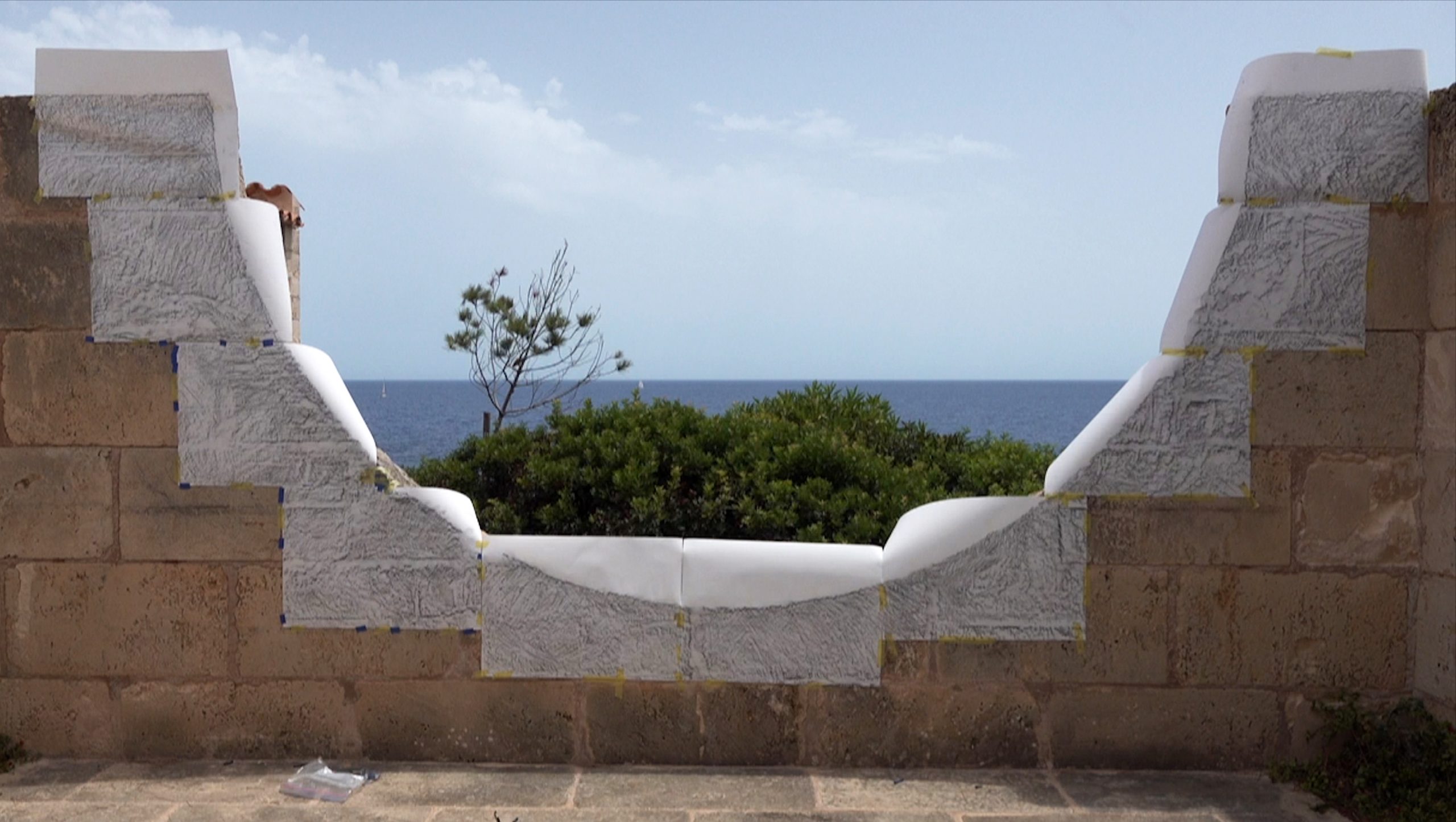
It all begins with Gunnar Friel’s fascination with Can Lis, a house built by Jorn Utzon in Mallorca (1972) as a residence for his family, after having become an international reference with the Sydney Opera House (1957-1973). It is a sitespecific building, that appears as an optical space, nearly a sculpture. The video is a personal investigation about material and memory, a video diary in search of the spirit of the house.
Spaces of inside and outside, the ephemeral, the winds and the lights, the pines and the shadows and, above all, the marés stone. The architect’s subtleties merge the elements, the temperatures or the reflections of the sea that come and go. Utzon’s sensitivity is shown in all its discretion in this site-specific work. The architect’s esteem and listening to the locus that stimulate him to arrange the four pavilions of the house, and to fix in marés the privileged views of the sea following the path of the sun.
The video is an attentive journey through surfaces and places, through the passage of time and sustained time, through the passing days that have matured the walls and the rooms. The material evoked and the protagonist is the marés, the stone of the place: Santanyí. Marés is a stone that has, among other things, unique sonorous and musical properties.
As usual in Friel’s research and works, the video includes a series of interviews. Like with the artist Xim Llompart and the architect Francisco Cifuentes of Aulets Arquitects (the studio that worked on the renovation of the house in 2012). There is also a unique interview with Utzon’s daughter Lin.
Supported by:
Stiftung Kunstfonds Berlin
Casa Planas Archive, Palma de Mallorca
Ministry for Culture and Science of North-Rhine Westphalia
Utzon Archives / Aalborg University & Utzon Center, Denmark
ACA Foundation for Accustic Creation, Búger
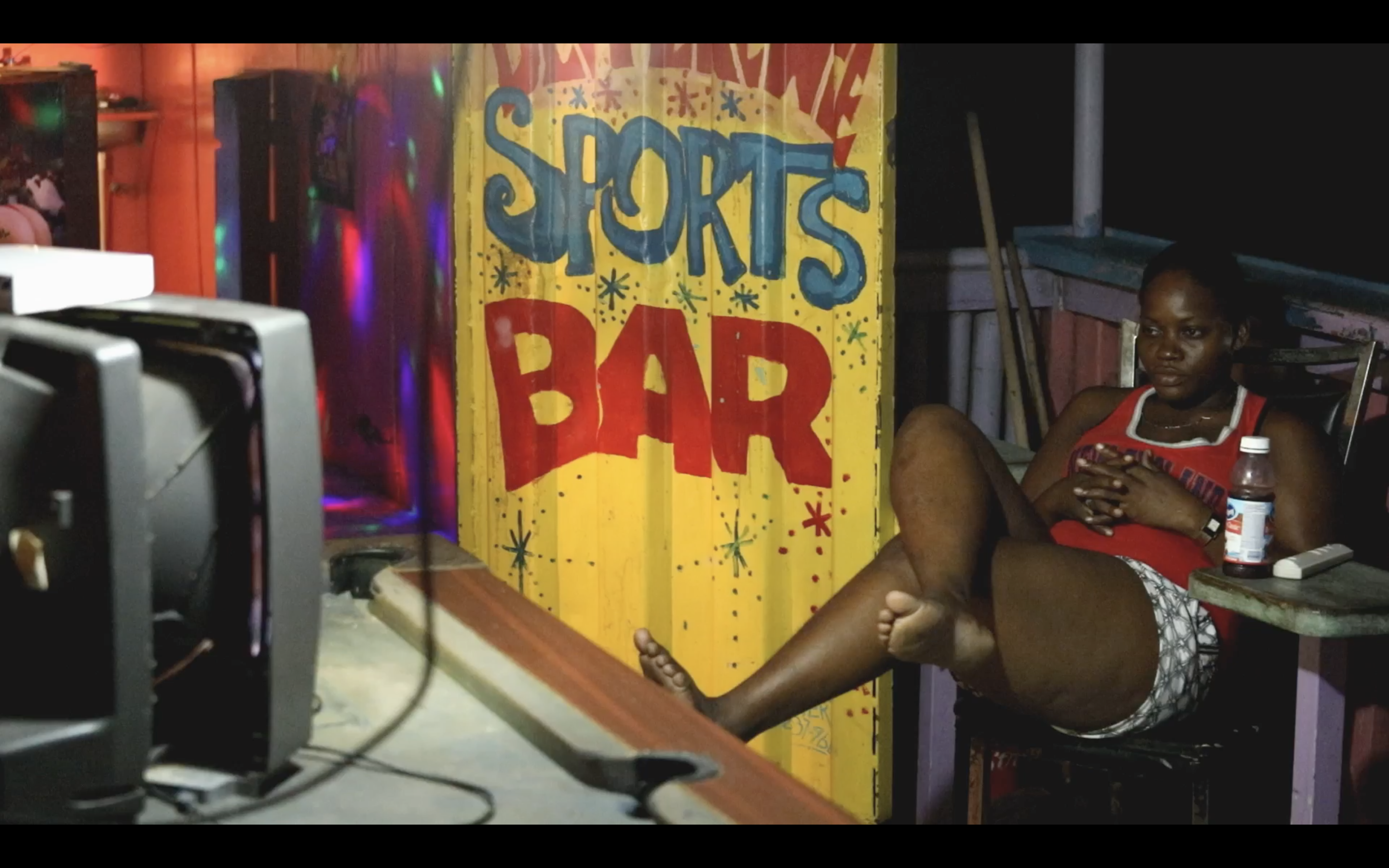
On the one hand, the video-graphic tour Reclaiming the echo, with works by national and international artists who claim and celebrate the communicative nature of the musical experience.
Works presented:
Cecilia Bengolea (Buenos Aires, 1979)
Dancehall Weather, 2017
10 min 28 sec
Fito Conesa (Cartagena, 1980)
El Reparo, 2021
5 min
Carles Congost (Olot, Girona, 1970)
Wonders, 2016,
15 min
Marco Godoy (Madrid, 1986)
Reclamar el eco, 2015
5min 25 sec
Adrian Melis (La Habana, 1985)
Glorias de un futuro olvidado, 2016
15min
Teresa Serrano (Ciudad de México, 1936)
Amapola, 2017
2 min 15 sec
—
Over the centuries, there has been much debate about the meaning of music and composition as linguistic forms. Although it would be difficult to affirm the universality of musical language without falling into hasty generalizations, it can be said that music functions as a communication tool, with its own specific codes of expression and representation, intonation and vocabulary.
As it happens with linguistic variety to distinguish among people who speak the same language (‘dialects’), in the musical field it is also possible to differentiate between different genres or styles. According to the academic classification, the factors to be taken into account in this case would be the ‘instrumentation’, the ‘design’ and the ‘intention’ of a composition, as well as its ‘cultural peculiarities’ and the ‘historical and geographical setting’ of its production.
According to this, you would have genres that use classical or acoustic musical instruments, and others that are produced virtually, with electronic nuances and synthesizers; there are genres that are a mixture of different music, and others that claim their purism. Some follow an exact score and others are based on improvisation. There are compositions designed to accompany singing or dancing, as well as to cause moments of recollection and reflection. There is traditional or popular music, as well as evangelical or religious music. There are rhythms resulting from youth movements in opposition to the system, as well as repeated litanies addressed to a saint or melodies related to the protests of the working class.
As this video selection wants to show, we could say that music is a hybrid, diverse, plural, heterogeneous phenomenon, but present in everyday life or in the memory of each one. That is a communication tool with a strong political, social, liturgical, visionary or entertainment character.
Thus, in Helicon (2018) by Fito Conesa (Cartagena, 1980), we hear a mystical song addressed to the Earth before the Apocalypse; and in Reclamar el eco [Reclaiming The Echo] (2012) by Marco Godoy (Madrid, 1986) the slogans pronounced in the protest demonstrations in Spain. The video Amapola (2017) by Teresa Serrano (Mexico City, 1936) proposes a sad melody that celebrates the symbolic resistance of the poppy flower to the drug trafficking network in Mexico, while Glorias de un futuro olvidado [Glories of a forgotten future] (2016) by Adrián Melis (La Habana, 1985) presents a group of women who remember their past in the time of Capitalist Cuba through some songs. On the other hand, Wonders (2016) by Carles Congost (Olot, Girona, 1970) uses resources close to musical biopic and performance to reflect on the social and personal repercussions of success and failure; and Dancehall Weather (2017) by Cecilia Bengolea (Buenos Aires, 1979) proposes a mix of various choreographic videos filmed between 2014 and today, where dancehall music constitutes an important moment of affirmation and aggregation.
We could reaffirm, then, that the meaning (or interpretation) attributed to music has to do, essentially, with the cultural horizon from which it is produced or heard, but that its existence is verified from one side of the planet to the other. As a resonance, a repercussion, or a continuous reflection. An infinite echo beyond time and space.