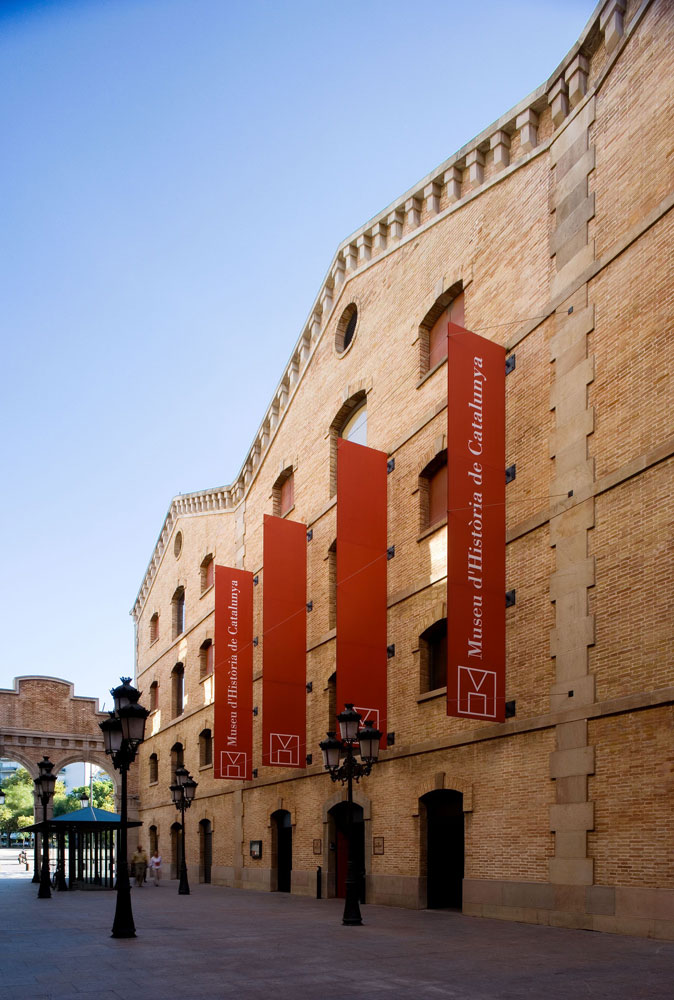
Museu d’Història de Catalunya
- Address
- Palau de Mar, Plaça de Pau Vila, 3, 08003, Barcelona
- Phone
- +34932254700
- Website
- www.en.mhcat.cat
- Map
- View map
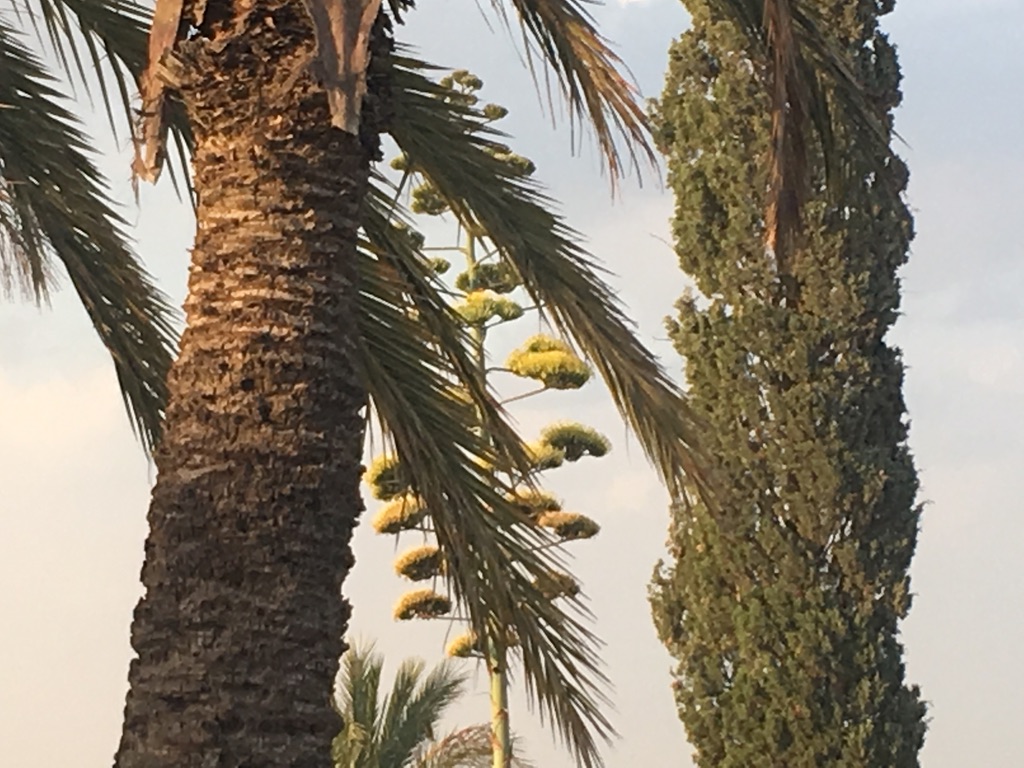
Beans, Rinsed Twice follows tales, histories, memories and recipes tied up in a bean. How many stories can a recipe tell? And who do these stories belong to?
Through the personal and historical symbolism of a bean – and, consequently, the process of growing, harvesting and cooking this seed – the film will move between the collaborators’ own memories (in all their factual/fabricated dimensions), expanding on to speak of how we carry multiple places within us, the value of tacit knowledge and the possibilities for a reciprocal language of care.
Co-financed with funds from the Creative Europe Program and the project A-PLACE. Linking places through networked artistic practices.


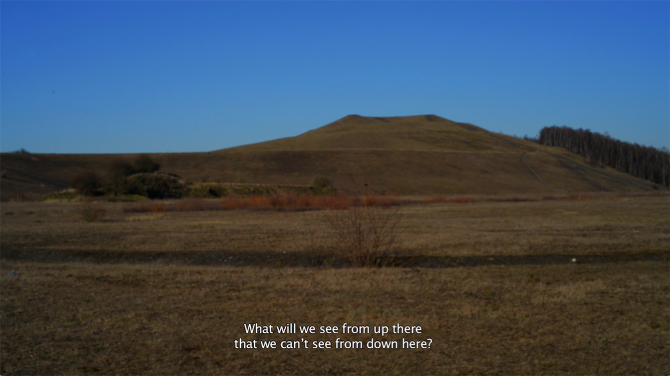
Within the broader, more delocalized scope of The bee who forgot the honey, Línies de fuga offers a reflection focused on the historical-political and social dimension of the notion of landscape, understood in this case as a collective imagination, an element that is displayed as both constructing us and being constructed by us as a society and citizens. It is a collective exhibition in which a number of artists elaborate on contemporary issues related to ecology, transhumanism or the value of the image.
Like a vanishing line, ever visible but unattainable – ideal but impossible -, in this case, the landscape is presented as something we destroy but must protect, something we seek but cannot find, an obstacle that limits us but that we can sometimes unwittingly surpass. This display approches the way in which men address landscapes or how they become the reflection of an ideology, a collective imagination or a sphere of intimacy.
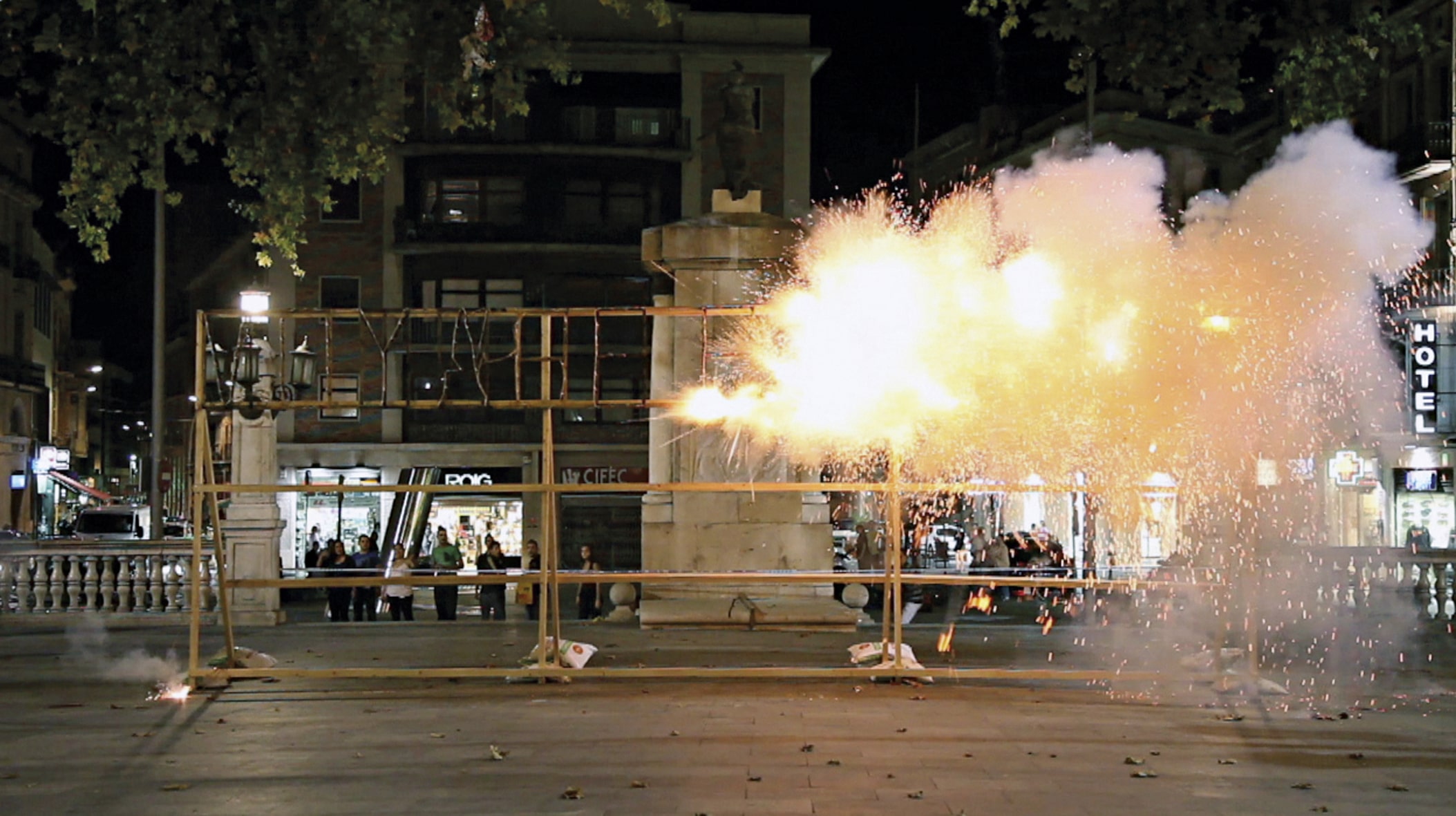
As part of the exhibition Catalunya, terra cooperativa [“Catalunya, Land of Cooperation”], the artist Domènec shows his piece Voyage en Icarie, a video recording of an action that happened in front of the statue of Narcís Monturiol during the Festival Ingràvid, in Figueres. This project remembers the socialist and Icarian commitment of Monturiol by referencing the title of Etienne Cabet’s novel, which gives name to this Utopian and cooperative movement. The Icarian influence in Catalonia was very intense throughout the 19th century, and some of its members participated in the migration movements to start egalitarian communes in the United States. The cooperative movement in Catalonia was highly influenced by the Icarians through Monturiol, who founded, among others, La Fraternidad, Spain’s first socialist magazine, where a translation of Cabet’s novel was published.
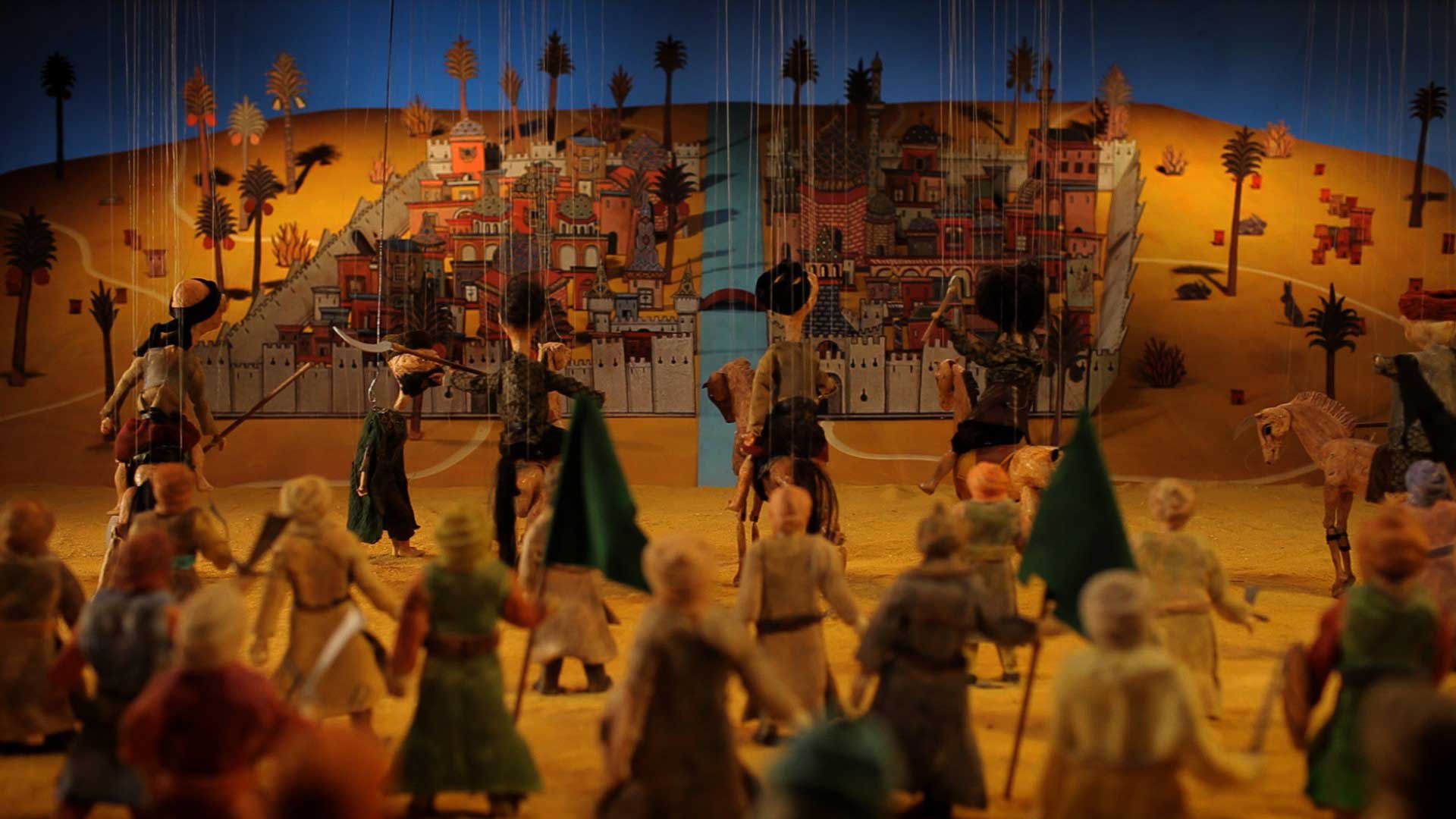
Cabaret Crusades is a trilogy of videos dealing with the history of the Crusades. The screenplay is based on an essay by Lebanese author Amin Maalouf, The Crusades through Arab Eyes (1983), which draws from Arab historical sources to subvert the traditional Western reading of the Medieval religious wars. Wael Shawky reenacts these bloody events through marionettes, transforming the historical reconstruction into a form of entertainment, as the title of the series explicitly suggests.
The second chapter of the trilogy, The Path to Cairo (2012), produced by Fondazione Sandretto Re Rebaudengo for dOCUMENTA (13), recounts the events that happened between the first and the second Crusade, between 1099 and 1145, and is structured as a musical. In this case, Shawky collaborated with potters and Provençal santonnier makers to create the ceramic marionettes that comprise the cast, and with choirs of fishermen and children from Bahrein for the musical performances.
In Shawky’s work, the evident artificiality and the taste for a blatant, emphatic theatrical style are functional to a reflection on the ways in which History is written and passed down. It is not so much a question of authenticity as of perspective, of acknowledging multiple viewpoints, an attitude that Shawky carries to extremes by turning the written historical account into images, thereby shifting from the academic register to that of spectacle.
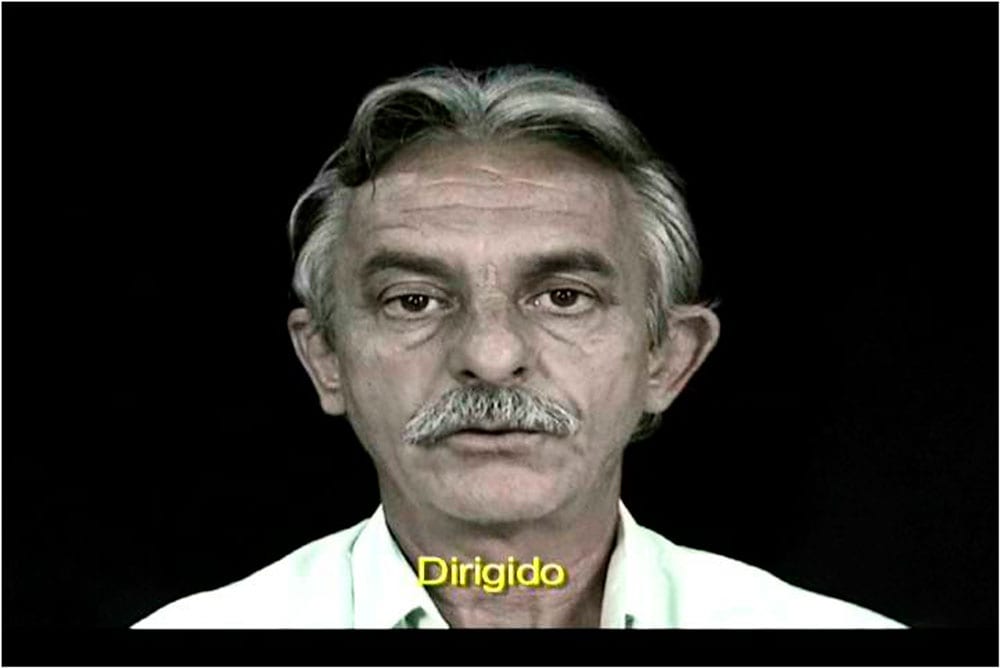
Beyond The Tropics is the third and last phase of the project titles Sobre paradoxes democràtiques (On Democratic Paradoxes), and it showcases the works of a dozen international artists as they reflect on social, political and economic inequality. The exhibition is displayed as an open conclusion that arises from the forays of the first two phases Hic et Nunc and Ibi et Nunc, into the American continent.
The exhibition puts the spotlight on new artists and works in thelight of the evolution of some of the project’s initial considerations. That is why Beyond the Tropics has been conceived as a discursive action that can only take place after having displayed, exchanged and expanded one’s horizons and reflections. All of the artists hail from and live in ostensibly democratic countries but, as we all know, this does not in any way guarantee basic welfare or fundamental rights. The twelve selected works contain clear and direct proposals and denunciations. Thus, their political essence is used to point an accusatory finger through artistic practice.
Artists and works:
1st Screen
PSJM (Spain)
ANCAPS, 2015
Joaquín Segura (Mexico)
Casa Popolurui, 2015
2nd Screen
Andrea Mármol (Guatemala)
Ri Kach’ (The Gum), 2014
Isabel Rocamora (UK, Spain)
BodyWar, 2015
3rd Screen
Eugenio Ampudia (Spain)
Dónde dormir # 5-El Palau (Where to Sleep # 5-El Palau), 2015
Iván Candeo (Venezuela)
Retrato Populista (Populist Portrait), 2009
4th Screen
Jorge García (Spain)
This is Not the End, 2015
Tomás Ochoa (Ecuador)
Indios medievales (Medieval Indians), 2007
5th Screen
Núria Güell (Spain)
Sweet Europe #1 (Support Swedish Culture), 2014
6th Screen
Patricio Palomeque (Ecuador)
Cabezas (Heads), 2015
Avelino Sala (Spain)
The Letter (Delfina), 2015