Reial Cercle Artístic
- Address
- Carrer Arcs, 5, 08002, Barcelona
- Phone
- +34933187866
- Website
- www.reialcercleartistic.cat/w
- Map
- View map
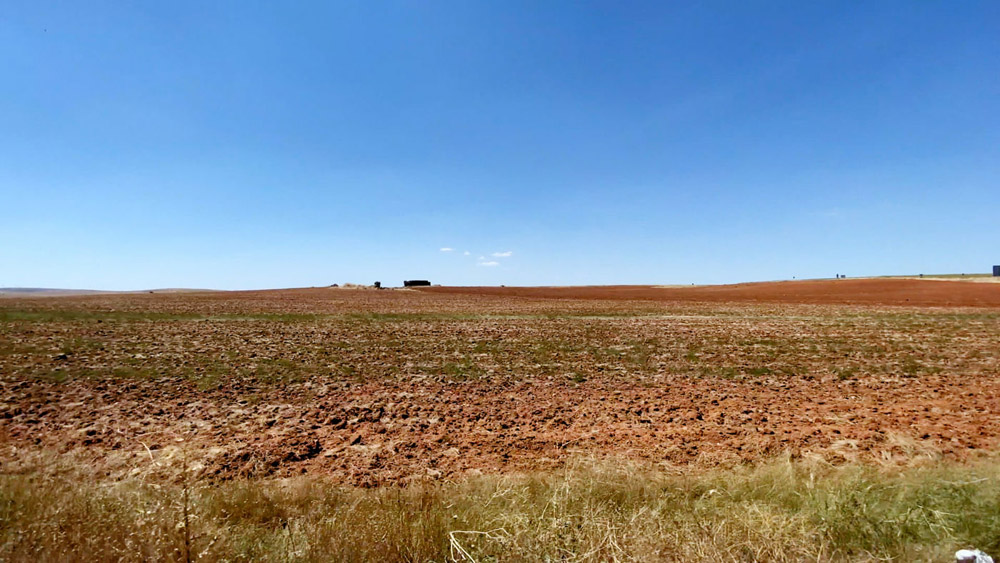
In the pandemic summer of 2020 Hans Schabus travelled through Europe with his dog Enzo. By train, taxi, a rented car, ferry and bus he travelled to Northcape, the northernmost point of Europe. From there, he continued is journey with a cargo bike and cycled in 39 days all the way to Tarifa, the southernmost city in continental Europe. While travelling, Hans Schabus filmed the landscape with his Smartphone always facing right. The outcome is a video work made up of 50 takes of 30 seconds each, resulting into 25 minutes of images unfolding opposite to the reading direction. A performative, sculptural survey of the European landscape and an overcoming of nation states and their borders. From the rainy North to the dry South, from wooden three huts to brick houses and stone walls, from the rich green to the dry brown. (Music by Michaela Kisling).
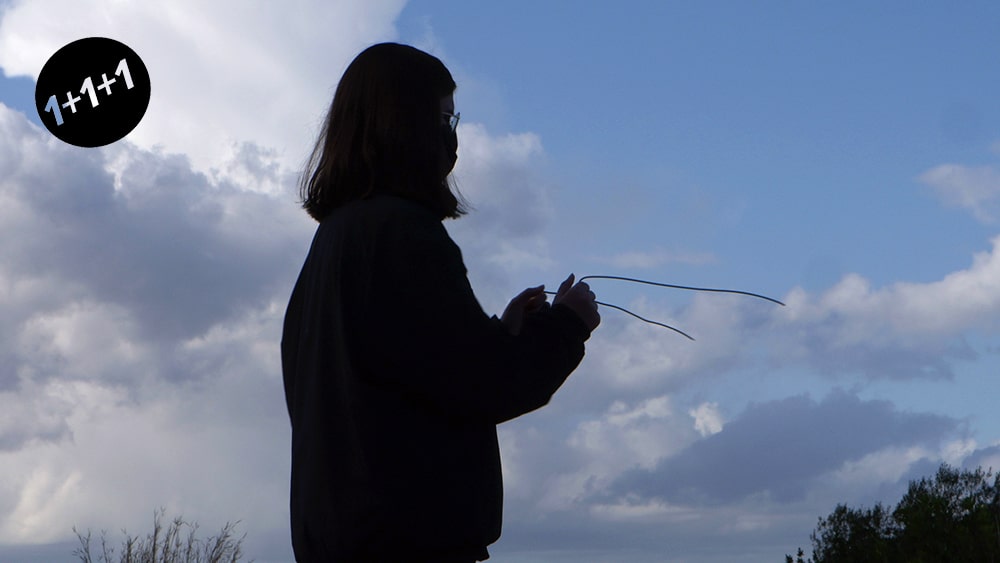
Estaría bien que en algún momento podamos beber agua [It Would Be Good if We Could Drink Water at Some Point] discusses an encounter on the mountain to look for groundwater, albeit without extraction in mind. It is born from Ventanyol’s wish to carry out this bodily skill, by exerting her own sensitivity with which she will perceive the burbling of the water running underground and which will allow her to find it. The word zahorí (dowser) comes from the Spanish Arabic word zuhari, which is in turn derived from azzuharah. Zahar means to shine. A dowser’s ability is known as dowsing (or water divining), and it is defined as the ability to perceive radiations. This is one of humanity’s ancestral and animal abilities. Beginners use simple devices that amplify these radiations. Veteran dowsers rarely need these devices and rely on their own bodies. There is a wealth of manuals that provide detailed explanations on how to place your body, especially your feet, back, hands and fingers. Ventayol collects these manuals, especially due to her interest in the drawings they contain, which are curiously similar to old instruction sheets to assemble utilitarian devices.
Participants / actors: Laia Grau, Mireia Fornes, Maria Bonet, Toni Viejo, Lluís Nebot, Agustí Nebot, Joan Terrassa, Tomeu Torres, Xisca Fuster and Toni Bonet.
Camera: Agustí Torres
Postproduction: Laia Ventayol García, Sofía Sasso
Music: Jansky
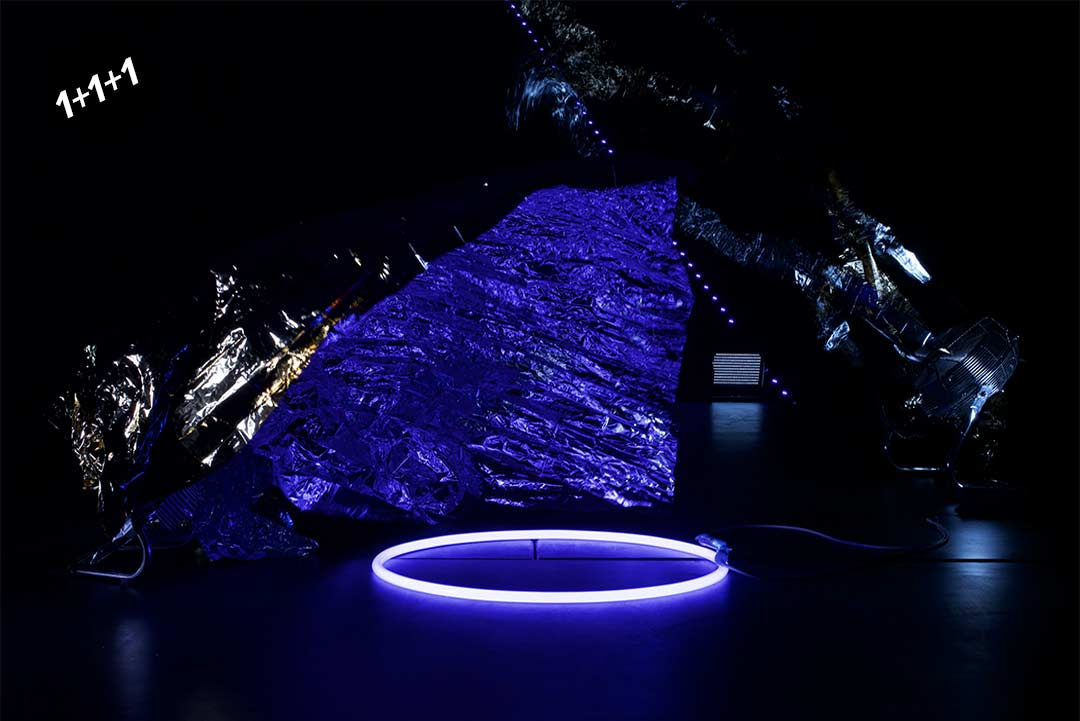
Behold the object in all its splendor; an archive of queer bodies, an arsenal of dissident discoveries, a chapel of undermined entities, a cabinet of disobedient matter. The skepticism towards that which is called inanimate, –‘without a soul’-, artificial or immaterial is being revised in the age of agential realism; a field proposed by the physicist-theorist Karen Barad. Is digitality truely weightless? Do the object and the artificial not experience affect at all? Are they truly mute? According to physics, we are all beings subjected to the same fundamental forces, from elementary particles to elephants. The basic unit that existence —including solid/liquid/biological/gaseous/mineral— shares is vibration and, therefore, the malleability to mutate and to become. We constitute, therefore, a collective phenomenology cultivated by a common potentiality and affectivity, an incessant dialectical exchange, a frenzied and erratic latency. This dialogue is the friction, the incandescent rubbing between subjects, it is a choral phenomenon that occurs on levels that often go unnoticed. Notice how the neon caresses you, how the flashes strike you, how the object speaks to you.
The artist Agustín Ortiz Herrera and the curator Gabriel Virgilio Luciani invite you to a sensorial laboratory in which things communicate without being silenced. The exhibition hosts a newly produced audiovisual work accompanied by an installation composed of urban discoveries and other atmospheric elements that the artist has brought together. The installation also contains material contributions from the participants of the workshop Exanimate: Rethinking Objects organised by the Centre d’Art Maristany in Sant Cugat del Vallès in collaboration with the artist.
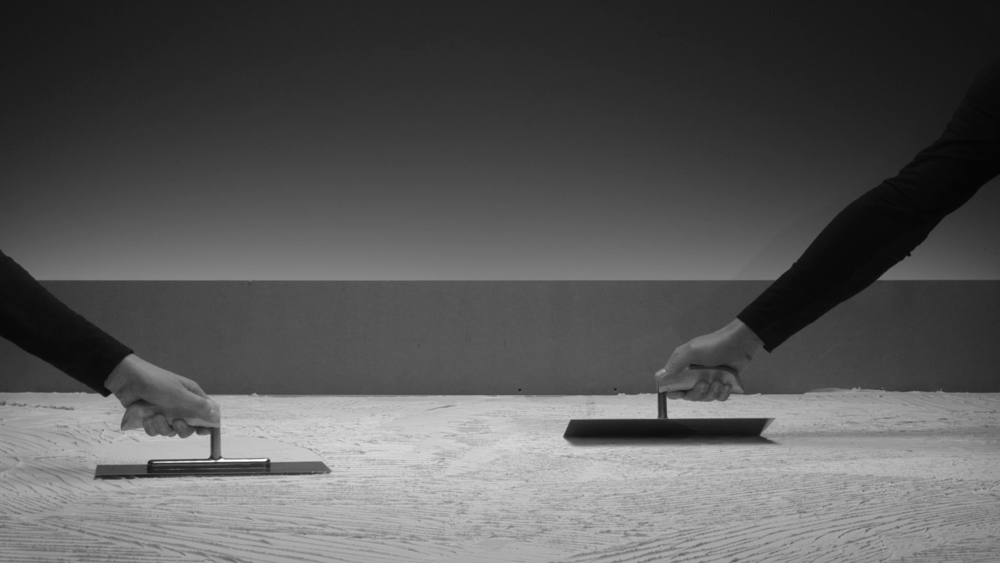
Staging Silence (3) is the third and final instalment in a series of autonomous art films by Hans Op de Beeck, all of which have been directed according to the same principles. Two pairs of anonymous hands construct and deconstruct fictional interiors and landscapes on a mini film set of just three square meters in size. These anonymous hands, like a double Deus ex Machina of sorts, decide on the life and death, growth and blossoming or decay of the places that are conjured up.
It is a reflexion on how landscape, and nature in general, has been seen as a metaphysical object by mankind, a world-at-hand (Vorhandenheit) as Heidegger calls it, and the way in which man ‘humanises’ open space in an attempt to create meaning, identity and control. Intimate surroundings become open landscapes in a visual journey through depopulated, enigmatic and often melancholic territories, which are built up and taken down before the eye of the camera. This theatre of landscape acquires its full meaning against the backdrop of the magnificent stage of the Reial Cercle Artístic, in a sort of ironic and beautiful mise en abyme.
The installation is part of the exhibition The bee who forgot the honey.
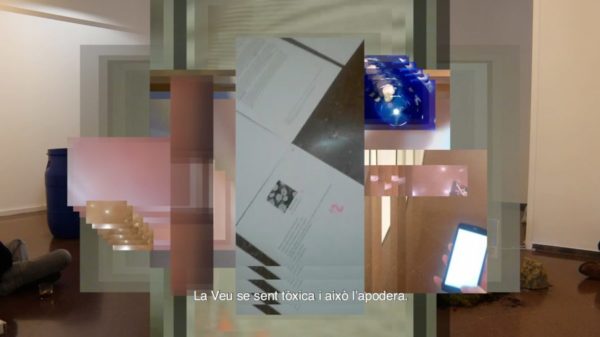
Following the study of production that defines this year’s edition of LOOP Barcelona, the exhibition presents the works of eleven artists who research the body and subjectivity as entities that produce and are produced. The selected works play with and analyse virtual worlds, video games, dating apps, ASMR and Google Images as spheres of interaction, surveillance and intimacy. In our unstable context, where neoliberal globalisation is being surpassed by authoritarian drifts, and technological acceleration, artificial intelligence and climate change are questioning humans’ position in the world; bodies and subjects appear as battle fields of commercial and political signification. Today, bodies go beyond their somatic limits into the deep web as users of drugs and sex slaves, while subjects are not defined by lineal accumulative narratives, but rather by superimposed layers of stimuli and boredom, networks of reciprocity that encourage and reward the individual’s originality and performativity, as instances of an extended system of self-exploitation and precariousness, present in work conditions and personal relations. These processes are physical and visual, we are traceable yet anonymous, specific yet pre-determined, while our fingers swipe and scroll screens that turn our personalities into mixers of hyperlinks to endless content. The artistic projects presented here reflect a multiplicity of approaches that are research-based while concerned with the senses. They connect to larger inquiries on materiality and bodily fluids, and they critically look at the Internet as an infinite space of interconnectivity. If we were to group them all under a word, production would come back to mind, understood as an ongoing process that evidences how we are inconclusive products of an unclear time.
With the collaboration of Hangar
This exhibition combines the objectives and actions that characterize both projects: the promotion of artistic work and collection through its production, exhibition and dissemination. On this occasion, the selected work reflects the importance given in the Festival and the LOOP Fair, as well as the in pages of the Artnexus magazine, to art’s capacity to generate critical thinking. In this context, Teresa Serrano’s video is a metaphor of social urgency, that of her country, in the beautiful and fragile image that captures the sequence.
In the last years, Artnexus has undertaken an initiative to produce works by a great many international artists. The initiative has sought to support the growth of collecting and the development of the creators selected. As a result of its collaboration with LOOP, they are presenting a work of video art in their selection for the first time.
In the words of the artist herself:
“The poppy is a flower stigmatized for being that which produces heroin, which has us planted dead in the states of Guerrero, Michoacan, Sinaloa and Chihuahua in Mexico. War between drug traffickers for control over the heroin, market has resulted in over 60,000 dead in those states. You can not find the flower that grew naturally in the field and we could admire it.
That velvety red flower is being claimed by Narcos who export heroin to the United States and Europe.
I managed, after searching all the places where they sell flowers of silk or plastic, the Poppy in silk and I planted it as if it were natural in the field in Tepoztlán. The film for a few minutes, the wind rocked at times, gave the appearance of a natural flower.
My friend and musician Santiago Ojeda helped me interpret the song, and I made a video with what I had filmed. I sang the song with my voice cascaded over the years as a performance in honor of the flower. The song is the soundtrack of the video.”
Amapola, pretty little poppy
My soul will be always only yours
I love you, my beloved girl
Like the flower loves the light of day
Amapola, pretty little poppy
Don’t be so ungrateful and love me
Amapola, Amapola
How can you live so lonely
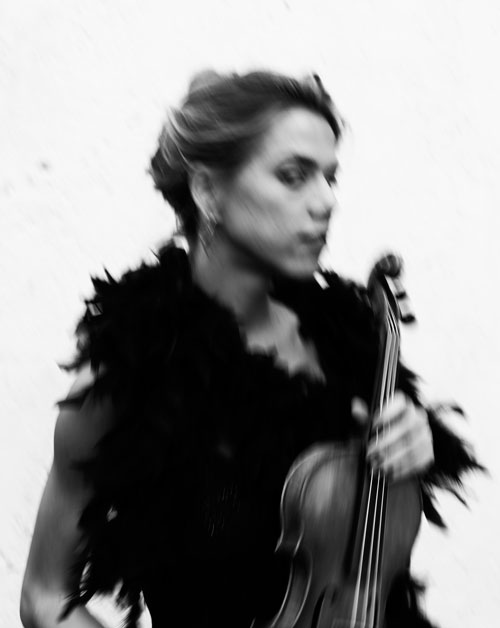
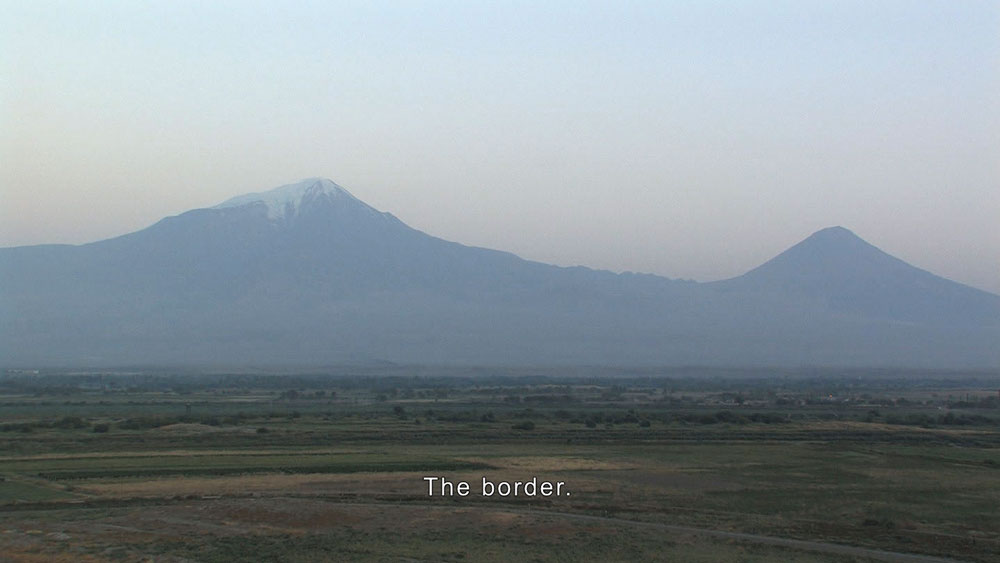
Without Pause, Dialogues is an exhibition project made up of a dozen perspectives that establish six common lines of research. It is built around two determining factors: a formal one, which is concerned with matters unrelated to the work itself, and a conceptual one, which emerges from the desire for dialogue between the works in the form of diptychs (two adjacent screens). The dialogue fostered by the diptychs reinforces and highlights the contents of each one of the projects, thus creating a feedback loop between them.
María Ruido (Lo que no puede ser visto debe ser mostrado) & Sarah Vanagt & Katrien Vermeire (The Wave)
Lúa Coderch (ARKADI. A guide for the perplexed) & Ria Pacquée (As long as I see birds flying I know I am alive)
Jordi Cané / Lisa Bause (Cicatrices) & Pieter Geenen (Relocation)
Raquel Friera (Space of Possibles-Istanbul) & Els Opsomer (10th of November |09:05)
Patricia Dauder (March 5th 1979) & Elias Heuninck (I’ll be late for dinner)
Jordi Colomer (Svartlamon Parade) & Eleni Kamma (Notes of Parrhesia)