Zumzeig
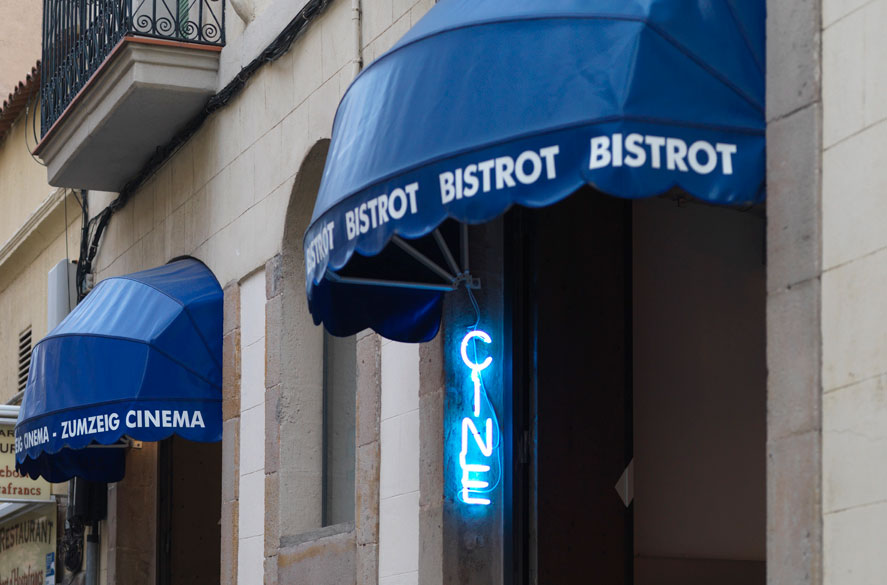
- Address
- Carrer de Béjar, 53, 08014, Barcelona
- Phone
- 935 46 14 11
- Website
- zumzeigcine.coop/es
- Map
- View map
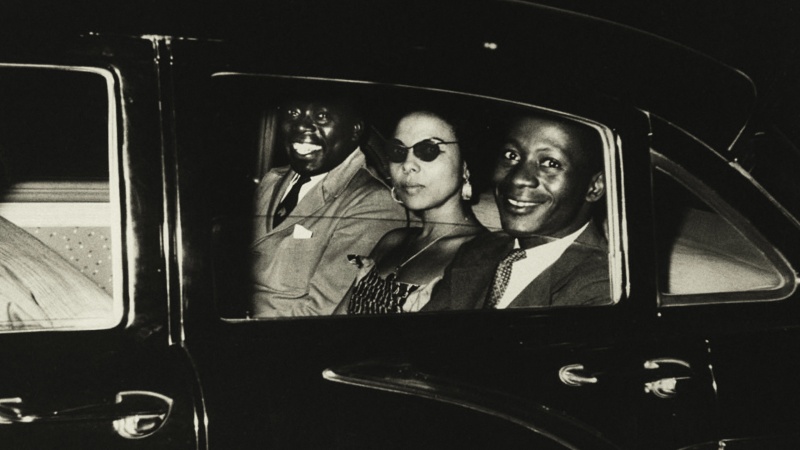
Soundtrack to a Coup d’Etat
Johan Grimonprez
2024 | Belgium, France, Netherlands | 150 min.
A monumental and innovative history lesson set to a jazz rhythm, exploring the social upheavals of the 1960s, the Cold War, Africa’s decolonization, and how the CIA and the Belgian monarchy orchestrated the assassination of Patrice Lumumba, the Prime Minister of the Congo, using legendary jazz musicians as a distraction. The political significance and music of African American artists like Dizzy Gillespie, Nina Simone, Max Roach, and Abbey Lincoln, as well as Congolese musicians such as Adou Elenga and Joseph Kabasele, piece together a bloody and captivating puzzle.
On November 22, curators Carles Guerra and Pascale Cassagneau (CNAP) will host a dialogue about the film.
Featured: Miriam Makeba, Andrée Blouin, Nikita S. Khrushchev, Patrice Lumumba, Allen Dulles, Paul-Henri Spaak, In Koli Jean Bofane, Krishna Menon, Malcolm X, Max Roach, Abbey Lincoln, Louis Armstrong, Dizzy Gillespie, Nina Simone, Thelonious Monk, Docteur Nico, Joseph Kabasele.
The program Comment ça va? borrows its title from the eponymous film by Jean-Luc Godard (1978), and has been developing throughout the past editions of the LOOP Festival. It presents documentary films that manifest a remarkable capacity to traverse history, recover truth and capture reality, not as their ultimate goals, but rather, as tools and potentialities of forms, that undertake a journey and forge a path through complex political geographies. The selected works incarnate a number of proposals that revisit some of the topoi of contemporary art, as well as narrative possibilities that fulfilling the calling of “stories that demand to be told” (to borrow from Paul Ricœur in Temps et Récits I).
In Comment ça va? Jean-Luc Godard filmed an exchange between the editor of a communist and trade unionist newspaper and his colleague, a left-wing militant, as they put together an article designed to reveal the processes involved in producing their daily paper. The pair disagree on how information ought to be handled, and in particular on how two specific images should be used and captioned. The first image depicts civilians and soldiers in conflict during Portugal’s “Carnation Revolution”, and the second image a clash between strikers and French anti-riot forces during a protest. While the film succeeds in exposing the complex ideological tensions and dissent that divided France’s Left, through editing and the film’s movement, it also dissects the rhetorical dimension of news making.
Resonating with a variety of hypotheses on reality, history and intimacy, contemporary video practice is not a transcendental field in and of itself, rather, it is an undefined territory in which artists venture (as they do with photography, drawing, digital media, or object-making). In engaging with these themes, several video works displace them in order to explore their utopian scope, such as for instance, with the appropriation of diverse cultural sources culled from mass media and the perspective of the network-based internet as context; human time and individual self-fictionalizing; uniqueness and intimacy reformulated in the scale of common time and between public and private space; unique representations of the self that establish a dialogue with the edition of the image, as montaging, fragmenting and referencing the filmic space become its prime motivation. Since the last century, the emergence of the document in the production of knowledge has modified the status of memory. Indeed, images provide memory with a support and a portal for reflection, leading the gaze towards both the object of memory and the memory of the object, acknowledging the ambiguity in their articulation. Moreover, the document has given rise to types of assemblages and montages that act as the basis for the elaboration of stories and forms of historicization. The creation of archives raises at once, questions on History and on personal, individual stories. Such is the nature of the document: a use value for the re-appropriation of subjectivities, of forms of historicity, through the multiplication of narrative hypotheses.
Programme
18/11/2023, 17.30h
João Pedro Rodrigues & João Rui Guerra da Mata. Onde fica esta rua? ou Sem antes nem depois (2022, 88 min)
19/11/2023, 18h
Joris Lachaise, Transfariana (2023, 150 min)

This programme is supported by a grant from Acción Cultural Española (AC/E).
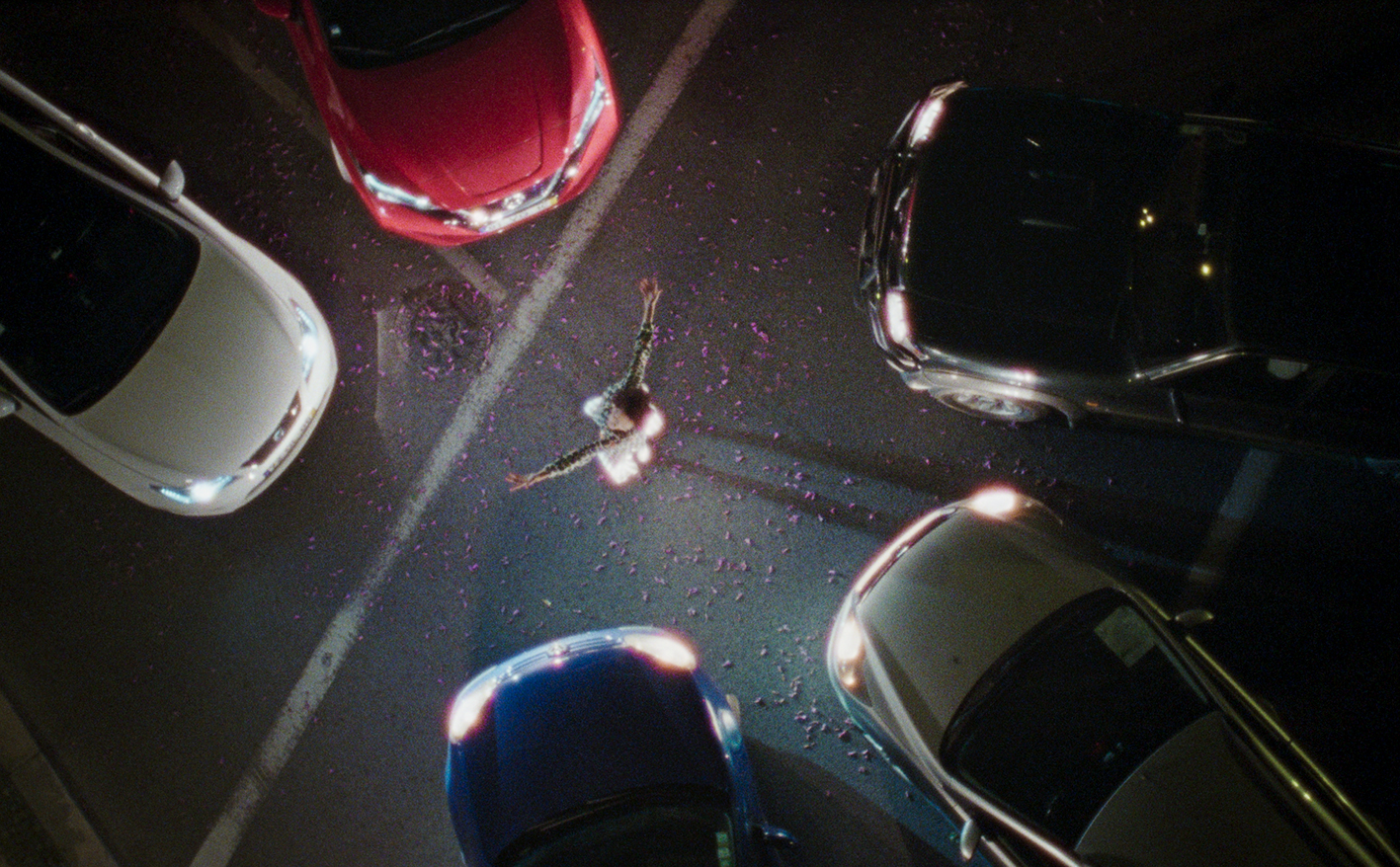
From our window one can see a set of the 1963 film The Green Years. This was our starting point: guided by Paulo Rocha’s gaze, we look back at the places of that film. The successive geological, urbanistic and social strata of Lisbon, besieged by the pandemic that interrupted the shooting, are drawn out in front of our camera, like a contemporary jazz impro from a score written in 1963.
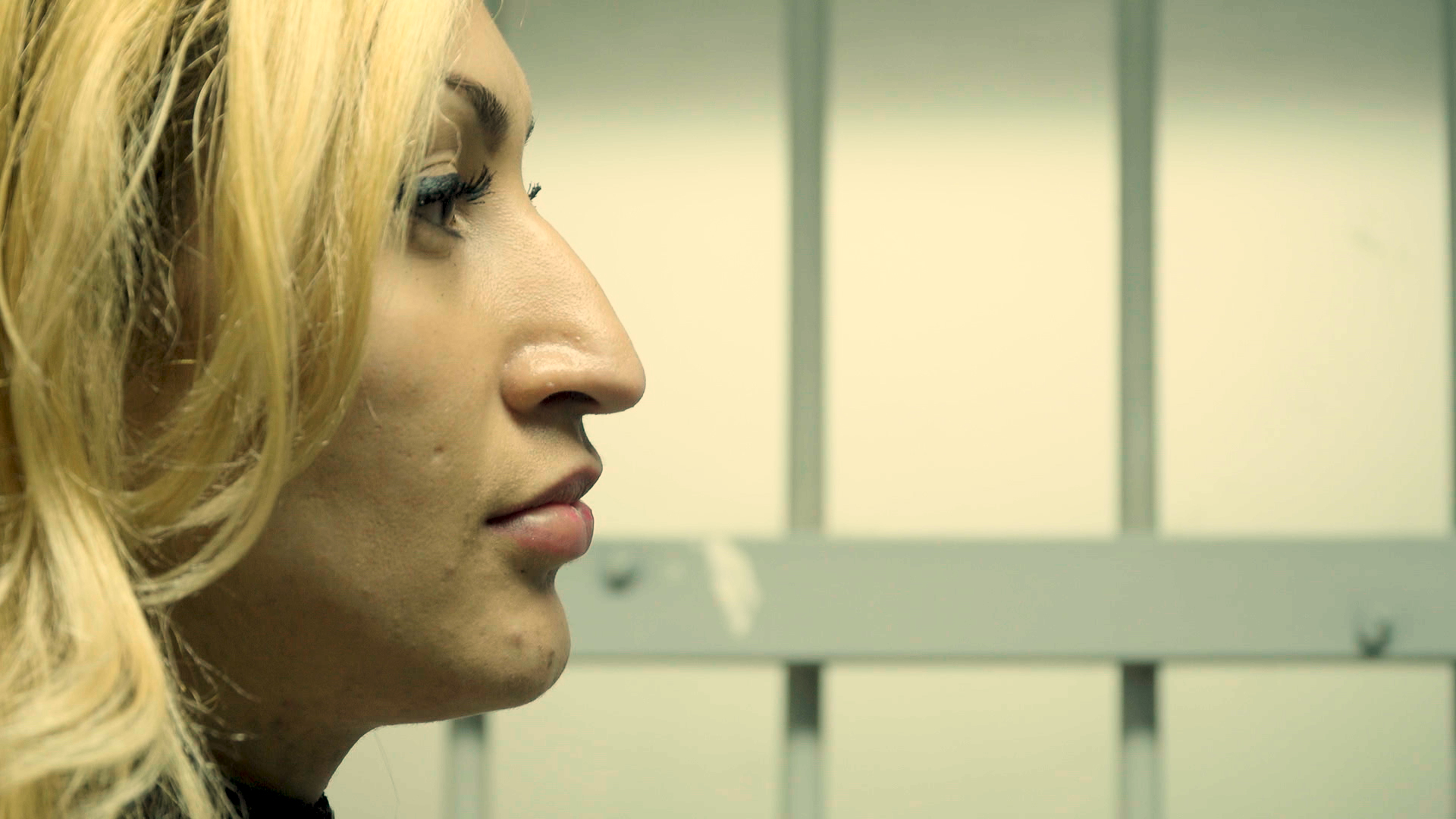
At La Picota, a high-security prison south of Bogotá, the marriage of a FARC guerrilla to a transgender woman ex-sex worker, sentenced to life imprisonment, first provoked scandal, then a transformation of mentalities. Based on the story of this rebellious nuptials, the film follows the encounter between two forms of struggle, two models of struggle that are transformed by interpenetrating. FARC and LGBTQIA+, same fight?
Between the world of prisons, urban life in Bogotá and the Colombian jungle, the camera watches for signs of change in society. An intelligent, surprising and deeply human mosaic film.
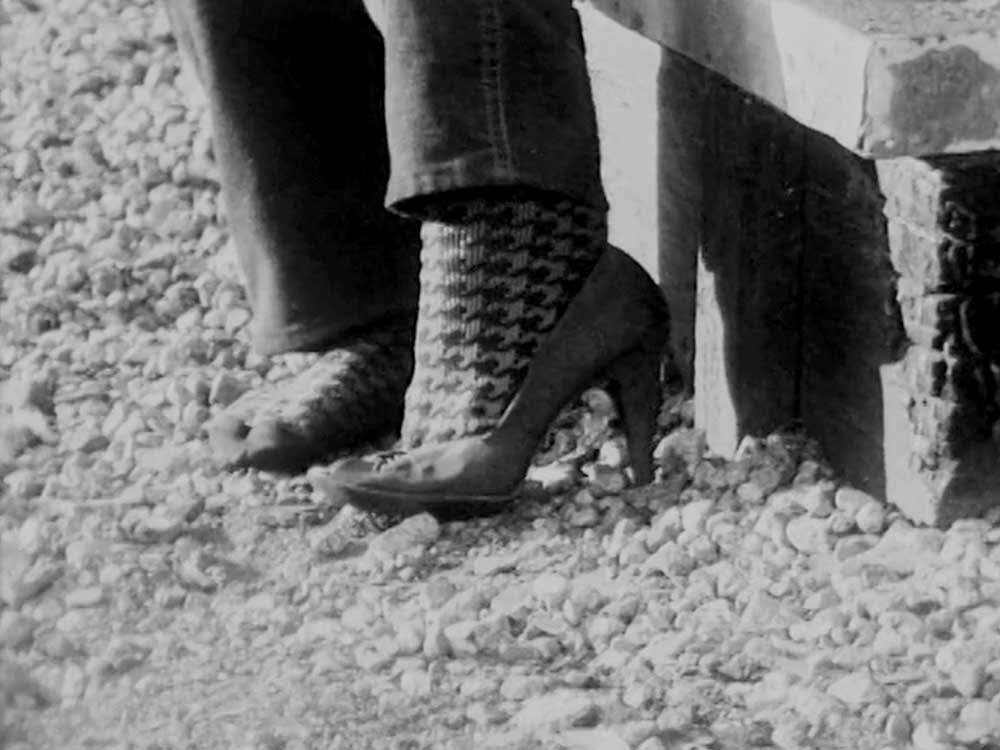
Online exhibition space courtyard presents a preview screening of its upcoming production High Heel Beloveds by Leslie Thornton. For High Heel Beloveds, Thornton VJs her archive of castaway footage from her opus film work Peggy and Fred in Hell (1983-2015, 95 minutes). Over the course of the next year she will, in her own words, “learn how to speak into a streaming void,” through mutilating footage she has filmed and gathered over decades. Drawing from her entire history of image making, Thornton will offer a chain of experiments of hauntings and degradations, with new forms arriving and dissipating over time.
A preview of this process will be presented for the first time at LOOP Festival.
High Heel Beloveds presents never before seen footage alongside Peggy and Fred in Hell: The Prologue (1985, 18:43 min) and High Heel Beloved (2022, 4:5 min).
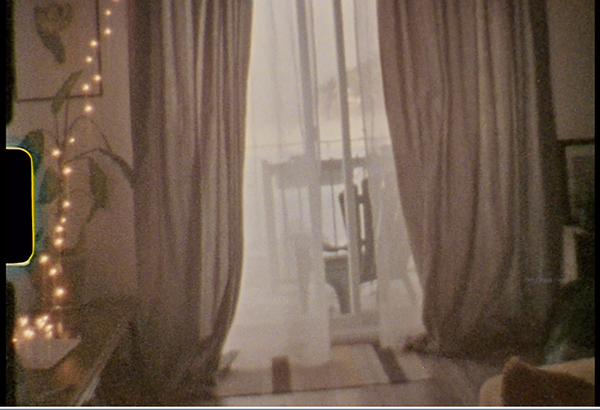
Hacia la niebla is an expanded film project that arises from the experience of contagion, isolation and release with COVID-19 from the director himself in Quebec, Canada. He works the film as matter, as possibility and as metaphor. The relationship with space, with memory and longing. The piece is an essay on a pandemic from the body. A body that embodies immunity and questions it. A dream that in turn evokes fear and hope. An exercise that starts from the paralyzing uncertainty towards the vulnerable force capable of knocking down giants.
«When I feel like listening to music, I open the windows of my apartment.»
John Cage
Manon de Boer is a Dutch artist based in Brussels. She uses cinema as a territory for creation and expression. Her first silent films, from the late 90s, are cinematic portraits. Contrarily, her latest ones that evoke the musician Bela Bartok are about sound, music and plasmodia, conceived in perfect intellectual complicity with the Rosas Company, choreographer Anna Teresa de Keersmaeke and interpreter George van Dam. Her portraits of musicians are experimentations of filmic and temporary forms. Her films, halfway between art and cinema are, likewise, spaces in a state of perpetually welcoming emptiness. Manon de Boer’s cinema consists of bodily performance, choreographed in scores, focusing on the notions of performance, scores, notation and register.
‘Attica’ (2008)
Attica (2008) refers to the mutiny that took place on 9 and 13 September 1971 at Attica prison (New York State), in which more than a thousand people revolted after the murder of the Black Panther party militant killed by prison yard guards at San Quentin prison (California), and then against the conditions of detention at Attica prison. 29 prisoners were killed as a result of the riot.
In 1972, composer Frederic Rzewski composed two pieces, Coming Together and Attica, based on letters from Sam Melville, a white prisoner who was shot in the final assault by the mutineers. In Attica, four musicians – Laurent Blondiau (trumpet), George van Dam (violin), Emmanuel Louis (voice) and Jan Rzewski (saxophone) – play the musical piece with a precise architecture: the main loop that forms the backbone of Rzewski’s work – Attica is in front of me, gives shape to a repetitive loop, as the device of a circular journey is filmed in the reflection of itself.
‘Dissonant’ (2010)
With Dissonant (2010), a film that talks about the relationship between dance and music – since in 1939, John Cage wrote in the essay Silence that “music will become more than an accompaniment: it will become an integral part of dance” – Manon de Boer films a live memorisation process: a dancer from the Rosas company is filmed while she is listening to a movement of a violin sonata by the composer Ysaÿe, in order to perform it. The dancer memorises the sequence while deciphering it. Afterwards, the filmmaker films her again as she performs the movement while dancing, in the absence of the music. The sound is always outside the frame in Manon de Boer’s work.
‘On a Warm Day in July’ (2015 – Le Fresnoy)
The film On a Warm Day in July (2015) was shot at the Wolfers Hotel in Brussels, with American soprano singer Claron McFadden. The elements that constitute the main motifs of this work are breath, space and the emptiness of the architecture; the performer freely improvises a sung piece inspired by a 17th century chant.
‘One, Two, Many ‘(2012 – CNAP)
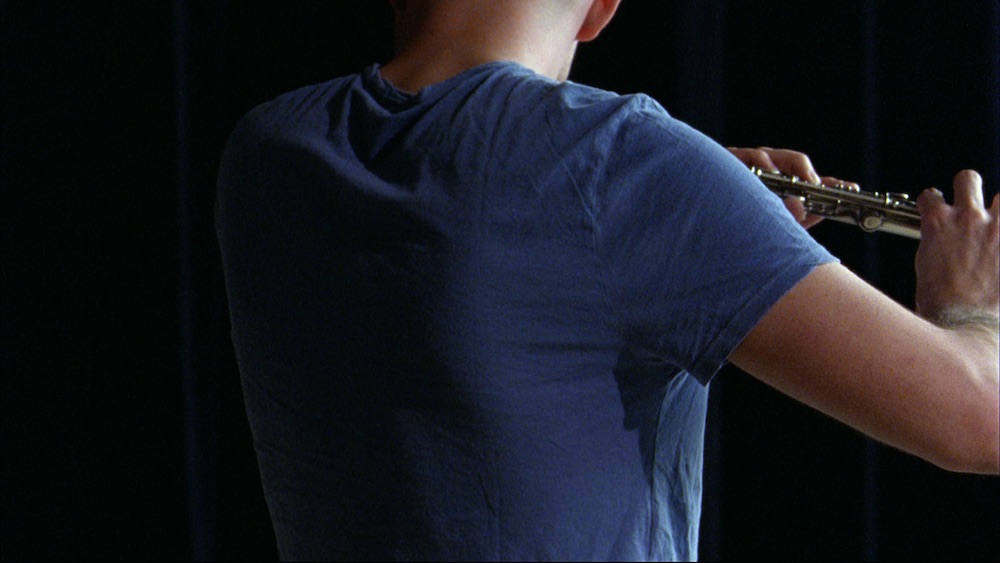
One, Two, Many (2012), instead, is a work conceived for Documenta 13 in Kassel that explores the spaces of listening to and interpreting music passing through the body. Three major movements make up the work: a first forward tracking shot shows a close-up portrait of a flute player in the process of searching for breath, sculpting it and exploring its grain. A second movement-sequence plays the voice of Roland Barthes recorded during the last courses of the Collège de France devoted to Comment vivre ensemble. The fragment deals with the relationship between thought and voice. Finally, the last movement is a looped lateral travelling that shows a choir of singers performing Giancito Scelsi’s Tre cante popolari while a few characters revolve around the choir creating a disorganised circle, immersed in a singular listening.
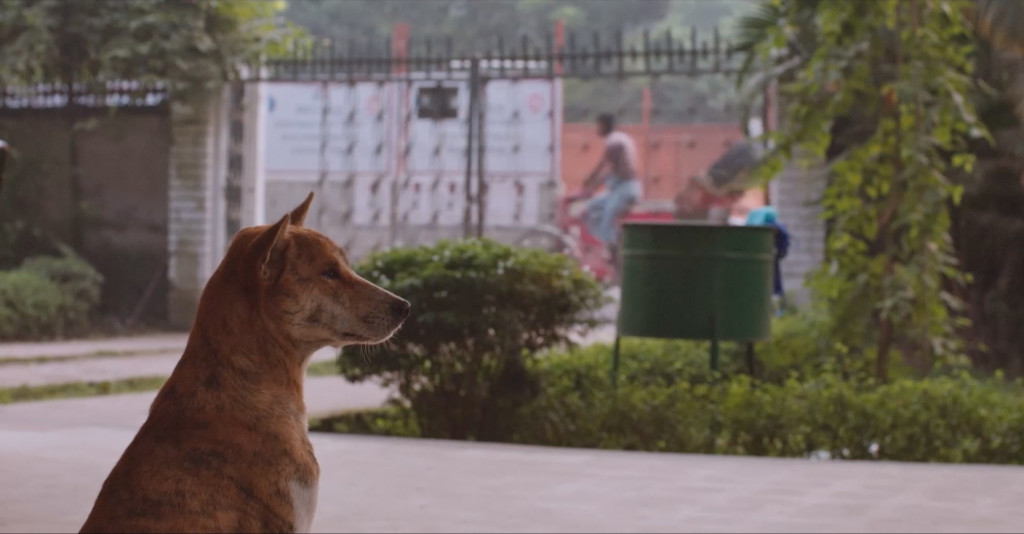
Premiered in early February at the Dhaka Art Summit 2020, ‘Fog Dog’ is the artist’s first foray into cinematic storytelling. It takes as point of departure the curious interaction of human and non-human inhabitants of the Institute of Fine Arts of Dhaka, documenting the daily life of the school and the numerous stray dogs that live there and seem to lead a parallel existence.
Designed by architect and pioneer of Bangladeshi modernism Muzharul Islam (1923-2012) and characterized by an open structure—open colonnades, free-standing staircases, ceramic jalousies, and wooden screens allow for an interweaving of interior and exterior—the building is both stage and protagonist of the film. Boundaries between inside and outside, building and surrounding gardens, institutional and public spaces seem fluid. The ambient noises of the tropical landscape and the urban environment mingle, creating a richly evocative sonic landscape.
Drawing on the inextricable entanglement of traces of the past and prospects of the future in today’s realities, conversations about the lasting consequences of the colonial past and a TV report on the effects of climate change are woven into the daily lives we encounter, as the film settles in on the routine of the school’s nightwatchman. During the night the building is visited by a ghostly presence—a phantom that will not seem out of place and continues to haunt its guardian even after daybreak.
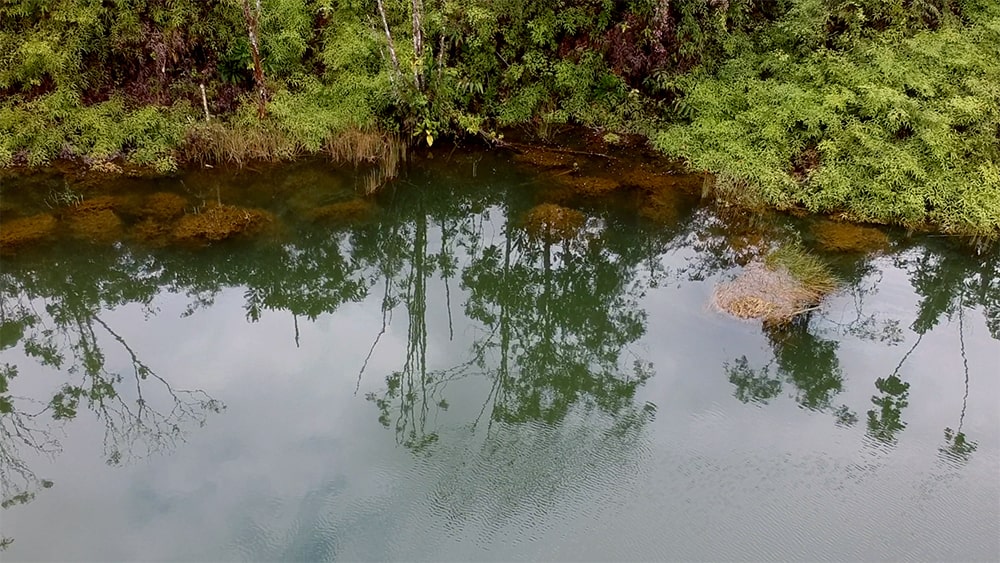
Relations with the Earth have been social relations of work and exploitation since the emerging industrial capitalism of the 19th century, just as they were in digital capitalism in the 21st century.
Who owns the natural resources and who receives their profits? How do wage labour and exploitation shape our relations with the earth and our relations with each other? How does the acceleration of digital processes counteract the slowness of geological processes? The artist Regina de Miguel asks herself these questions based on the regions of Chocó in Colombia and Rio Tinto in Spain. Here the state, the local population and international corporations are fighting for underground gold, an essential element for the computer industry as well as an alien element, which is an object of evil associated with desire and violence over bodies and territories.
Through various scenarios, different aspects of extractive coloniality, resistance and guerrilla strategies, Yuli Correa’s feminist social activism in Colombia during the peace process, and a critical re-reading of Bogota’s Gold Museum and its protocols of concealment are made visible, ending with an epilogue based on Michael Taussig’s My Cocaine Museum.
With the support of Fundación Más Arte Más Acción (Colombia)
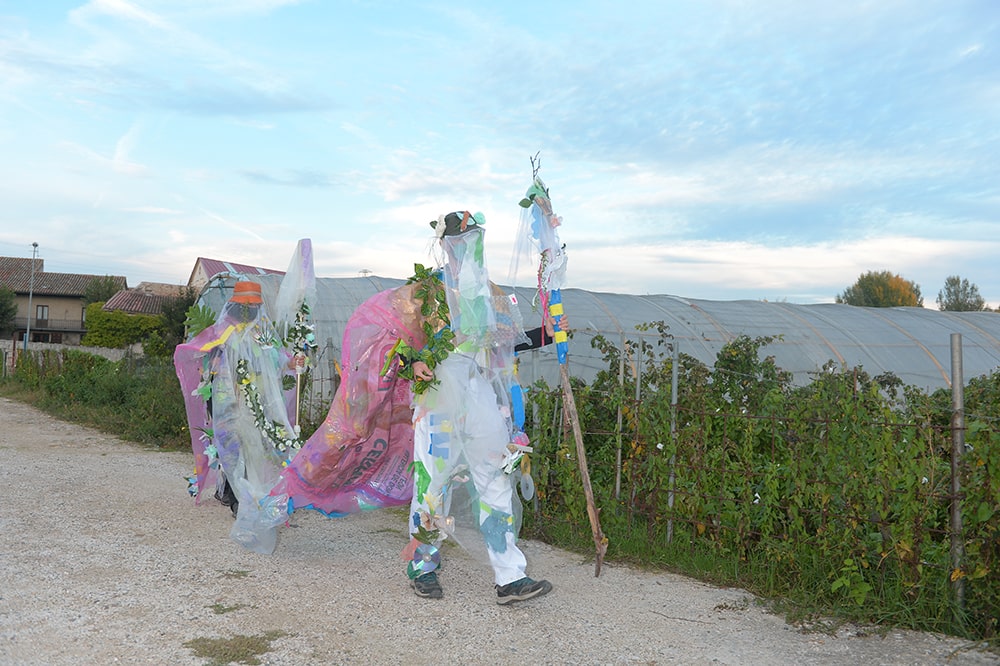
Into the River is a video-performance session that brings together three works developed within the framework of Transversal Aesthetics, a platform for experimenting on the intersection between art, mediation and social space, activated by Idensitat in collaboration with art centres in Valencia, Alicante and Castelló, in collaboration with the Consorci de Museus de la Comunitat Valenciana, and in Huarte, Burlada and Villaba with the Centro de Arte Contemporáneo de Huarte.
Transversal Aesthetics offers a place of confluence among artistic practices as a vehicle for critical research; among cultural mediation activities as a vehicle for the production of content, interaction and knowledge transfer; and the urban context as a vehicle for connecting specific themes of work to a specific active social space to these themes. This latest 2021 edition, Ecosystems of Fiction, both in Navarra and in the Valencian Community, has explored the conceptual premise of Fiction, using a setting common to all the participating locations: rivers.
In each of these contexts, artists, local participants, and a number of educational organisations have enacted various processes centred upon the tensions, paradoxes or connections that exist between imagined realities and fictions, based upon a view of the river environment and its multiple components and perspectives (natural, social, landscape , political, etc.) as elements that outline and blur the boundaries between rural and urban.
The waters of the Arga river in Navarra, or their absence, as well as the waters in the riverbeds of the Riu Sec (Dry River) in Castelló, the river Túria in València, and the river Monnegre in Alicante, together create dialogues and deploy various imaginary or fictional visions connected to those locations in which the project was developed.
Three audiovisual pieces will be screened in this session. Three experimental audiovisual productions in dialogue with these rivers, resulting from the artistic residencies carried out within the framework of Transversal Aesthetics – Ecosystems of Fiction between 2019 and 2021. The Night Flier by Jorge Núñez de la Visitación, realised in Alicante during the residence at the Las Cigarreras Cultural Centre, De Perdidos al Río by Joana Capella and Roc Domingo, and La Guaca o Tesoro by Alfonso Borragan, both pieces realised in Huarte, with the Centro de Arte Contemporáneo de Huarte.
The Night Flier
Jorge Núñez de la Visitación
The Night Flier AKA Fleeting AKA Full Exposure is a fragmented fantasy horror movie presented as performative cinema, filmed during Jorge Núñez de la Visitación’s artistic residency at the Las Cigarreras Cultural Centre, using Alicante’s Monnegre River (Riu Sec). The mixture of video, sound and text reassesses the construction of filmic aesthetics in the fantastic cinema genre, linking them to the location, a landscape formed by a discontinuous and weak river course. How may the fear of the unknown be narrated? What happens in the friction between the unexpected and the conventional?
The narrative revolves around Margot. She lives with two scientists in a house next to the beach. Suspecting that they are performing murky experiments in a room in the house, Margot one day takes advantage of the fact that they have left, and while she is snooping around the laboratory, she touches an unknown substance. Afterwards, she begins to feel strange and has a recurring dream; a plane crosses the Mediterranean Sea in the middle of the night, while broadcasting strange signals on the radio. Margot comes into contact with an entity that emerges from the night, The Night Flier.
La Guaca o Tesoro
alfonso borragán
La Guaca o Tesoro is a video essay made in collaboration with Patxi Alda, Ione Lameiro and Hasier Larretxea. The piece is a semi-fictionalised narrative which imagines a relationship between the fragments of treasures accumulated in the river and carried by the current, and the seeker who allows herself to be found by them. The treasure is elusive, and, as the treasure hunter herself recounts, the treasure escapes from its seekers. The guaca finds you. The video essay is constructed through reflections that search for these treasures in the water and fragmented images of the reconstruction of photogrammetries of treasures that escape their representation.
La Guaca o Tesoro is part of the long-term No Man’s Land project that uses water and the game as revelatory of the illicit, the means of re-inhabiting a forgotten space free of social norms and possessors. The project, on the one hand, attempts to recover the hidden practices that were carried out in situ and the memories that passed through it; while on the other, it recreates new stories, experiences and myths for future recovery. In this phase, the project explores the magnetism of the destiny and the sweep of the Arga river, and the three towns that follow its course: Huarte, where the Contemporary Art Centre is located, Burlada and Villava (Navarra).
De Perdidos al Río
Roc Domingo y Joana Capella
De Perdidos al Río is a project resulting from a residence aimed at examining the dialogue between reality and fiction, as applied to the context of the Arga River as it passes through the towns of Burlada, Villava and Huarte.
In this project, the artists experiment with the intersection between the imaginary linked to memory and the identity attached to the river, and the construction of a new mutant imaginary elaborated from fiction. The project’s formalisation was adapted to the new circumstances that arose from the pandemic, converting it into a particular aesthetic experience without an audience, a strange solitary pilgrimage of two beings emerging from the Anthropocene, who on their journey connect the Huarte Art centre with the Góngora waste treatment plant, following the course of the Arga river, passing through Burlada and Villava.
The action becomes a long audiovisual piece that is broadcast live. The performance-film is a sequence shot that captures the entire journey, from the beginning of the project, its production process and the pilgrimage itself as executed by the artists. The use of live shuffle, the multiscreen and sequence shots, serve to question the narrative linearity of the events, creating a tension between directionality and transition, attempting to deploy or disclose those mechanisms that construct these ideas. The piece is accompanied by a text, which turns into a voice-over that appears while the images are being shown.
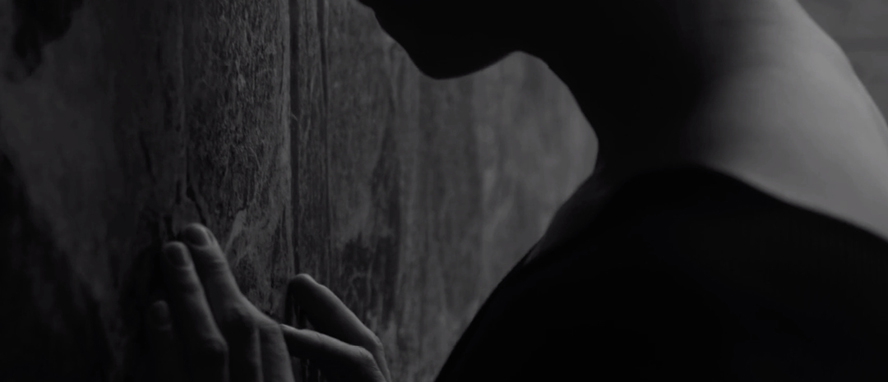
A short film in black and white by Albert Badia and 15-L, based on Enric Llorach’s artistic intervention in the Mies van der Rohe Pavilion at Loop Barcelona 2017, it starts from the dance show in the composition of Fèlix Pastor and the dancer Sonia Fernández in which they rehearsed the visit of a woman in the German pavilion of Mies van der Rohe.
“Built for the first time in 1929, the German Pavilion was designed to be walked across. But the pavilion is too a labyrinth. In the inside, you will find a wall of onyx. At the height of your eyes, the outbreak of veined silice will hurt you like the initial scene for Un chien andalou, which practiced the same horizontal cut to the eye. Then, your presence will become spectral until you find a sculpture on the water: a new Human form, femenine and large, captured in the moment of awakening.” Enric Llorach
Director: Albert Badia
Assistant Director: Jeffrey Frígula
Dance and choreography: Sonia Fernández Lage
Mounting: Albert Badia
Cello: Ingrid Kunztmann
Accordion: Edurne Arizu
Sound: Sixto Cámara and Enric Guaus
Composition and musical direction: Fèlix Pastor
Artistic direction: Enric Llorach
Artistic accompaniment: Bàrbara Raubert and Carles Murillo
Mineral Sculpture: Nicolas Joos
Producers: Carlota Coloma and Adrià Lahuerta
Production Assistant: Anna Asensio
An original idea by Enric Llorach and Fèlix Pastor
A production of Mies van der Rohe Foundation and 15L FILMS
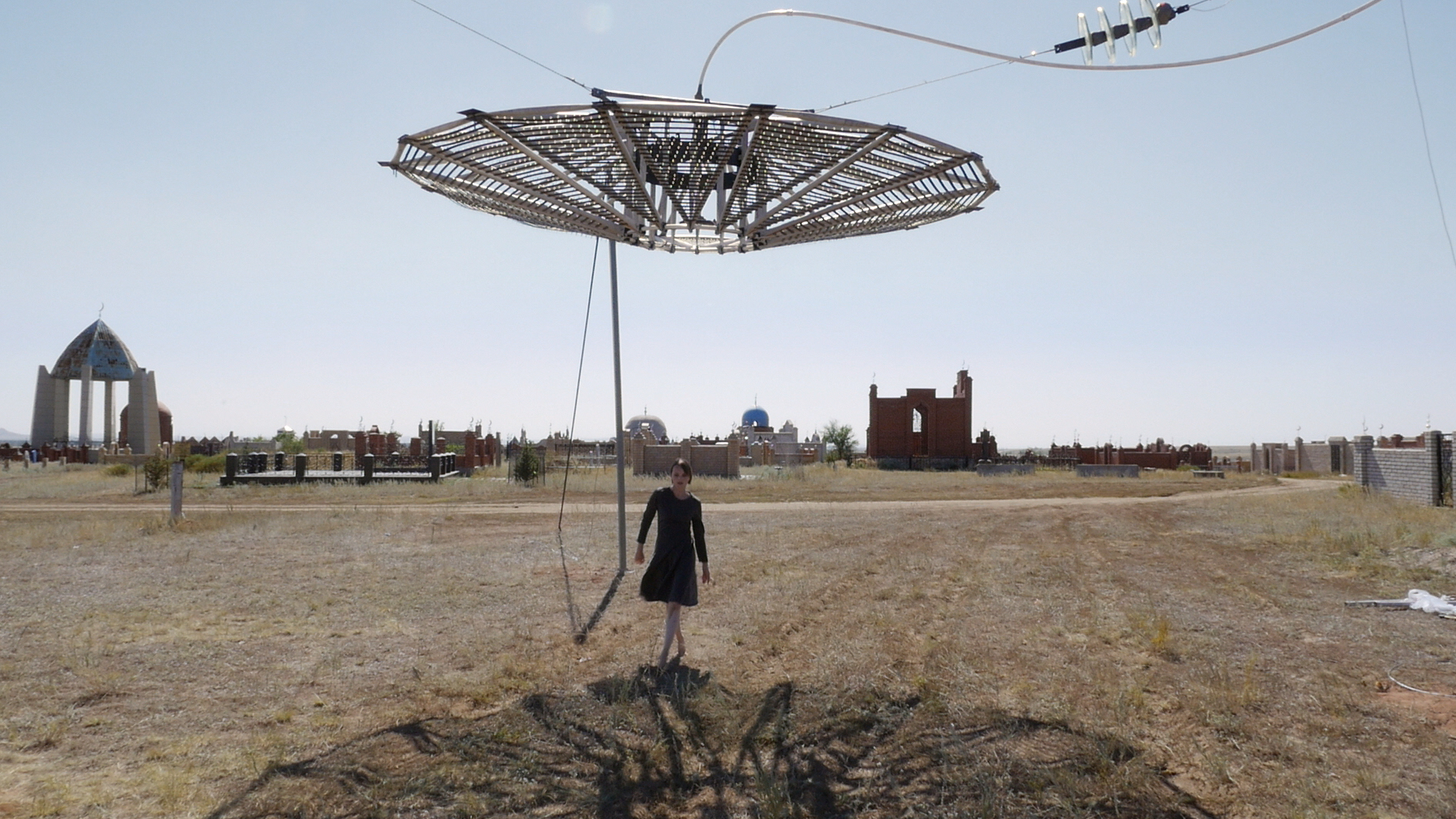
The cultural movement known as ‘Russian Cosmism’ was developed by philosopher Nikolai Fedorov at the end of the 19th Century and emerged in Russia before the October Revolution. Entailing a broad theory of natural philosophy, it had the utopian objective to not only reform art but also create a brand new world: its ideological pillars were the end of Death, resurrection, and free movement within cosmic space. In his ninety-six minute film trilogy, Anton Vidokle, artist and e-flux journal editor, investigates the foundations of Cosmist thinking and traces the remains of Soviet art and architecture, from the desolate steppes of Kazakhstan to museums in Moscow. Compositions by John Cale and Éliane Radigue constitute the musical background for an imaginary that seems suspended in time.
This is Cosmos, 2014 (28’10 min)
HD Video, color, sound
Russian with English subtitles
Shot in Siberia and Kazakhstan, as well as Moscow and Archangelsk regions, the first film in the trilogy on Russian Cosmism comprises a collage of ideas from the movement’s diverse protagonists, including founding philosopher Nikolai Fedorov. Fedorov, among others, believed that death was a mistake—a flaw in the overall design of the human, “because the energy of cosmos is indestructible, because true religion is a cult of ancestors, because true social equality is immortality for all.” For the Russian cosmists, the definition of cosmos was not limited to outer space: rather, they set out to create “cosmos,” or harmonious and eternal life, on Earth. The ultimate goal, as illuminated in the short film, was “to construct a new reality, free of hunger, disease, violence, death, need, inequality—like communism.”
The Communist Revolution Was Caused By The Sun, 2015 (33’36 min)
HD Video, color, sound
Russian with English subtitles
The second part of the trilogy looks at the poetic dimension of solar cosmology of Soviet biophysicist, Alexander Chizhevsky. Shot in Kazakhstan, where Chizhevsky was imprisoned and later exiled, the film introduces Сhizhevsky’s research into the impact of solar emissions on human sociology, psychology, politics and economics in the form of wars, revolutions, epidemics and other upheavals. The film aligns the life of post-soviet rural residents and the futurological projects of Russian cosmism to emphasize that the goal of the early Soviet breakthroughs aimed at the conquest of outer space was not so much technical acceleration, but the common cause of humankind in their struggle against limitations of earthly life.
Immortality and Resurrection for All!, 2017 (34’17 min)
HD Video, color, sound
Russian with English subtitles
The trilogy’s last part is a meditation on a museum as the site of resurrection — a central idea for many Cosmist thinkers, scientists and avant-garde artists. Filmed at the State Tretyakov Gallery, Moscow Zoological Museum, the Lenin Library and the Museum of Revolution, the film looks at museological and archival techniques of collection, restoration and conservation as a means of the material restoration of life, following an essay penned by Nikolai Fedorov on this subject in 1880s. The film follows a cast comprised of present-day followers of Fedorov, several actors, artists and a Pharaoh Hound that playfully enact the resurrection of a mummy, a close examination of Malevich’ Black Square, Rodchenko’s spatial constructions, taxidermied animals, artifacts of the Russian Revolution, skeletons, and mannequins in tableau vivant-like scenes, in order to create a contemporary visualization for the poetry implicit in Fedorov’s writings.
Activity in collaboration with La Capella, within the frame of BCN Producció, inside the curatorial project “Esdevenir immortal i després morir” by Caterina Almirall, which will be exhibited between October 2020 and January 2021.
http://lacapella.barcelona/ca/esdevenir-immortal-i-despres-morir
http://lacapella.barcelona/en/immortality-all-film-trilogy-russian-cosmism
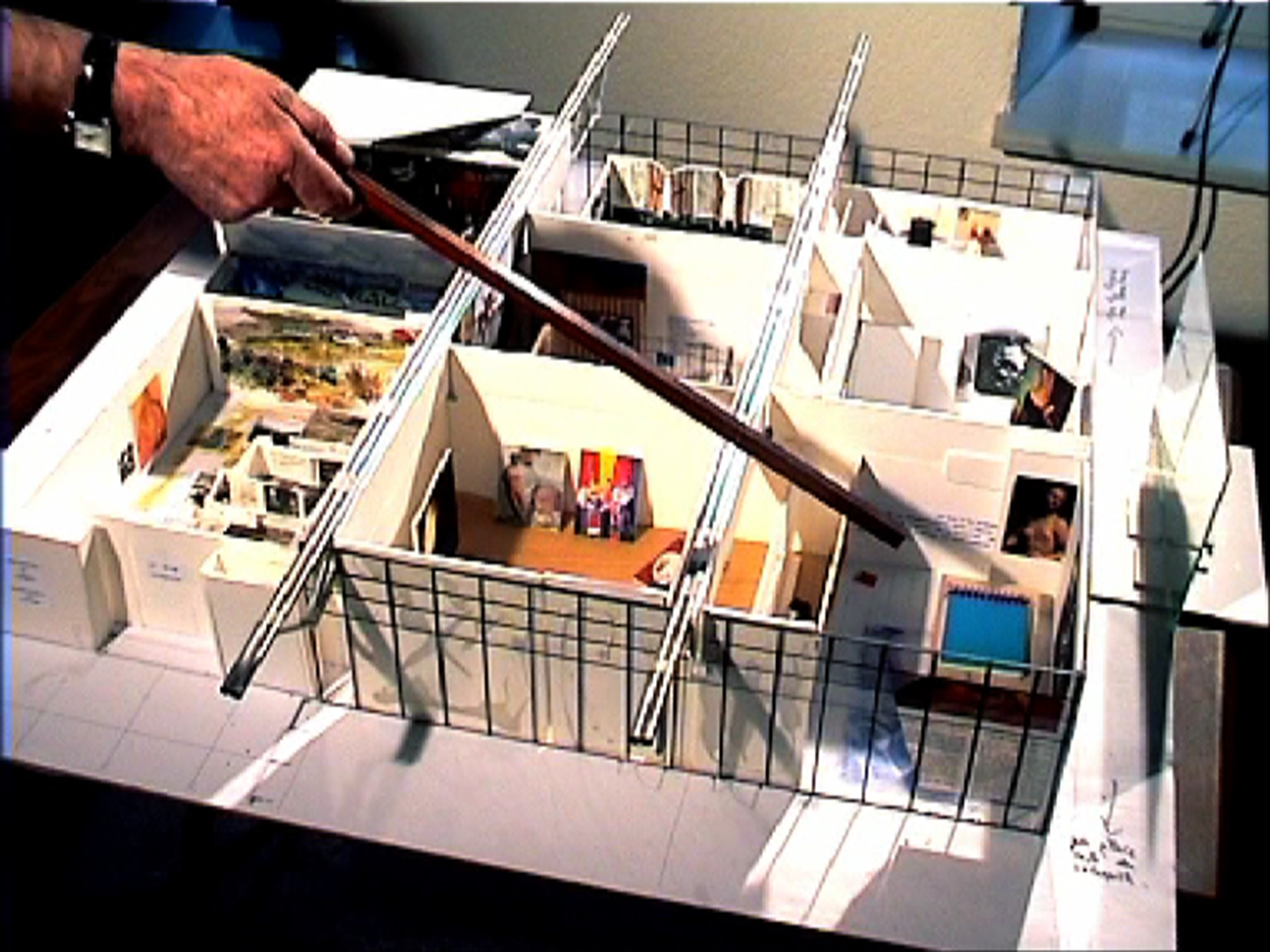
As part of the established cycle Comment ça va?, which film expert and curator Pascale Cassagnau has been programming for over 5 years, LOOP and the Zumzeig present a session entirely dedicated to Jean-Luc Godard. Centred on Godard’s relationship with art at large, the screening feature two short films that relate to the much discussed 2006’s exhibition Voyage(s) en utopie, JLG, 1946-2006, à la recherche d’un théorème perdu (Centre Pompidou, 11 May – 4 August 2006). Reportage amateur (maquette expo) shows a cardboard maquette made for the show from the most humble materials and it suggests and ambitious dialogue between cinema, painting and literature. Made a few months after, Souvenir d’Utopie presents the maquette with tighter, static shots, without commentary, punctuated with cuts to black.
J.L. Godard, Anne-Marie Miéville, Reportage amateur (maquette expo), 2006, 46′
Anne-Marie Miéville, Souvenir d’utopie, 2006, 6’09”
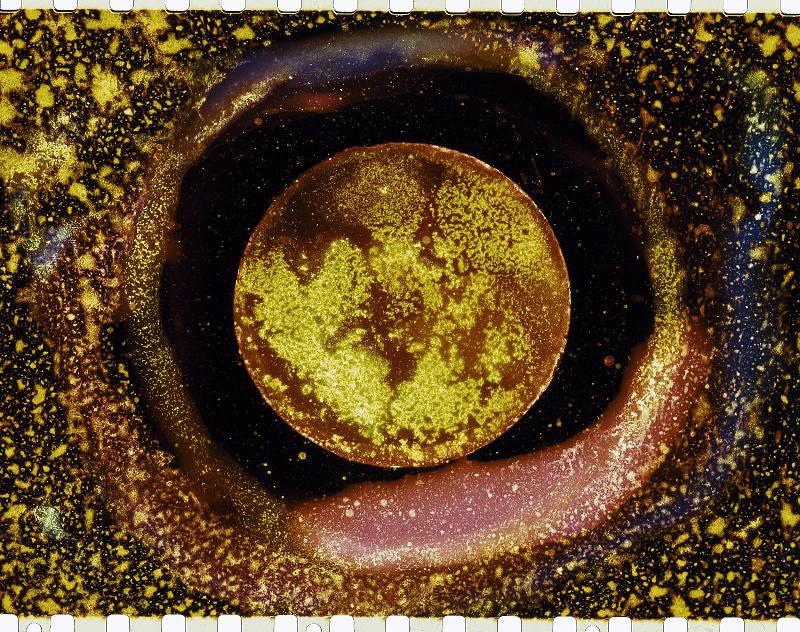
This selection gathers together a series of cinematographic works whose aesthetics discloses different discursive ways to approach outer space. The screening unfolds into three abstract and evocative animations around the cosmos, and three documentations focusing on comets, the moon or the Milky Way. While triggering dialogue between the film inscriptions by Lye, the visual and pictorial music of Sistiaga, the astral multiplications of Szlam, the meteoric speculation of Stratman, the Martian imagery of Darroll and the hypnotic celestial filming of Liotta, this programme ultimately unfolds into a combination of non-galactic figuration and interstellar hyperrealism.
As a result of the long term collaboration with curator Pascale Cassagnau and responsible of the audiovisual and new media collection of the Centre national des arts plastiques – CNAP, and on the occasion of the Barcelona Gallery Weekend, LOOP presents I Had Nowhere To Go: A Portrait of a Displaced Person (2016) by renowned visual artist Douglas Gordon. The film is a ninety-seven minute project in which experimental filmmaker Jonas Mekas is heard via voice-over reading passages from his 1991 autobiography of the same title, while his image intermittently appears out of the dark blankness that the black screen of the work is governed by.
Another example of Gordon’s tendency to play with the expectations around moving image works and a somewhat hybrid production between video art and experimental cinema, I Had Nowhere To Go continues the artist’s practice as a portraitist while creating a space for debating on the frontiers between different disciplines.
The Comment ça va ? D’Après Godard film project-program, based on the eponymous film by Jean -Luc Godard, Comment ça va ? (1978) presents documentary and documented films, highlighting their capacity to cross history, to recover truth and reality, not as their ultimate goals, but rather, as tools, as reserves of forms, to undertake a journey, a trajectory, a path through complex political geographies.
In Comment ça va ? (1978, 70’), Jean –Luc Godard films a dialogue opposing a trade unionist and a left-wing activist on the subject of information processing and, specifically, on how two shots should be treated. The shots in question involve the Carnation Revolution, in Portugal, and a clash between strikers and riot police during a demonstration in France. The filmmaker described the genesis of this film, through a commentary delivered by a voice over, in the following terms: “This is the story of a guy who gets news from some other guy, who happens to be his father. And then this other guy talks to him about a woman with whom he had a thing going on at the office, a woman with whom he’s making a film showing how a Communist newspaper is made”. Not only does the film “expose” the full complexity of the ideological disagreements and tensions that divided the French left-wing movement, in doing so it also dissects the rhetorical dimension at work behind all information-writing activity through its montage and its movement, by deliberately placing the film, as the opening and closing credits put it, at the centre of the tension between two elements: “A film between the actor and the spectator, a film between activity and passivity”.
Here, the works of the Comment ça va? D’après Godard program express a number of shared hypotheses regarding both revisiting some of the topoi in modern art as well as work-creation and the possibility for narration. It is, in short, a series of films involved in reflecting on the present day.
Dowload the full curiatorial text here
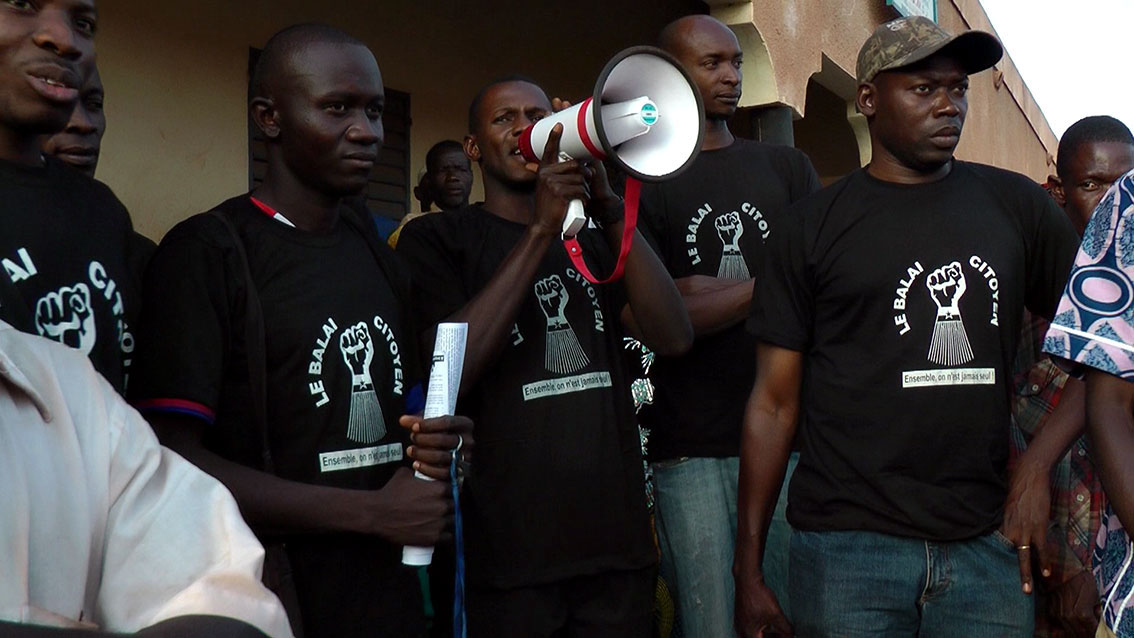
Frédérique Lagny, “Djama Mourouti” ( La colère du peuple) , 2016,49′
Thirteen years after the Democratic and Popular Revolution led by Thomas Sankara in Burkina Faso, the film Djama Mourouty, which was shot in Bobo-Dioulasso, the second largest city in the nation, reminds us of the fall of Blaise Compaoré’s regime. The Burkinabé people, and particularly its youth, go into action forcefully, inventing new tools and slogans for the purpose of carrying out citizen protests.
Lech Kowalski, “I Pay for Your Story”, 2016, 86′
This film by Lech Kowalski is a journey to the present of a devastated America, showcased by the filmmaker as he revisits his childhood locations. Starting from the close unity of space of the neighbourhood — a few blocks — in which he spent his childhood and teenage years, upon his arrival to the United States after emigrating from Poland, the filmmaker films his former neighbours like so many portraits of social and human dereliction that are entirely absent in the sphere of the media and official representations of American society. Lech Kowalski uses the uniqueness of life stories to delve into the heart of the influence of institutions on destinies and the fundamental alienation that results from it.
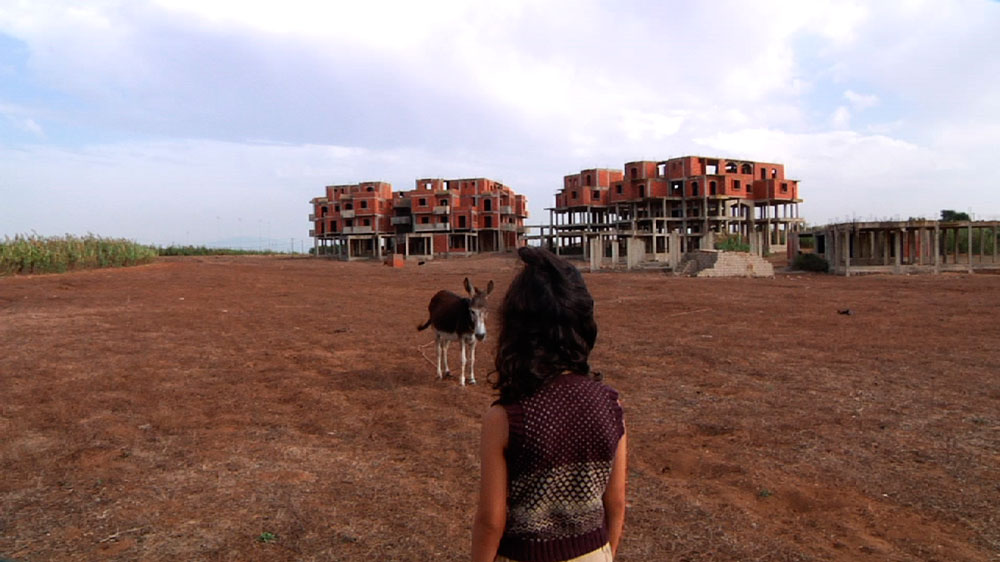
As following this exploration of cinematic narratives and codes as a means to interpret reality, the Zumzeig hosts a selection of films by French born and based artists, set across Northern and Sub-Saharan African cities. While questioning past and present events or envisioning future scenarios, the works span issues related with ethnography, decolonisation, political exiles and upheavals, the exploitation of labour and the loss of memory.
In Dans ma tête un rond point (A Roundabout in my Head) the spectator is invited to go behind the scenes at a central Algiers abbatoir. A glimpse into the working lives of the male employees, Ferhani’s feature-length debut touches lightly on wider issues connected with the Arab Spring; and is thus sufficiently topical — as well as aesthetically distinctive.
In Fièvre (Fever) a child perceives the presence of the ghost of a woman (a political exile returning to his homeland), on a night of fever in Morocco. While the history of decolonization and forgotten struggles resurfaces, the children and the ghost merge into a journey through space and time, in search for lost memories and past recollections.
In Psaume a small group of men seeks water and survival, in a part of Sub-Saharan Africa. The dusty villages they cross are inhabited only by mad and infirm, souls left behind by a war. In long sequence shots, the camera embraces the slow progress of the haggard figures, immersing us in a post-apocalyptic world that resembles a science fiction landscape as much as it does the setting of a modern African catastrophe.
*At the presence of the directors and the curators.