Loop Symposium: Commissioning Artists’ Cinema. Moderated by Filipa Ramos
Loading video, please wait
- 00:00
- Speakers
- Tarini Malik, Hoor Al Qasimi, Filipa Ramos, Guilherme Blanc and Kostas Stasinopoulos
Comissioning Artists’ Cinema (Wednesday 20 Nov. 2024), moderated by Filipa Ramos
Commissions rely on relationships, based on dialogue and exchange. They are made of trust, support, commitment and anticipation, as the end result of a commissioned artwork is a surprise for all. Commissions must balance many aspects, from the expectations of funding bodies to the unpredictable reception of press and the response of specialized and general audiences to a new artwork. They are particularly important to stimulate the work of artists whose practice does not rely as heavily in the market as that of artists whose mediums are more traditional. For this reason, they are fundamental to assure the dynamic and healthy life of time-based media and artists’ cinema. In this panel, we bring together institutional experiences, both public and private, to discuss the context, pertinence and modalities of commissioning in the context of art exhibitions, festivals, biennales and other encounters that support and rely on the exhibition of newly commissioned filmic artworks.
Tarini Malik
- Speaker
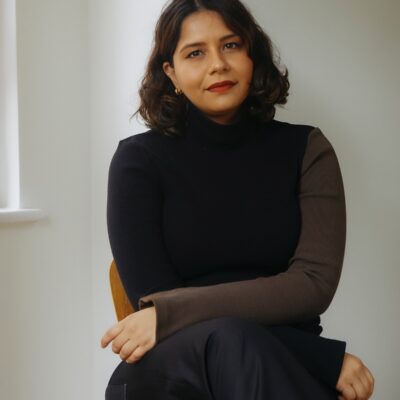
Tarini Malik is the curator of the British Pavilion at the 2024 edition of La Biennale di Venezia working with artist John Akomfrah. She is currently in post as Curator of Contemporary Art at the Royal Academy of Arts in London. Previously, she was a curator at the Whitechapel Gallery and responsible for the planning of artistic programmes, and at the Hayward Gallery where she organised a series of landmark group exhibitions, as well as the first solo presentations in the UK of several international artists. From 2013-2017, Malik was Head of Exhibitions for artist Isaac Julien and Research Curator with Mark Nash on several major touring international exhibitions. In 2015, she was Research Curator for the main exhibition at La Biennale di Venezia curated by Okwui Enwezor, entitled “All The World’s Futures”. Malik has also held curatorial positions at Fiorucci Art Trust, Frieze Projects and Serpentine Galleries. She has published her writing in various magazines and journals and lectured widely on cultural studies.
Hoor Al Qasimi
- Speaker
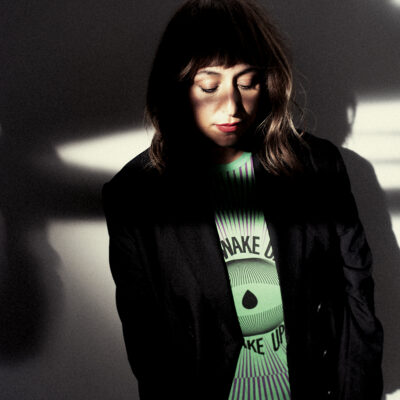
Hoor Al Qasimi is President and Director of Sharjah Art Foundation, the public art institution she established in 2009 as a catalyst and advocate for the arts in Sharjah, UAE, and around the world. Director of Sharjah Biennial since 2003, she has curated and co-curated major exhibitions for the Foundation and numerous international institutions, including the critically acclaimed Sharjah Biennial 15 (2023), the major touring retrospective Hassan Sharif: I Am The Single Work Artist (2017–2018) and solo exhibitions of artists Tarek Atoui, Simone Fattal, Rasheed Araeen, Yayoi Kusama, Farideh Lashai, Khalil Rabah, Bouchra Khalili and Emily Karaka. Al Qasimi also serves as President of the International Biennial Association; President of The Africa Institute, Sharjah; Director of the Sharjah Architecture Triennial; and head of Sharjah’s Global Studies University. Al Qasimi curated the 2020 Lahore Biennial and has been appointed Artistic Director of the 6th Aichi Triennale (2025) and 25th Biennale of Sydney (2026).
Filipa Ramos
- Speaker
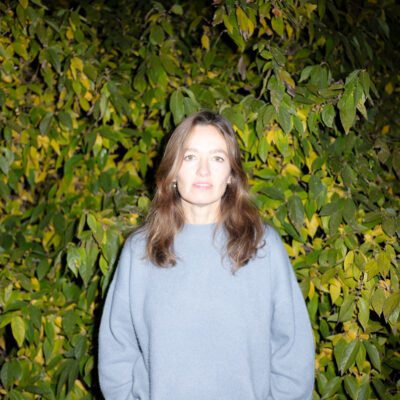
Filipa Ramos, PhD, is Lecturer at the Arts Institute of the HGK/FHNW, Basel. Her research focuses on how contemporary art engages with nature and ecology. Ramos has been curator of the Art Basel Film sector (2020-24) and co-founded the online artists’ cinema Vdrome). Current projects include BESTIARI, the Catalan representation at the 60th International Art Exhibition – La Biennale di Venezia (2024) and the festival The Shape of a Circle in the Mind of a Fish (since 2018, with Lucia Pietroiusti). In 2024, she curated Songs for the Changing Seasons, 1. Klima Biennale Wien and in 2022, Persons Personen, 8th Biennale Gherdëina (both w/ Lucia Pietroiusti). In 2021, she co-curated Bodies of Water, the 13th Shanghai Biennale.
Guilherme Blanc
- Speaker
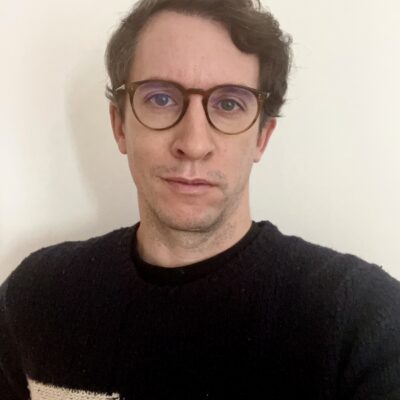
Guilherme Blanc is a curator and researcher, working across cinema and visual arts, often in dialogue with other practices, namely performance and editorial. He has worked as an independent film curator since 2012, collaborating with institutions such as the Barbican Centre, Whitechapel Gallery and the ICA. From 2017 to 2021, he was head of contemporary art and film for the city of Porto, working as artistic director of Galeria Municipal do Porto, Fórum do Futuro, and leading funding programmes for the arts. He is artistic director of Batalha Centro de Cinema, and teaches film at Universidade Católica Portuguesa.
Kostas Stasinopoulos
- Speaker
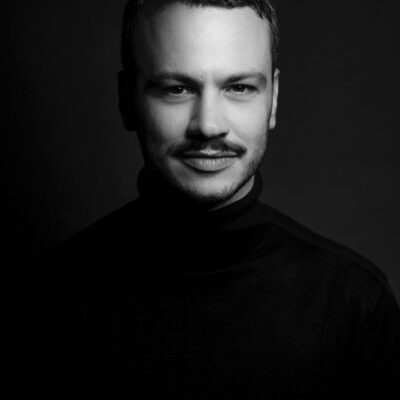
Kostas Stasinopoulos is a curator and writer. He is Curator, Live Programmes at Serpentine, London, has served as Associate Curator at The Stavros Niarchos Foundation Cultural Center and has collaborated with the Whitechapel Gallery, White Cube, Frieze and the Athens Biennale. Kostas received his PhD in History of Art from University of York, funded by the Arts and Humanities Research Council, the Onassis Foundation and NEON. He holds an MA in History of Art from the Courtauld Institute of Art and a BSc in Biochemistry from Imperial College London. Together with Hans Ulrich Obrist, Artistic Director, Serpentine, he is the co-editor of 140 Artists’ Ideas for Planet Earth (Penguin, 2021).