Pascale Cassagnau
- Curator, Speaker
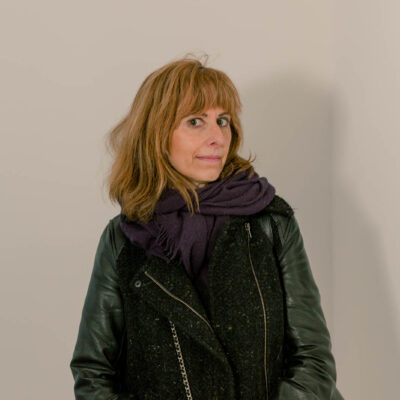
Pascale Cassagnau holds a PhD in Art History and Criticism and is responsible for the audiovisual and new media collection at the CNAP (Centre national des arts plastiques, Paris). She writes extensively for Art Press and is the author of texts on artists such as Chris Burden, James Coleman, John Baldessari, Pierre Huyghe, Dominique Gonzalez-Foerster and Matthieu Laurette, among others. She is mainly interested in the study of new film practices and their cross-over with contemporary art. Her essay “Future Amnesia, Enquêtes sur un troisième cinéma” (Ed. Isthmus, 2006) investigates new filmic forms, existing between fiction and documentary. “Un pays supplémentaire” (Ed. Ecole nationale supérieure des Beaux-Arts de Paris, 2010) focuses on contemporary creation in the media architecture. Her book, “‘Apichatpong Weerasethakul,’ Une théorie des objets personnels” was released as an e-book in 2016. Her essay “Diagramme Monteiro, on Joao Cesar Monterio, was written in collaboration with Hughes Decointet and published in Editions de L’Oeil in 2017. Her essays “La répétition générale,” — a work on the processes of creation and research in the fields of cinema, contemporary art — and “Dispositifs-jeux” — on Jean Frapat, inventor of television devices — are currently in progress.
Last update 9th March 2017
Related Activities
“Soundtrack to a Coup d’Etat” by Johan Grimonprez
Friday 22 November 2024, 9:30 pm
— Screening and conversation with curators Carles Guerra and Pascale Cassagneau (CNAP)
- Speakers
- Pascale Cassagnau and Carles Guerra
- Venue
- Zumzeig
- A project by
- Loop Festival
Add to calendar
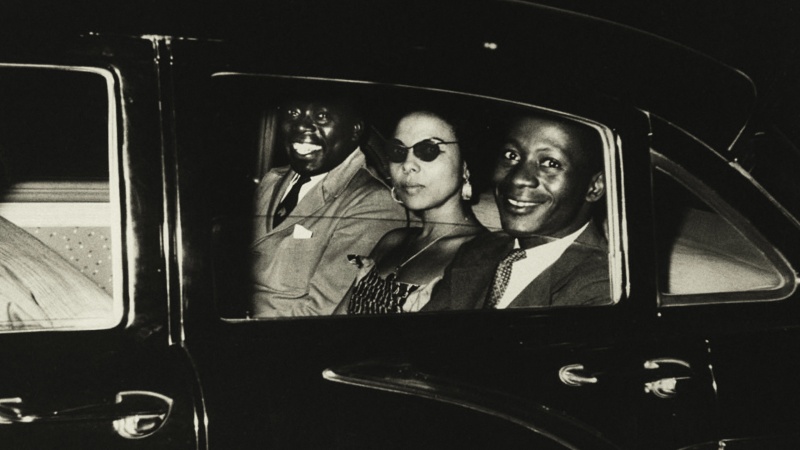
Soundtrack to a Coup d’Etat
Johan Grimonprez
2024 | Belgium, France, Netherlands | 150 min.
A monumental and innovative history lesson set to a jazz rhythm, exploring the social upheavals of the 1960s, the Cold War, Africa’s decolonization, and how the CIA and the Belgian monarchy orchestrated the assassination of Patrice Lumumba, the Prime Minister of the Congo, using legendary jazz musicians as a distraction. The political significance and music of African American artists like Dizzy Gillespie, Nina Simone, Max Roach, and Abbey Lincoln, as well as Congolese musicians such as Adou Elenga and Joseph Kabasele, piece together a bloody and captivating puzzle.
On November 22, curators Carles Guerra and Pascale Cassagneau (CNAP) will host a dialogue about the film.
Featured: Miriam Makeba, Andrée Blouin, Nikita S. Khrushchev, Patrice Lumumba, Allen Dulles, Paul-Henri Spaak, In Koli Jean Bofane, Krishna Menon, Malcolm X, Max Roach, Abbey Lincoln, Louis Armstrong, Dizzy Gillespie, Nina Simone, Thelonious Monk, Docteur Nico, Joseph Kabasele.
Joris Lachaise, João Pedro Rodrigues & João Rui Guerra da Mata. ‘Comment ça va? VI’
18 — 19 November 2023
- Artists
- Joris Lachaise, João Pedro Rodrigues and João Rui Guerra da Mata
- Curators
- Pascale Cassagnau and Rasha Salti
- Venues
- Zumzeig
- A project by
- CNAP, La Lucarne (Arte France) & LOOP
- Contributor
- Acción Cultural Española (AC/E)
- Price
- 7 €
- Tickets & register
- zumzeigcine.coop/es
Add to calendar
The program Comment ça va? borrows its title from the eponymous film by Jean-Luc Godard (1978), and has been developing throughout the past editions of the LOOP Festival. It presents documentary films that manifest a remarkable capacity to traverse history, recover truth and capture reality, not as their ultimate goals, but rather, as tools and potentialities of forms, that undertake a journey and forge a path through complex political geographies. The selected works incarnate a number of proposals that revisit some of the topoi of contemporary art, as well as narrative possibilities that fulfilling the calling of “stories that demand to be told” (to borrow from Paul Ricœur in Temps et Récits I).
In Comment ça va? Jean-Luc Godard filmed an exchange between the editor of a communist and trade unionist newspaper and his colleague, a left-wing militant, as they put together an article designed to reveal the processes involved in producing their daily paper. The pair disagree on how information ought to be handled, and in particular on how two specific images should be used and captioned. The first image depicts civilians and soldiers in conflict during Portugal’s “Carnation Revolution”, and the second image a clash between strikers and French anti-riot forces during a protest. While the film succeeds in exposing the complex ideological tensions and dissent that divided France’s Left, through editing and the film’s movement, it also dissects the rhetorical dimension of news making.
Resonating with a variety of hypotheses on reality, history and intimacy, contemporary video practice is not a transcendental field in and of itself, rather, it is an undefined territory in which artists venture (as they do with photography, drawing, digital media, or object-making). In engaging with these themes, several video works displace them in order to explore their utopian scope, such as for instance, with the appropriation of diverse cultural sources culled from mass media and the perspective of the network-based internet as context; human time and individual self-fictionalizing; uniqueness and intimacy reformulated in the scale of common time and between public and private space; unique representations of the self that establish a dialogue with the edition of the image, as montaging, fragmenting and referencing the filmic space become its prime motivation. Since the last century, the emergence of the document in the production of knowledge has modified the status of memory. Indeed, images provide memory with a support and a portal for reflection, leading the gaze towards both the object of memory and the memory of the object, acknowledging the ambiguity in their articulation. Moreover, the document has given rise to types of assemblages and montages that act as the basis for the elaboration of stories and forms of historicization. The creation of archives raises at once, questions on History and on personal, individual stories. Such is the nature of the document: a use value for the re-appropriation of subjectivities, of forms of historicity, through the multiplication of narrative hypotheses.
Programme
18/11/2023, 17.30h
João Pedro Rodrigues & João Rui Guerra da Mata. Onde fica esta rua? ou Sem antes nem depois (2022, 88 min)
19/11/2023, 18h
Joris Lachaise, Transfariana (2023, 150 min)

This programme is supported by a grant from Acción Cultural Española (AC/E).
Joris Lachaise. ‘Transfariana’
Sunday 19 November 2023, 6 pm
- Artists
- Joris Lachaise
- Curators
- Pascale Cassagnau and Rasha Salti
- Venues
- Zumzeig
- A project by
- CNAP, La Lucarne (Arte France) & LOOP
- Price
- 7 €
- Tickets & register
- entradas.codetickets.com/entradas/transfariana/46321/zumzeigcooperativa/online
- Language
- Spanish. Subtitles in English.
Add to calendar
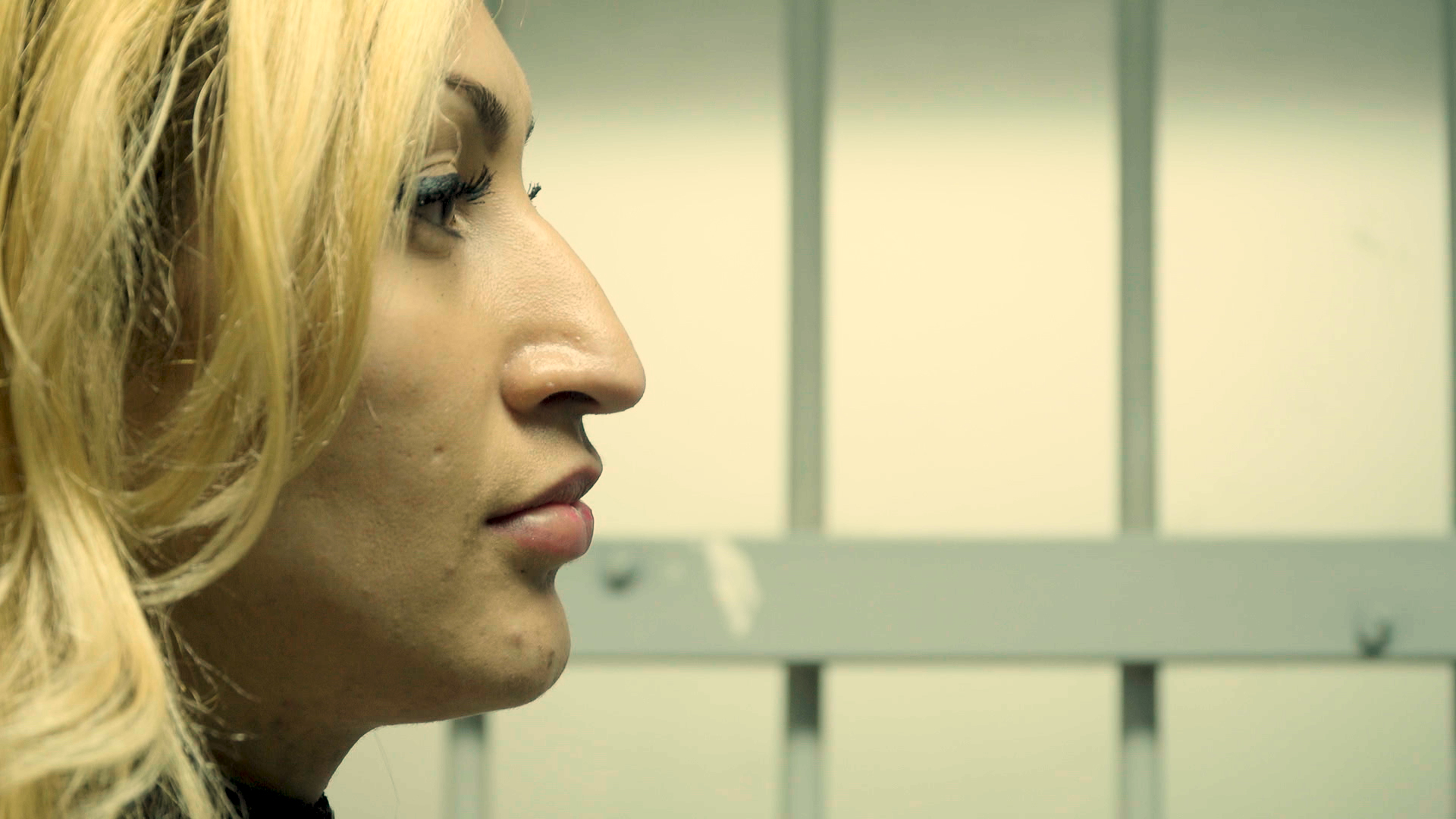
At La Picota, a high-security prison south of Bogotá, the marriage of a FARC guerrilla to a transgender woman ex-sex worker, sentenced to life imprisonment, first provoked scandal, then a transformation of mentalities. Based on the story of this rebellious nuptials, the film follows the encounter between two forms of struggle, two models of struggle that are transformed by interpenetrating. FARC and LGBTQIA+, same fight?
Between the world of prisons, urban life in Bogotá and the Colombian jungle, the camera watches for signs of change in society. An intelligent, surprising and deeply human mosaic film.
João Pedro Rodrigues & João Rui Guerra da Mata. ‘Onde fica esta rua? ou Sem antes nem depois’
Saturday 18 November 2023, 5:30 pm
- Artists
- João Pedro Rodrigues and João Rui Guerra da Mata
- Curators
- Pascale Cassagnau and Rasha Salti
- Venues
- Zumzeig
- A project by
- CNAP, La Lucarne (Arte France) & LOOP
- Price
- 7 €
- Tickets & register
- entradas.codetickets.com/entradas/onde-fica-esta-rua--ou-sem-antes-nem-depois/46323/zumzeigcooperativa/online
- Language
- Portuguese. Subtitles in Spanish.
Add to calendar
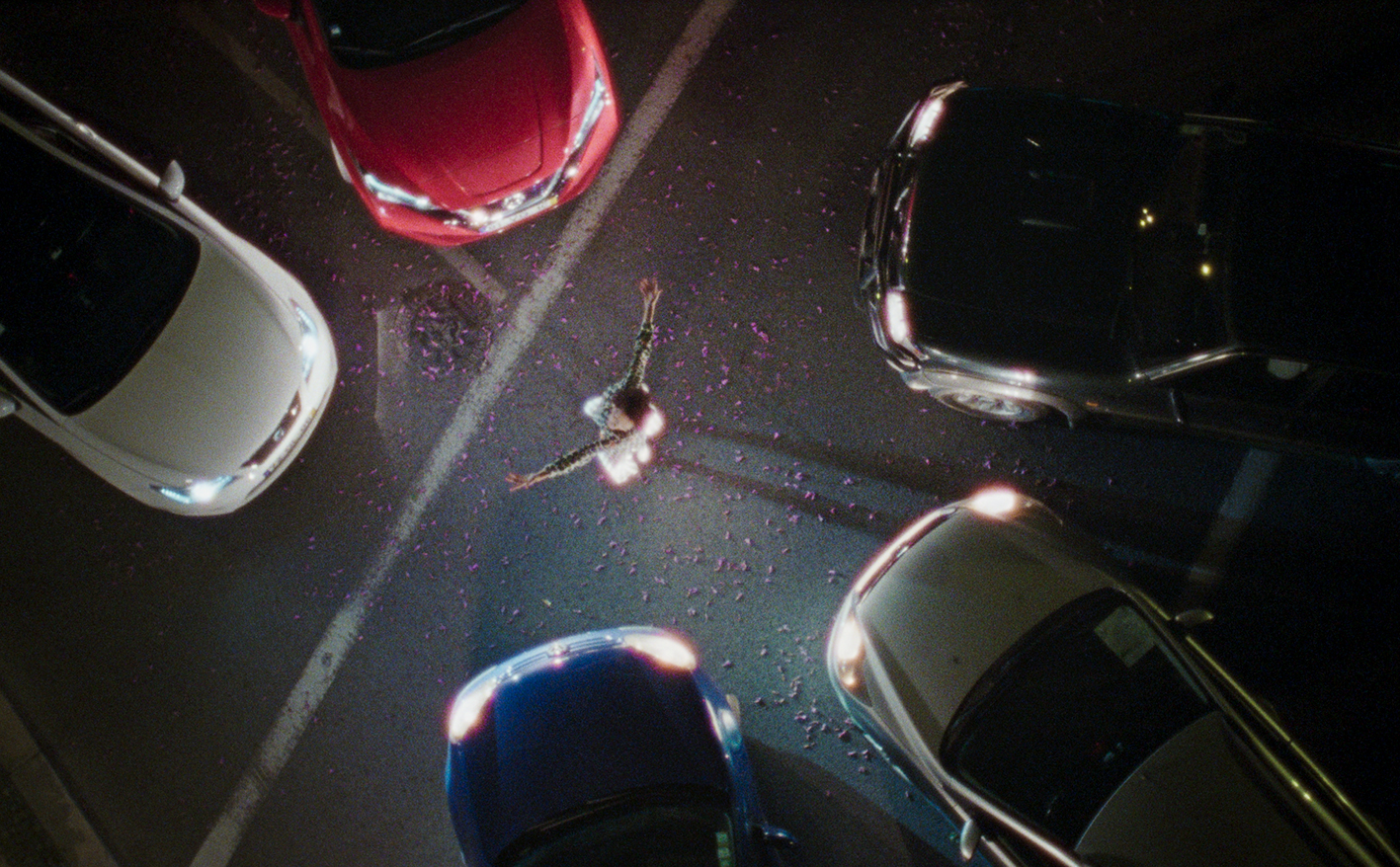
From our window one can see a set of the 1963 film The Green Years. This was our starting point: guided by Paulo Rocha’s gaze, we look back at the places of that film. The successive geological, urbanistic and social strata of Lisbon, besieged by the pandemic that interrupted the shooting, are drawn out in front of our camera, like a contemporary jazz impro from a score written in 1963.
The Dancing States of the Political Body
10 November — 10 December 2020
— Curated by Pascale Cassagnau
- Artists
- Cecilia Bengolea
- Curators
- Pascale Cassagnau
- Venue
- VIDEOCLOOP
- Contributor
- CNAP
Add to calendar
A selection of works by Cecilia Bengolea
CLICK HERE FOR WATCHING -> Dub Love, 2017
CLICK HERE FOR WATCHING -> Dancehall Weather, 2017
CLICK HERE FOR WATCHING -> Danse au fond de la mer, 2019
CLICK HERE FOR WATCHING -> Shelly Belly inna Real Life, 2020
This programme gathers together a series of works by Argentinian artist Cecilia Bengolea, and it features one video belonging to the collection of the CNAP (National Centre of Plastic Arts, Paris) – Dancehall Weather.
Dancer, performer and video-maker, Argentinian artist-Paris based Cécilia Bengoléa makes the territory of dance and the deconstruction of dominant aesthetics the very material of her work. Alone or in collaboration with a large number of dancers, choreographers, artists such as François Chaignaud – with whom she founded the Vlovajob Pru’s company in 2008 –, Cécilia Bengoléa examines collective dance rituals. The Jamaican culture of Dancehall now globally celebrated, thus, gets revisited with traditional songs from Georgia, exacerbating their political load. The journey through the music and dances of urban communities, as performed in great cities of the world and observed anthropologically, explores all the forms of scholarly parody contained in these popular and anonymous creations. The worlds of “Voguing”, “Twerk”, “Dancehall”, “House”, “Dub Step”, “Hip Hop”, “Bashement”, are explored according to their historical ecologies and respective cultures, with a dancing virtuosity that restores their very community nature (Dancehall Weather, Cnap’s collection). Drawing from the principle of a hybrid or diaphanous body of fluid crystals –as in “Liquid” dancing –, Cécilia Bengoléa presents a metamorphic and animal body, one in constant becoming.
Dub Love, 2017
Video, color, sound, 4 min 23 sec
For the Dub Love project, Cecilia Bengolea collaborated with HIGH ELEMENTS, and Dubplates DJ from the Island of Reunion, to create a sort of optimistic music, defined by a tension between the dub’s characteristic bass sounds and brilliant melodies. Dub is often heard at massive social gatherings in Europe and Jamaica (Nothing Hill Carnival, One Love Rave Festival) through powerful sound systems. Their intense vibrations, their physical impact and their unifying power turned these gatherings into spiritual or even religious events, going far beyond mere entertainment.
Dancehall Weather, 2017
Video, colour and sound, 10 min 28 sec (CNAP’s collection)
Dancehall Weather is an infinite mix of various choreographic collaboration shot between 2014 and 2020 in Kingston, Spanish Town Jamaica. A program of algorithms mixes live videos made in collaboration with Black Eagle, Equinoxx, Kissy McCoy, Erika Miyauichi. This is a ten minutes extrait of the algorithm which mixes six hours of rushes of Cecilia Bengolea and Dancehall Collective archive 2014-2020.
Danse au fond de la mer, 2019
Video, colour and sound, 12 min 52 sec
Danse au fond de la Mer re-enacts the repertory of Utopic dance compositions by François Malkovsky, Paris 1940-1980. A disciple of Isadora Duncan, François Malkovsky followed her steps to create a movement that responds to the industrial revolution and the de-harmonization of human and nature. Malkovsky’s with his repertory, aims to restitute harmony between human and nature again. His short choreographies figurate and animate the elements of the sea nature to sonatas of Schubert, Chopin, Rachmaninov, Debussy. His repertory was re-enacted by Cecilia Bengolea, and dancers Alex Mugler, Suzanne Bodak, François Chaignaud in Kasino in Vienna in 2012. In 2019, Bengolea made a video collage bringing deep-sea life footage to accompany Malcovsky’s repertory.
Shelly Belly inna Real Life, 2020
Video, color, sound, 23 min
Shot in Jamaica between 2015 and 2019 “Shelly Belly inna Real Life” is collaboration of Cecilia Bengolea with the Dancehall scene in Kingston and Bog Walk. It explores the influences of culture and nature within the Caribbean island art community. Narrated through movement and music it follows the language of dancehall from the intricate rhythms of the jungle landscapes to the choreography and steps of the people whose passion practice it follows. Shot by artist and choreographer Cecilia Bengolea it’s uniquely insider view grants unprecedented access to the characters whose vitality and influence has shaped a view of movement and life that reaches from its Jamaican founders to the world beyond.
About Cecilia Bengolea. Bengolea, born 1979 in Argentina, is a multidisciplinary artist using dance as a tool and a medium for radical empathy and emotional exchange. Through collaboration with others – artists, performers, deejays and dancers – Bengolea develops a broad artistry where she sees movement, dance and performance as animated sculpture, where she herself is both object and subject in her own work. Dance may be our most advanced forms of bodily expression. Unlike sport or other related forms of physical communication dance demands that we consider the figure as pure medium devoid of functionality. Adaptive physical intelligence may well be the indirect quest of most dance but, for Cecilia Bengolea, it is the basis of a practice that has been centered around the creation of new bodies of thought. The other mind that is the focus of her attention is less about what Deleuze & Guattari would term the body without organs, than a body without boundaries, a fully eroticized being born of a state of constant rehearsal. The spirit and rhythms that infuse this body move in several directions at once. Often they are found played out in transient or boundaries places such as the side of the road where passing cars choreograph another kind of risk. Sweat and tropical rain further dissolve the boundaries between inside and outside, reminding us perhaps that inner body fluid is an electrical conductor that functions for the body in ways similar to the synapses of the brain – creating new pathways and communication highways redefining sentience.
Bengolea’s work has been shown at the Gwangju Biennial (2014 et 2021), Biennale de Lyon (2015), The Tanks and Tate Modern (2015), Faena Arts Center, Buenos Aires (2015 and 2017) ICA, London (2015), Biennale de Sao Paulo (2016), The Infinite Mix, Hayward Gallery London (2016), Center Pompidou (2010 and 2016), Elevation 1049, Gstaad (2017), Dia Art Foundation (2017), Palais de Tokyo (2015 and 2018), ICA London (2015), Dhaka Art Summit (2018), TBA21, Venice (2018), Desertx (2019), Sferik Tulum (2019), Performa NY (2019) and Fondation Giacometti (2019), Tank Shanghai (2020).
Comment ça va? V
Saturday 16 November 2019, 9 pm
— Jean-Luc Godard and Anne-Marie Miéville
- Artists
- Jean-Luc Godard and Anne-Marie Miéville
- Curators
- Pascale Cassagnau
- Venue
- Zumzeig
- A project by
- LOOP, the Zumzeig and the CNAP (Centre national des arts plastiques, París)
- Price
- 5 €
- Language
- French with English subtitles
Add to calendar
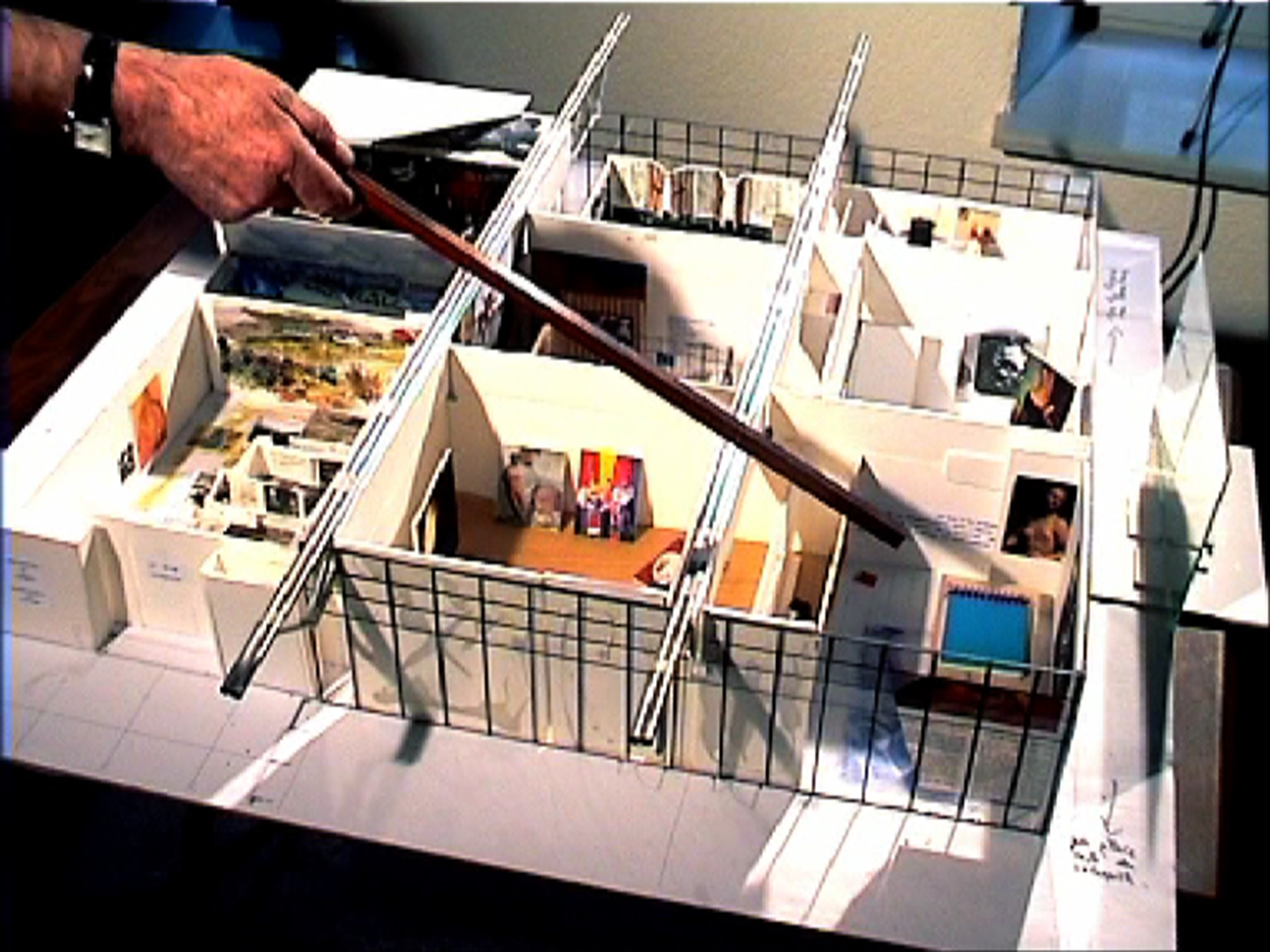
As part of the established cycle Comment ça va?, which film expert and curator Pascale Cassagnau has been programming for over 5 years, LOOP and the Zumzeig present a session entirely dedicated to Jean-Luc Godard. Centred on Godard’s relationship with art at large, the screening feature two short films that relate to the much discussed 2006’s exhibition Voyage(s) en utopie, JLG, 1946-2006, à la recherche d’un théorème perdu (Centre Pompidou, 11 May – 4 August 2006). Reportage amateur (maquette expo) shows a cardboard maquette made for the show from the most humble materials and it suggests and ambitious dialogue between cinema, painting and literature. Made a few months after, Souvenir d’Utopie presents the maquette with tighter, static shots, without commentary, punctuated with cuts to black.
J.L. Godard, Anne-Marie Miéville, Reportage amateur (maquette expo), 2006, 46′
Anne-Marie Miéville, Souvenir d’utopie, 2006, 6’09”
Comment ça va? IV
Saturday 27 May 2017, 6:30 — 10 pm
— D’Après Godard
- Artists
- Lech Kowalski and Frédérique Lagny
- Curators
- Pascale Cassagnau
- Venue
- Zumzeig
- A project by
- LOOP Barcelona in collaboration with CNAP
- Price
- 5 €
- Tickets & register
- zumzeigcine.coop/es
- Language
- English
Add to calendar
As the result of years long collaboration with curator Pascale Cassagnau, the CNAP and Le Fresnoy, LOOP presents the third edition of "Comment ça va? IV", a film programme dedicated to documentary and documented films. Taking place at the cinema Zumzeig, the programme proposes a selection of short and feature-length films by international artists, questioning filmic representation and narrative structures so to achieve a truthful image of reality and our everyday life.
The Comment ça va ? D’Après Godard film project-program, based on the eponymous film by Jean -Luc Godard, Comment ça va ? (1978) presents documentary and documented films, highlighting their capacity to cross history, to recover truth and reality, not as their ultimate goals, but rather, as tools, as reserves of forms, to undertake a journey, a trajectory, a path through complex political geographies.
In Comment ça va ? (1978, 70’), Jean –Luc Godard films a dialogue opposing a trade unionist and a left-wing activist on the subject of information processing and, specifically, on how two shots should be treated. The shots in question involve the Carnation Revolution, in Portugal, and a clash between strikers and riot police during a demonstration in France. The filmmaker described the genesis of this film, through a commentary delivered by a voice over, in the following terms: “This is the story of a guy who gets news from some other guy, who happens to be his father. And then this other guy talks to him about a woman with whom he had a thing going on at the office, a woman with whom he’s making a film showing how a Communist newspaper is made”. Not only does the film “expose” the full complexity of the ideological disagreements and tensions that divided the French left-wing movement, in doing so it also dissects the rhetorical dimension at work behind all information-writing activity through its montage and its movement, by deliberately placing the film, as the opening and closing credits put it, at the centre of the tension between two elements: “A film between the actor and the spectator, a film between activity and passivity”.
Here, the works of the Comment ça va? D’après Godard program express a number of shared hypotheses regarding both revisiting some of the topoi in modern art as well as work-creation and the possibility for narration. It is, in short, a series of films involved in reflecting on the present day.
Dowload the full curiatorial text here
Frédérique Lagny, “Djama Mourouti” ( La colère du peuple) , 2016,49′
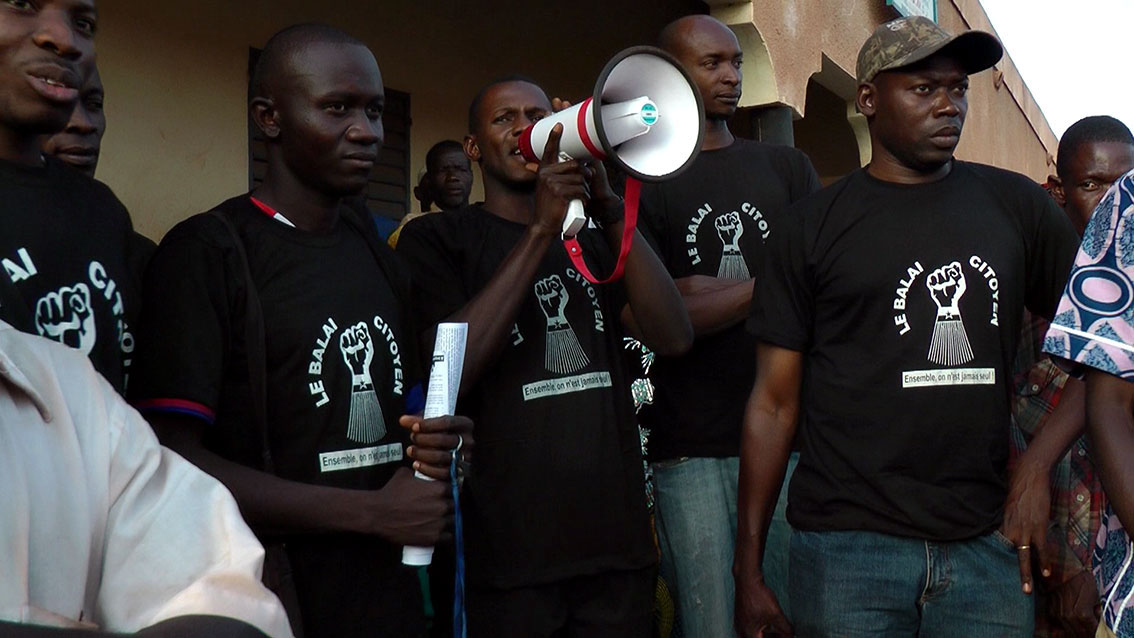
Thirteen years after the Democratic and Popular Revolution led by Thomas Sankara in Burkina Faso, the film Djama Mourouty, which was shot in Bobo-Dioulasso, the second largest city in the nation, reminds us of the fall of Blaise Compaoré’s regime. The Burkinabé people, and particularly its youth, go into action forcefully, inventing new tools and slogans for the purpose of carrying out citizen protests.
Lech Kowalski, “I Pay for Your Story”, 2016, 86′
This film by Lech Kowalski is a journey to the present of a devastated America, showcased by the filmmaker as he revisits his childhood locations. Starting from the close unity of space of the neighbourhood — a few blocks — in which he spent his childhood and teenage years, upon his arrival to the United States after emigrating from Poland, the filmmaker films his former neighbours like so many portraits of social and human dereliction that are entirely absent in the sphere of the media and official representations of American society. Lech Kowalski uses the uniqueness of life stories to delve into the heart of the influence of institutions on destinies and the fundamental alienation that results from it.
Comment ça va? III
Sunday 5 June 2016, 6 pm
— A programme curated by Pascal Cassagnau
- Artists
- Safia Benhaim, Nicolas Boone, Hassen Ferhani
- Curators
- Pascale Cassagnau
- Venue
- Zumzeig
- A project by
- A project by LOOP Barcelona in collaboration with CNAP and Le Fresnoy.
- Price
- 7.5 €
- Tickets & register
- www.zumzeig-cine.eu
- Language
- English
Add to calendar
As the result of years long collaboration with curator Pascale Cassagnau, the CNAP and Le Fresnoy, LOOP presents the third edition of "Comment ça va? III", a film programme dedicated to documentary and documented films. Taking place at the cinema Boliche and the Zumzeig, the programme proposes a selection of short and feature-length films by international artists, questioning filmic representation and narrative structures so to achieve a truthful image of reality and our everyday life.
As following this exploration of cinematic narratives and codes as a means to interpret reality, the Zumzeig hosts a selection of films by French born and based artists, set across Northern and Sub-Saharan African cities. While questioning past and present events or envisioning future scenarios, the works span issues related with ethnography, decolonisation, political exiles and upheavals, the exploitation of labour and the loss of memory.
In Dans ma tête un rond point (A Roundabout in my Head) the spectator is invited to go behind the scenes at a central Algiers abbatoir. A glimpse into the working lives of the male employees, Ferhani’s feature-length debut touches lightly on wider issues connected with the Arab Spring; and is thus sufficiently topical — as well as aesthetically distinctive.
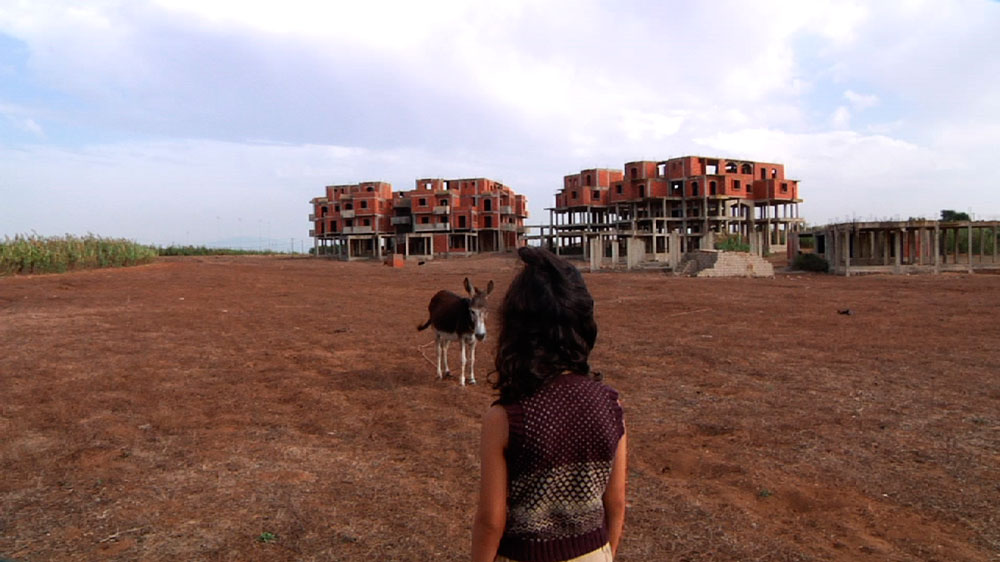
In Fièvre (Fever) a child perceives the presence of the ghost of a woman (a political exile returning to his homeland), on a night of fever in Morocco. While the history of decolonization and forgotten struggles resurfaces, the children and the ghost merge into a journey through space and time, in search for lost memories and past recollections.
In Psaume a small group of men seeks water and survival, in a part of Sub-Saharan Africa. The dusty villages they cross are inhabited only by mad and infirm, souls left behind by a war. In long sequence shots, the camera embraces the slow progress of the haggard figures, immersing us in a post-apocalyptic world that resembles a science fiction landscape as much as it does the setting of a modern African catastrophe.
*At the presence of the directors and the curators.
João Pedro Rodrigues. ‘Comment ça va? III’
Monday 30 May 2016, 8 pm
— Third edition of the programme curated by Pascale Cassagnau
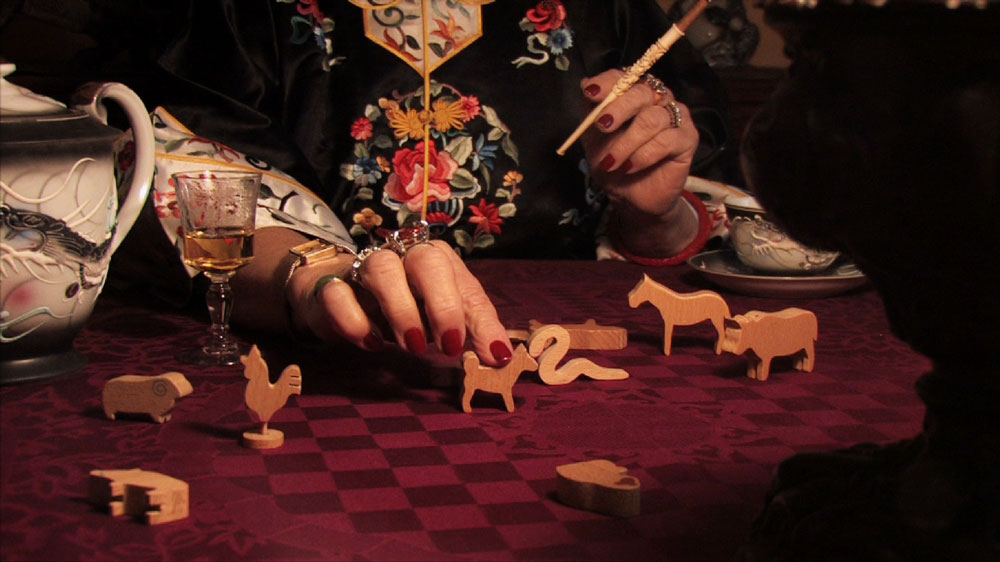
- Artists
- João Pedro Rodrigues
- Curators
- Pascale Cassagnau
- Venue
- Boliche Cinemes
- A project by
- A project by LOOP Barcelona in collaboration with CNAP and Le Fresnoy.
- Price
- 6 €
- Tickets & register
- bolichecinemes.cat
- Language
- English
Add to calendar
As the result of years long collaboration with curator Pascale Cassagnau, the CNAP and Le Fresnoy, LOOP presents the third edition of "Comment ça va?", a film programme dedicated to documentary and documented films. Taking place at the cinema Boliche and the Zumzeig, the programme proposes a selection of short and feature-length films by international artists, questioning filmic representation and narrative structures so to achieve a truthful image of reality and our everyday life.
Accordingly, the cinema Boliche features works by Portuguese filmmaker João Pedro Rodrigues, that blur together documentary images and fictional accounts, cinematographic memories and personal recollections. The films result into a homage to the traditions of the artist’s home city (Lisbon) and hint to the history of his country.
In Á Ultima Vez Que Vi Macau (The Last Time I Saw Macao) João Rui Guerra da Mata receives an unexpected call from Candy, an old friend who lives in Macao, which tells him that she has gotten into trouble together with the wrong man. Mata decides to travel to Las Vegas from the East in order to help her. But going to Macau, implies returning to the city of his childhood and the happiest years of his life. Within this search through the labyrinthine streets and tourist city, real facts are mixed with fiction and biographical memories are intervened upon with the film device.
In Mañha de Santo Antonio (The Morning of Saint Antoine), the director evokes the celebration of his country’s patron, during which lovers traditionally exchange pots of basil, paper-foldings and excerpts of poems.
*At the presence of the director and the curator.